Monday, 3 August 2026
The Willie Wagtails were awake early this morning outside our cabin. Making their scissor grinder call rather than their lyrical ‘sweet pretty creature’ call. Still, I suppose it’s nice to be woken by wildlife rather than traffic noises? Ah, the benefits of staying in a cabin. I used the loo overnight and I had a lovely hot shower. Bernie didn’t realize nearly the same benefit from our cabin stay as there was no hot water left for him. It may have been one hot water storage tank to service our cabin and the one next door. Ross and I had hot showers but Bernie and Magda were not so lucky. I swear I was quick in the shower. Well, I was certainly quick by my standards but maybe not quick enough? Having unlimited, instantaneous hot water at home spoils you!
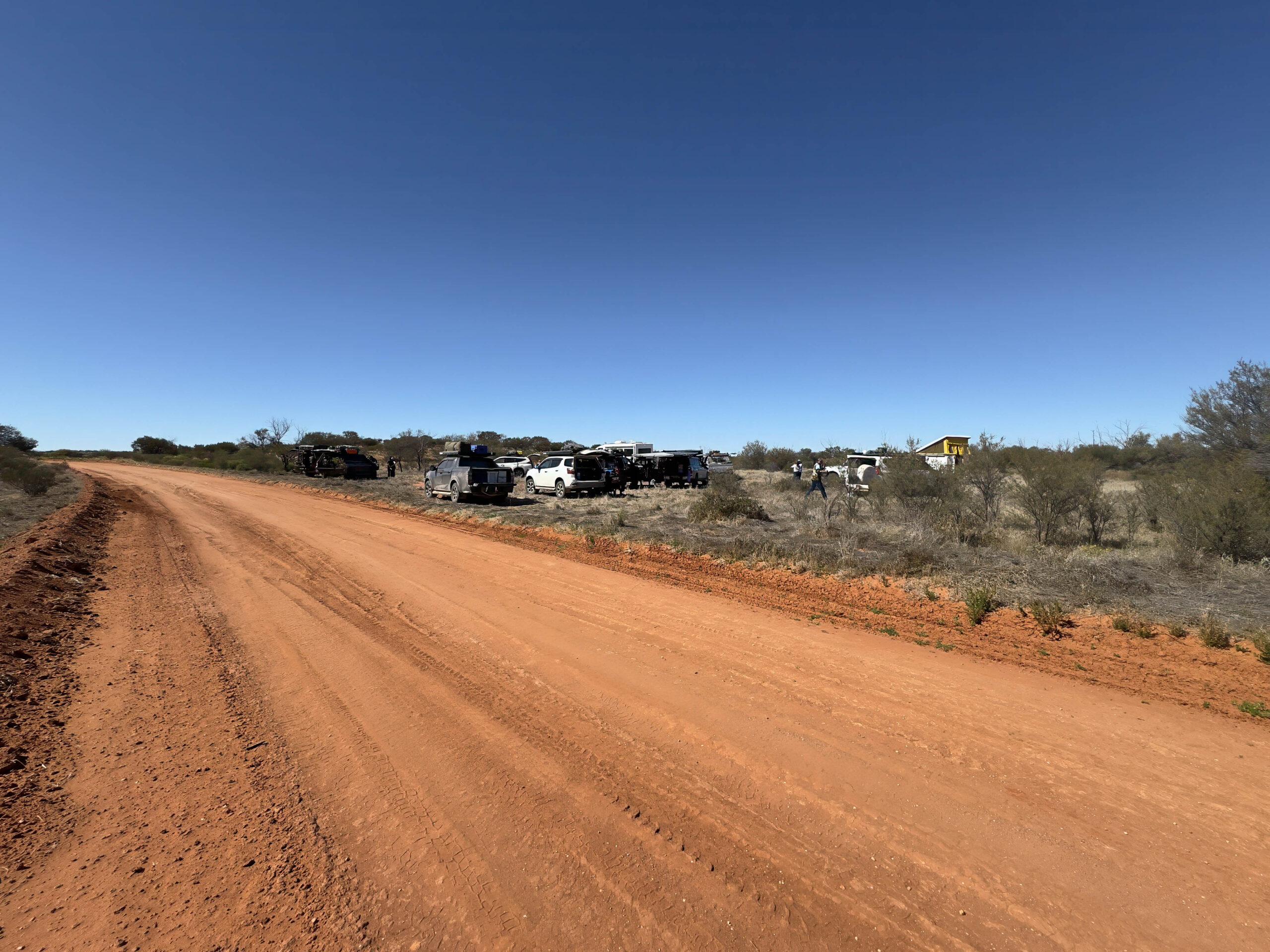
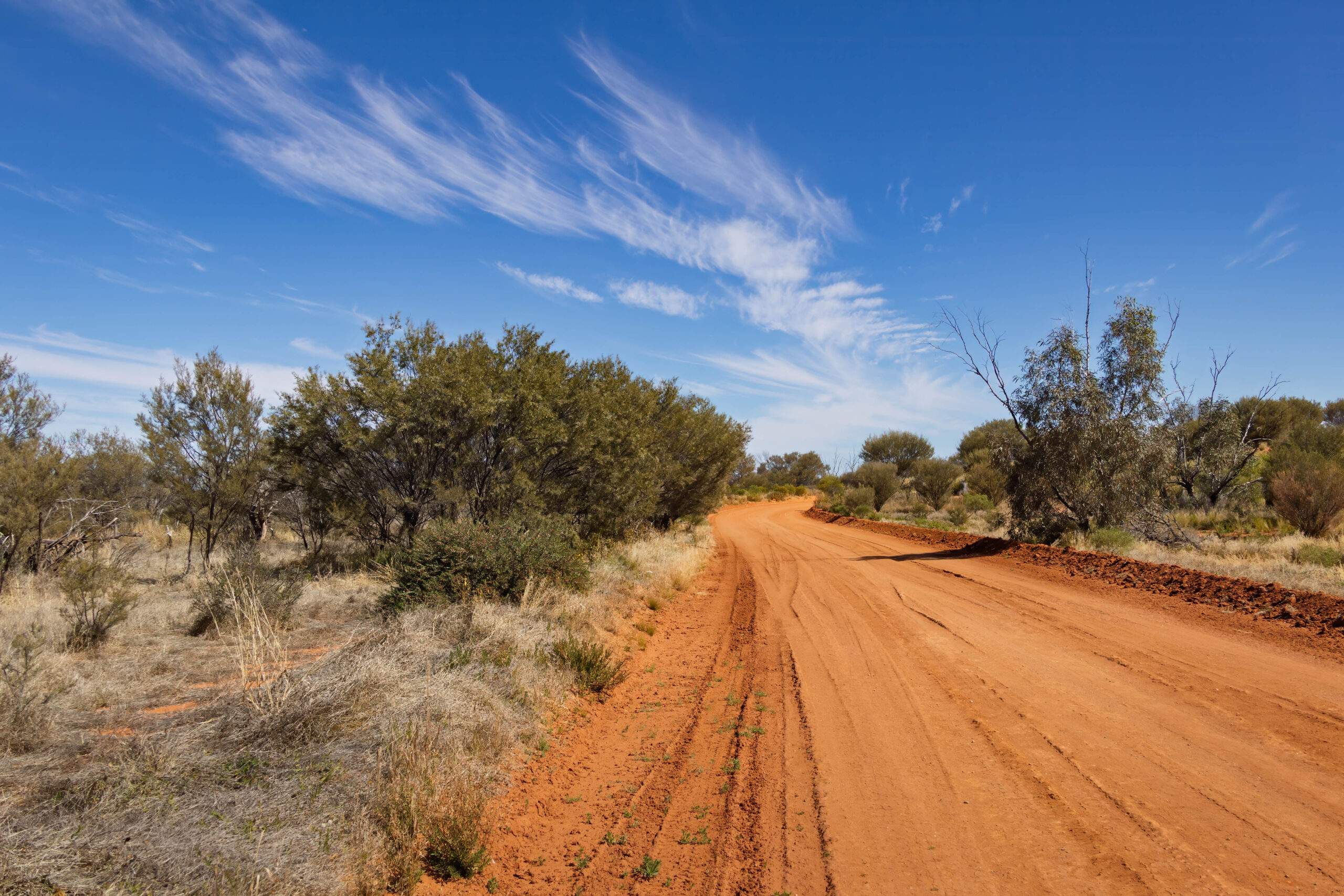
The Dingo Pack rolled out of Oodnadatta at 9.30am and, just before 10.00am, turned off onto the track heading towards Mount Dare. We pulled up soon after the turn to switch out the troublesome battery in one of the cars. It is suspected that it is actually an alternator problem that is draining the battery. Hopefully this problem can be rectified at Mount Dare. Fingers crossed.
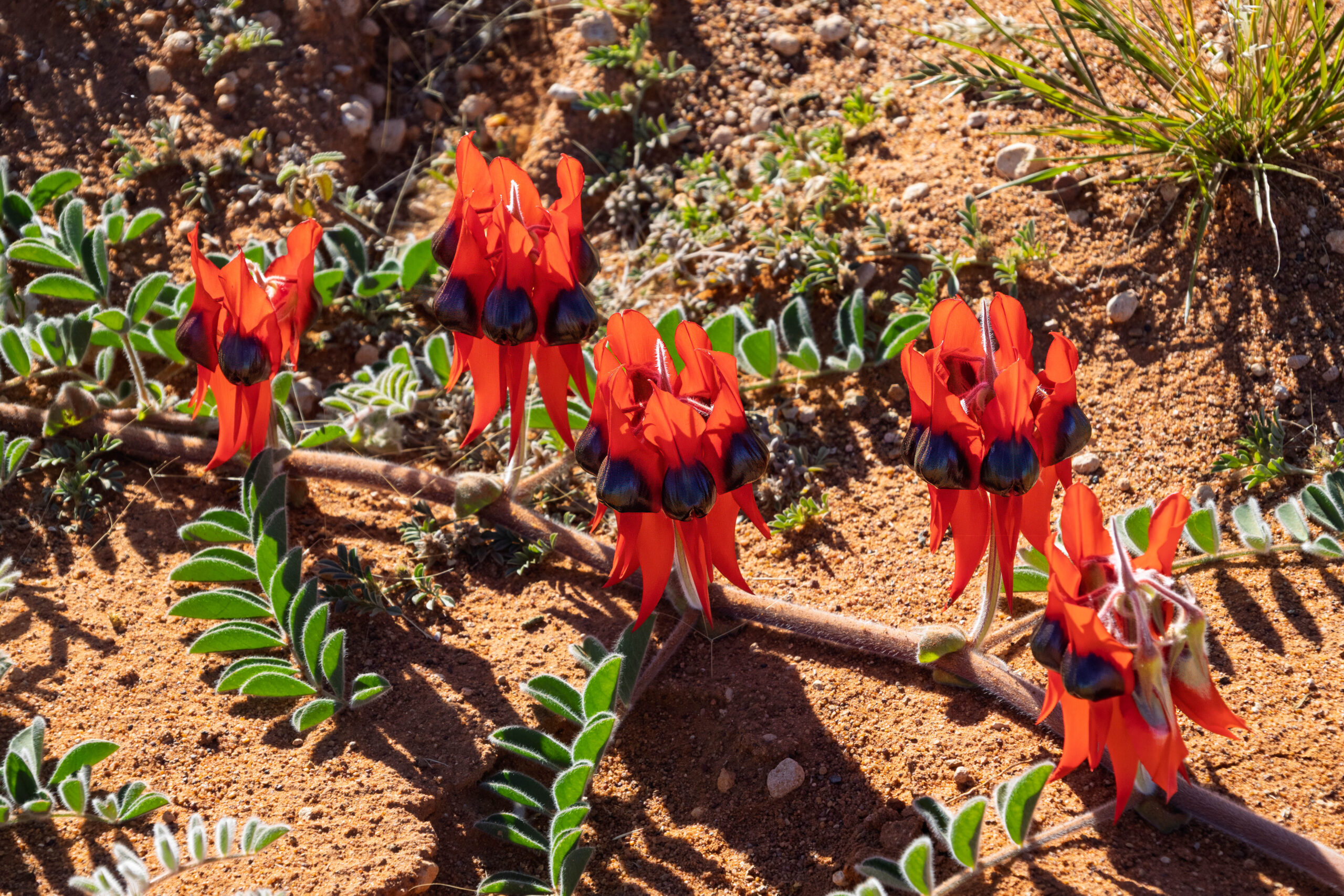
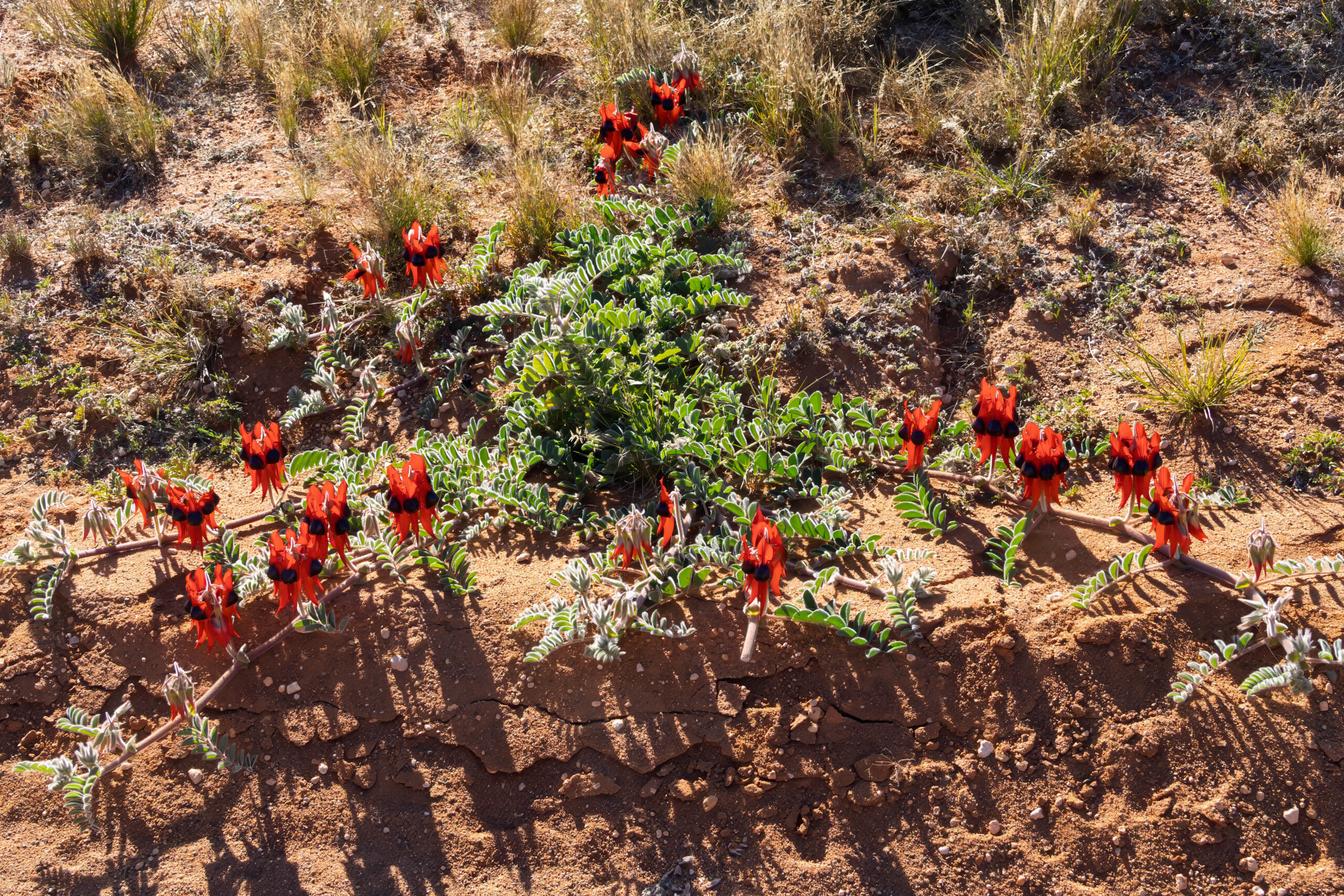
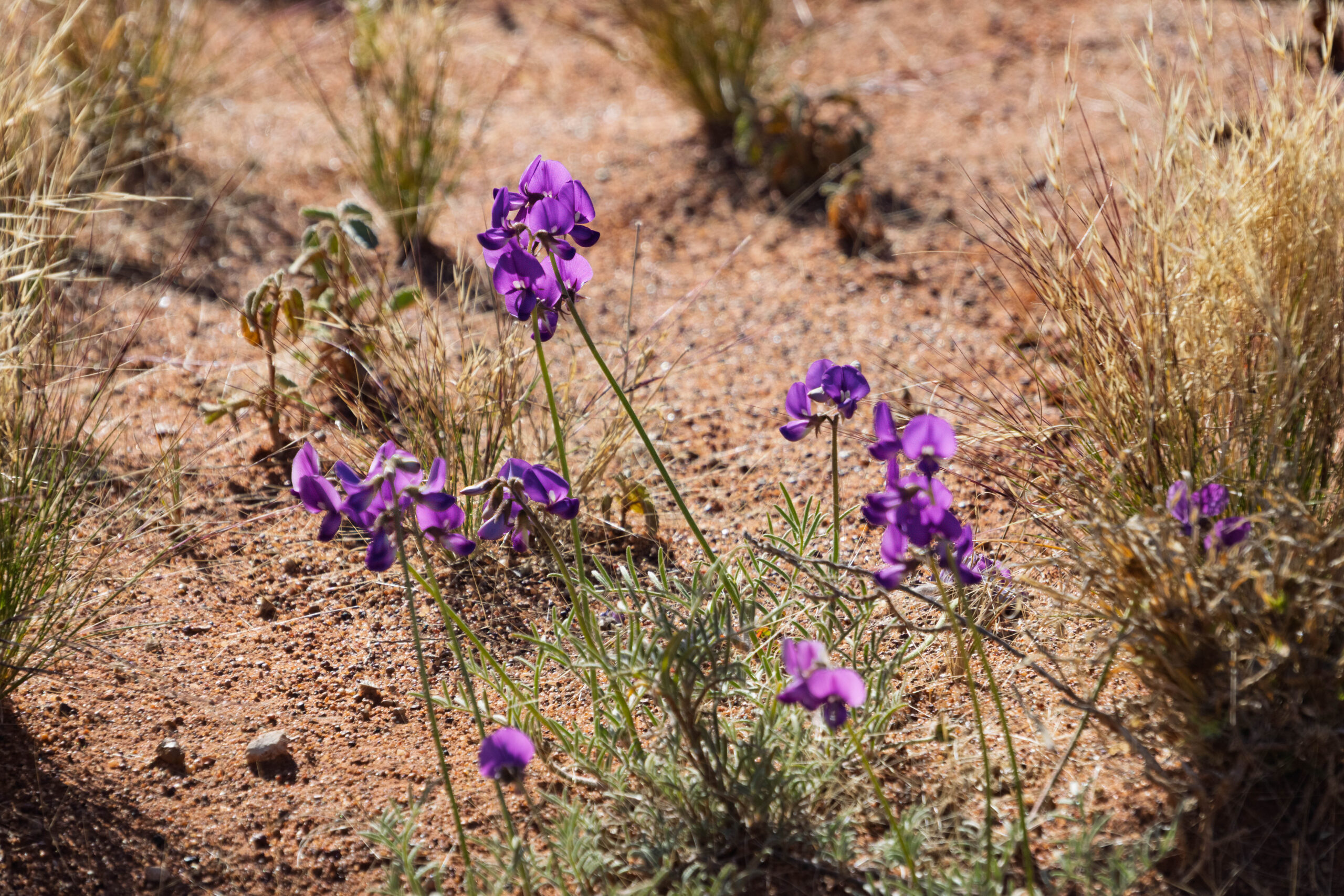
After only a few more kilometres we lost our collective minds over Sturt’s Desert Pea (STP) growing in the wild. By the time we were parked up, we were all some way in front of the patch of desert peas. That meant that those wanting photographs had to walk back. In my case this was not such a bad thing because my watch has been telling me that all my fitness goals have been trending down since we’ve been on the road.
As we pulled up, Bernie noticed that the aerial on the bull bar was leaning over. A quick check found that the bottom bolt in the mounting was gone. I left Bernie to fix that while I hiked back to the desert pea growing by the side of the road nearly a kilometre back? Probably not really that far! As I passed Ross’s vehicle he cheekily said to me ‘It’s a long way to walk for a pea’, ha, ha. Everyone joked that we would drive around the next corner and there would be MORE STP … and there was! Arriving back at the truck I found the aerial mount cobbled together with zip ties and gaffer tape. Not pretty, but it works.
Just before 12.00pm, we had another roadside stop for running repairs. A squeak here, a rattle there to be investigated … and some low bushes for the privacy of those needing to empty their bladders. OK, by noon we are all bored with Sturt’s Desert Pea! So much STP growing along the roadside, but so exciting to see it in full flower growing in abundance in the wild. That was probably my No. 1 thing that I hoped we would see out here in the desert.
At Hamilton Station, we turned right onto Perdirka Track, pulling up for a lunch break just around the corner, where there was space to circle the wagons. Everyone tucked into their various choices of lunch and, once again, there was a huge variation in what people have found to be their best ‘on the road’ option. Today we were a bit posh with Ryvita with cream cheese and smoked salmon. Very la di da. Others have been very organised, making sandwiches for their freezers and just pulling those out each morning to be ready to eat at lunchtime. Others have set ups that make it easy to brew their tea or coffee. If I was addicted enough I could ask Bernie to have our Jetboil handy for a hot beverage at lunchtime. So far I haven’t felt the need.
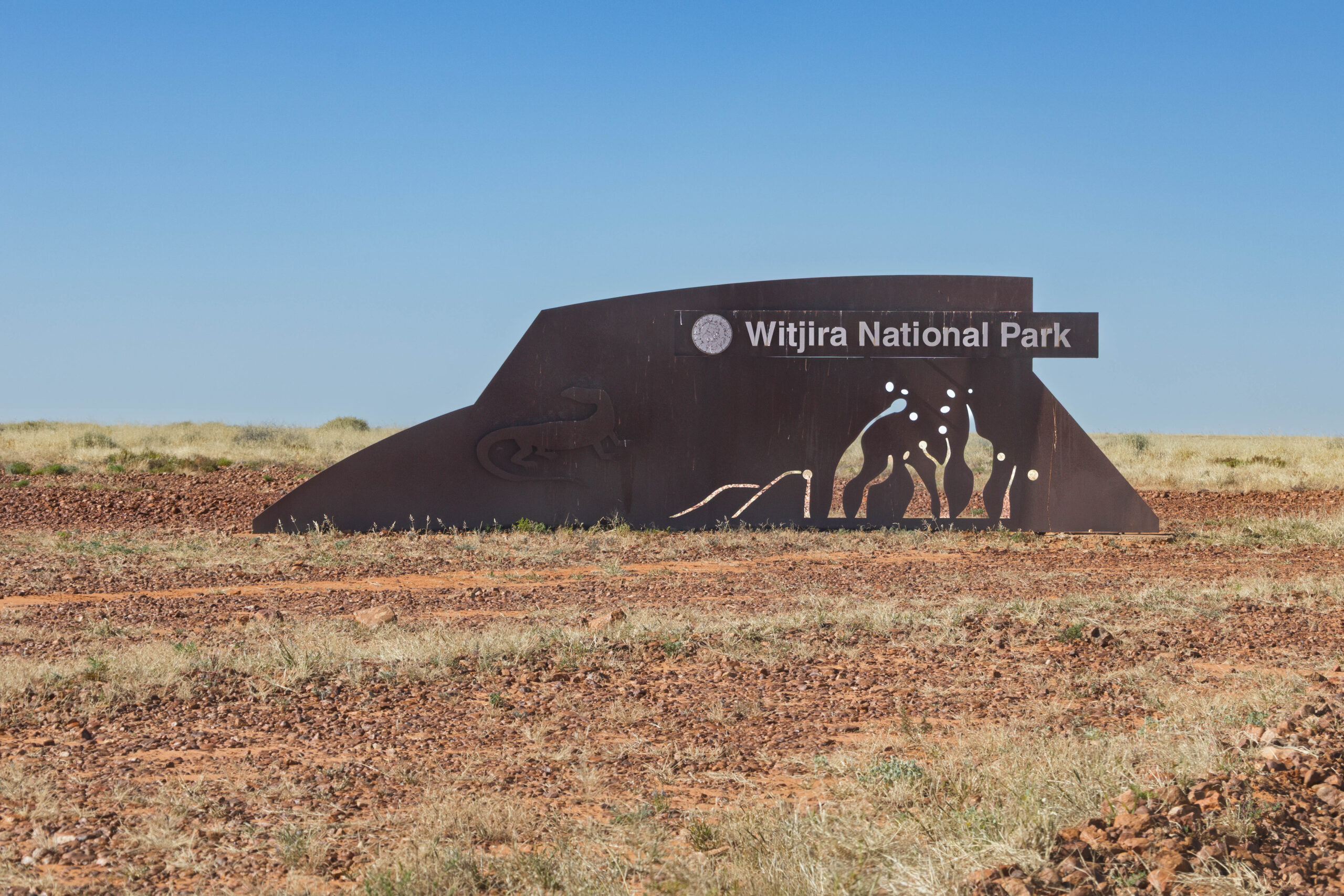
About 2.30pm we entered Witjira NP. Bernie had to wake me to take a photo of the entrance board. Yes, seriously. The road is so much rougher than any section of the Gibb River Road and yet I still managed to doze off, ha, ha. We stopped to read the interpretative boards which informed us that the area is comprised of the traditional lands of the Lower Southern Arrernte and Wangkangurra people.
Aboriginal people have occupied the land for over 15,000 years and now co-manage the park alongside the Department of Environment, Water and Natural Resources. The co-management board aims to promote and respect Aboriginal lore as well as manage the park in a way that is sustainable to preserve the land now and into the future.
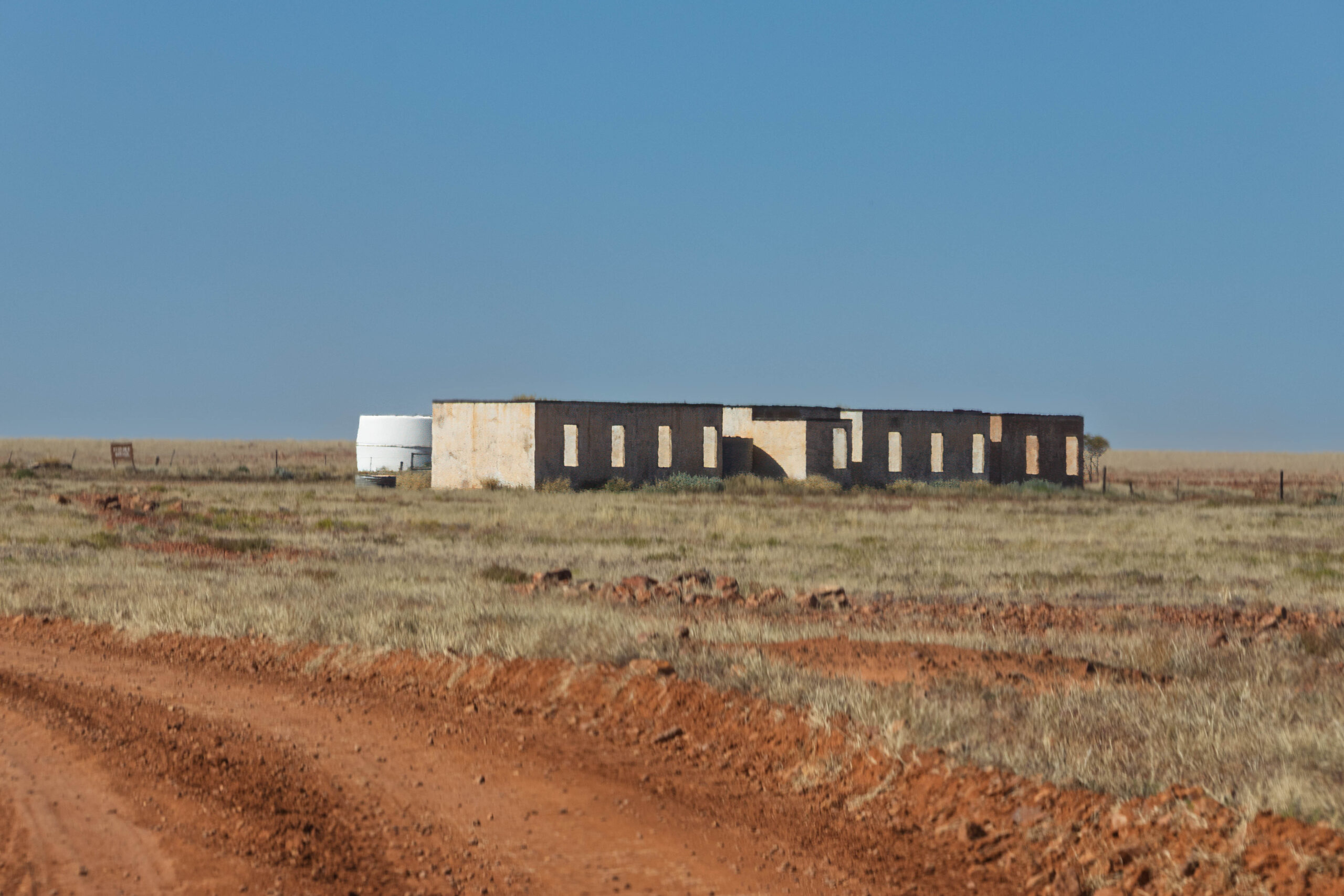
We continued into the park, motoring past the ruins of Perdika Siding soon after. Although this was a stop on the Old Ghan Railway, these ruins were nowhere near as pretty as the worker’s cottage at Margaret Siding.
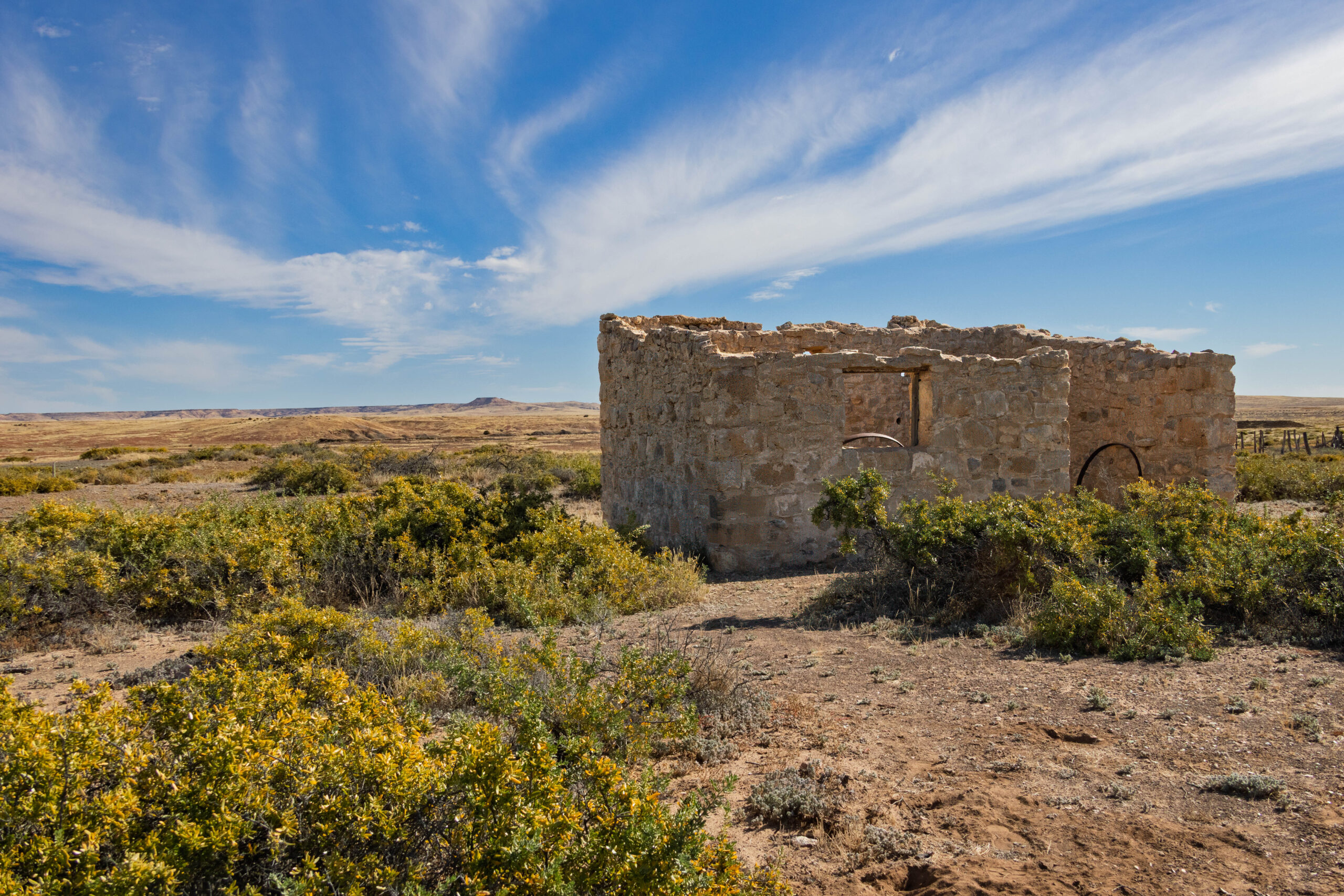
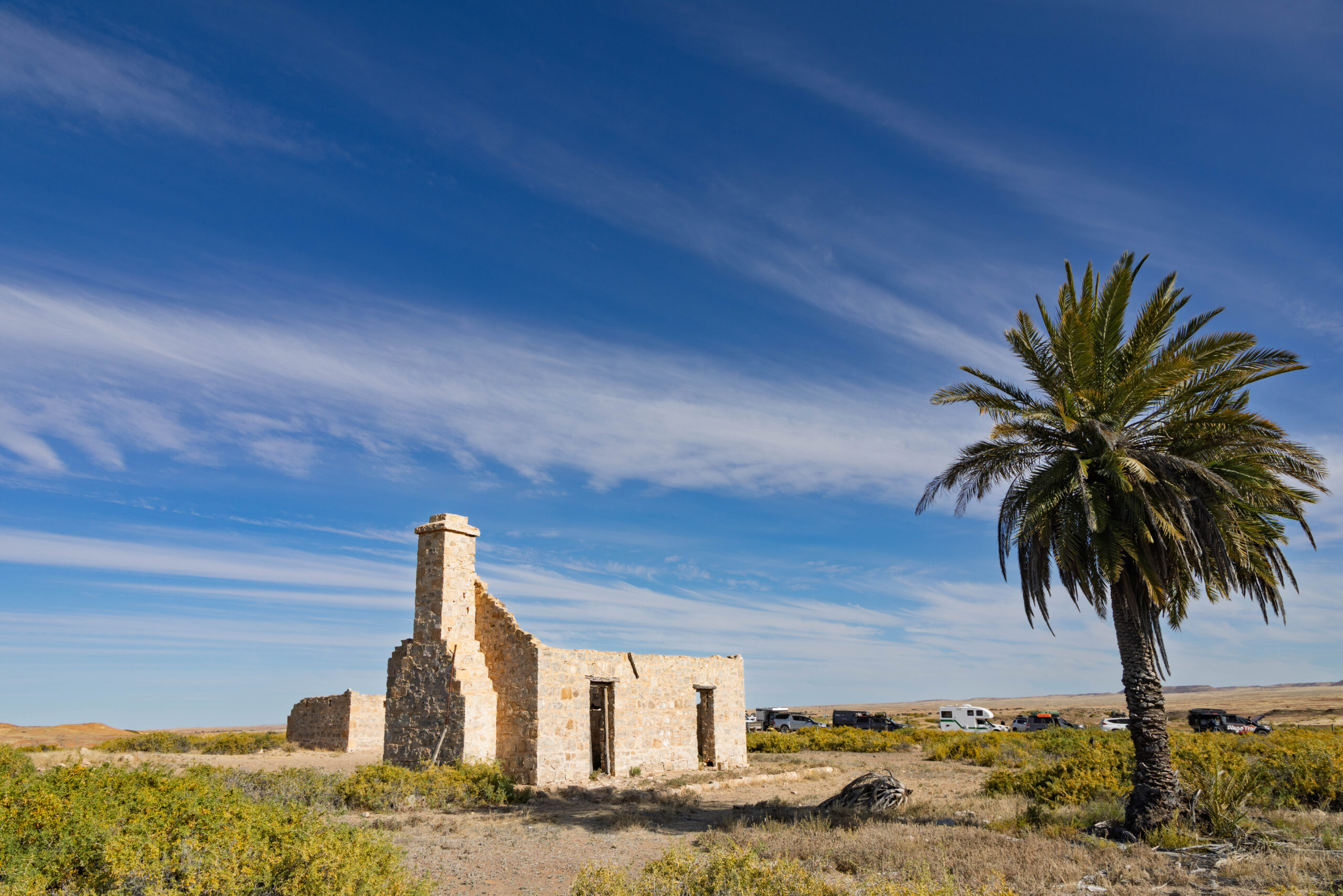
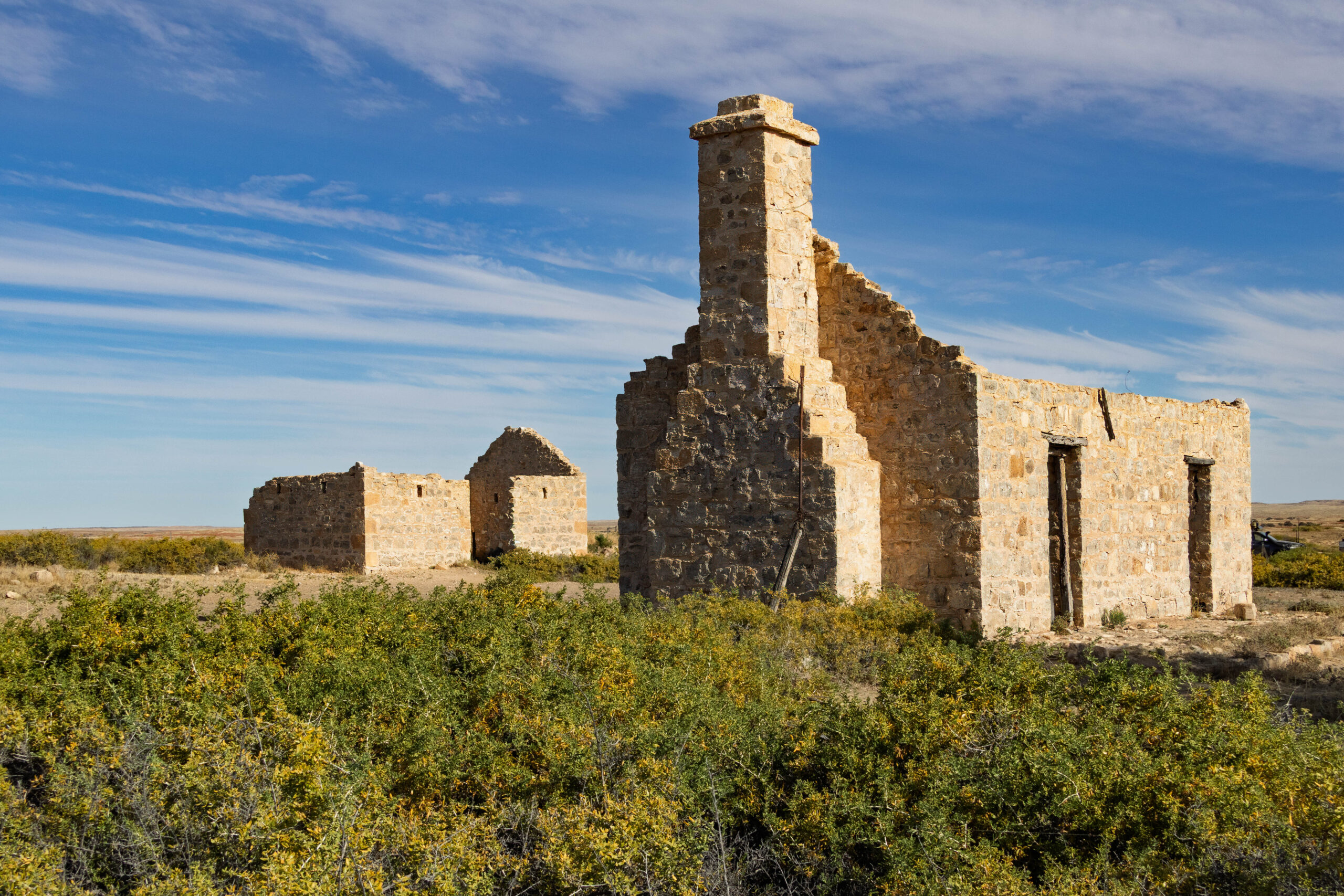
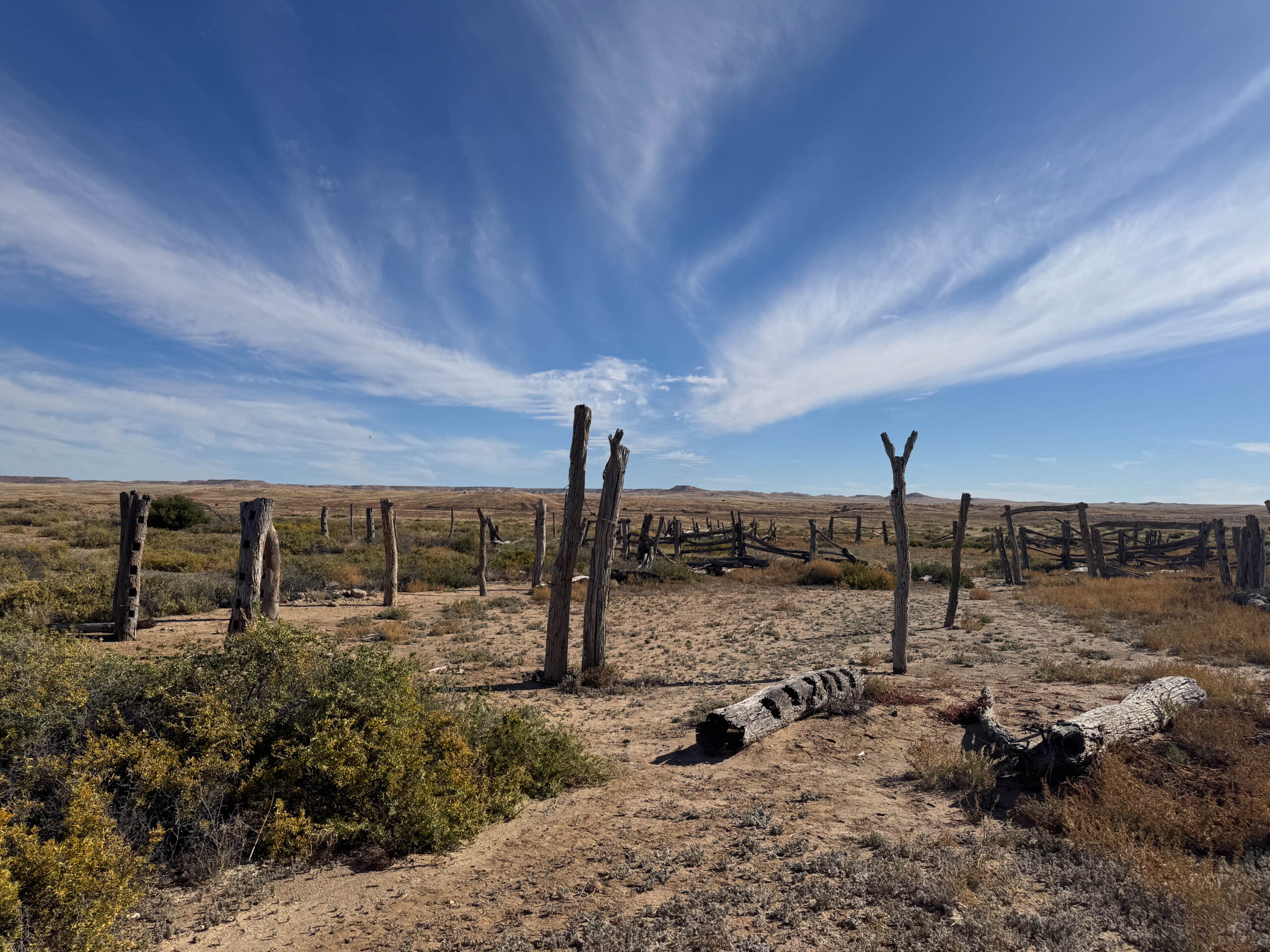
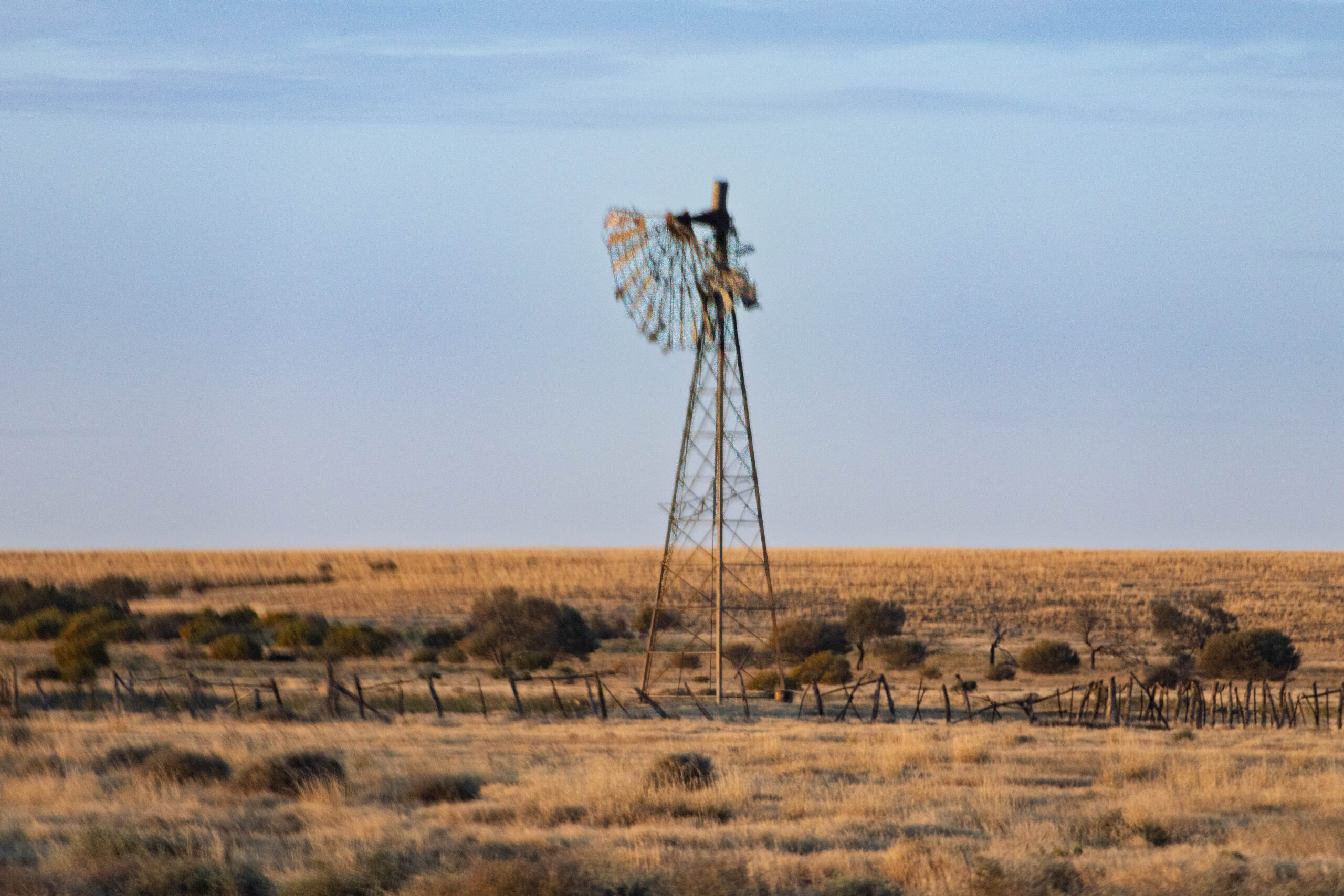
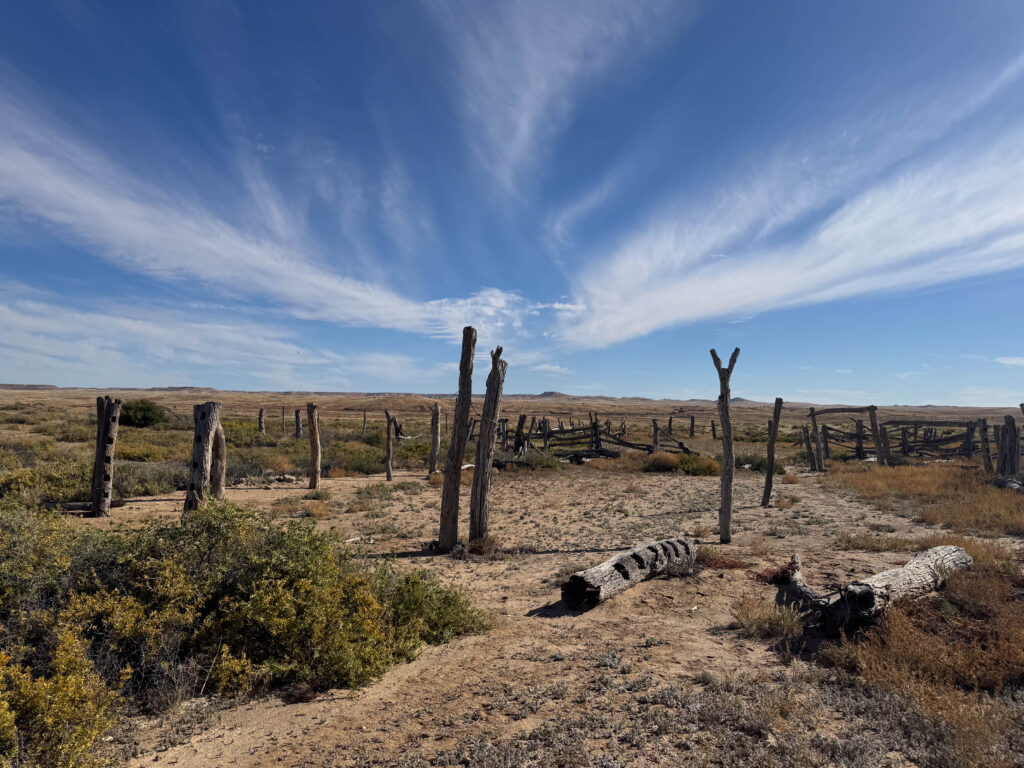
It was around 3.00pm when we pulled in at the Dalhousie Ruins. Dalhousie Station was South Australia’s most northern pastoral lease. The land was used to graze and breed sheep, goats, horses, camels and cattle. Other more experimental agricultural crops such as dates palms and lucerne were also trialled. Evidence of the date palms remains, but as this is an invasive species most have been removed in recent efforts to rehabilitate the land. The few that remain are all male palms so that they cannot breed and take over the landscape, preventing native species from thriving. We spent a pleasant half hour or so wandering around the ruins of the homestead, the worker’s quarters, the blacksmith’s and the stock yards.
As we were driving today we could see flocks of small birds flitting around near the road. John told us that these were flocks of budgies. Unfortunately they were never close enough for us to see their iridescent colours and we had to take John’s word for it that they were budgies. I’m sure he would not mislead us!
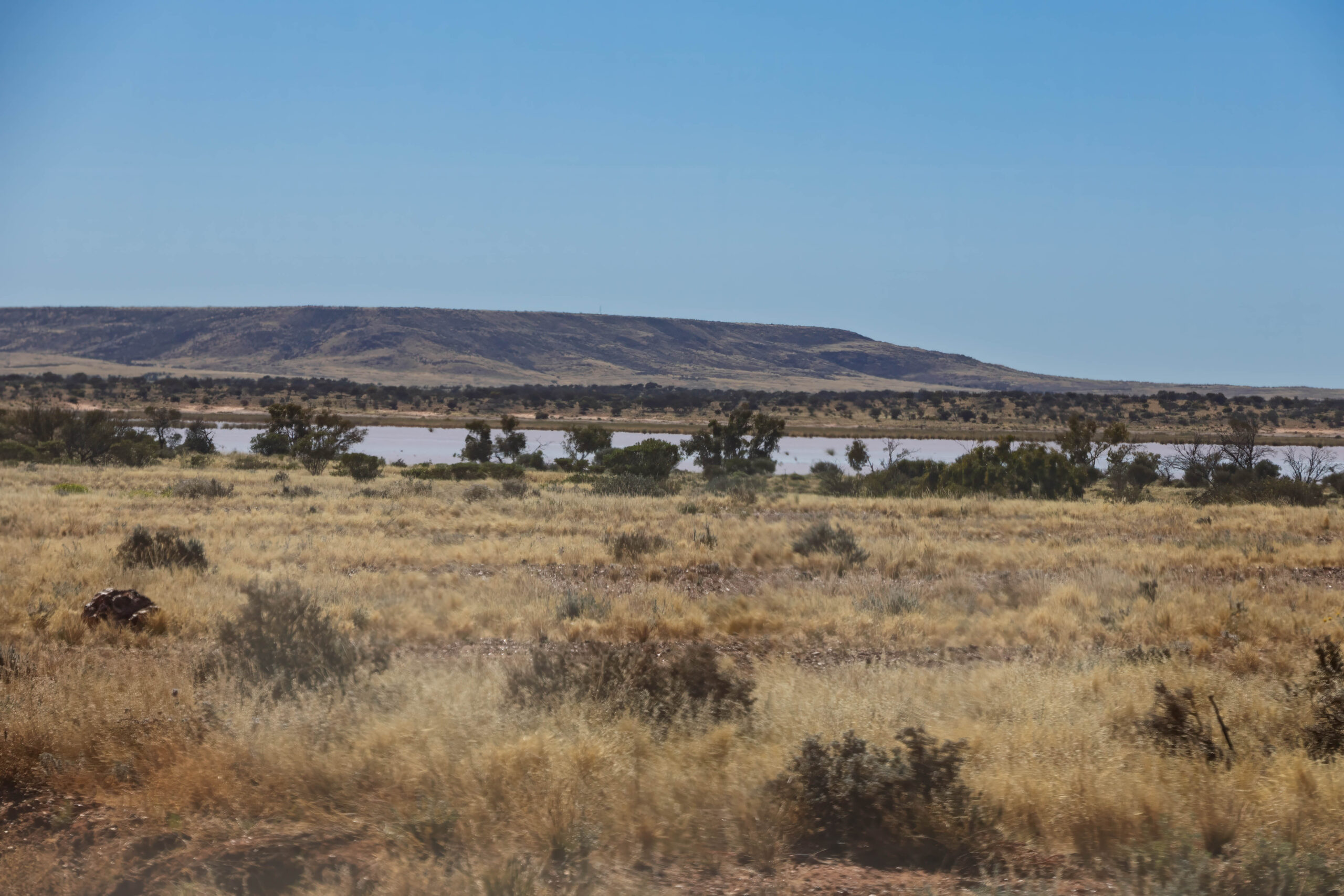
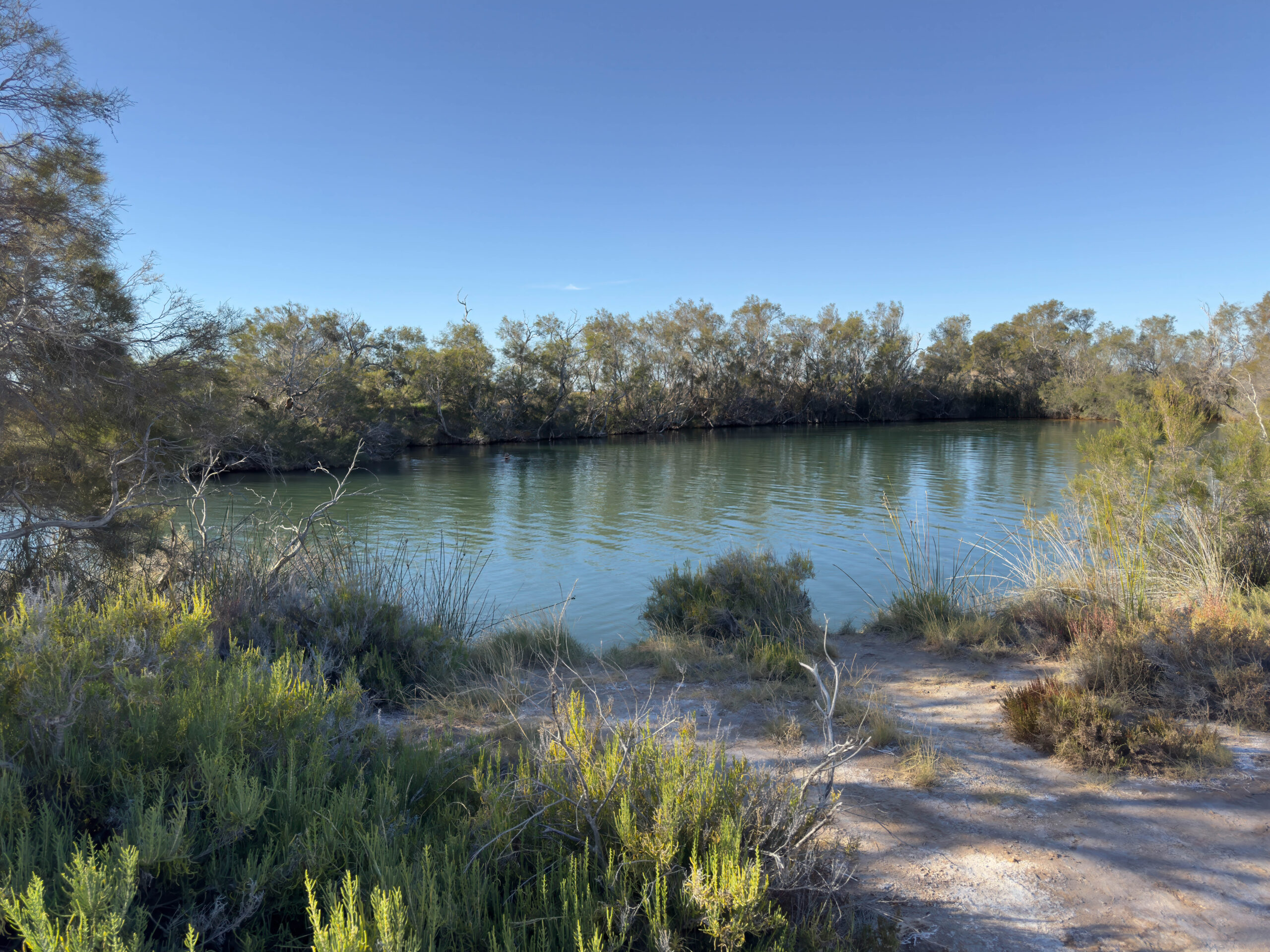
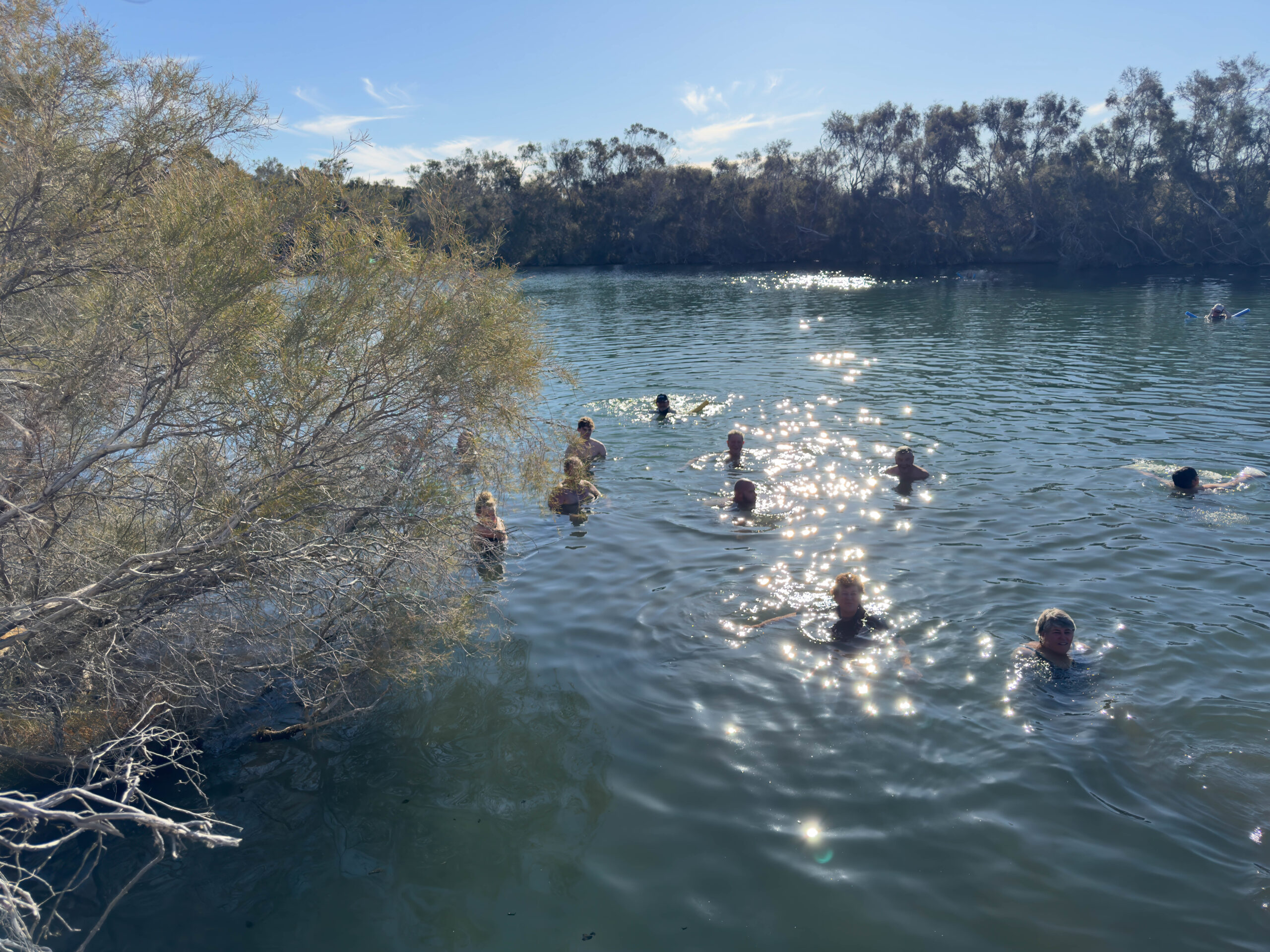
Just before 4.00pm, we arrived at Dalhousie Springs where most of us took a dip in the warm waters. The National Heritage listed Dalhousie Springs is one of the most significant natural springs in the world. It is recognized for its cultural importance and unique hydrogeological and biodiversity values. Water has been discharging at Dalhousie for up to two million years creating an incredibly stable environment in an otherwise changing landscape.
There are over 1,000 hectares of wetland at Dalhousie, created by 148 mound springs. These springs vary in flow from almost nothing to a whopping 10 million litres per day. The water comes mainly from the Great Artesian Basin that sits under nearly a quarter of Australia’s land mass. The water here at Irrwanyere (the main spring), ranges from 37°C to 42°C. I’m not sure what the temperature was today but it was very pleasant. For me it was really in the Goldilocks Zone, not to hot, not to cool, just right. With the depth ranging to 12 metres I was glad to take one of our pool noodles in.
All too soon it was time to haul ourselves out of the lovely warm water. Although the day was warm, the breeze was a little bit cool on our wet skins. With the amenities block lousy with mosquitoes, I decided to change back into my clothes between the front and back doors of the truck. I don’t think there was anyone out in the scrub copping a perve when my arse was bare?
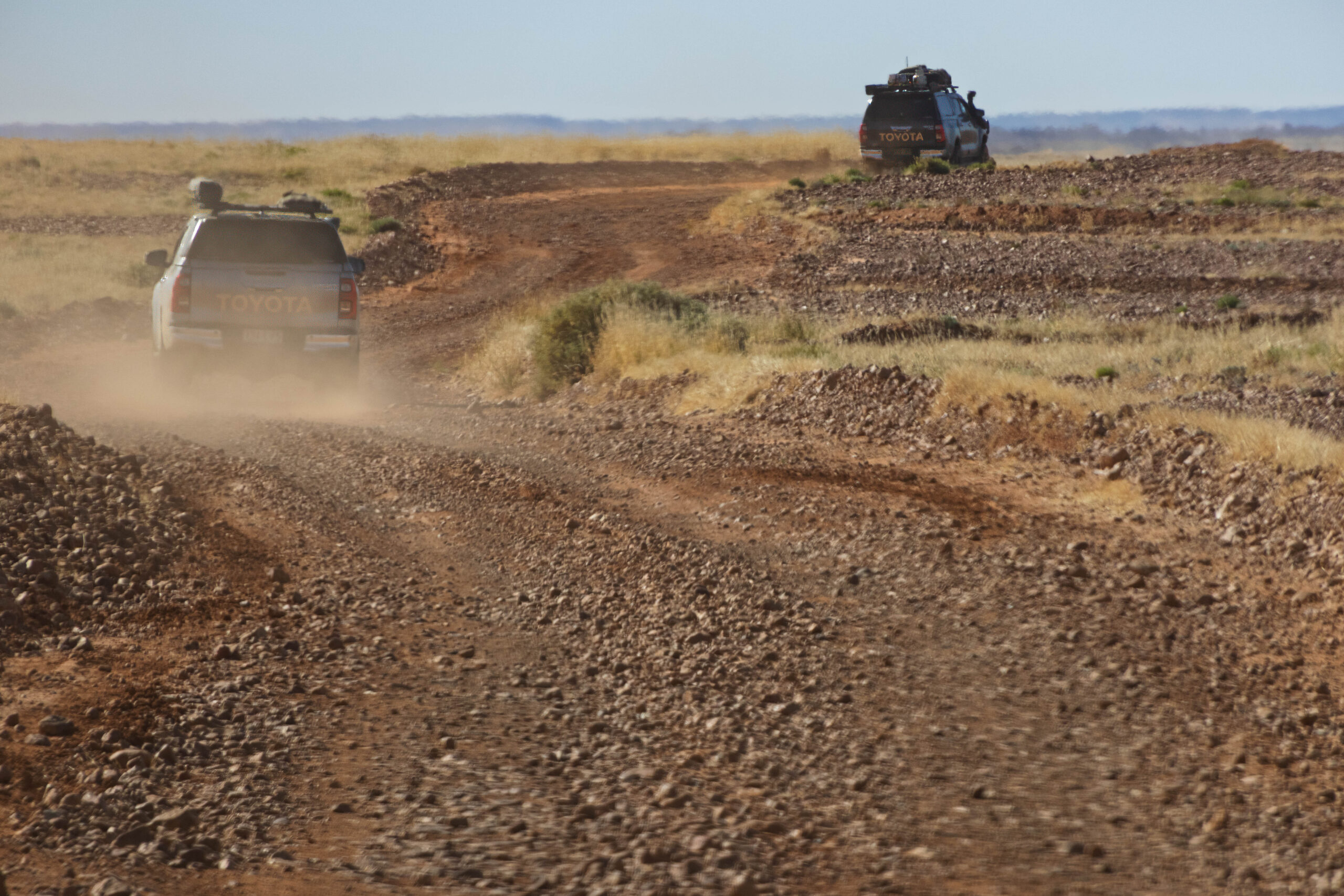
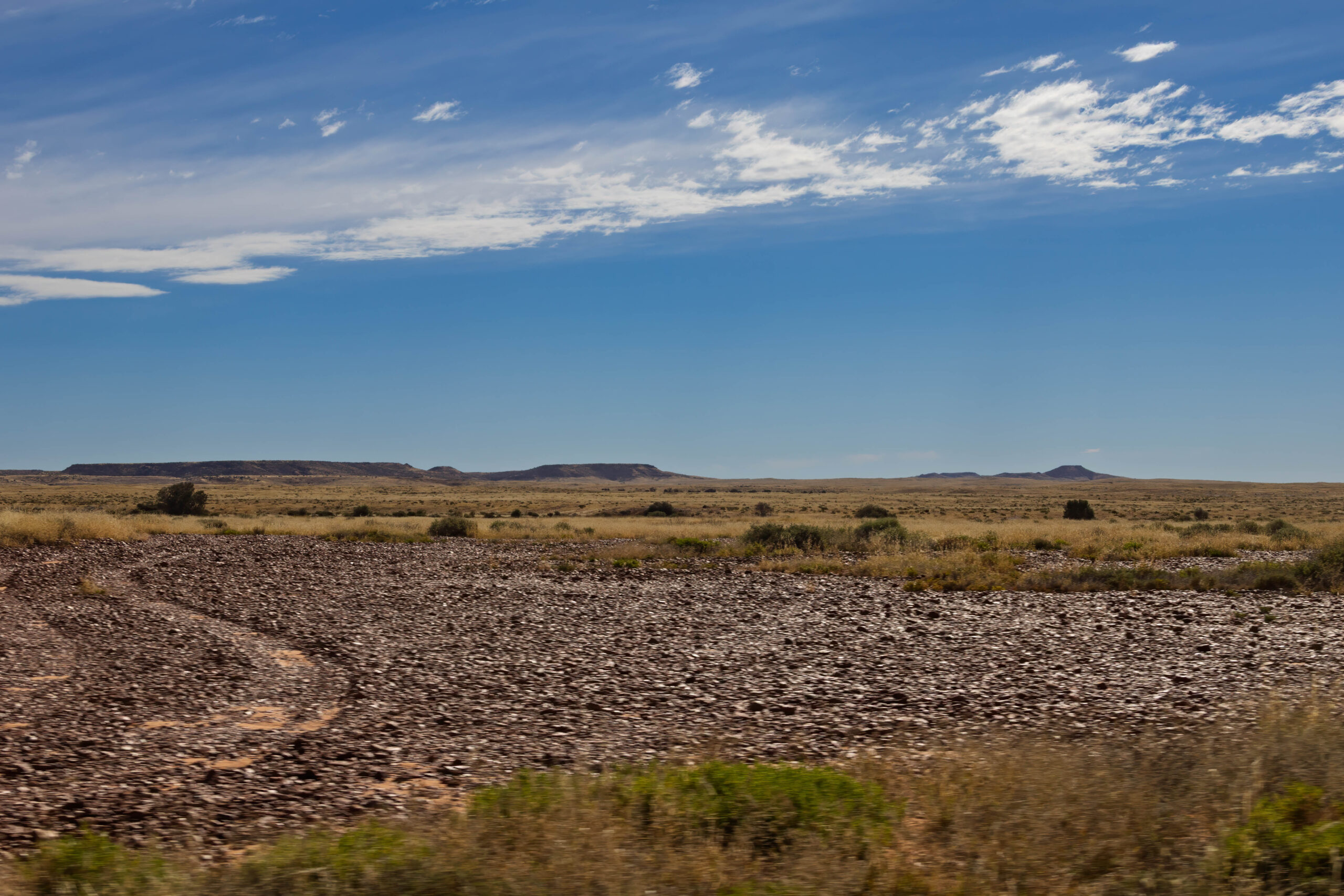
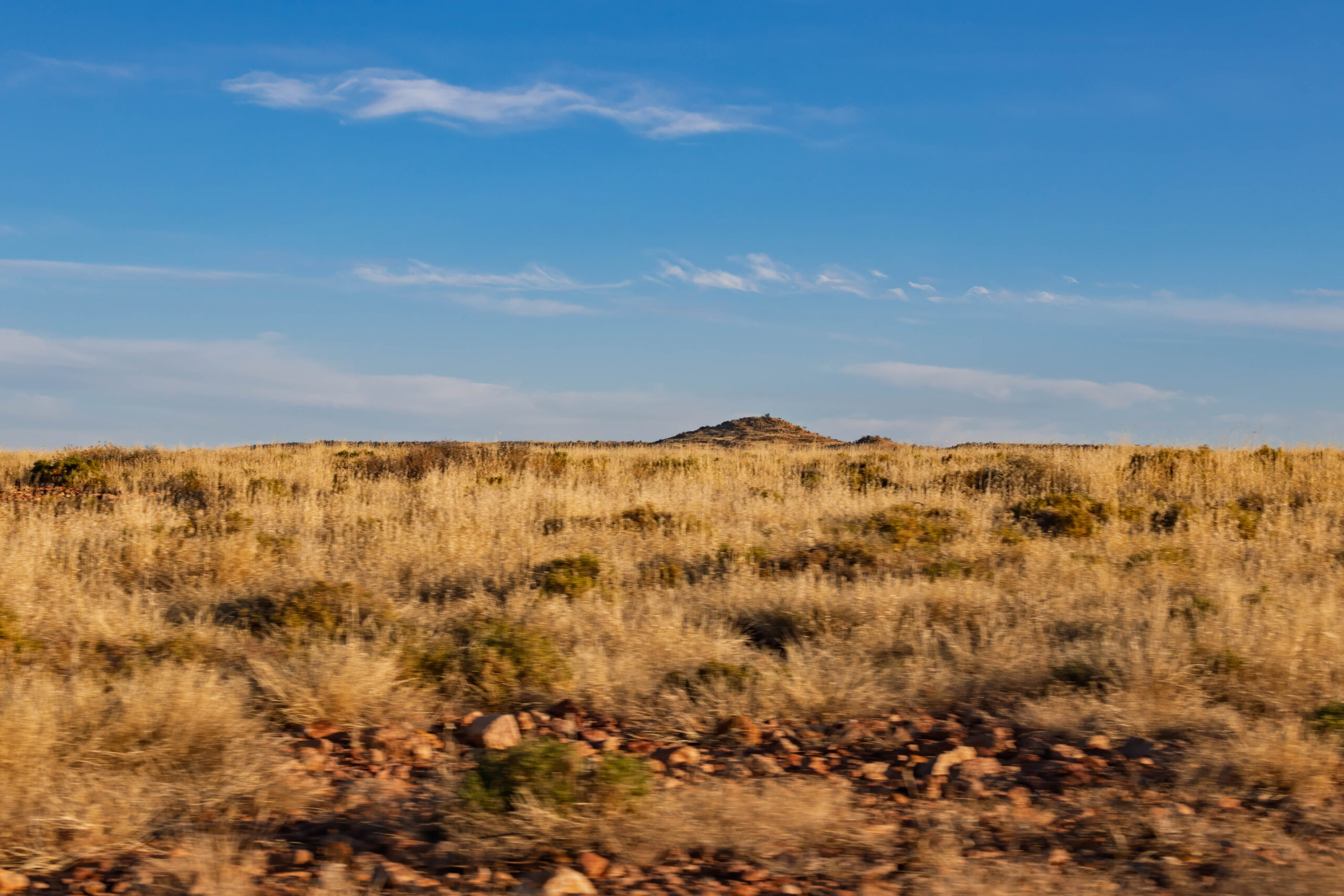
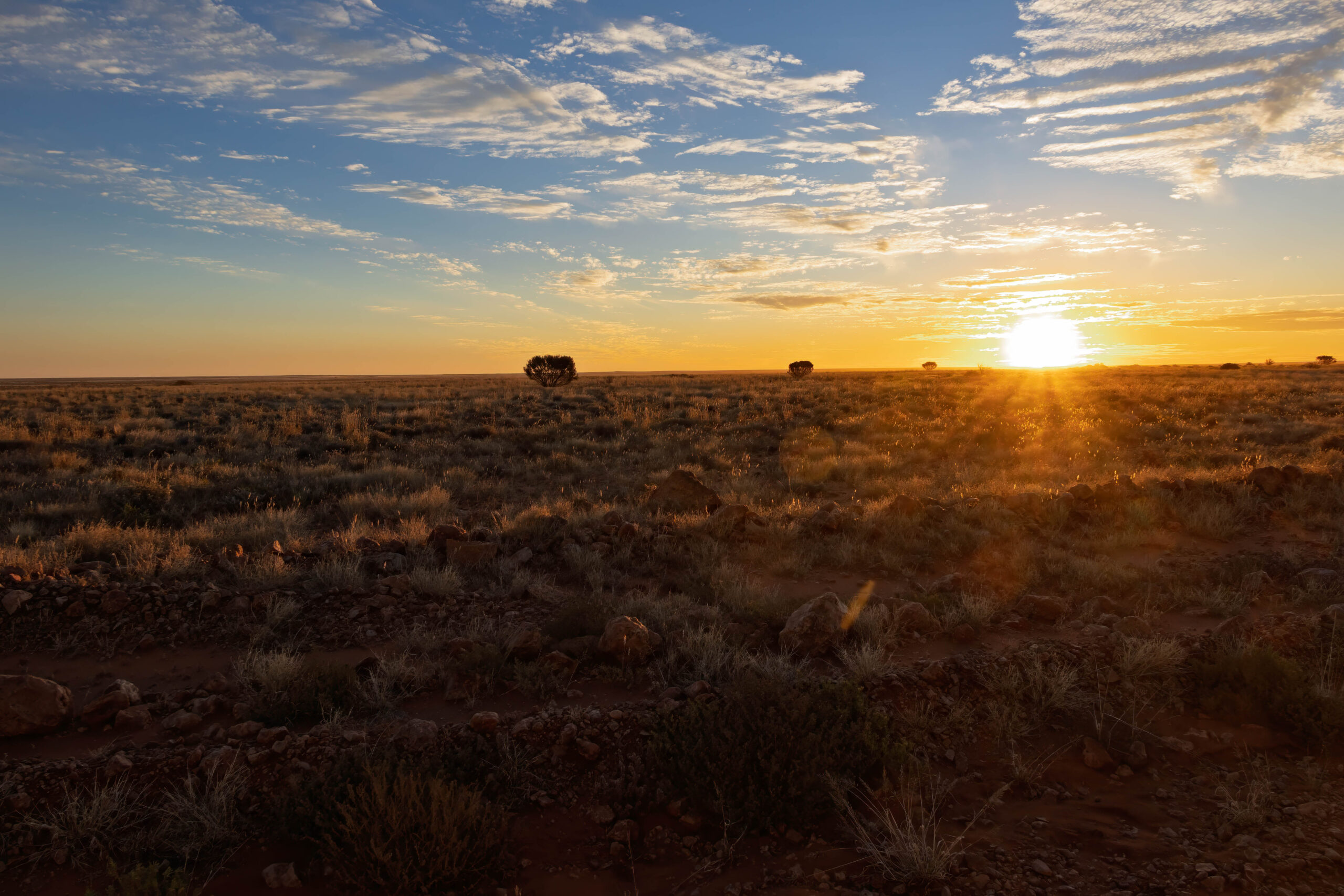
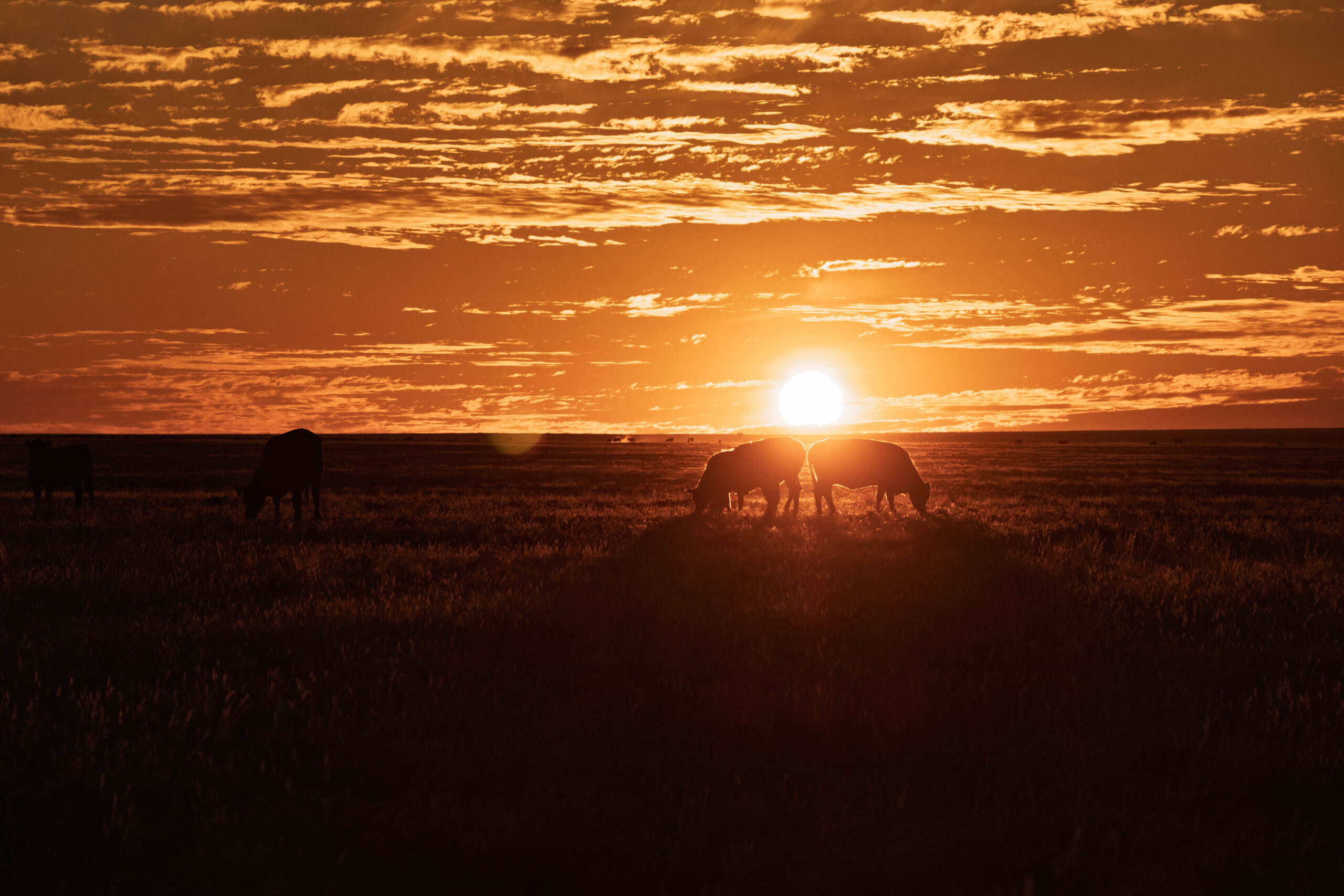
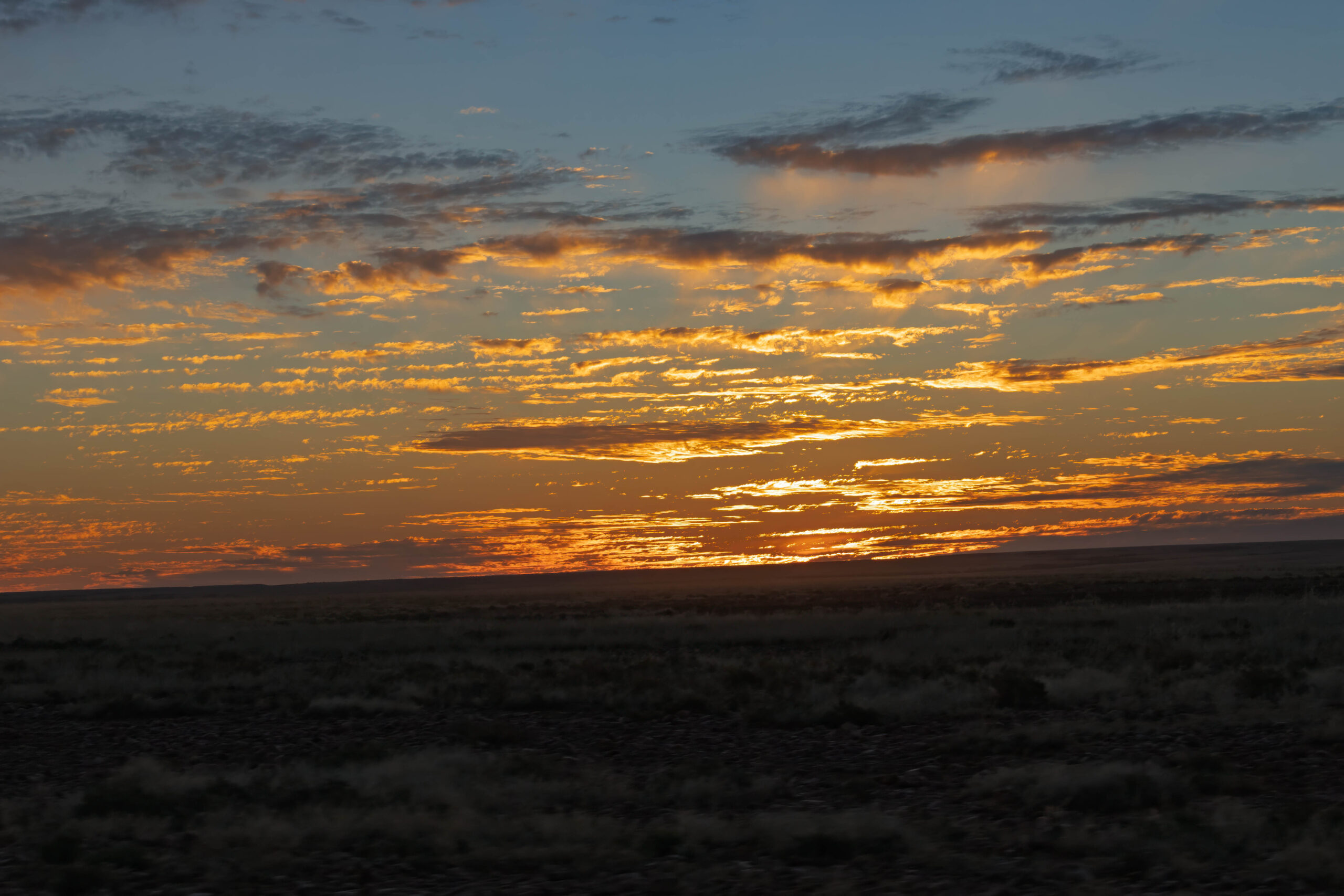
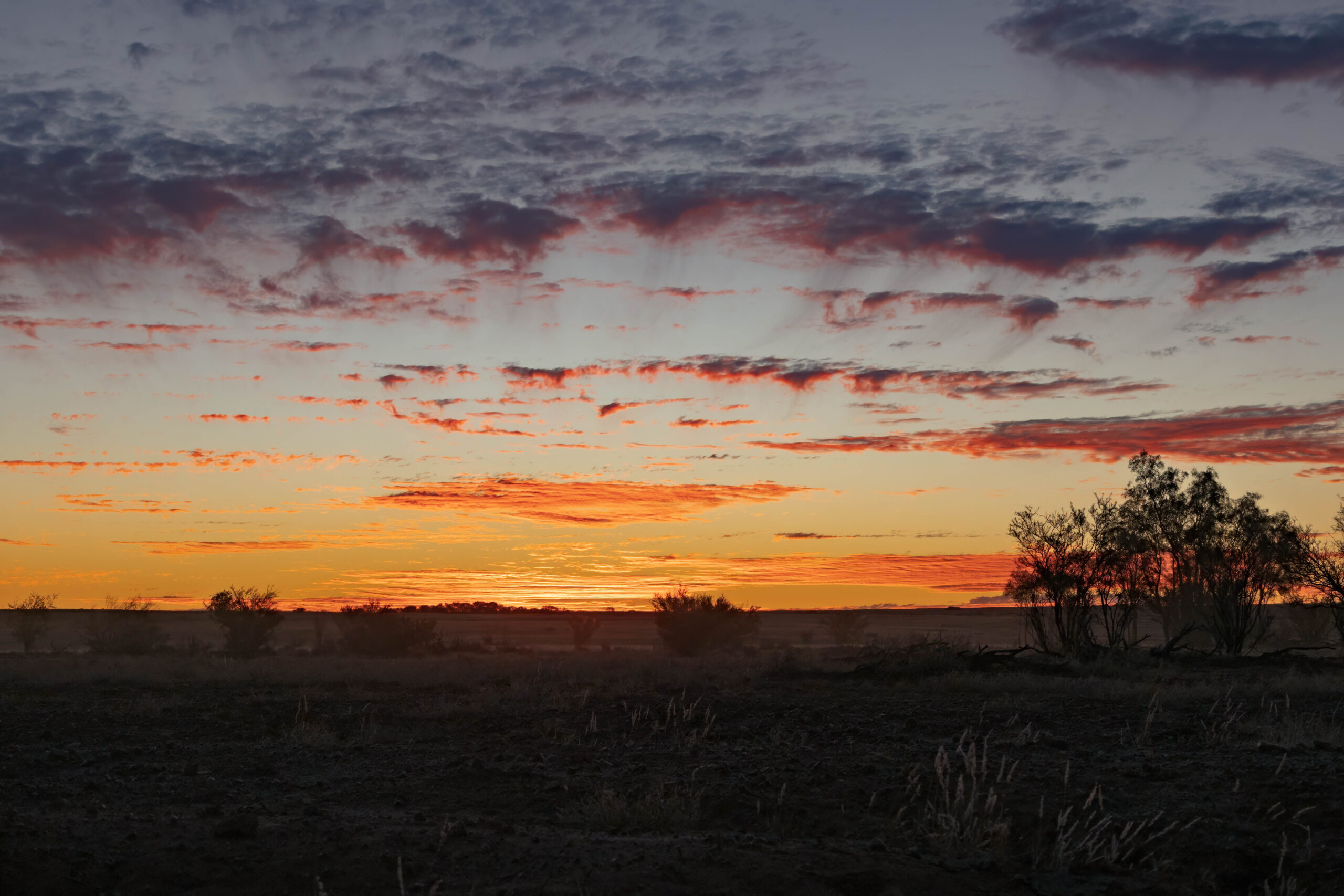
It was about 4.30pm when we started the last leg to Mount Dare. It was only about 65 kilometres to Mount Dare BUT the road was truly awful. We juddered over corrugations for most of the drive which kept our speed down to around 40kph. That made it a slow old drive in failing light as the sun gradually sank below the horizon. It was dark when we pulled in at about 6.30pm. Oh, no, we were finally going to camp tonight and we had to face putting up the swag … in the dark!
We all filed into the bar and booked sites and our meals for 7.30pm. We drove over the berm and found a camping space amongst some of the sites chosen by others in our group. It’s not a bad spot, not too far from an amenities block. We got the swag set up without too much drama? OK, maybe got a little snippy with each other, but got the swag organised before we needed to go back to the hotel for dinner. We both enjoyed great steaks but may have been lucky with our particular steaks, with another member of the group disappointed with hers.
Returning to our camp site, Bernie was keen that we still put our awning up and was talking about getting the table and camp chairs out to complete our blog. Nope, sorry, that’s not happening – it’s been a big day, all I want to do is clean my teeth, climb into the swag and maybe read a little bit before lights out. We did set up the awning, but that was IT for the evening.
Oodnadatta to Mount Dare – 299 kilometres