Tuesday, 17 February 2026
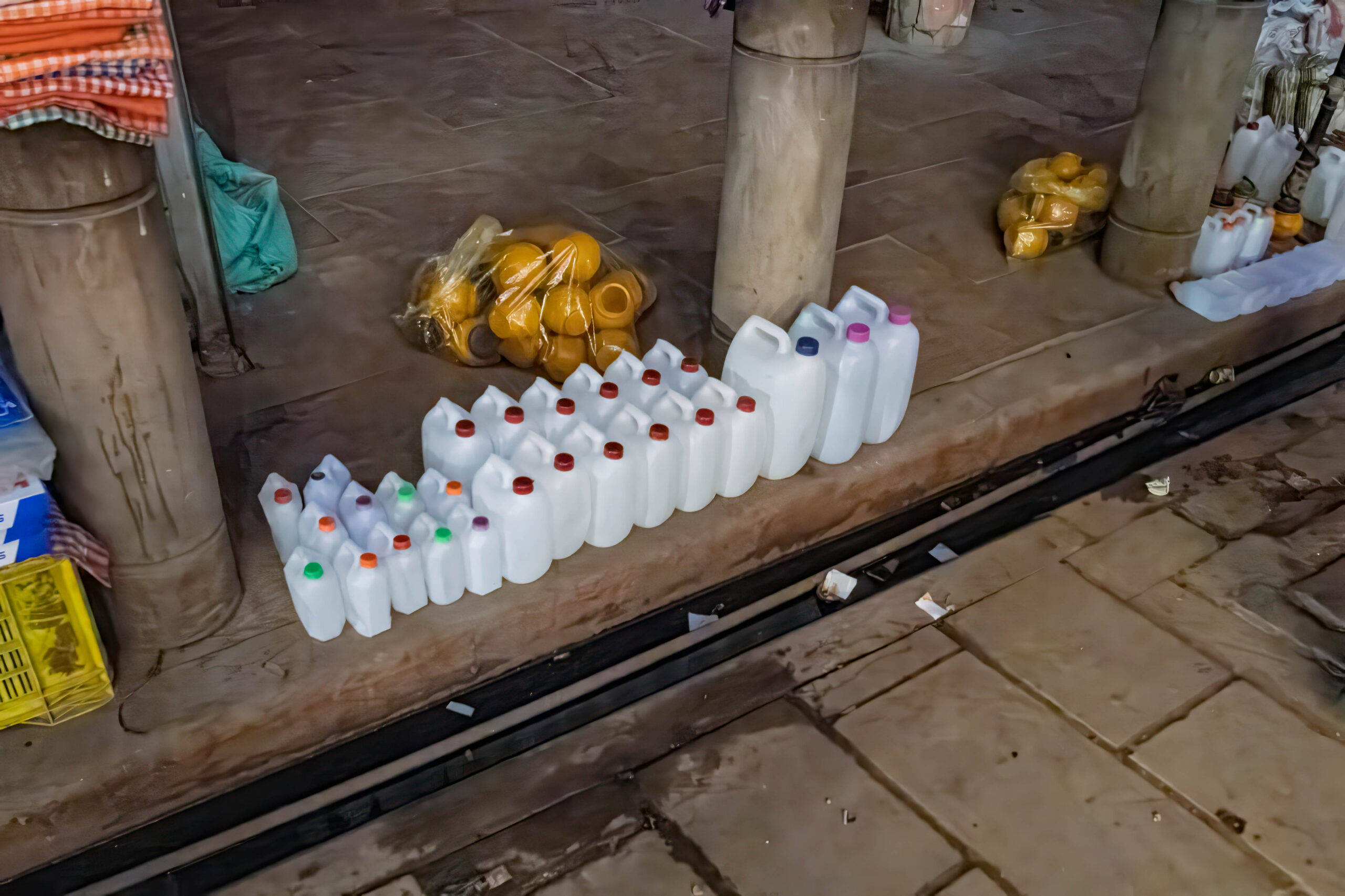
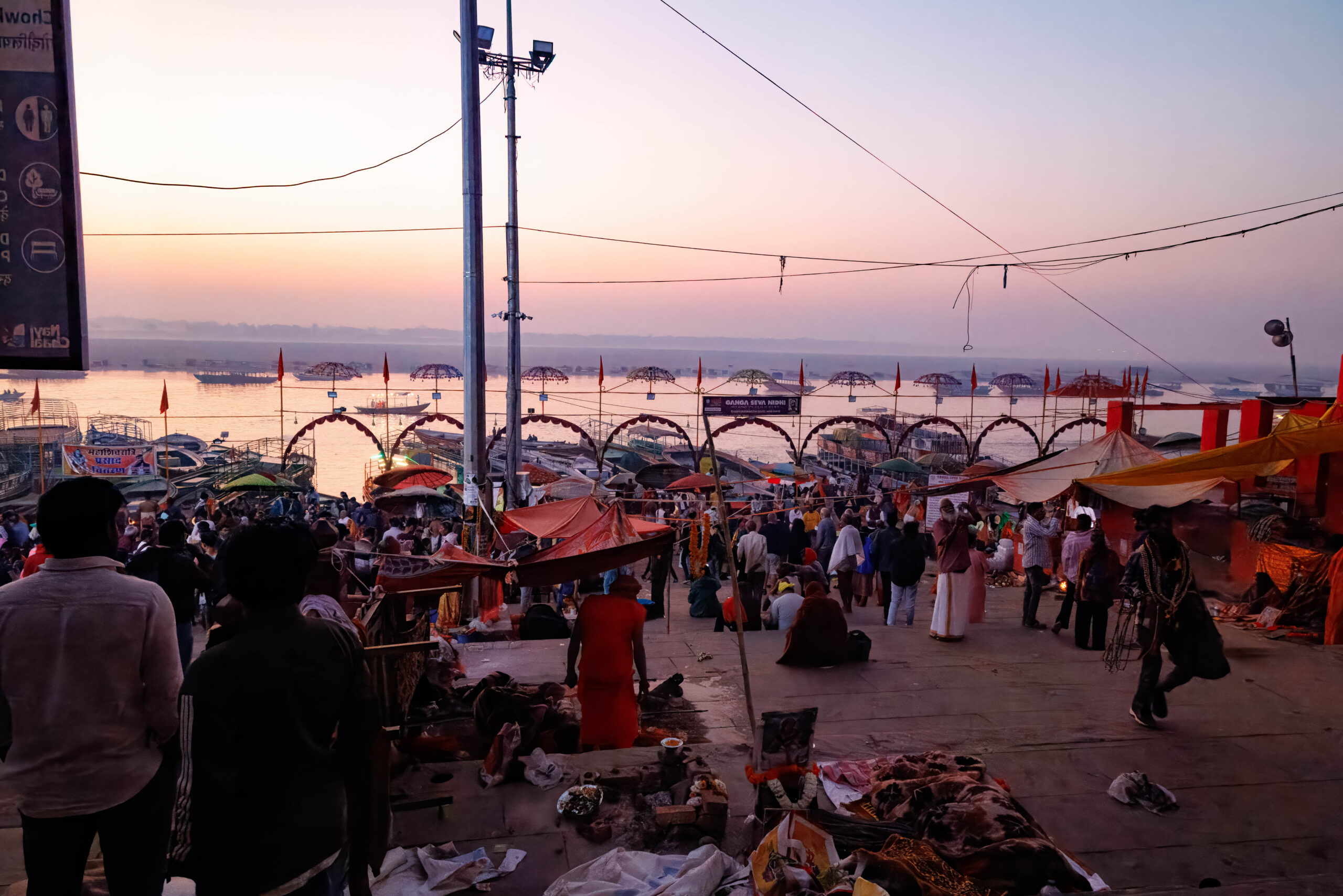
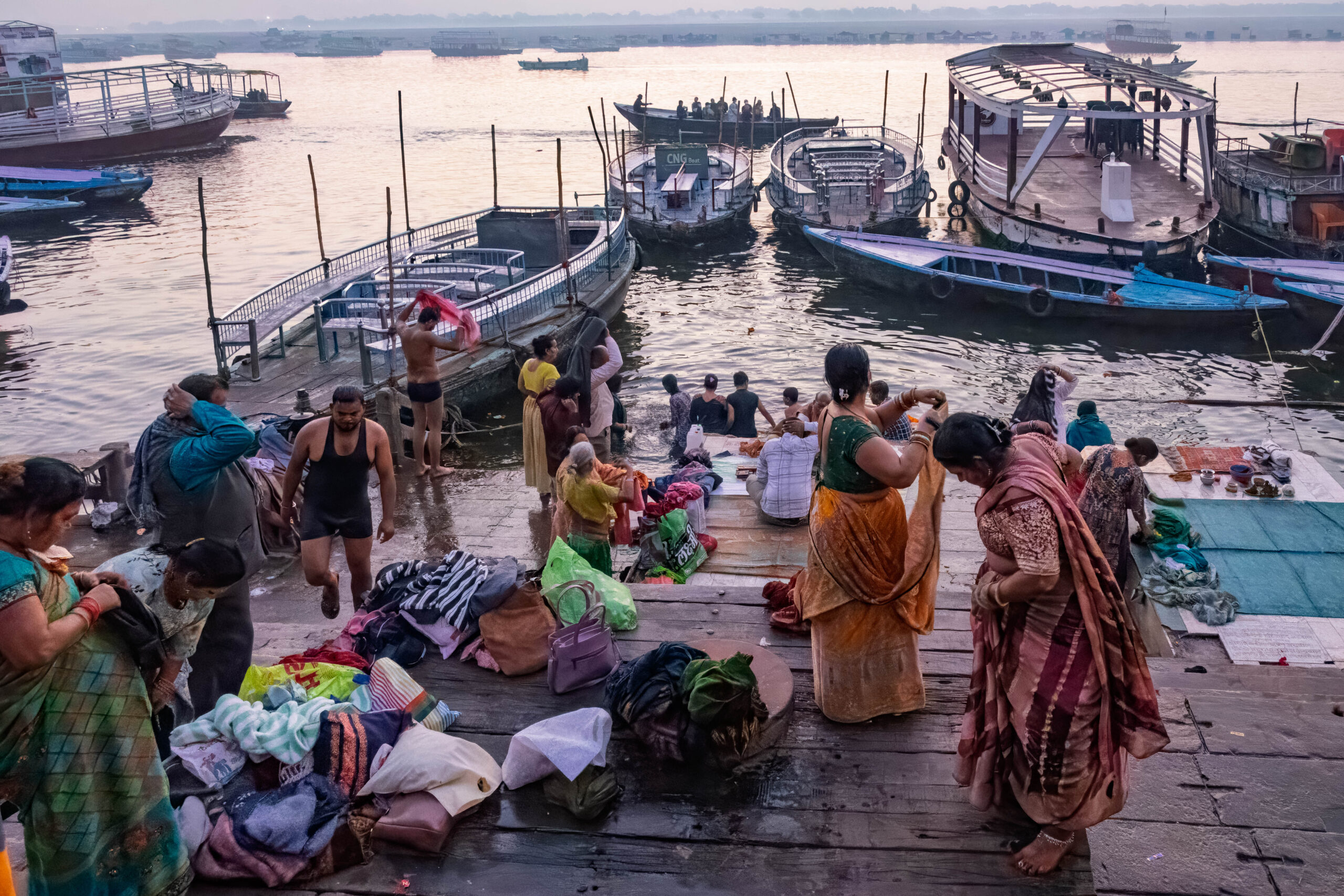
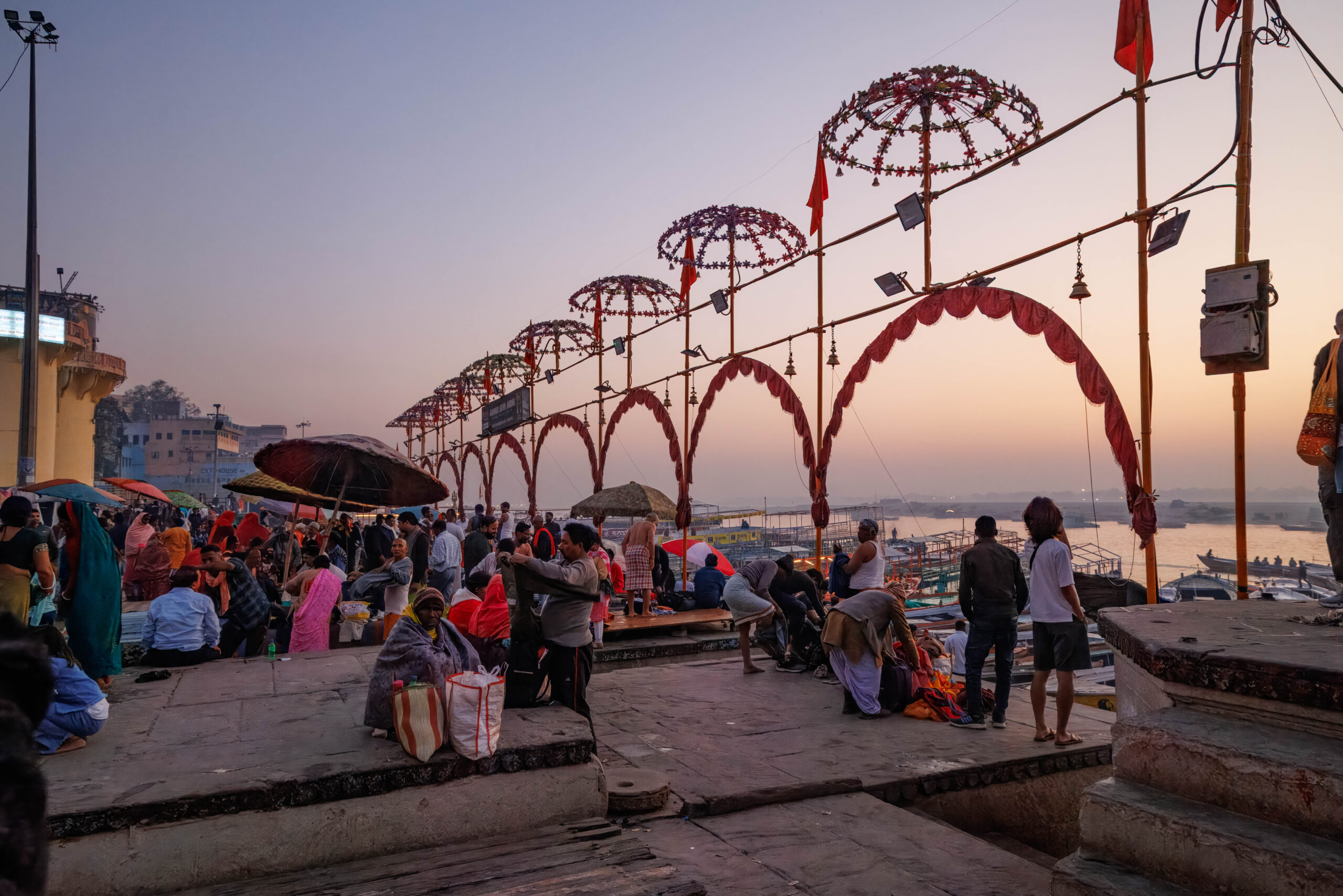
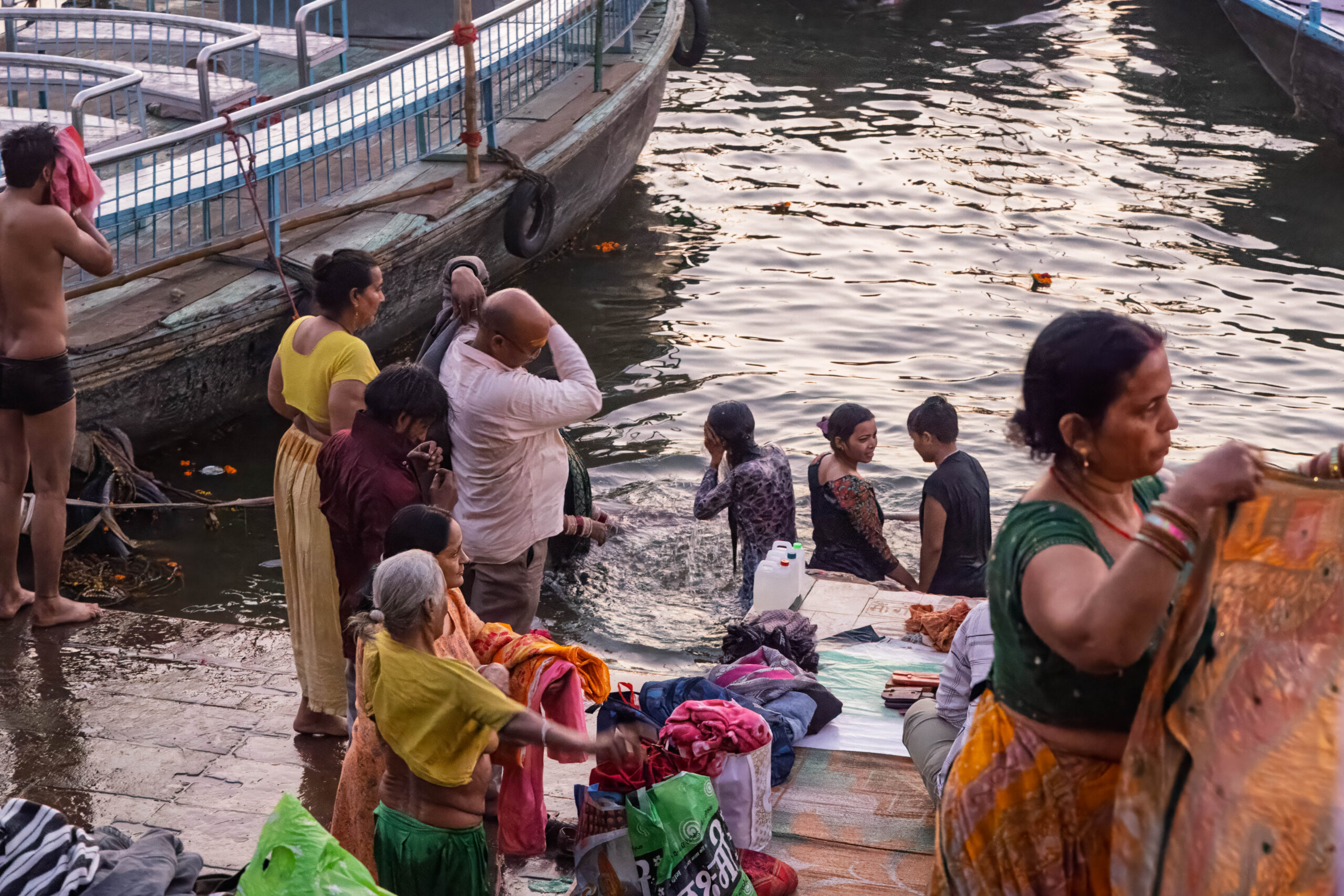
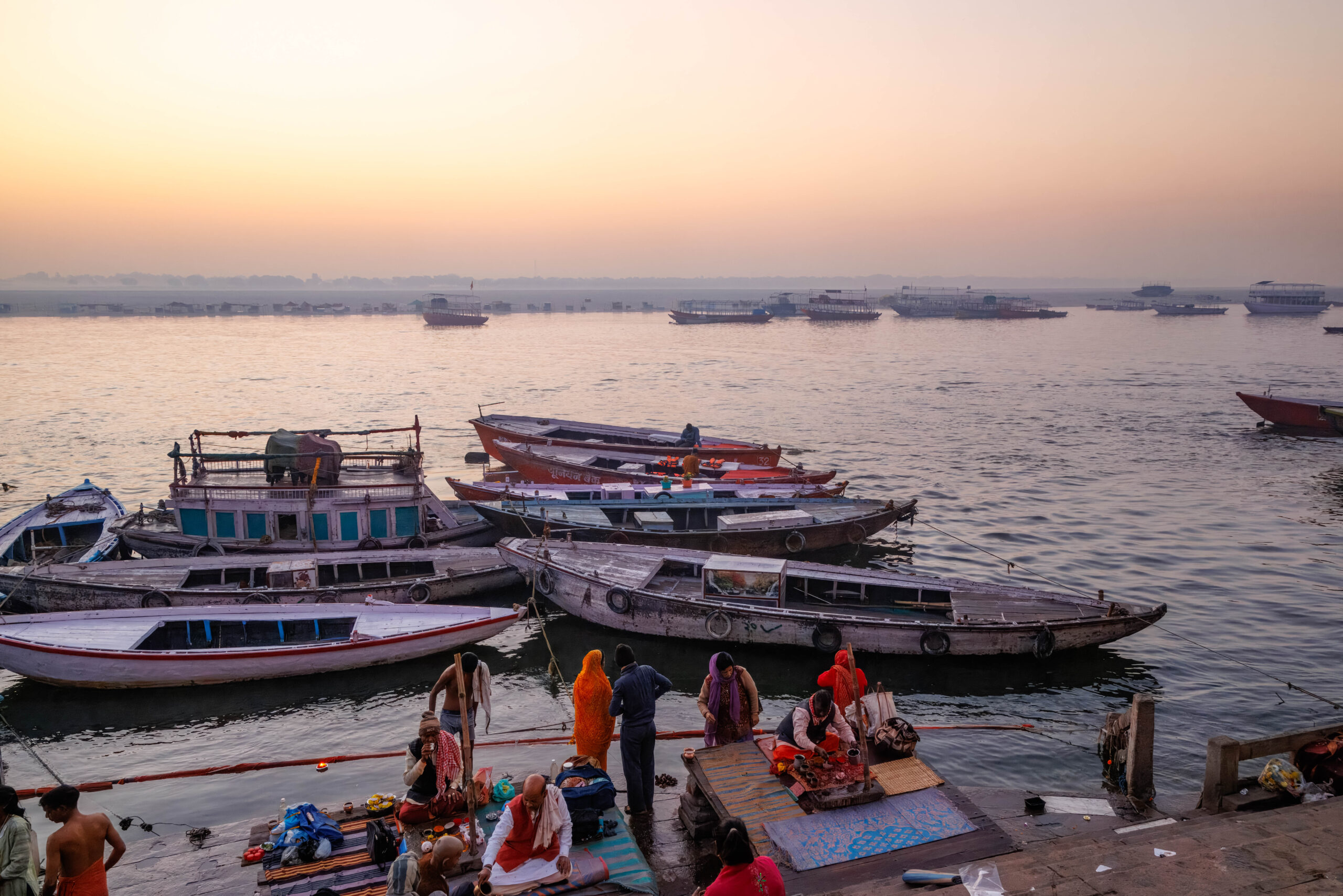
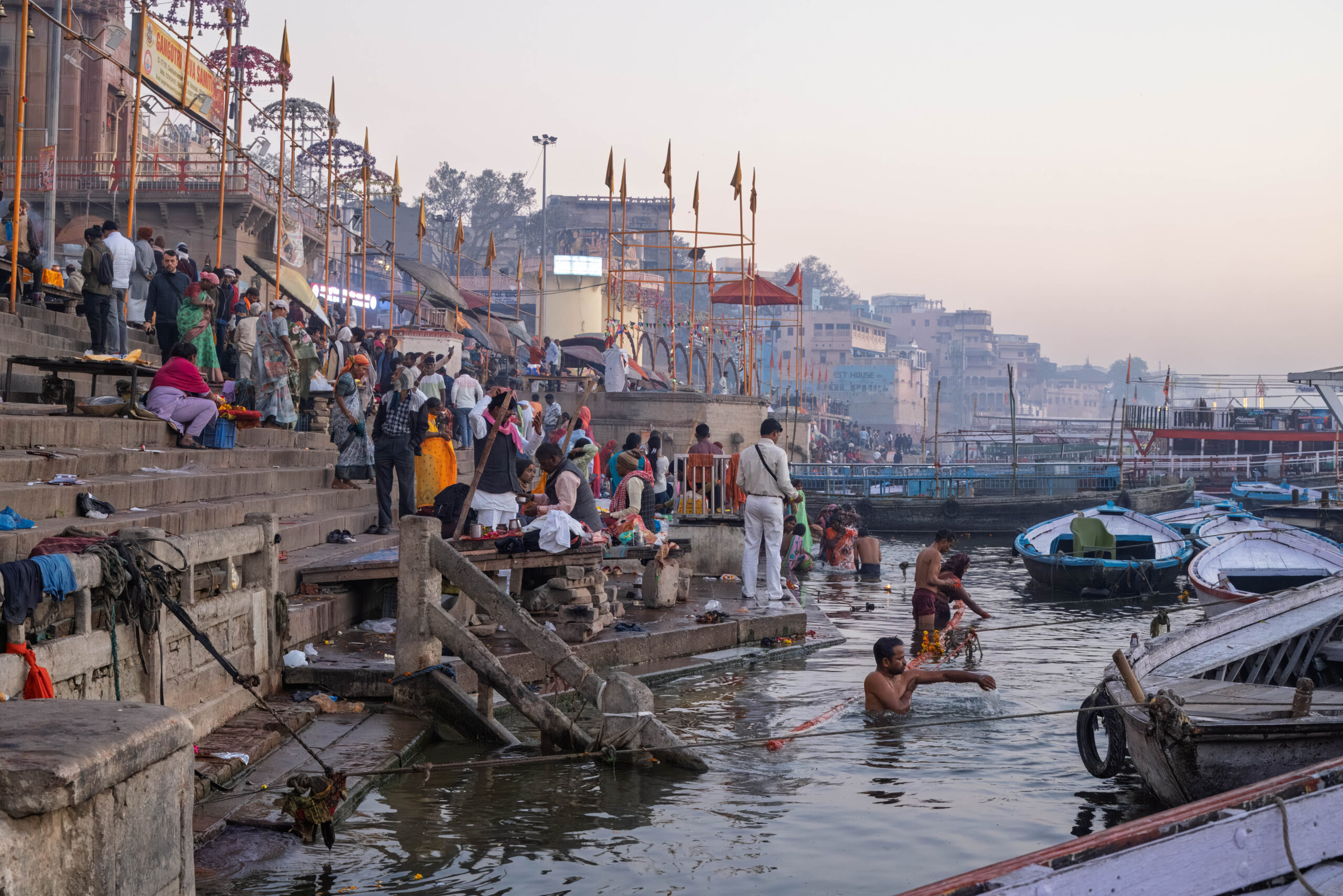
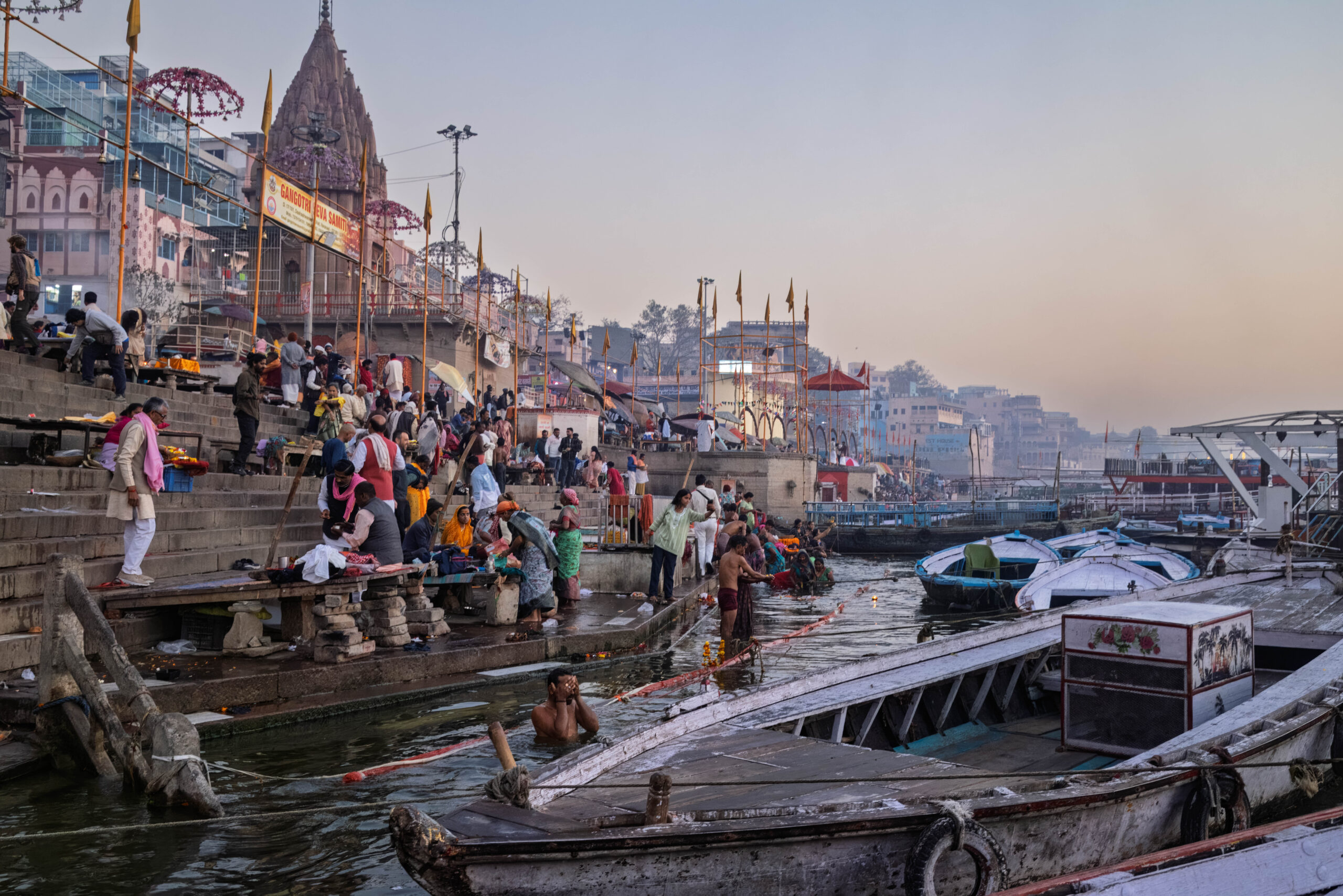
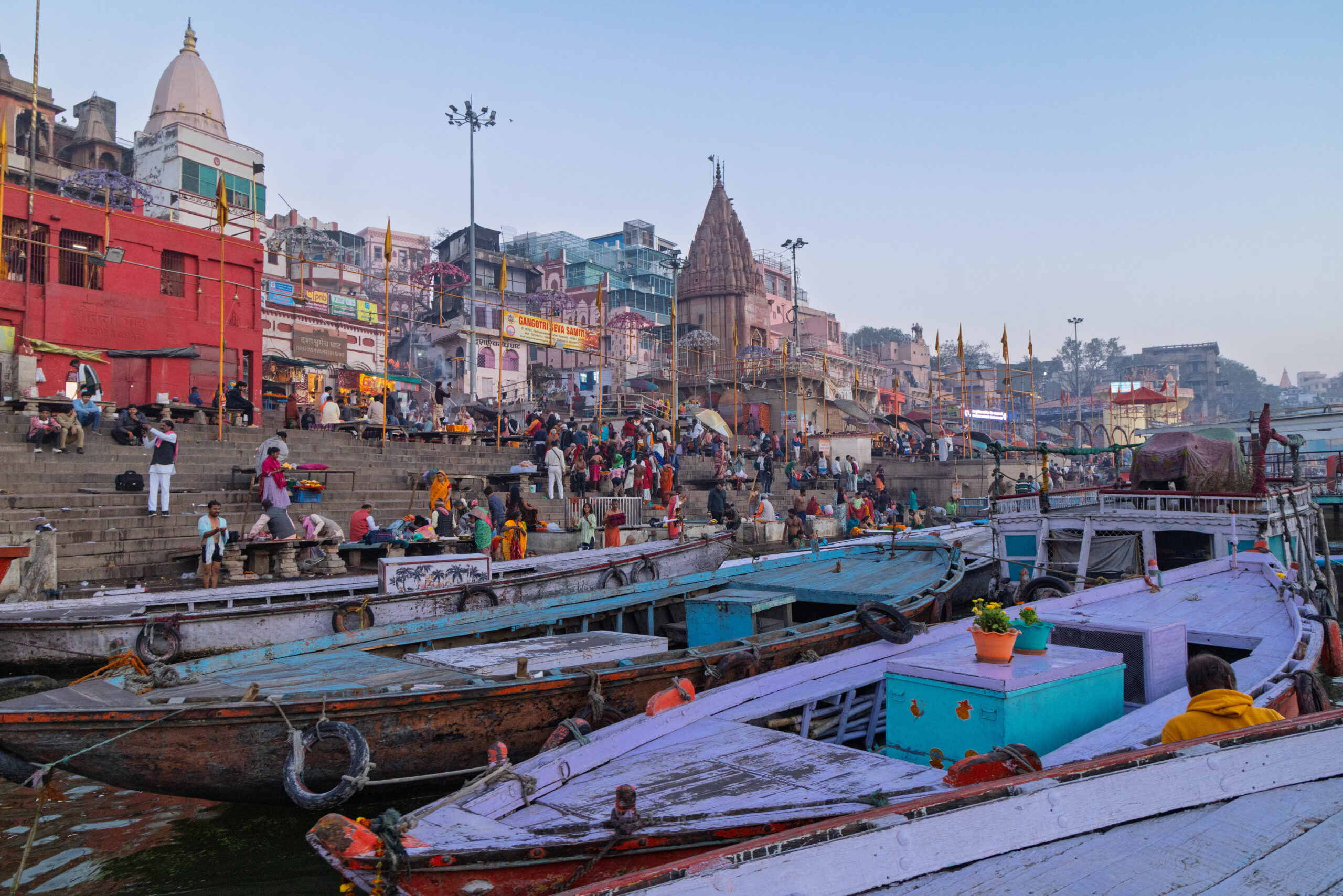
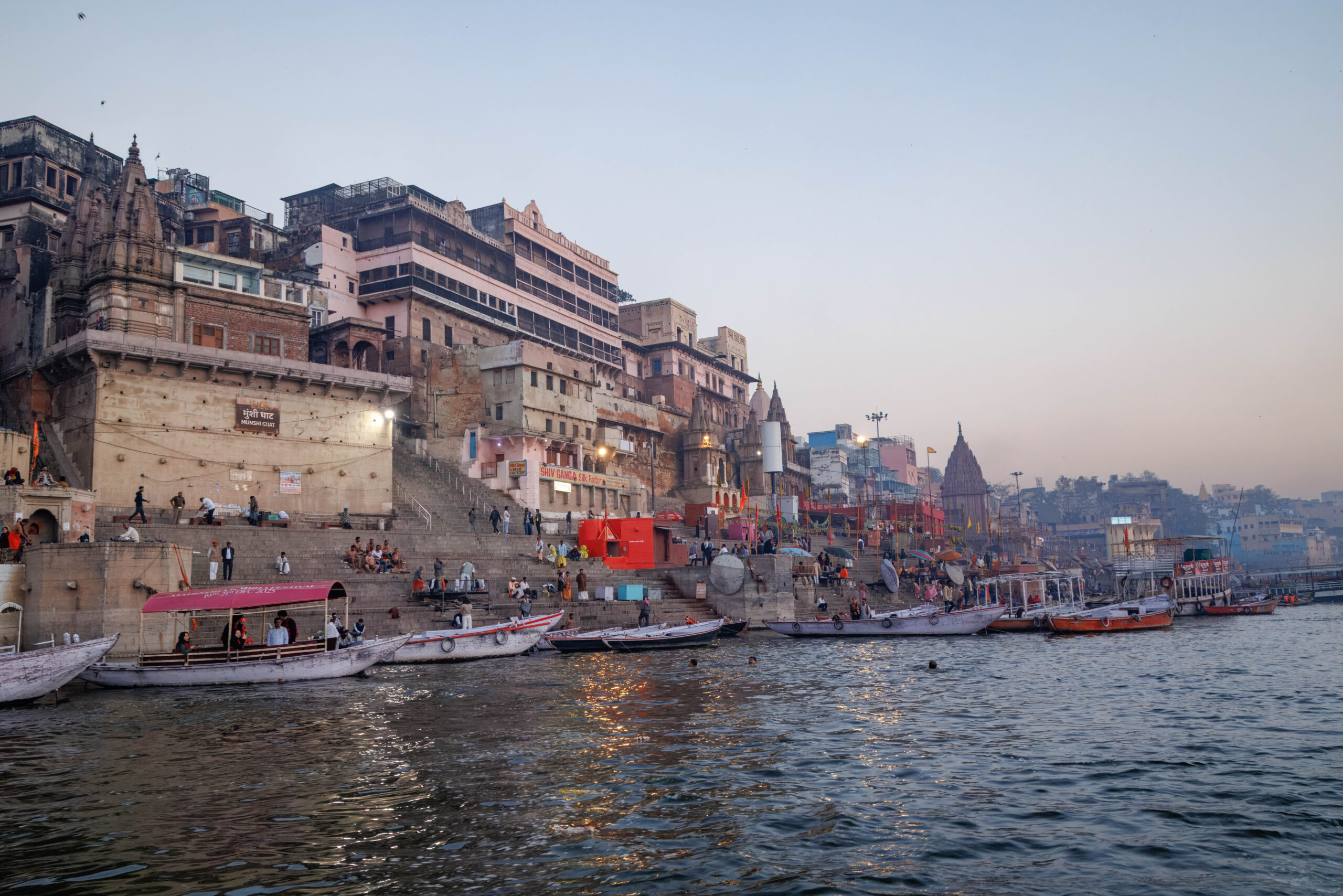
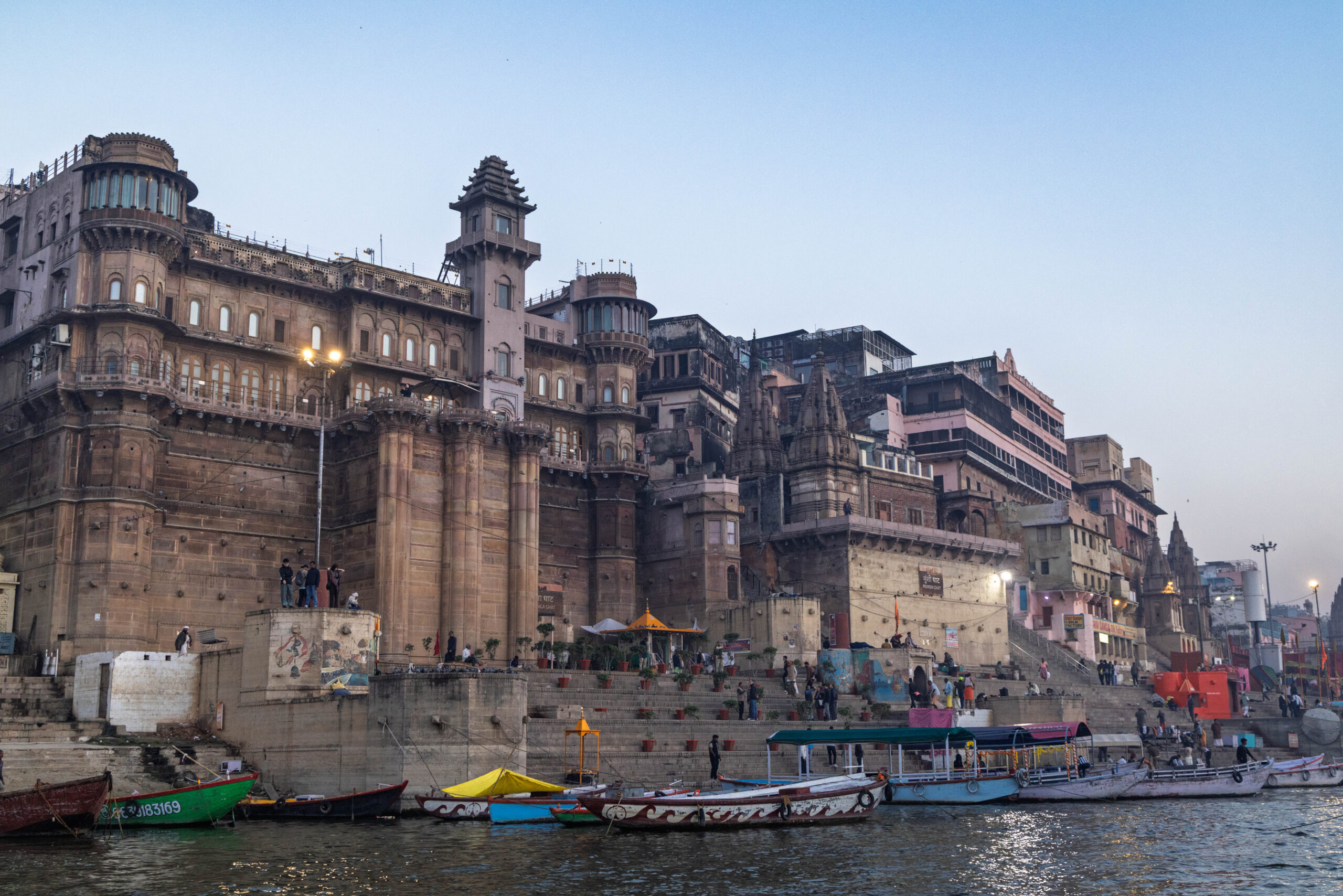
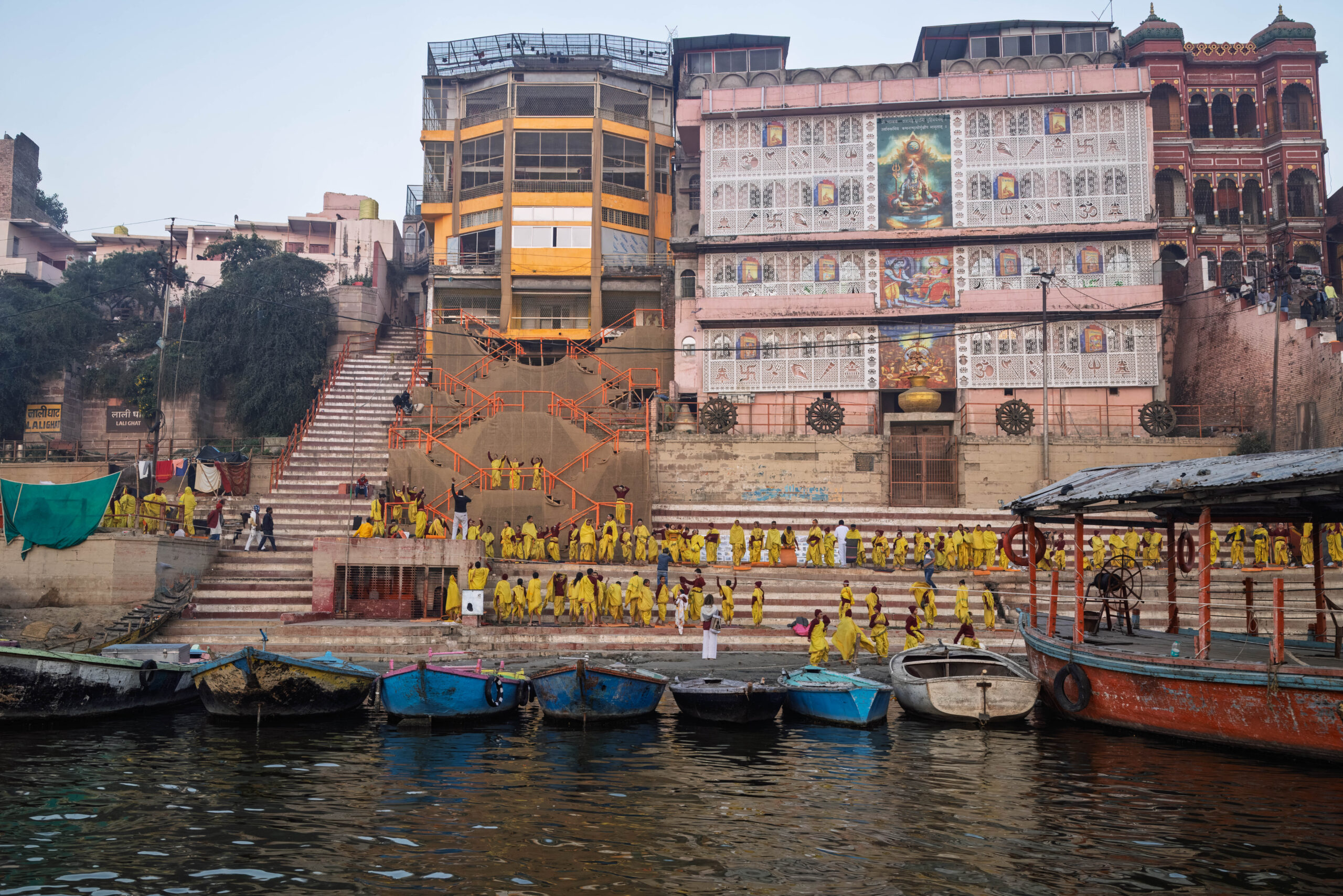
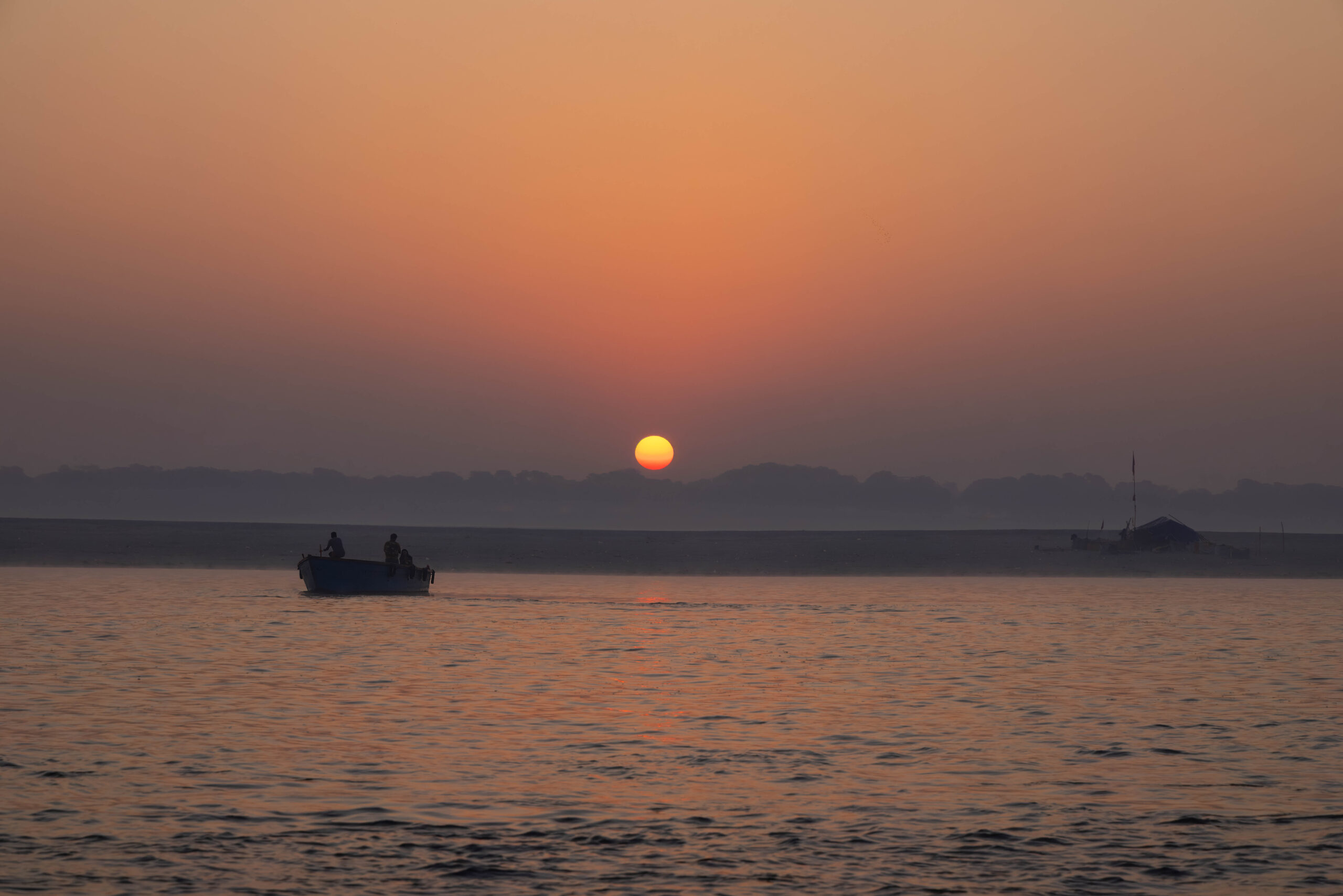
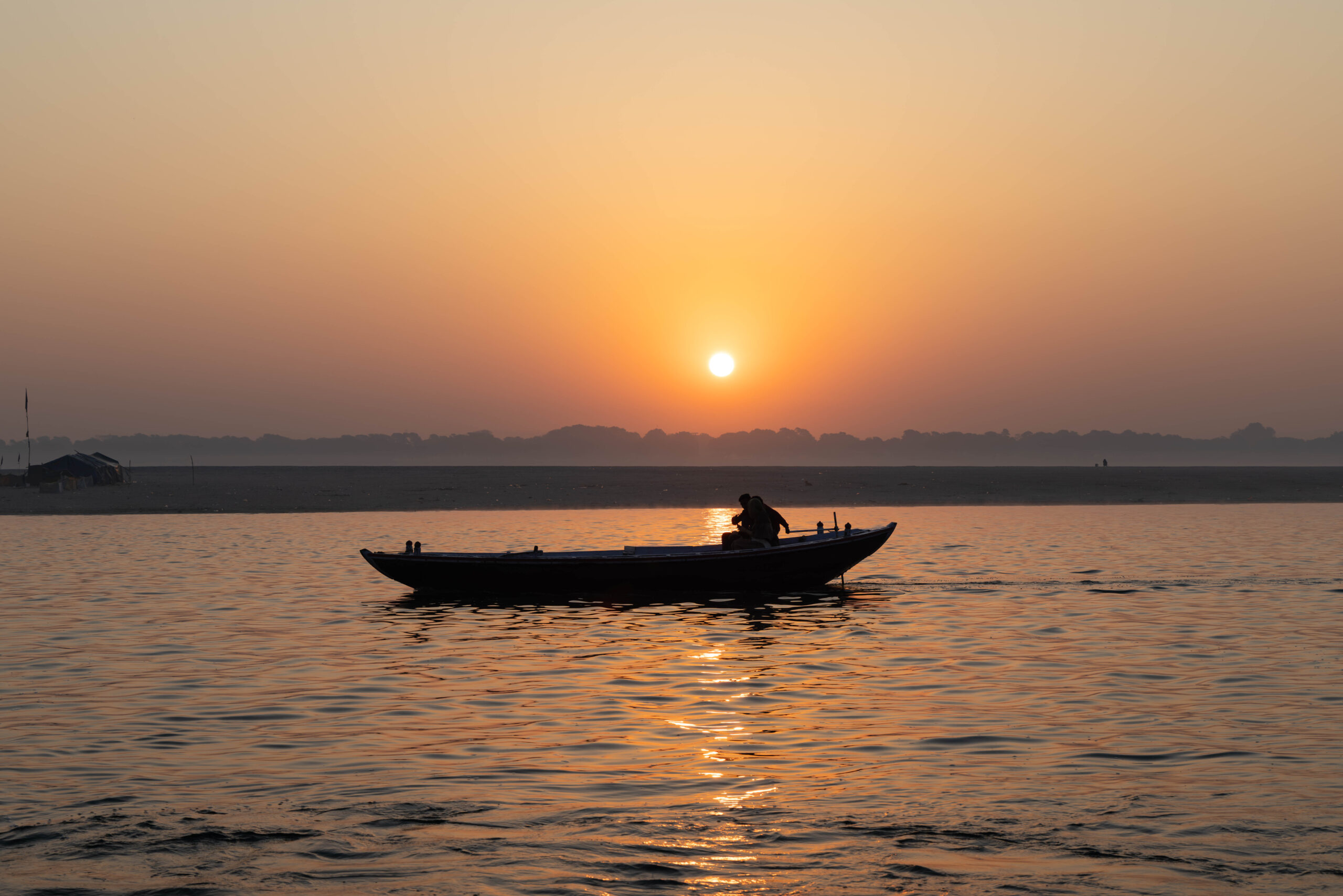
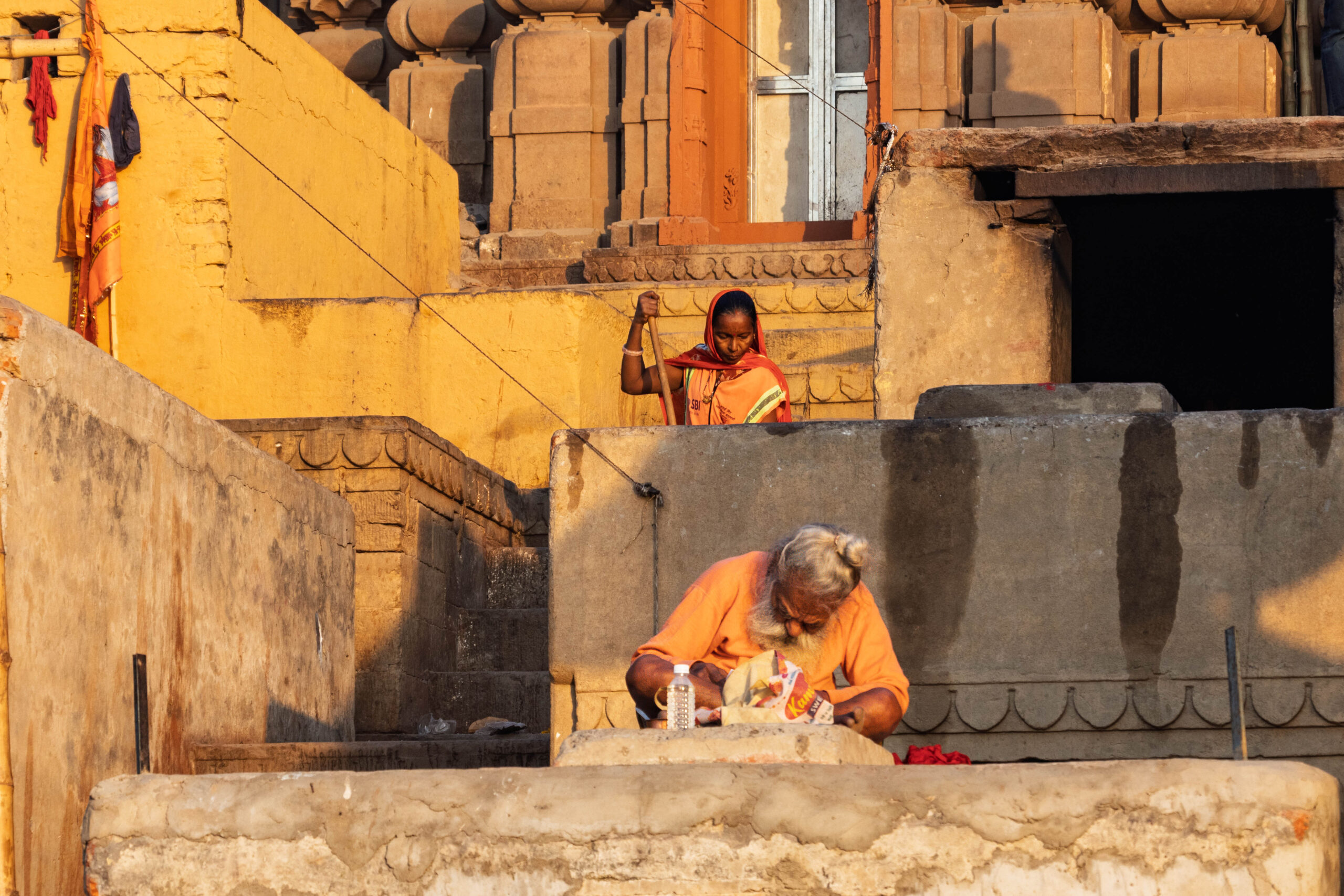
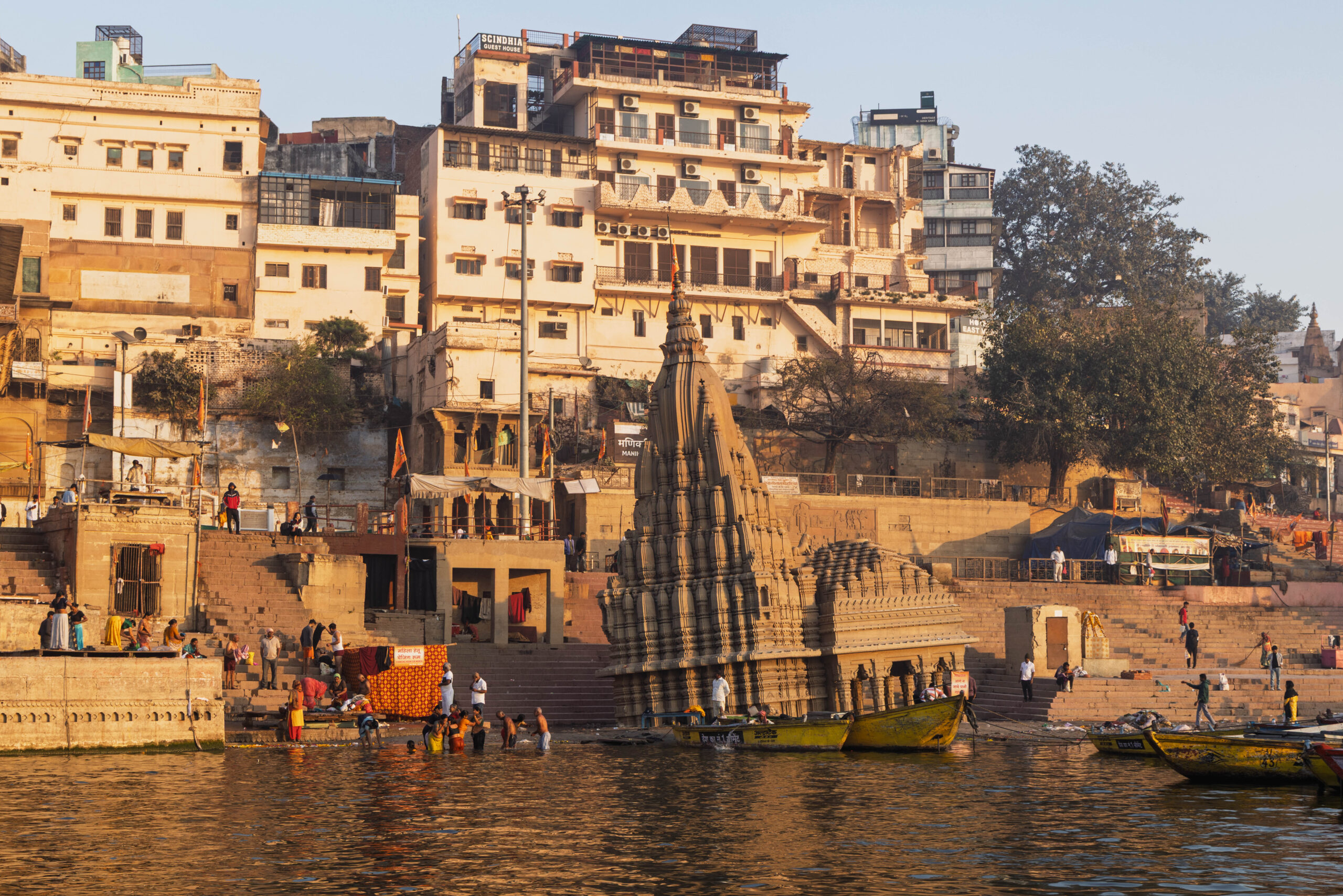
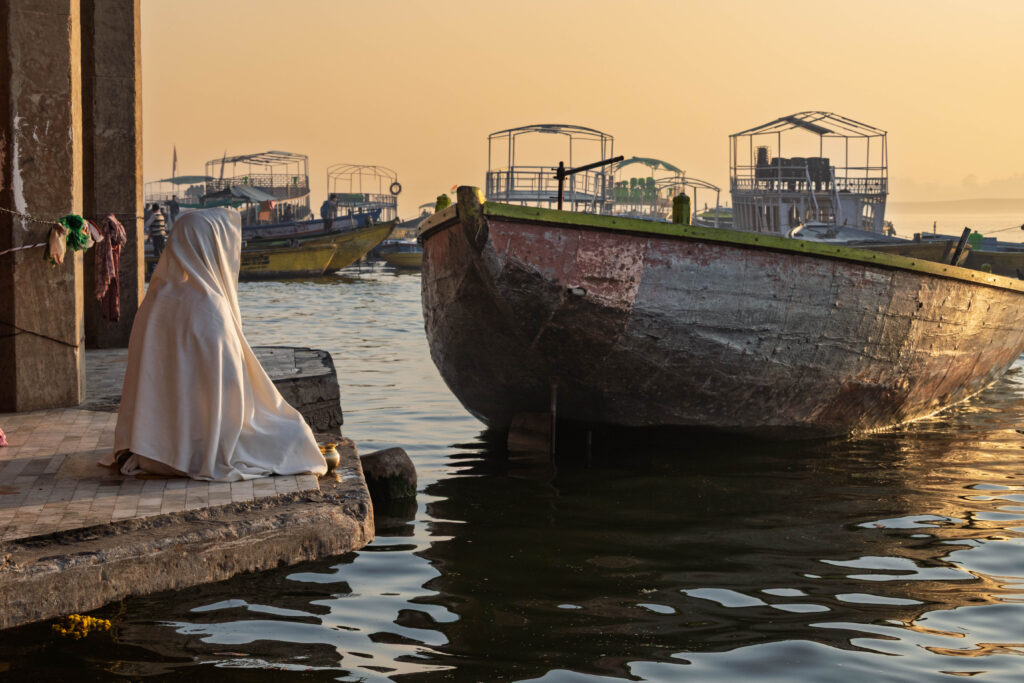
Our earliest start so far on this trip. We were up at 5.00am to meet Dinesh in the foyer at 5.45am to be driven to the Ganges River for our early morning boat cruise. The banks of the Ganges are considered to be sacred in the Hindu religion and are the centre of great religious activity in the city. Many people make their way to the river in the morning to bathe in its waters as the sun rises. Most Hindus hold the ambition to come to Varanasi and perform this devotion at least once in their lives.
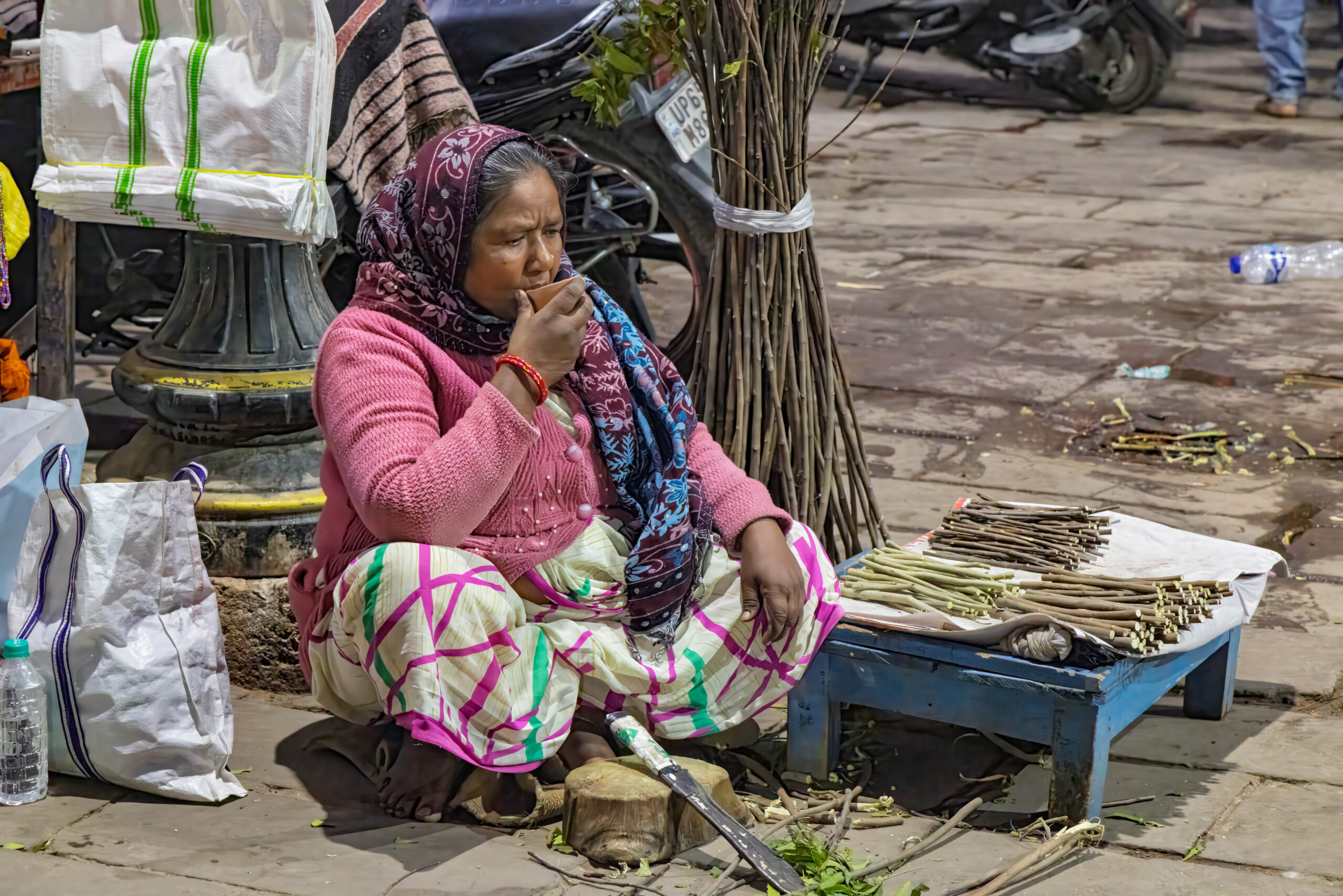
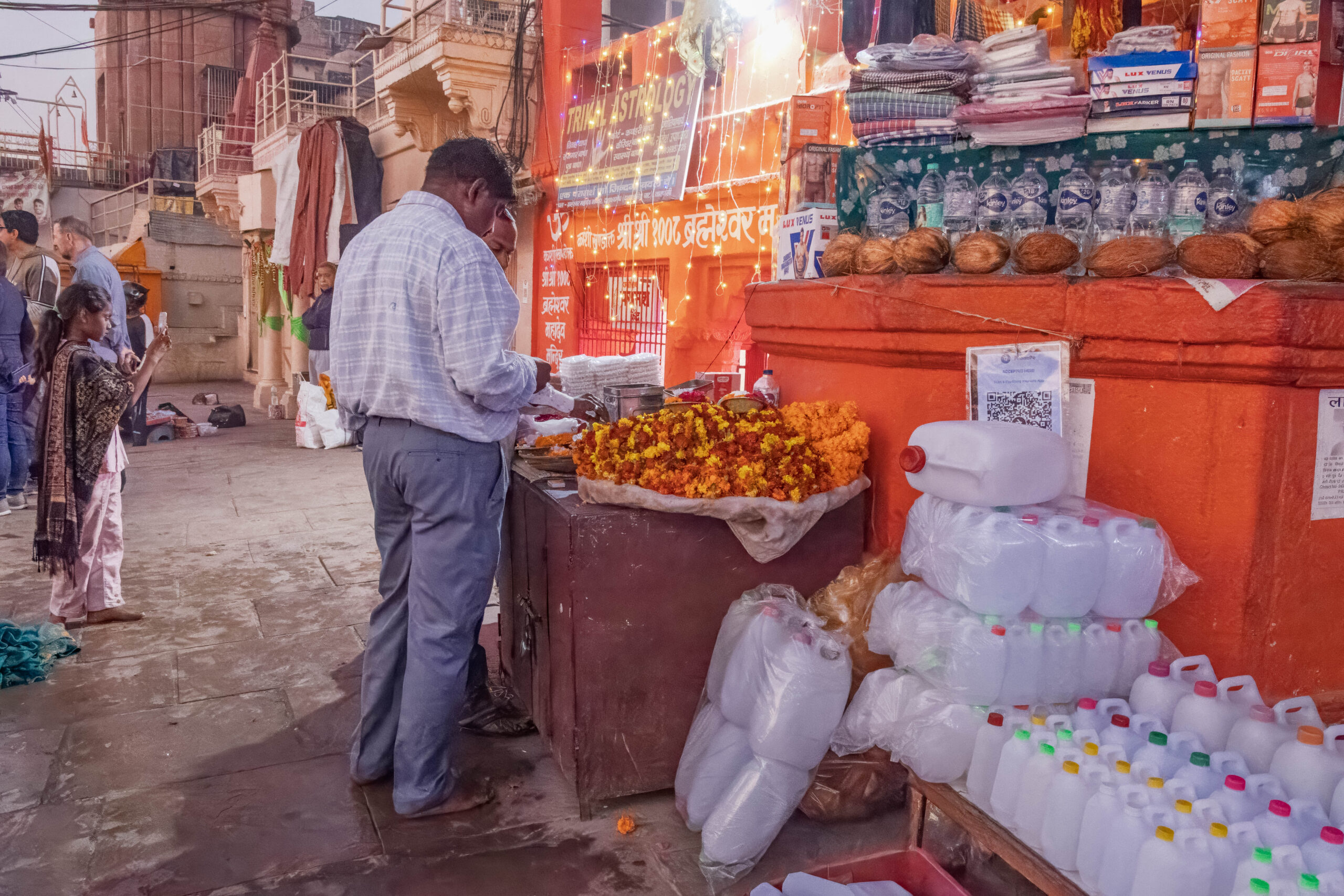
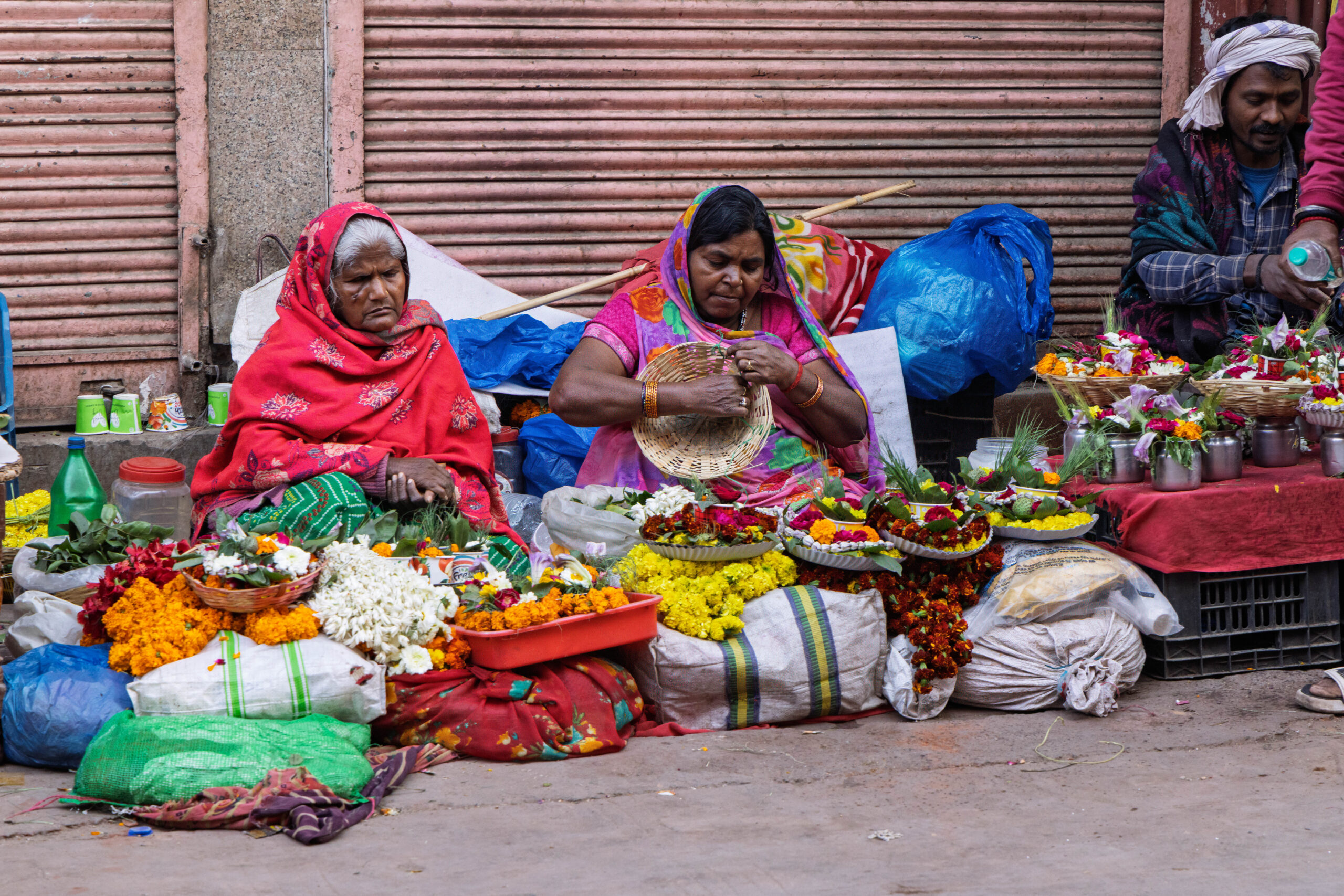
It was hectic down at the river despite the early hour. The deeply religious nature of the place was spoilt by all the touts jostling us and beseeching us to buy their wares. In a way it’s not the tourists themselves that intrude on the solemnity of the place, it is the touts that are drawn by the tourists. I think that all the tourists who were there were respectful and mindful of the spirituality of the place but the touts are just there trying to extract cash in their usually brash and persistent style. We did buy flower candles though, to cast onto the river during our boat ride.
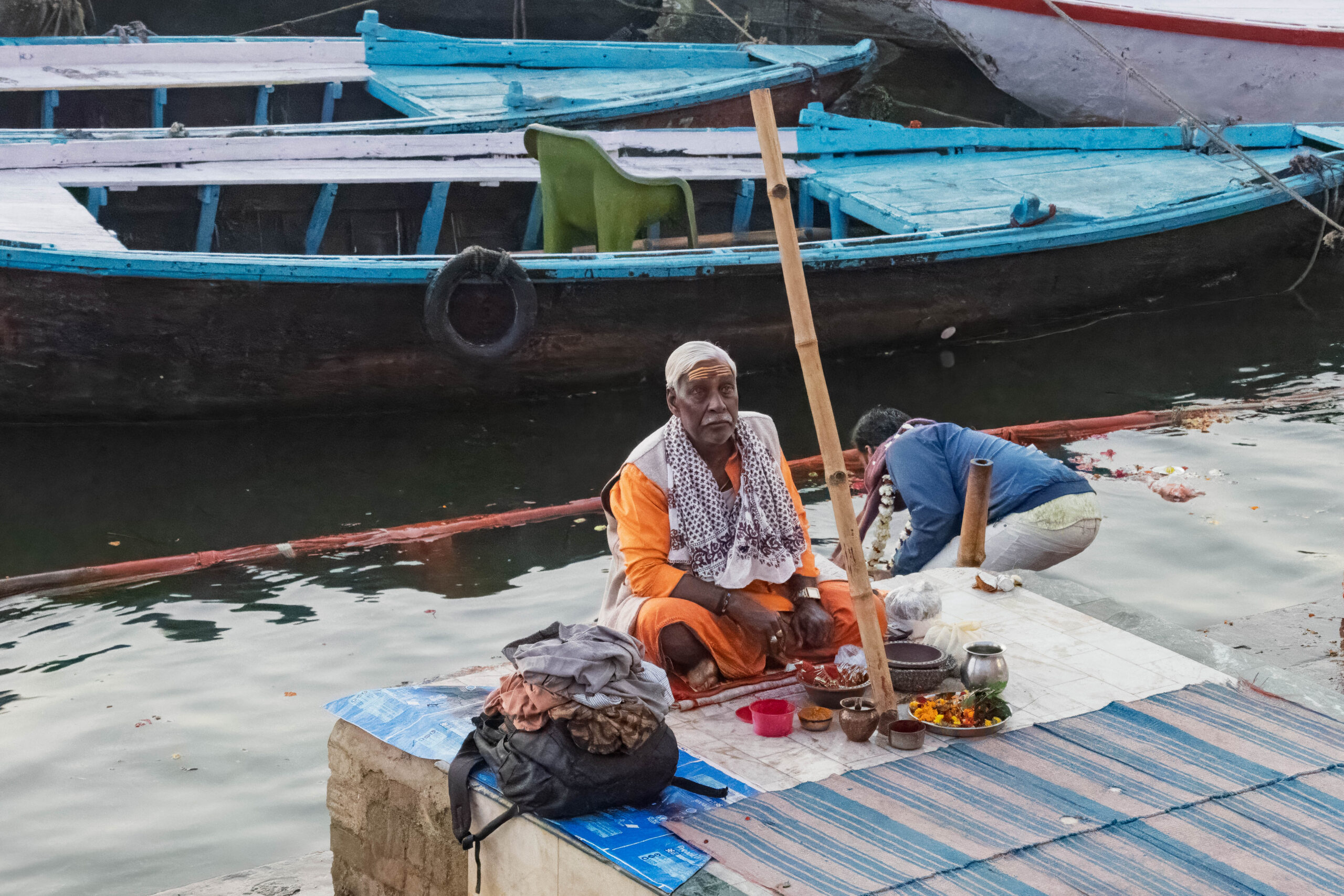
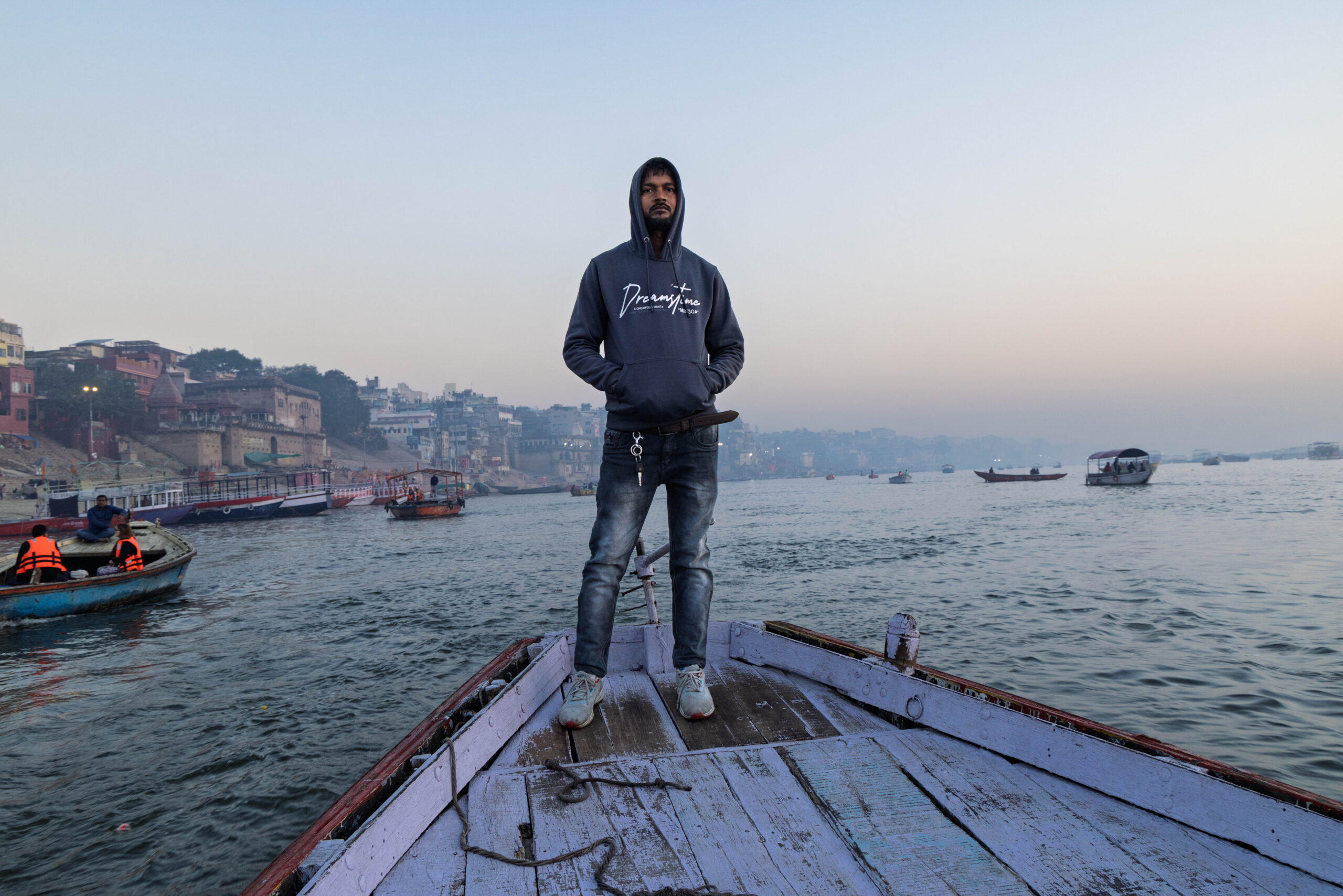
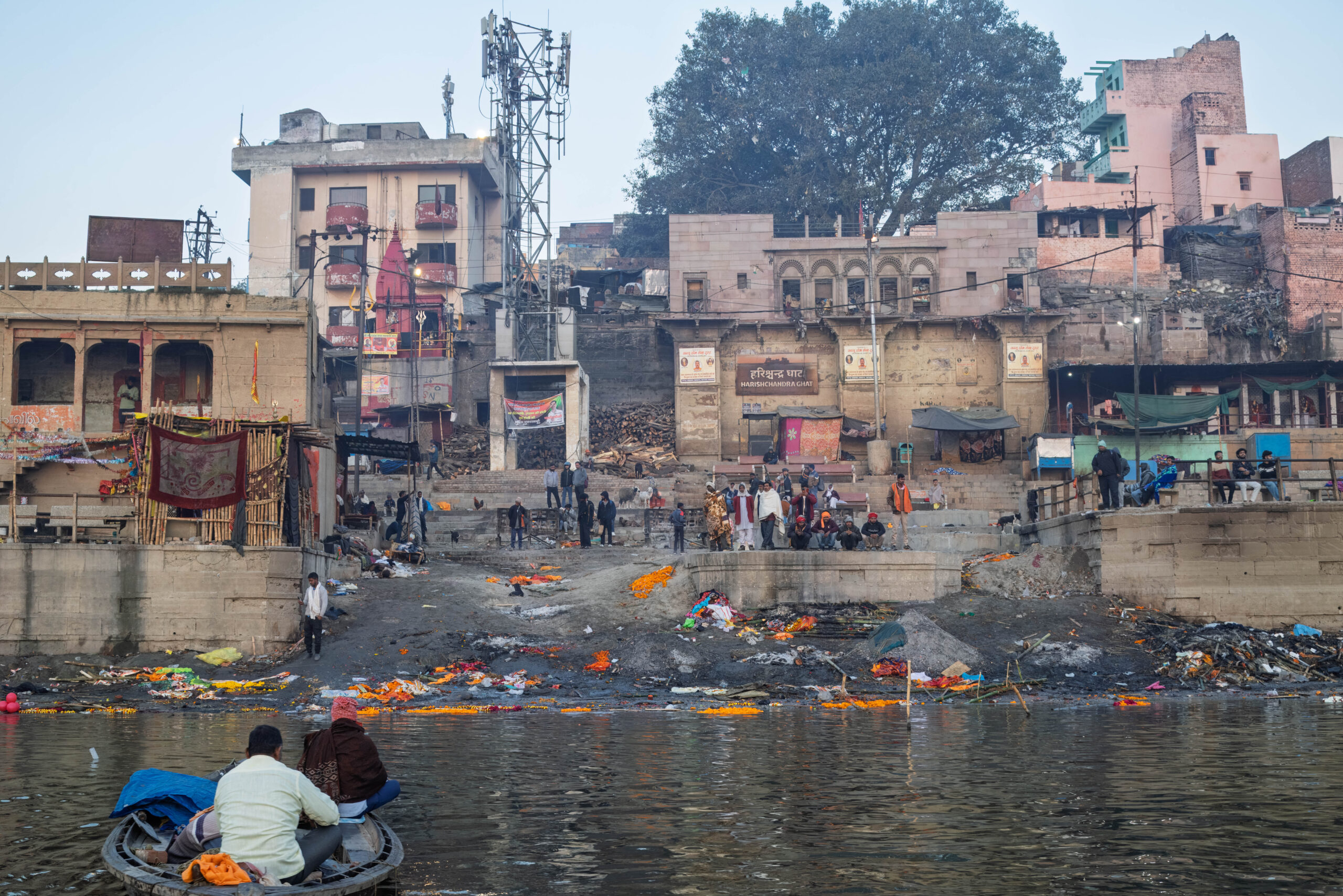
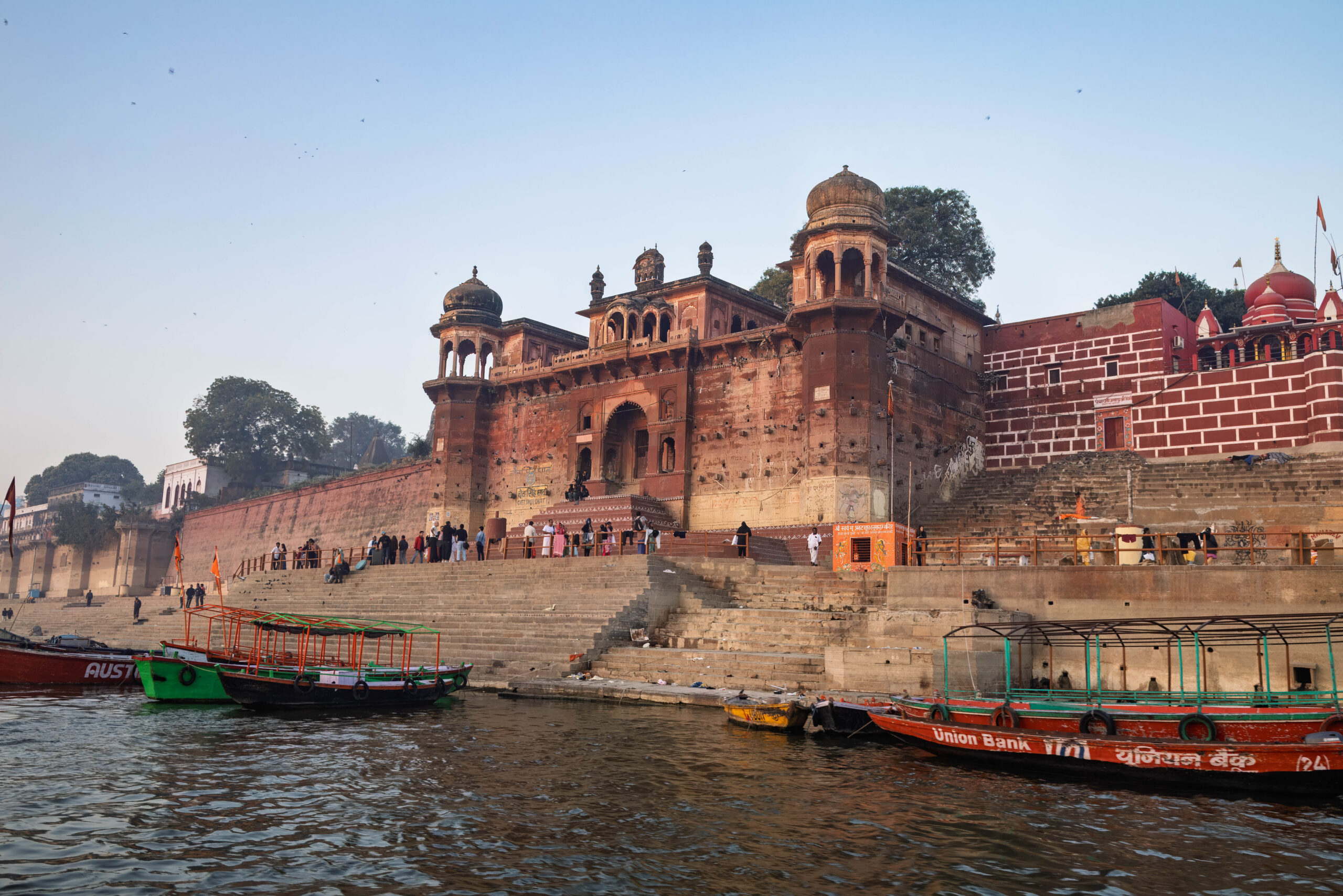
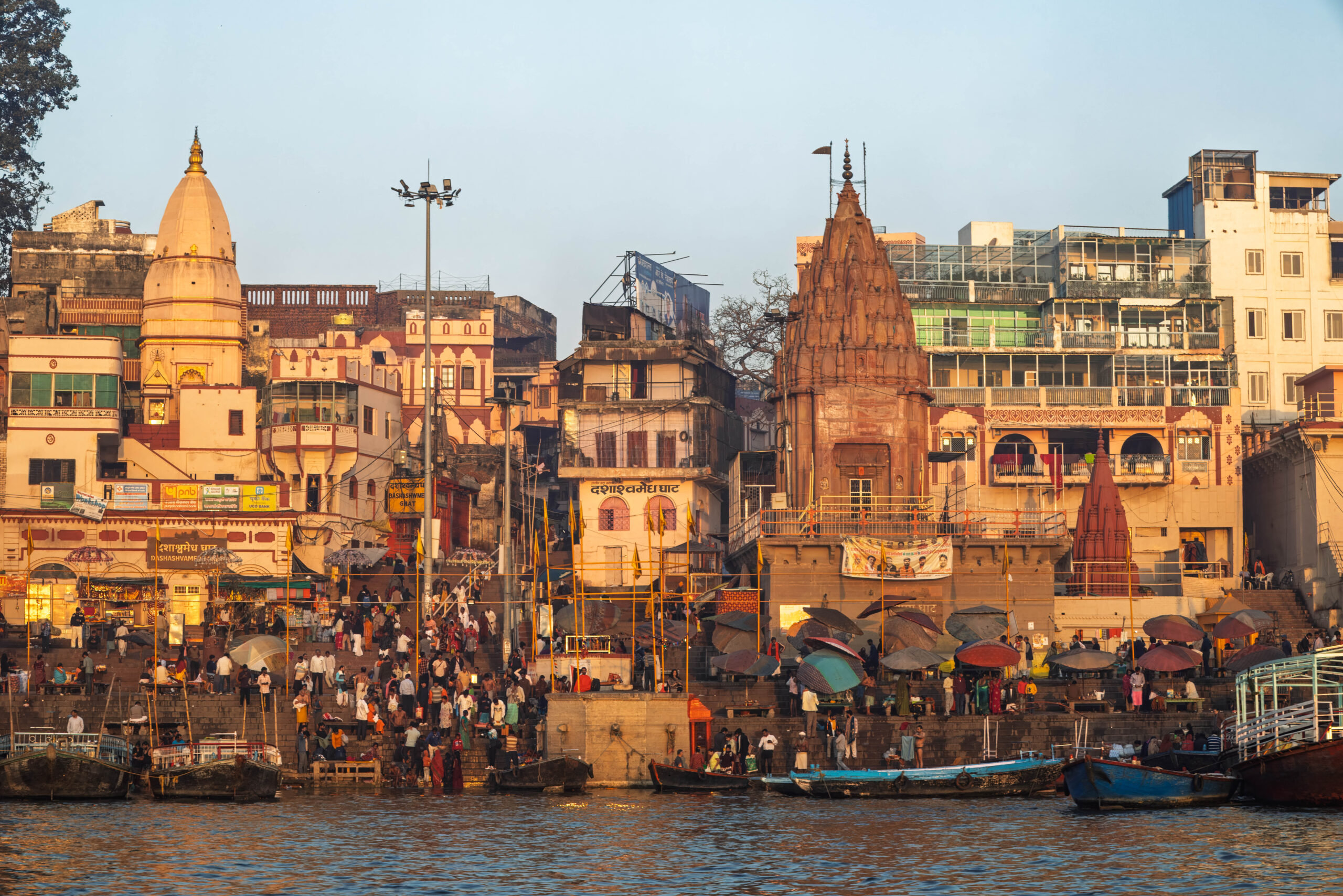
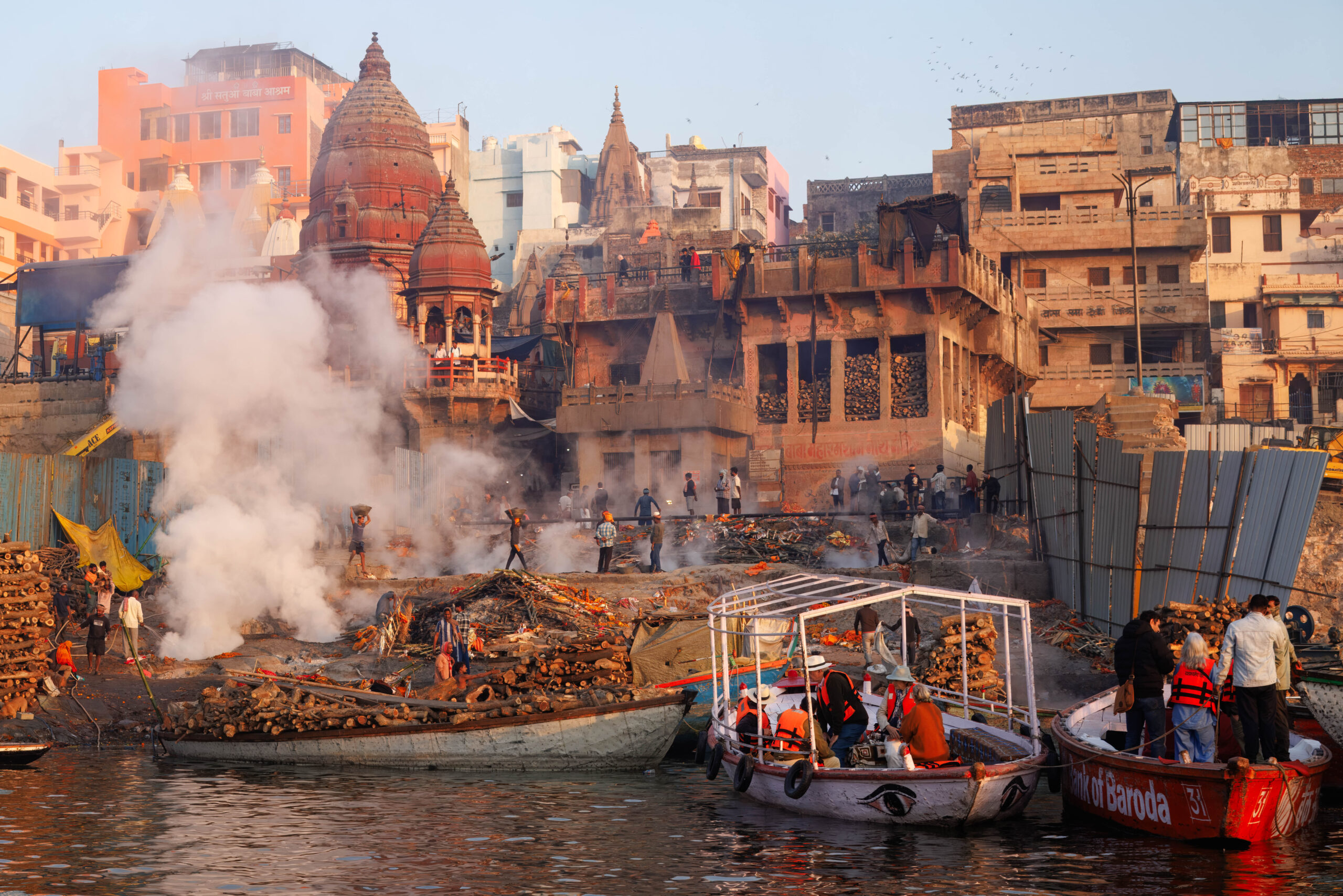
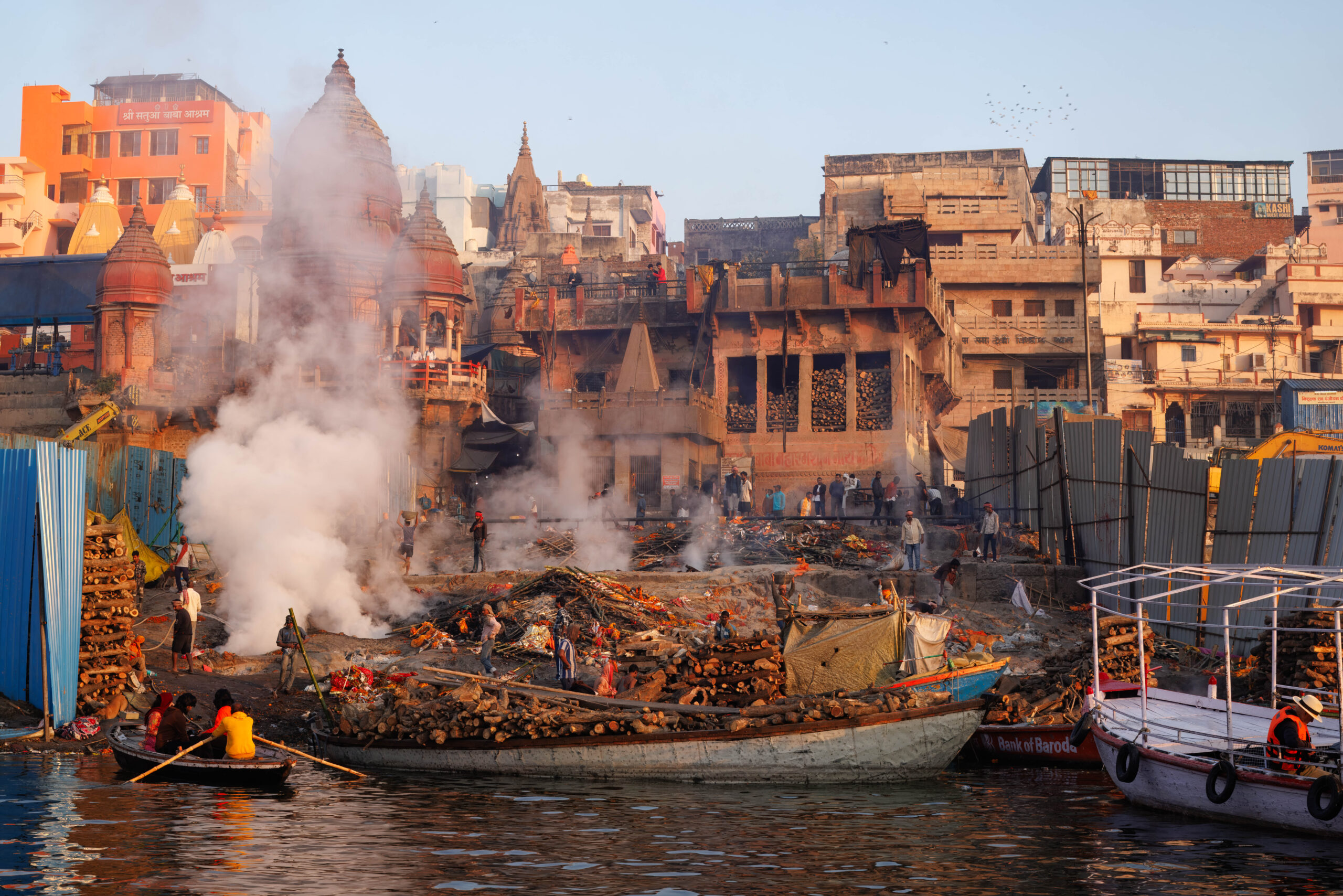
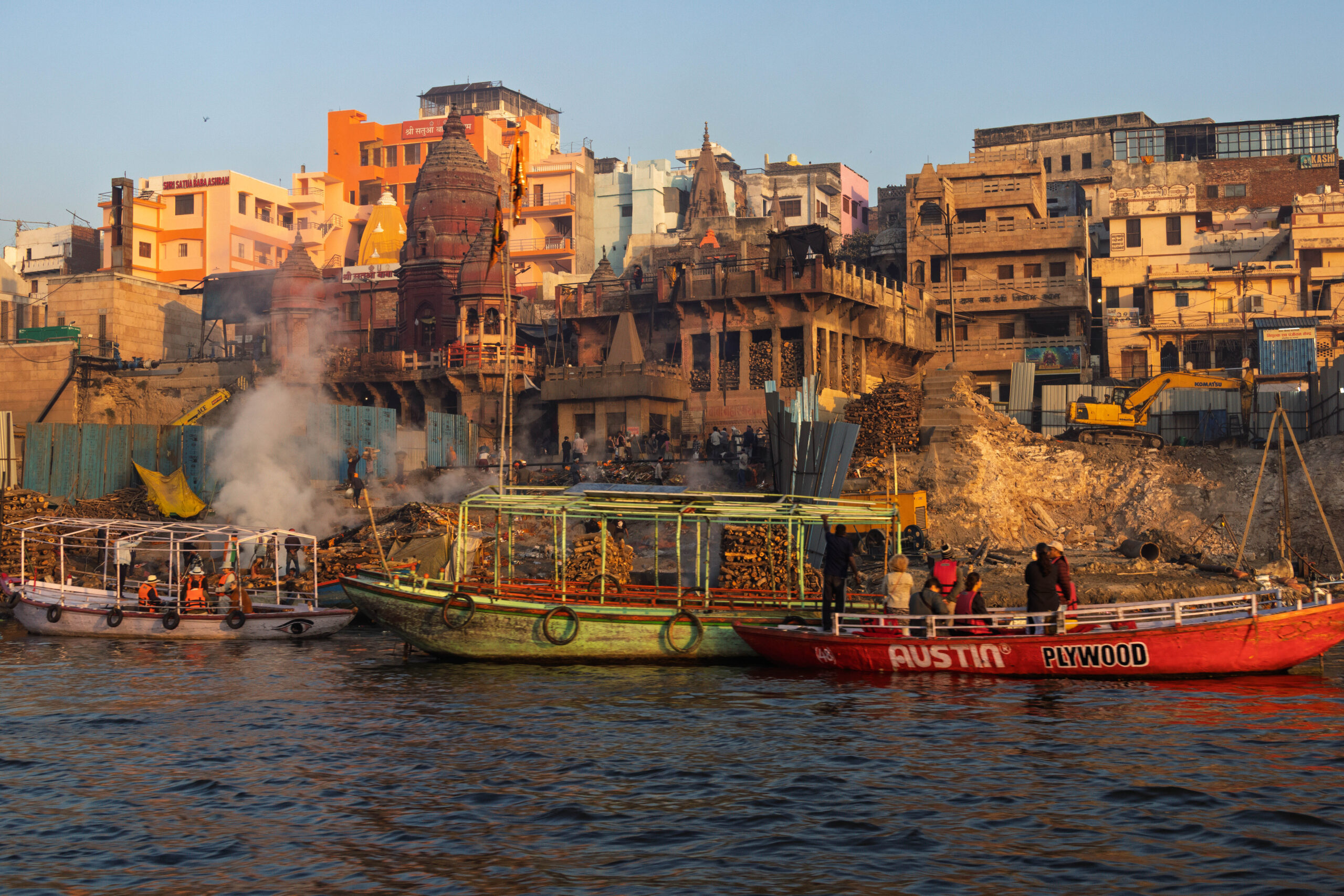
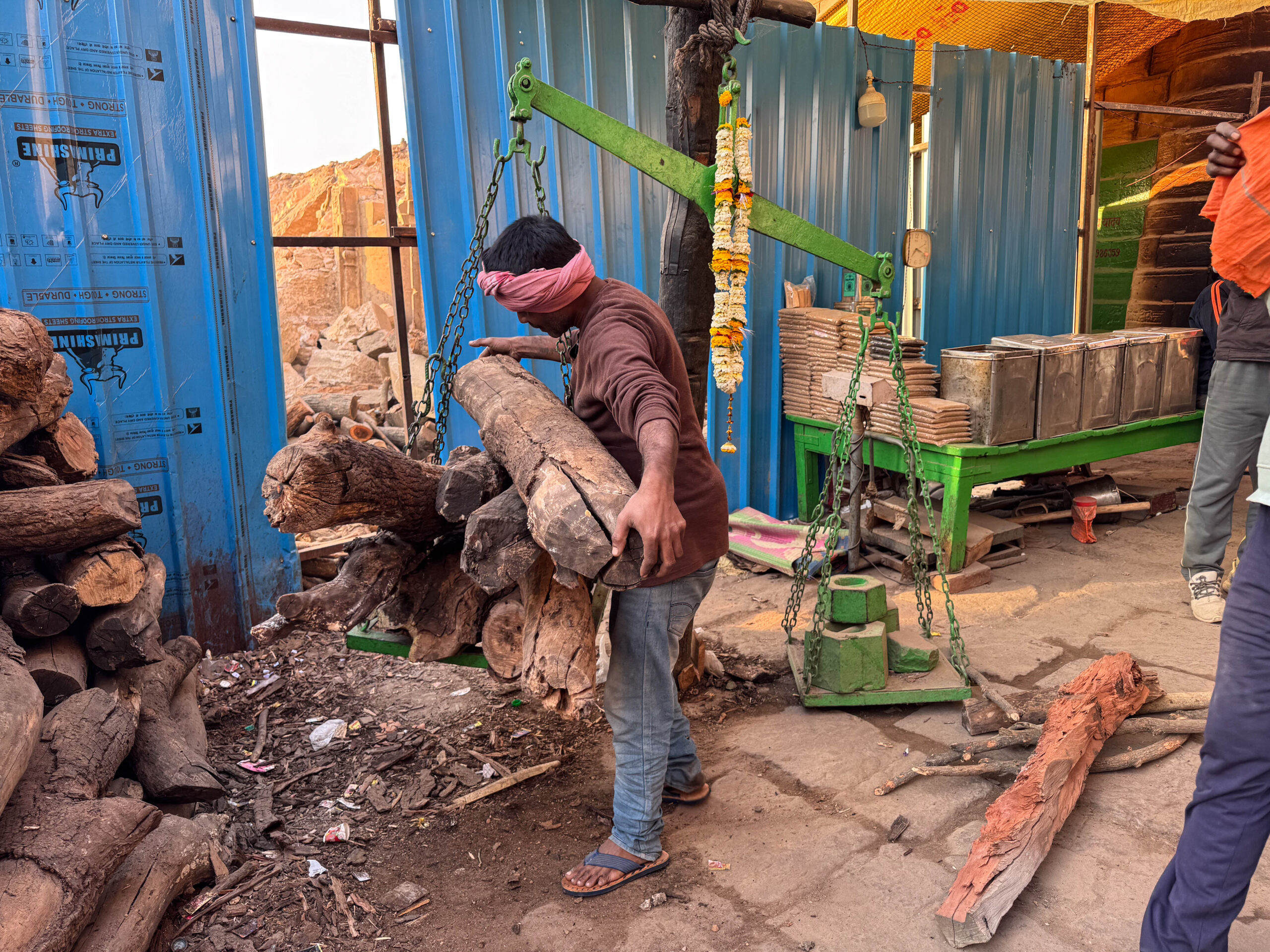
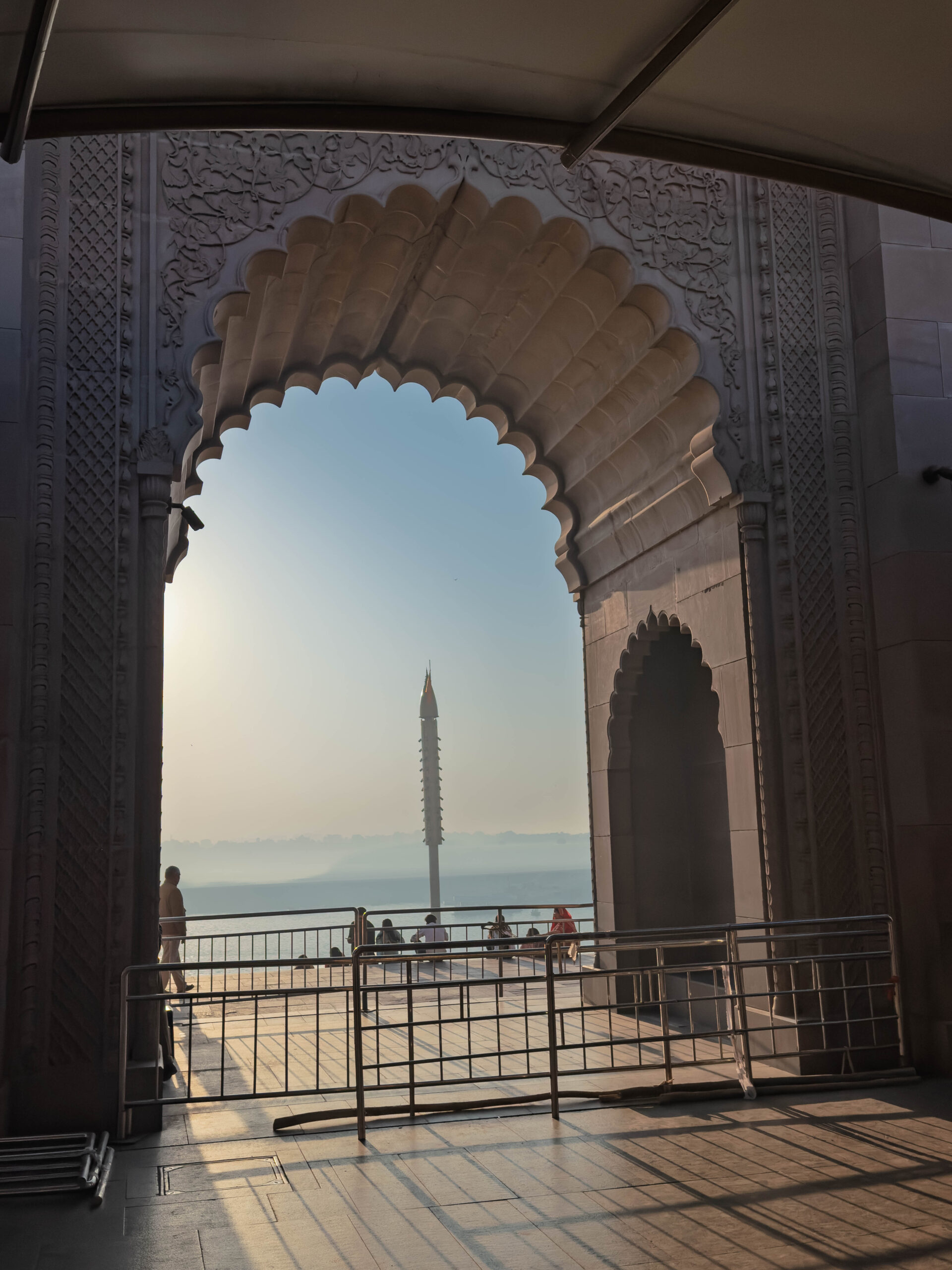
We boarded our boat and cast out onto the river, all the better to see the ghats built along the banks of the river to support the religious activities. We motored along the river absorbing the solemn atmosphere of the river as the sun rose over the eastern bank, witnessing the many pilgrims bathing in the holy waters of the Ganges. We continued past one of the crematoriums which was a little … confronting, but it is a way of life here. Families cremate their loved ones here so that their ashes can be cast into the Ganges River to liberate the soul from the cycle of rebirth.
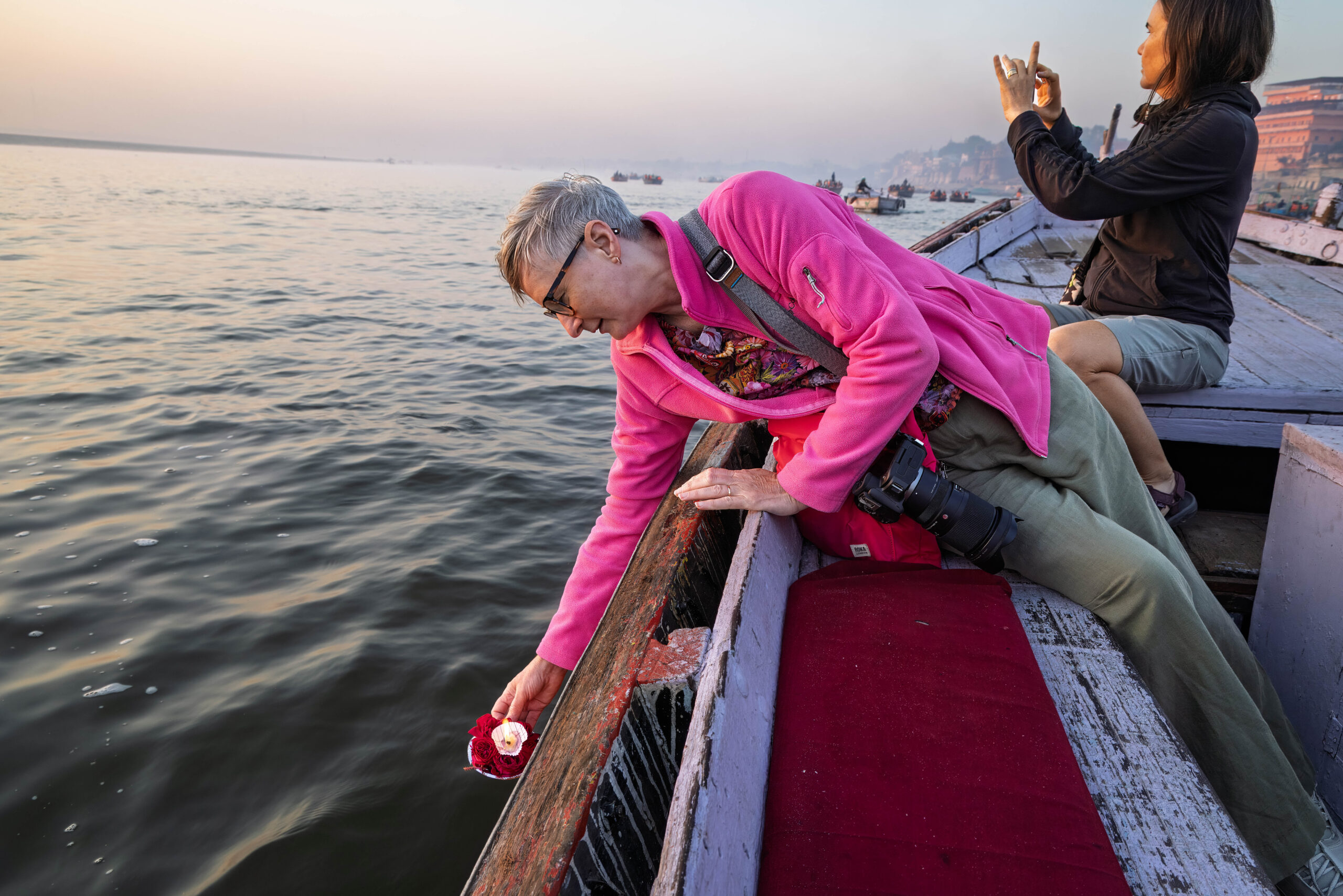
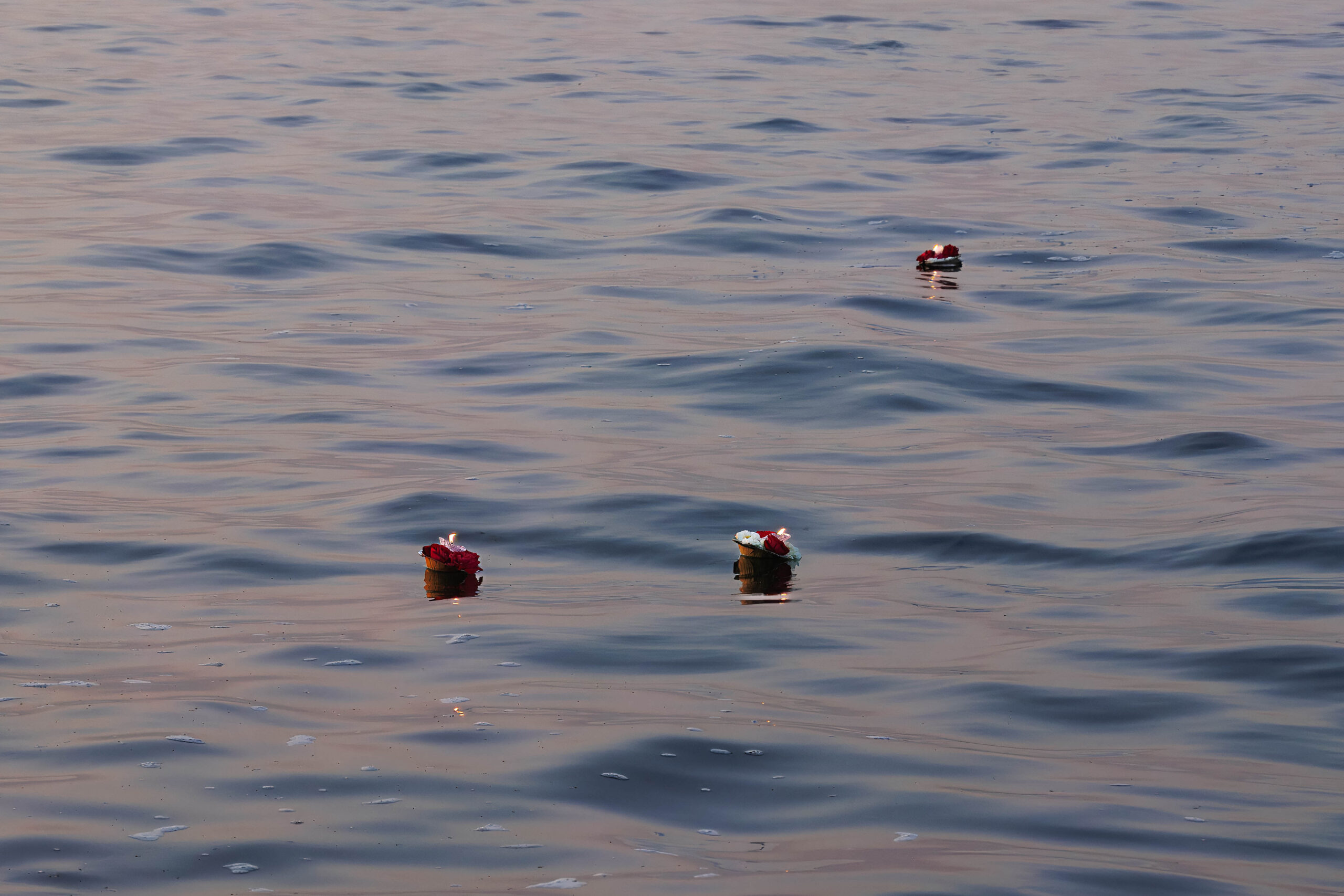
We stopped in the river, bobbing in the wake of other boats, as Dinesh lit our flower candles. These floral offerings (diyas) are a way of giving thanks to the river goddess and asking for blessings. We all lowered our candles, in their small leaf baskets, onto the surface of the river and watched them float away. The solemnity of this ritual juxtaposed with our boat driver becoming anxious about us putting our life jackets on because the water police were coming.
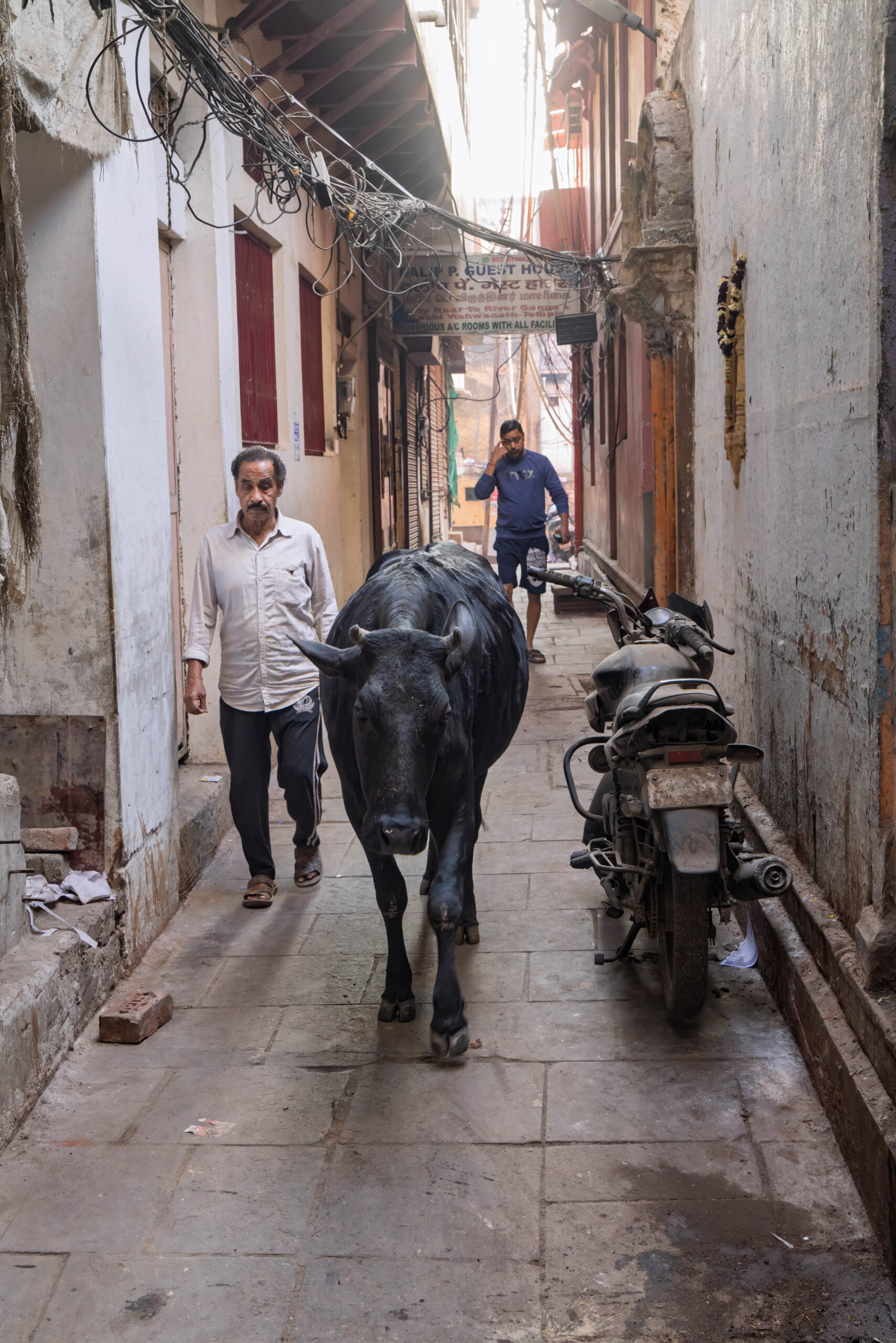
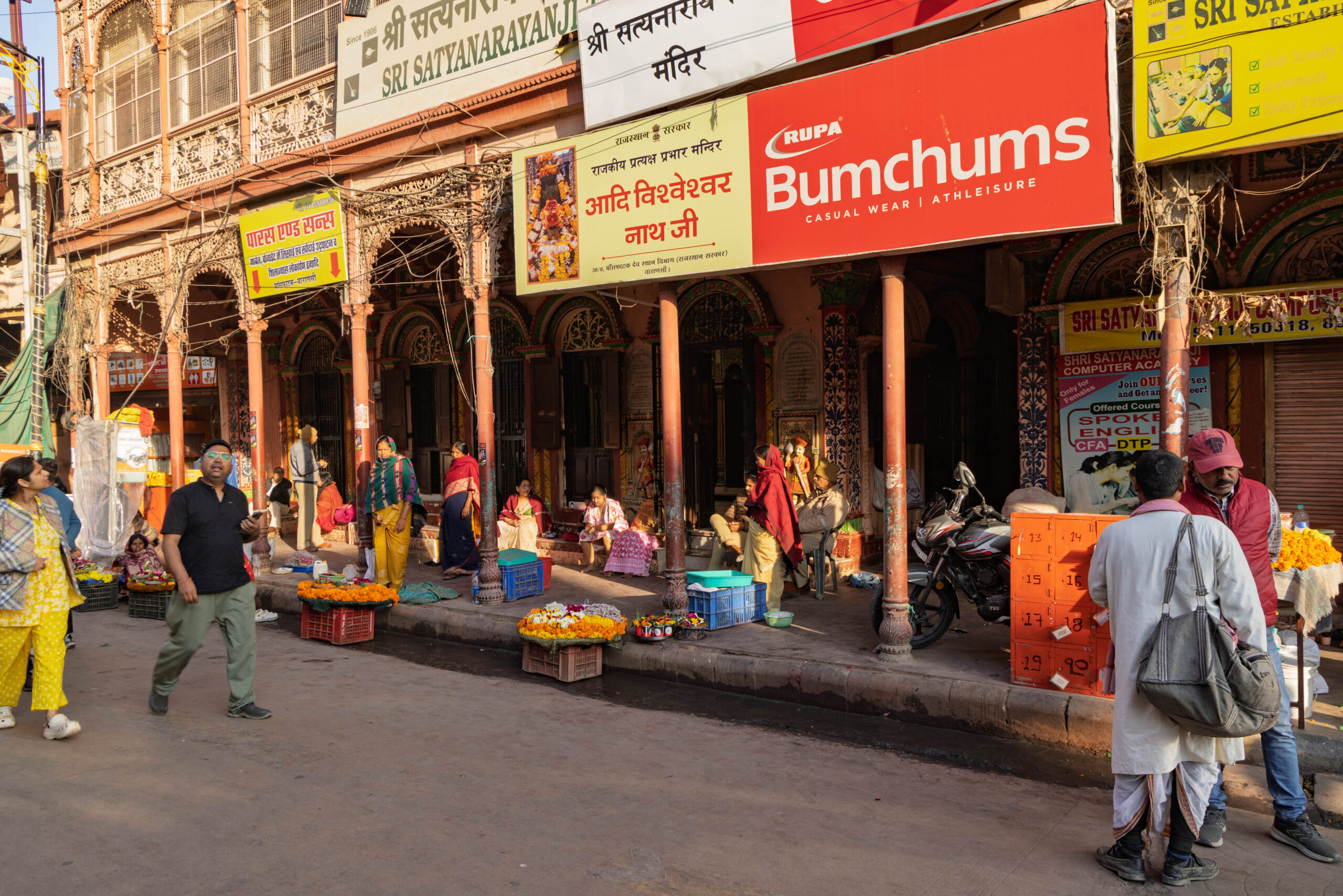
After we disembarked, we began a walk through the old city. Dinesh asked if we wanted to go into the crematorium. I would have preferred not to – it seemed too intrusive – but, in we went. We didn’t see anything gruesome, but it just seemed a bit odd to wander through the site where people are dealing with death. I probably overthought the whole thing because I think many other cultures deal with death quite differently from western culture.
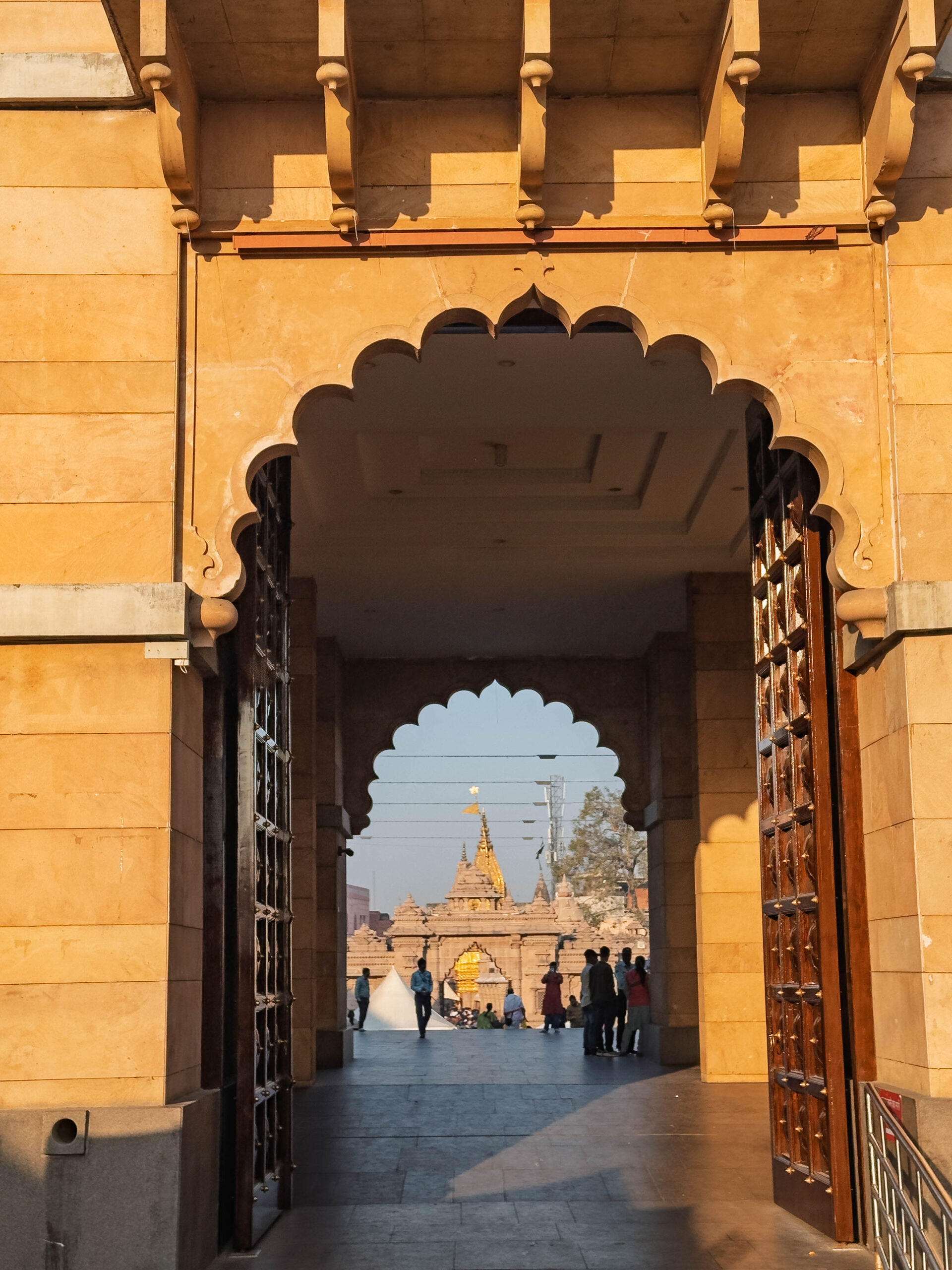
We continued walking to Varanasi’s most famous temple, the Kashi Vishwanath, or ‘Golden Temple’, dedicated to the Hindu god Shiva. We did not enter the temple complex but looked through the archway to the three domes of the temple, two of which were covered in gold in 1839. The gold was donated by Punjabi Kisan Maharaja Ranjeet Singh.
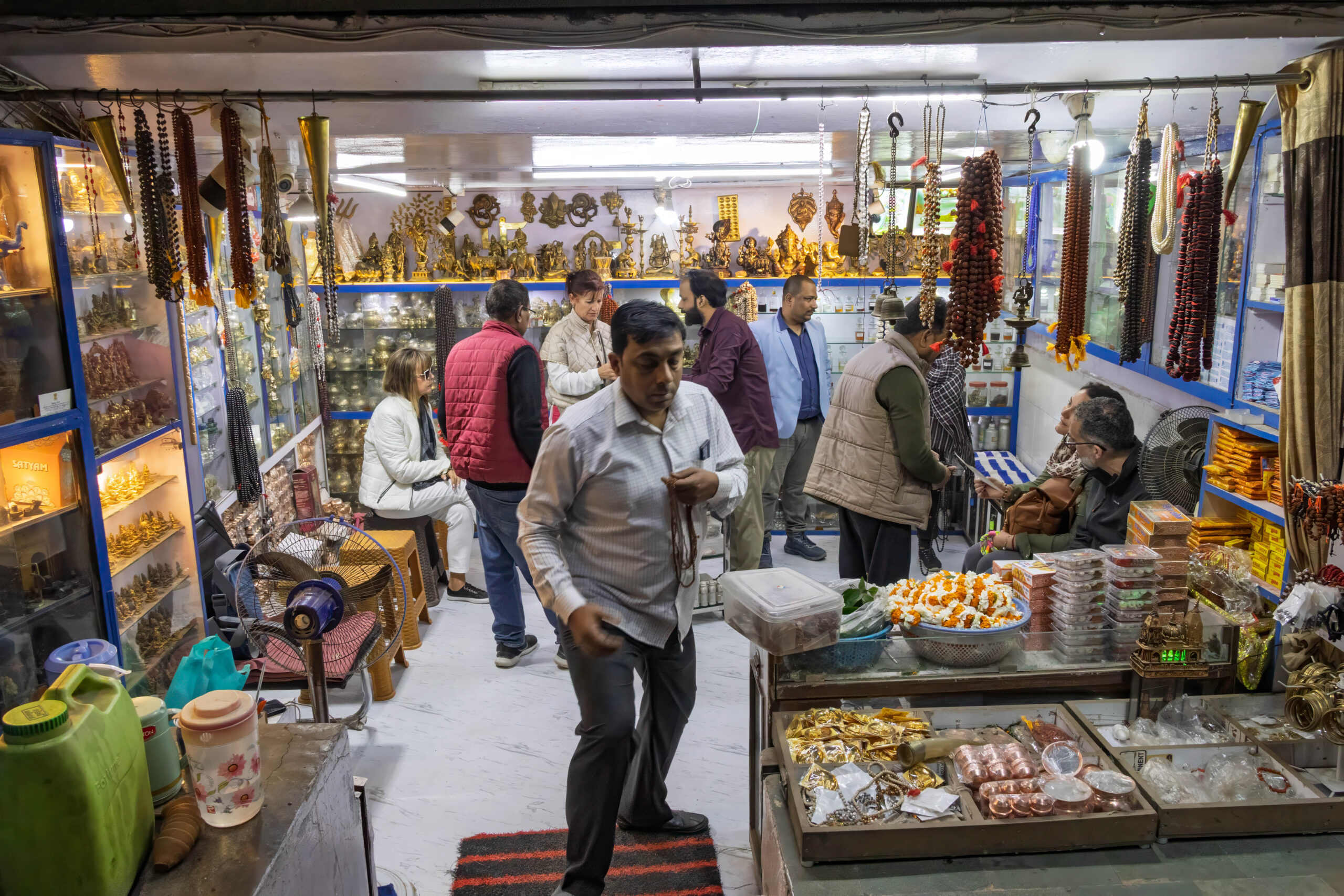
Continuing our walk through the old city, we arrived at today’s obligatory shopping experience. Today, it was essential oils and spices. With some of the group well and truly over these shopping experiences, it was only four of us who entered the shop to have various oils massaged onto our fingers along with explanations of their therapeutic benefits. We were a tough group with only one purchases made of a very small bottle of (I think) neem oil. Slightly citrusy and supposedly good to calm the mind and relieve stress.
Returning to the bus, we drove by a circuitous route back to the hotel. After our early start I was feeling drowsy and I can’t really say what we saw apart from the quick circuit that we completed around the campus of the Banaras Hindu University. We were supposed to be seeing the remaining ‘interesting places’ that we didn’t visit yesterday as part of the panoramic city tour. It’s hard to call it a panoramic tour when you’re in a minibus with a very limited view and with no actual stops to visit/see/photograph anything properly.
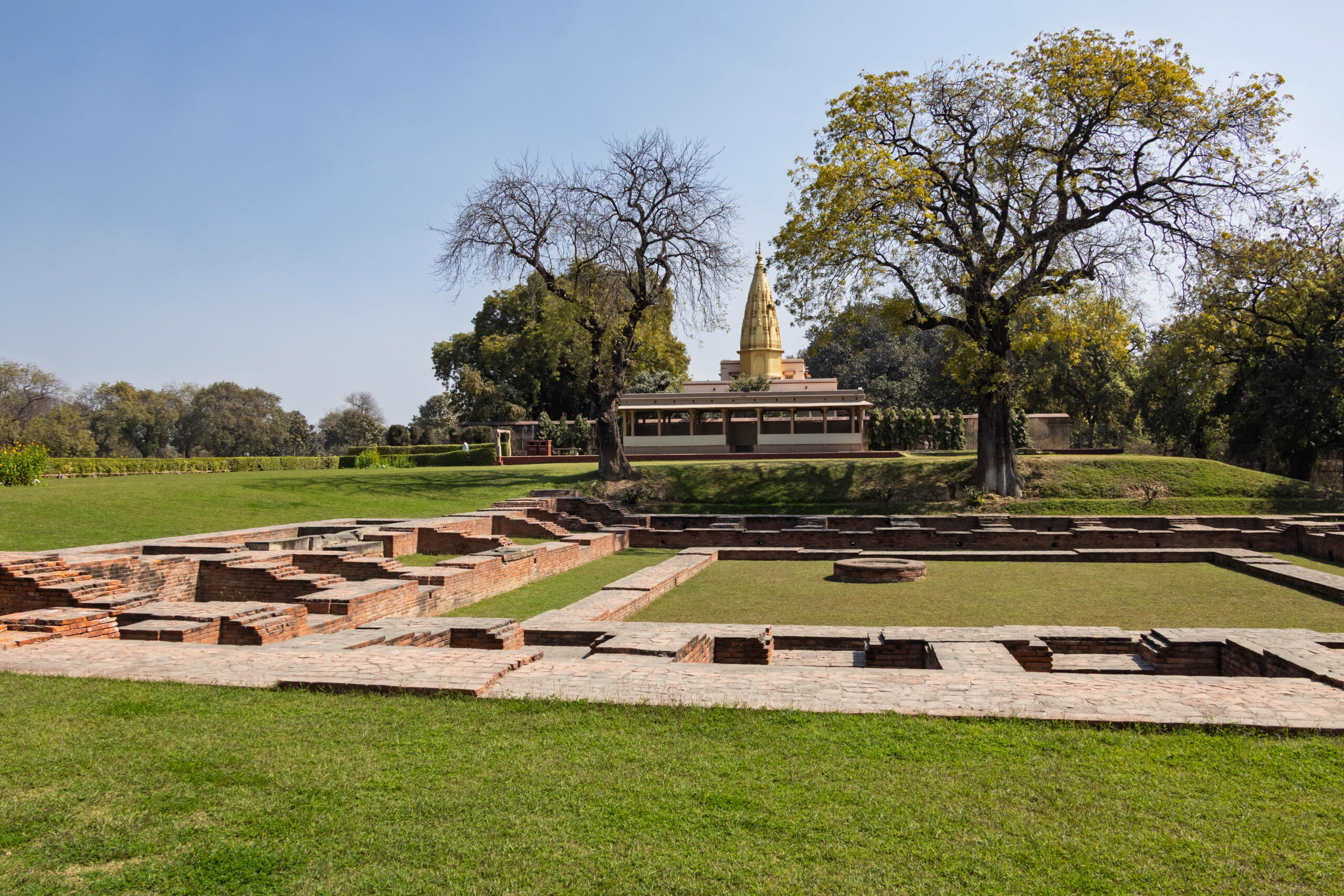
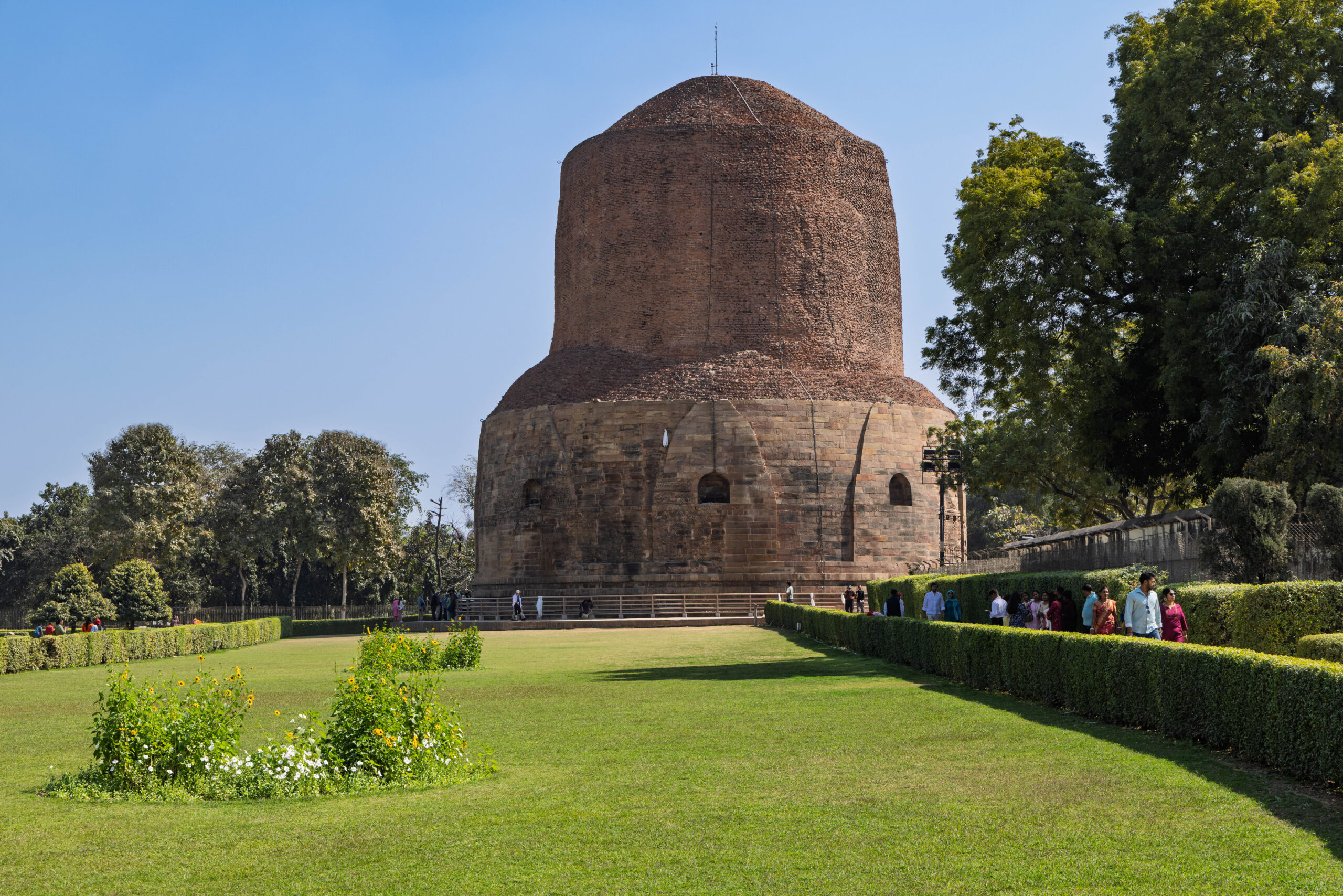
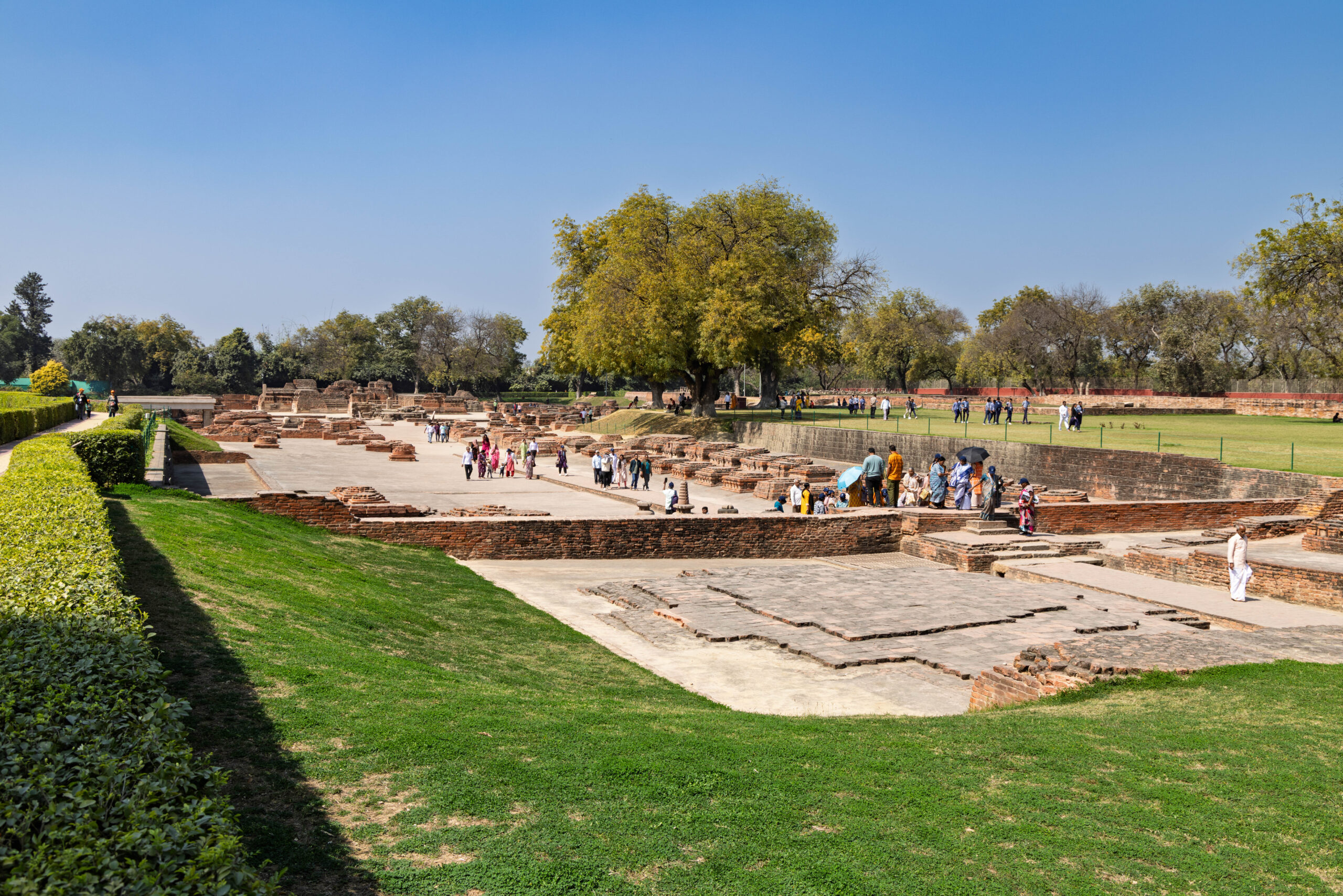
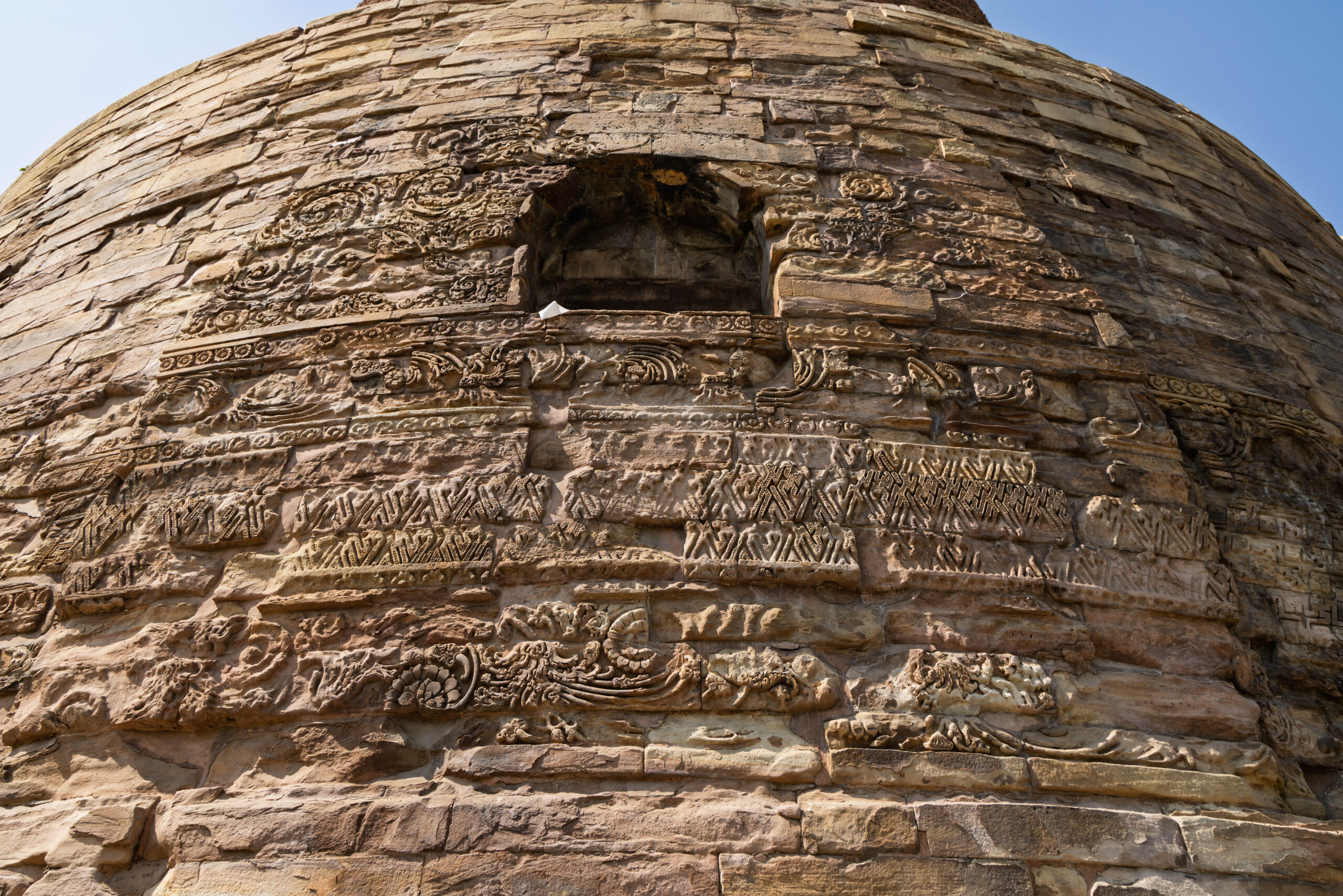
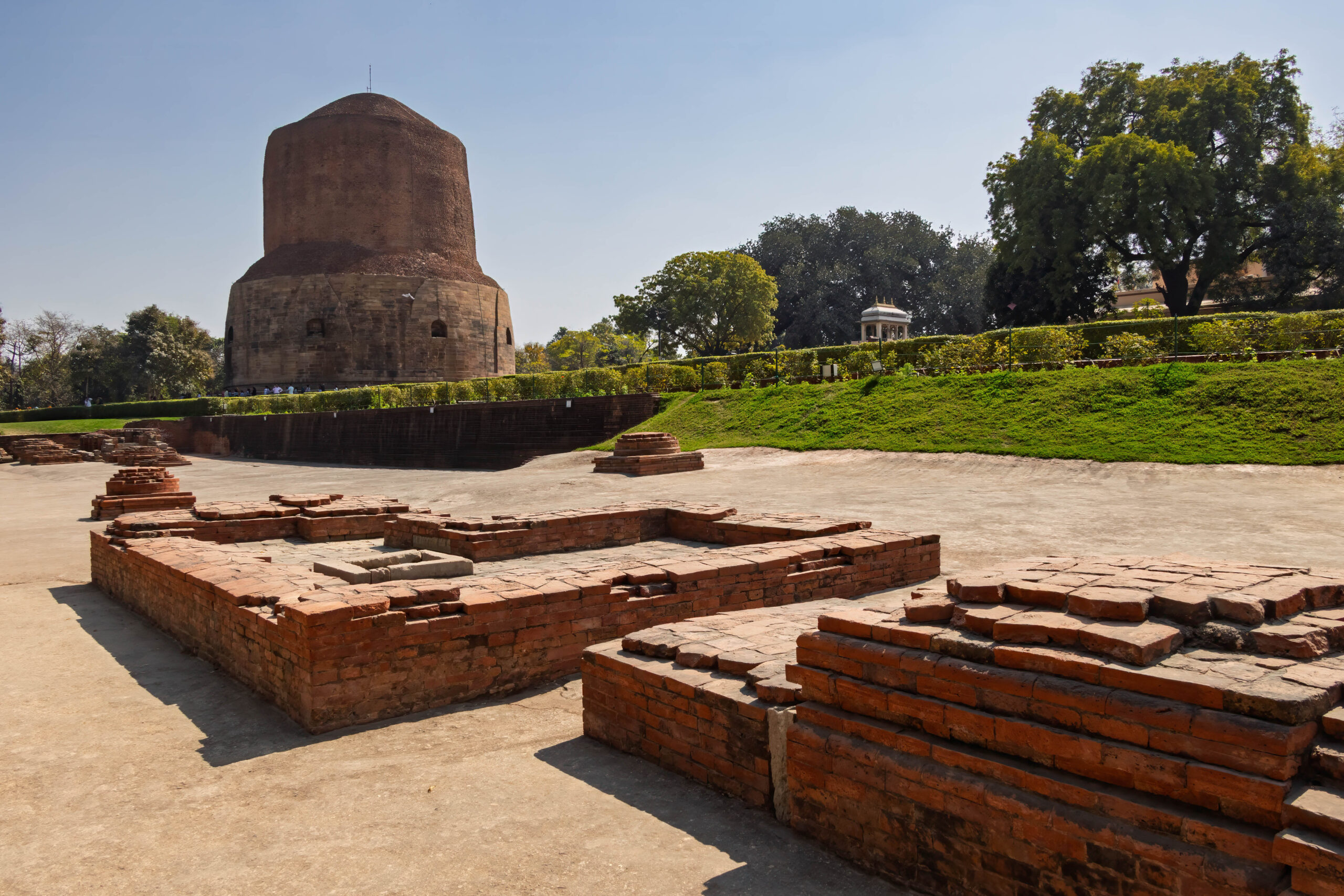
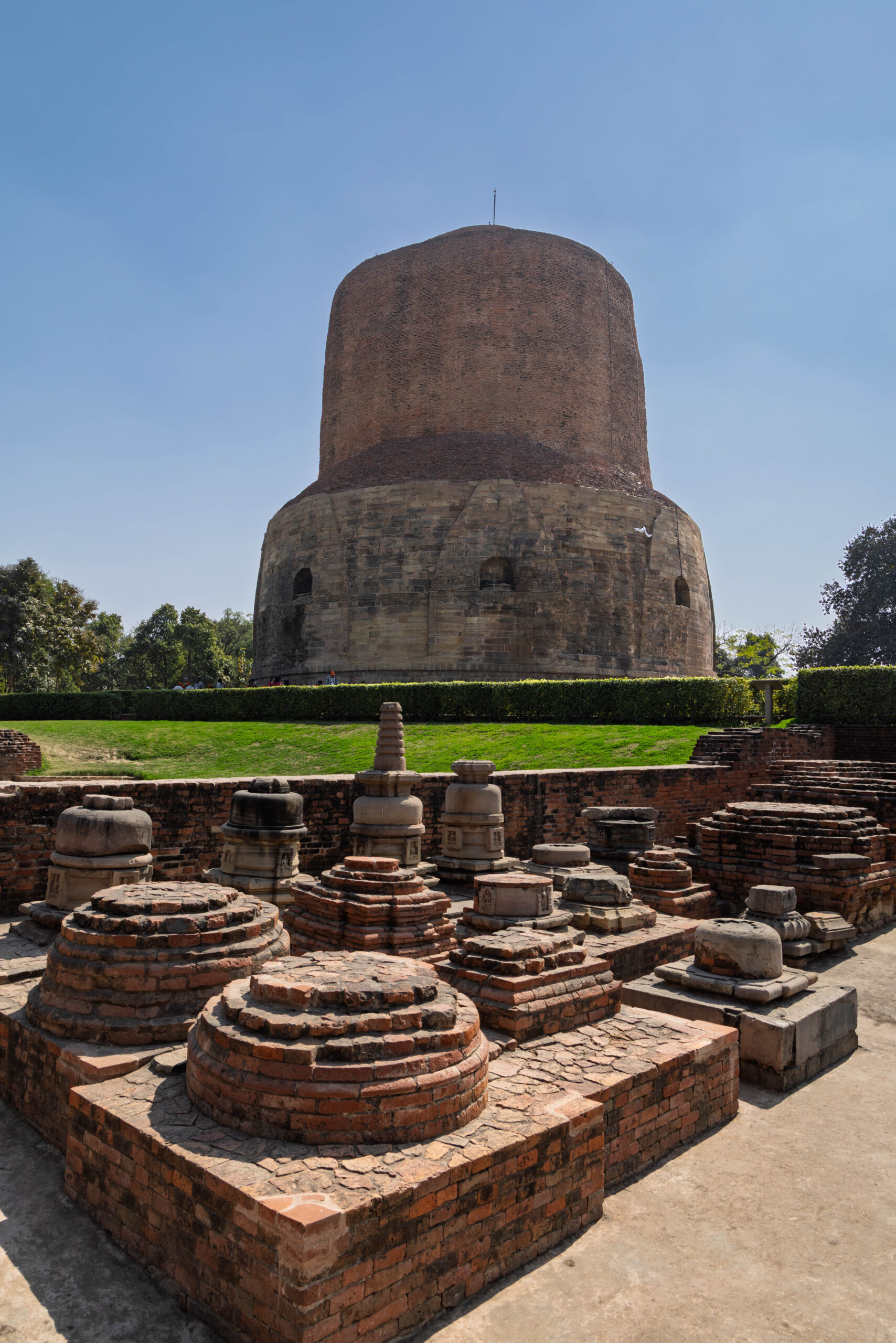
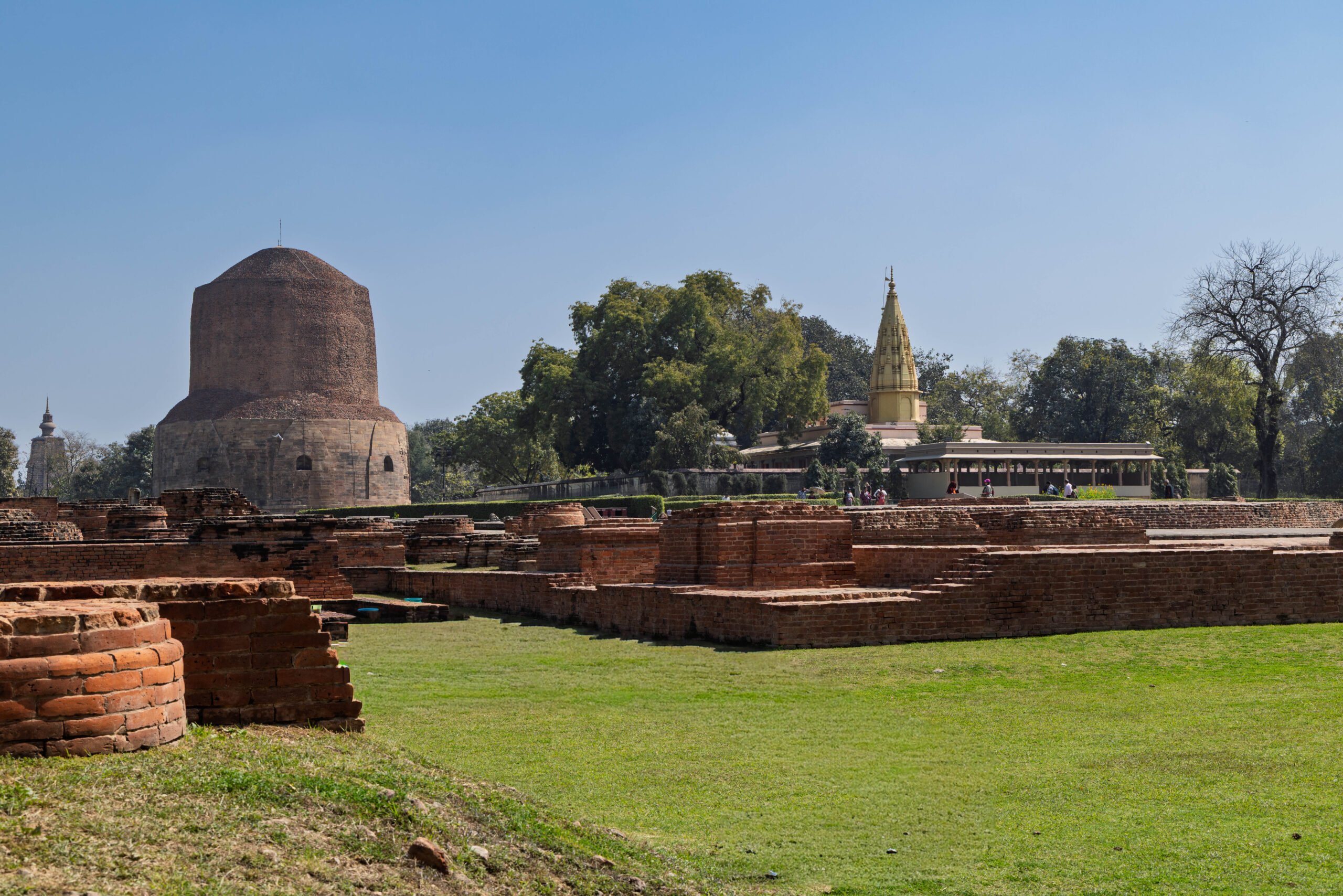
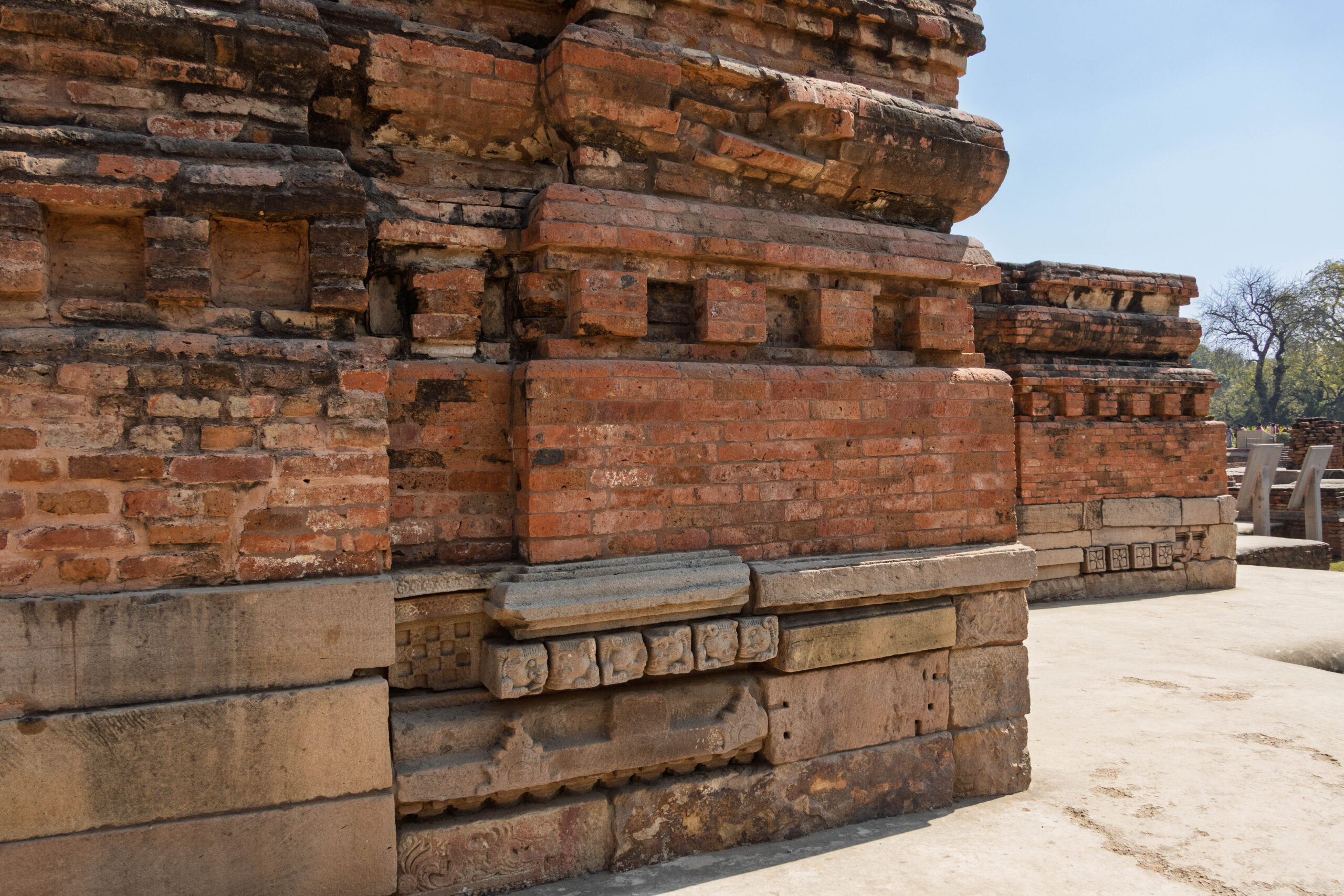
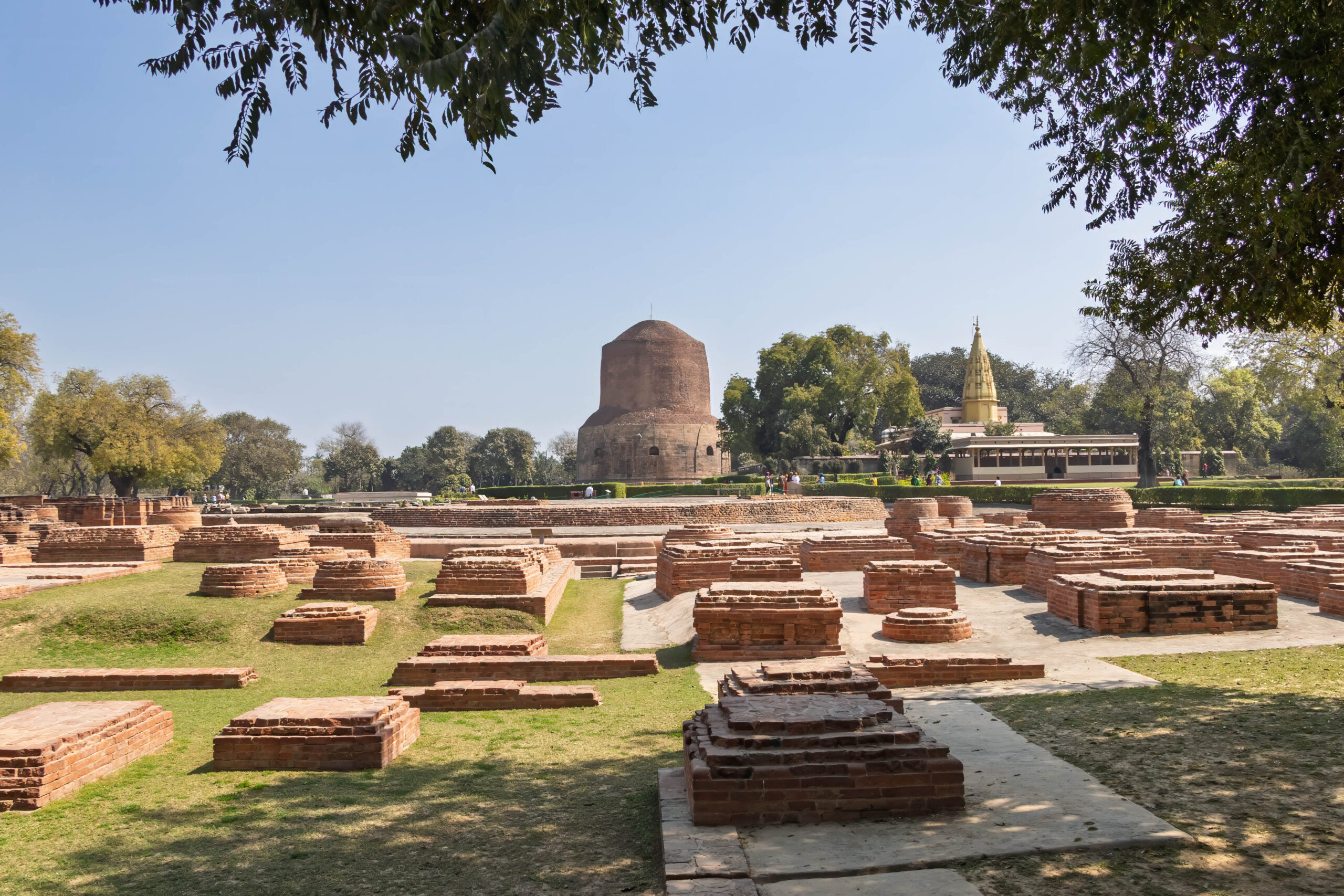
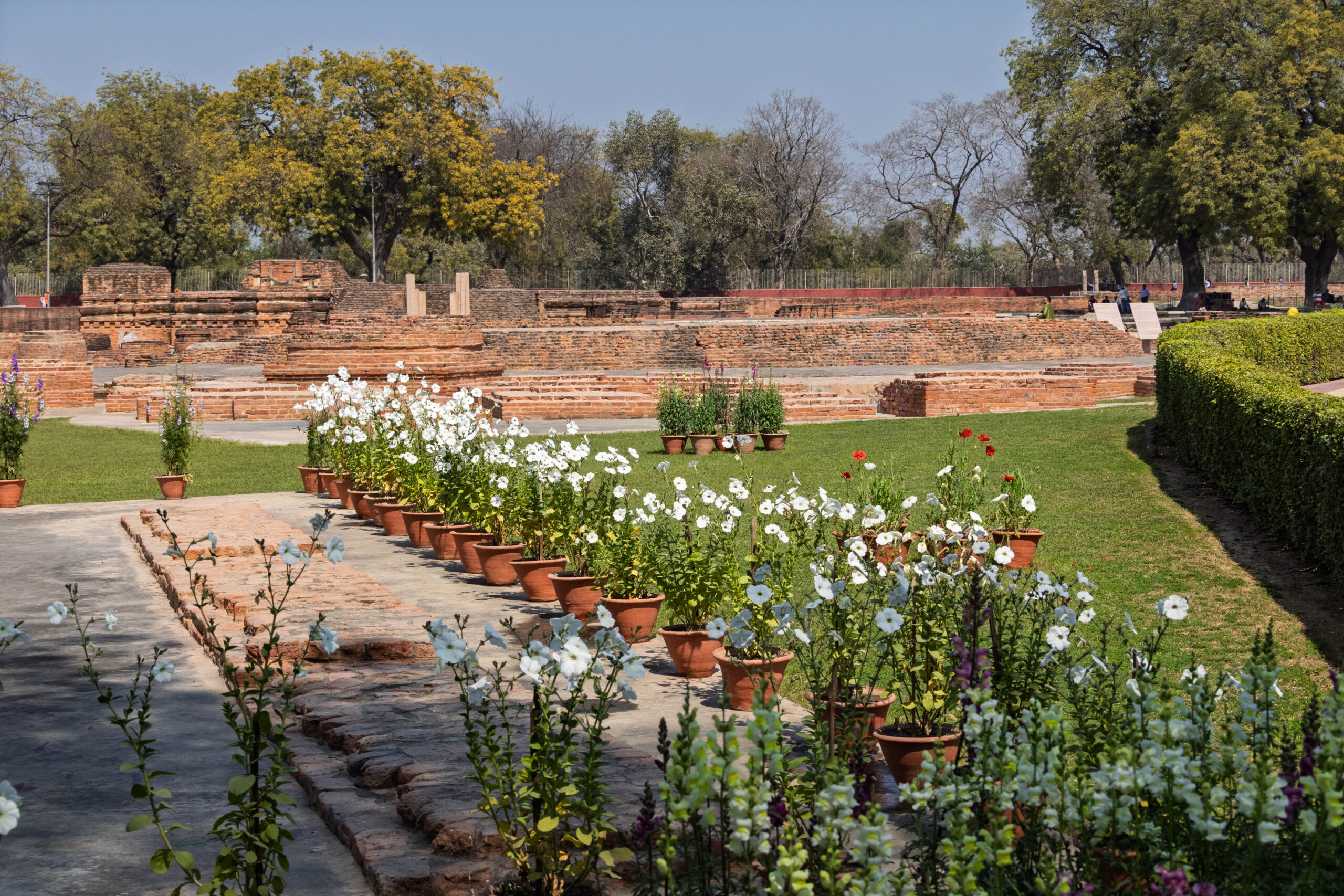
Back at the hotel it was well and truly time for a late (9.30am) breakfast. At 11.00am we rejoined Dinesh in the foyer, before squeezing back into the bus to have Suneet drive us to the city of Sarnath, just 10 kilometres from Varanasi. Sarnath is a highly revered Buddhist pilgrimage centre as it’s believed that after reaching enlightenment at Bodh Gaya, Lord Buddha preached his first sermon here. The great Dhamek Stupa, and several other structures, stand testimony to the importance the place enjoyed at that time. The Chaukhandi Stupa is where, during his first visit to Sarnath, Lord Buddha met his first five disciples. The area is a treasure trove of archaeological findings such as Dharmarajika Stupa and Mulagandha Kuti Vihar.
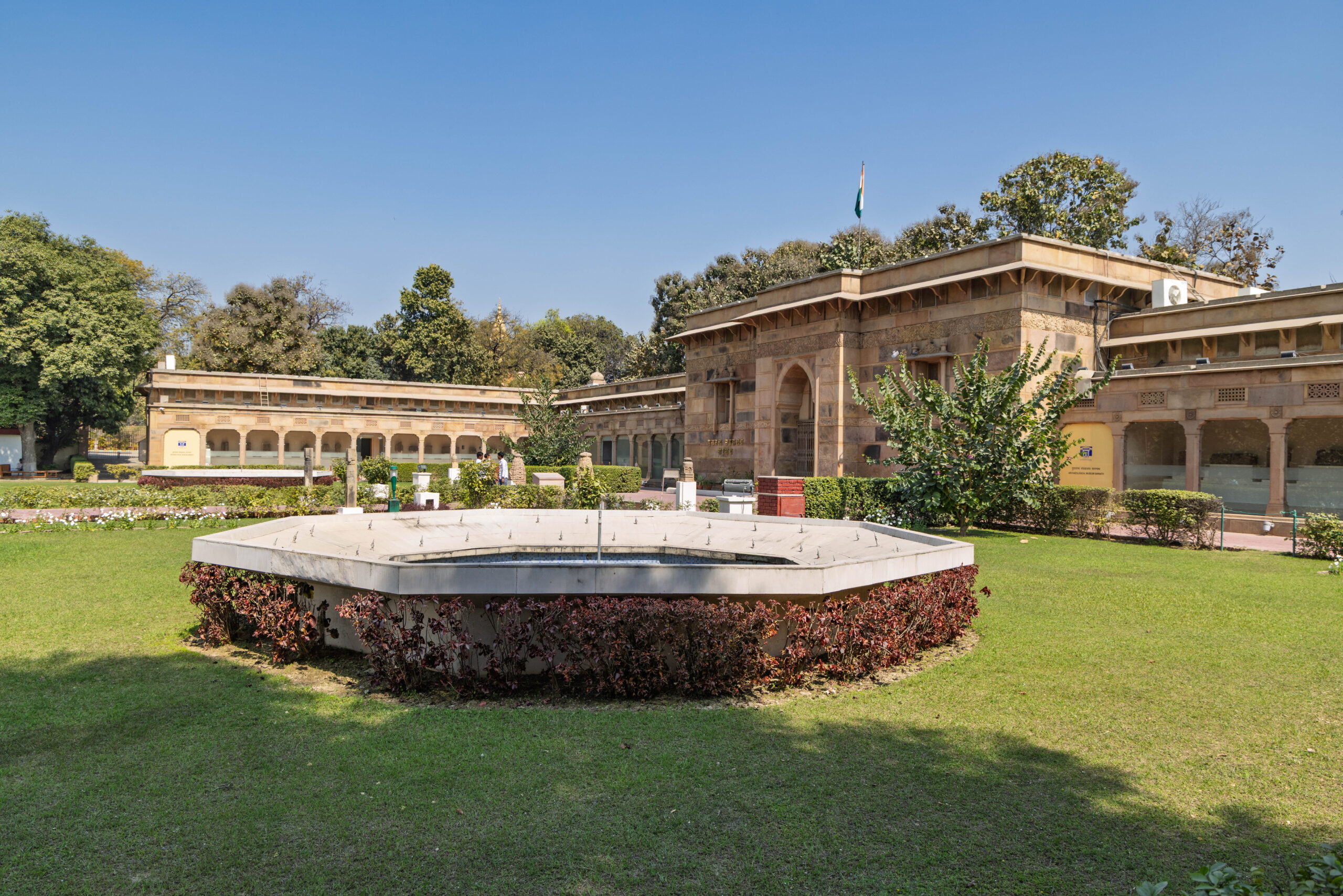
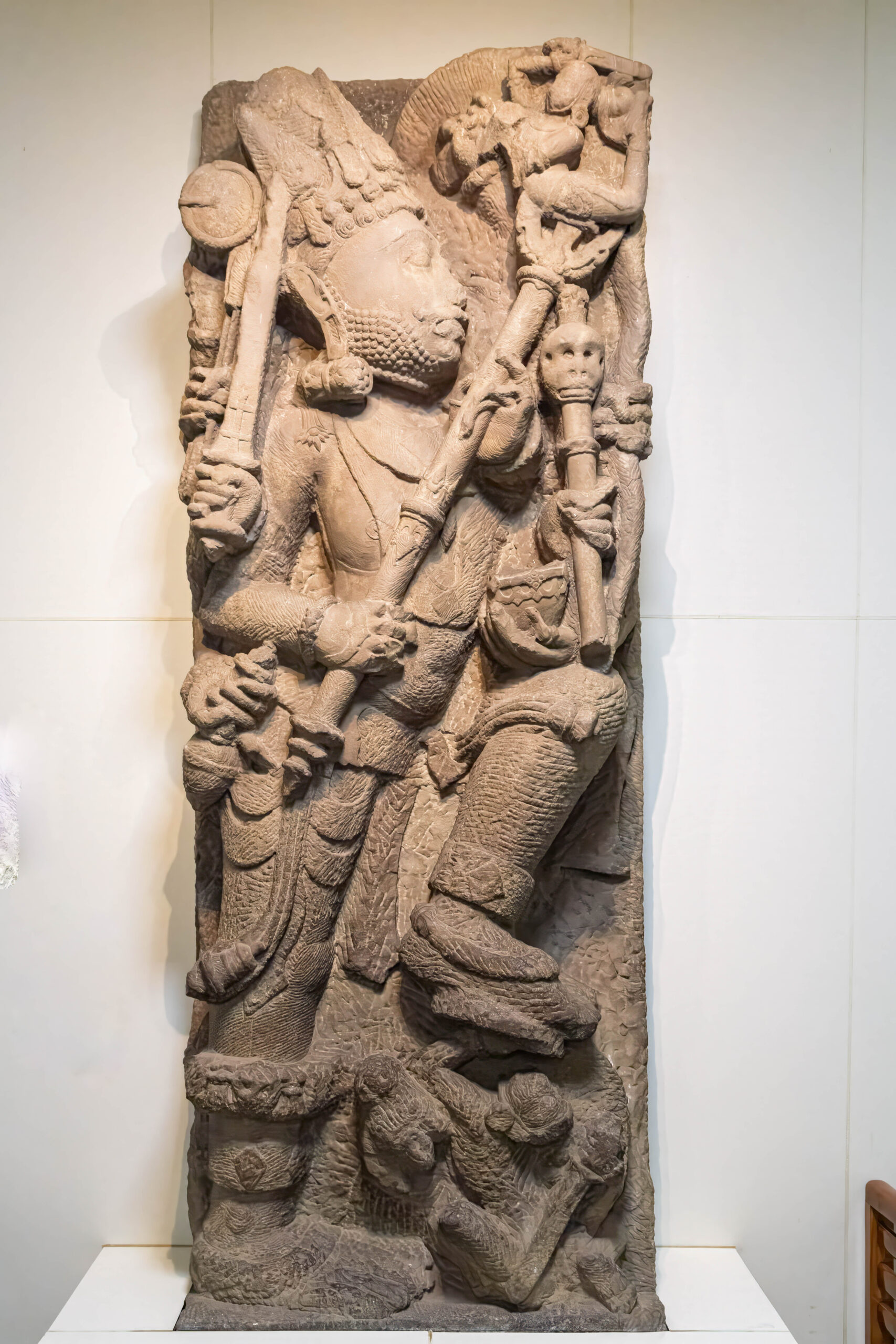
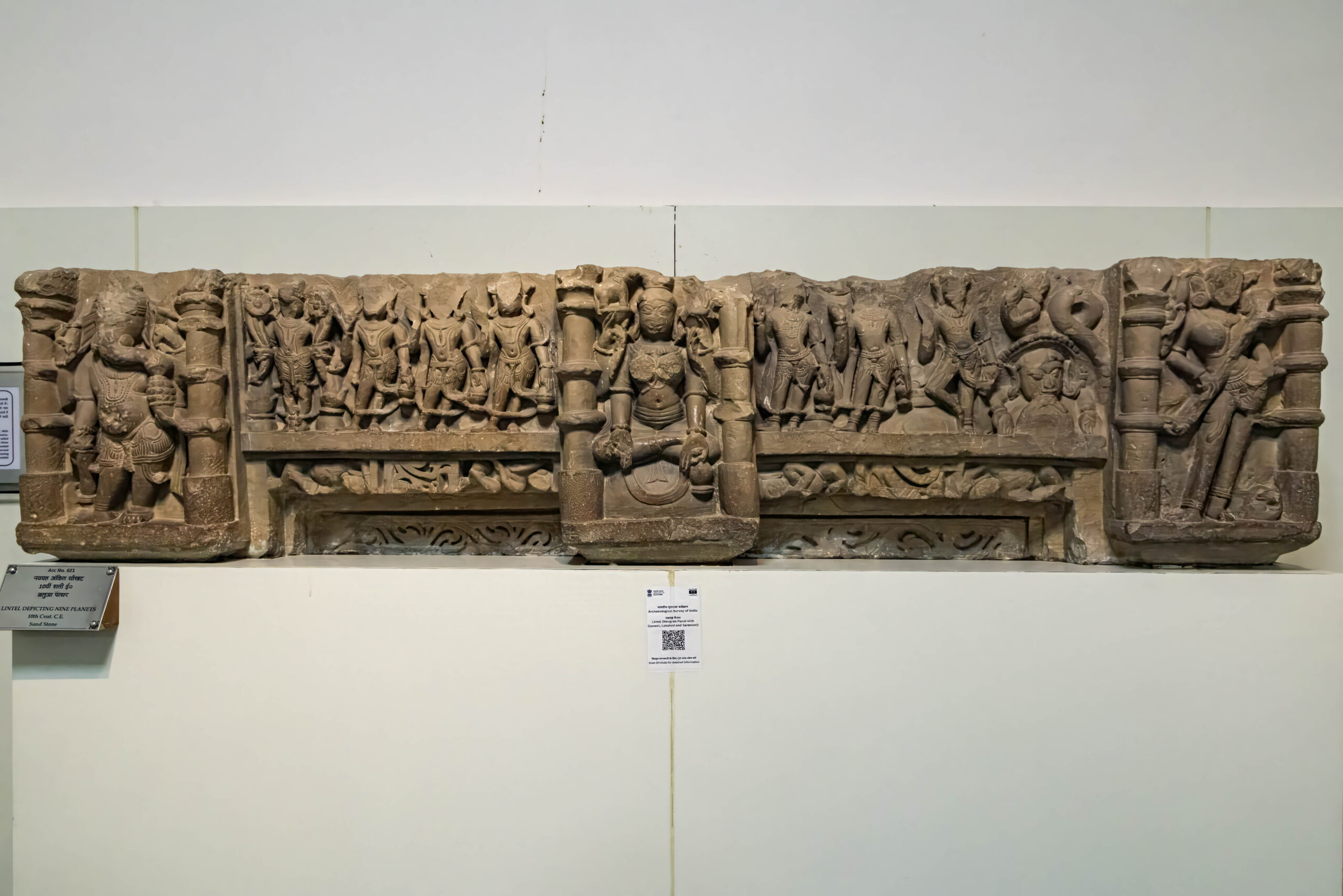
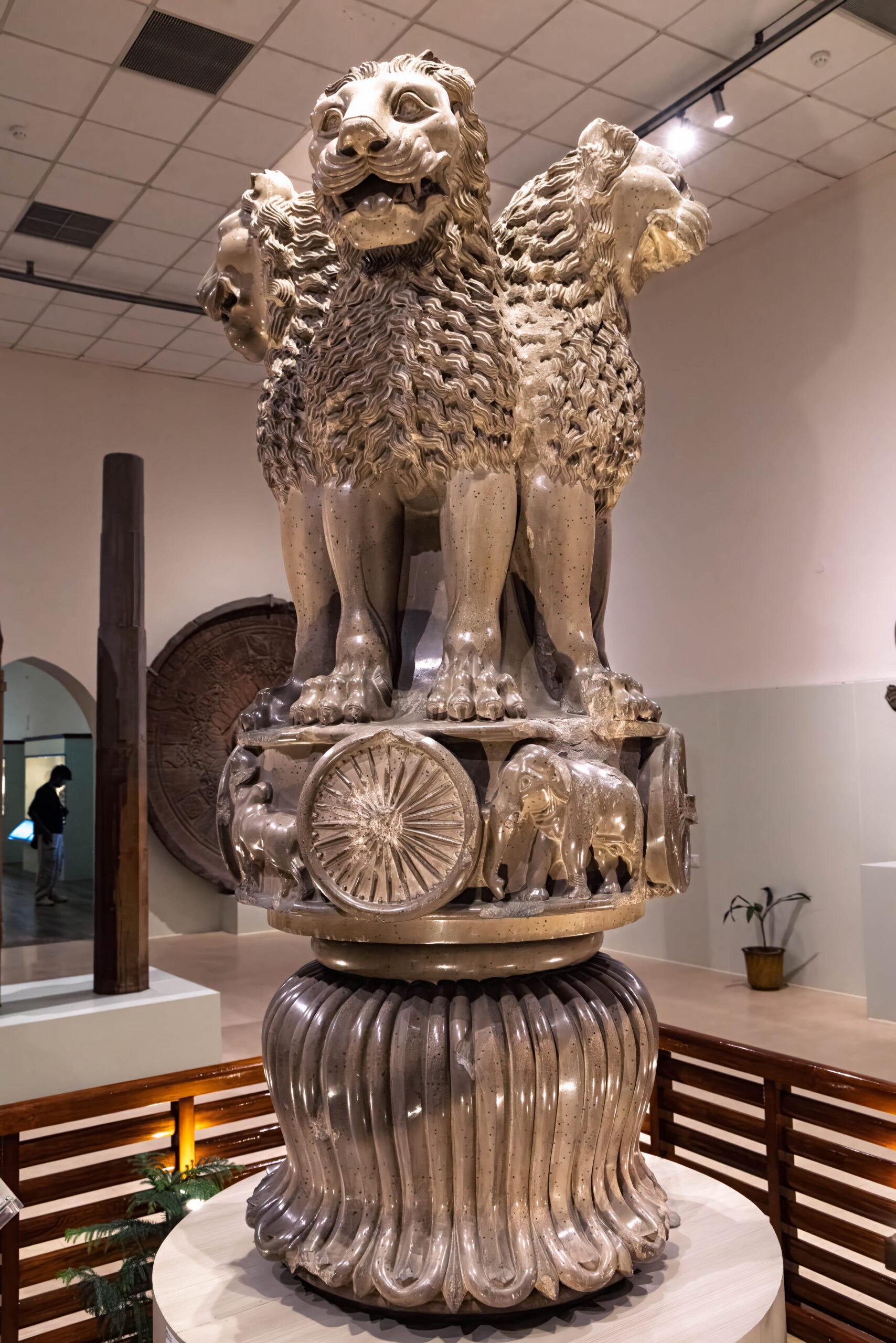
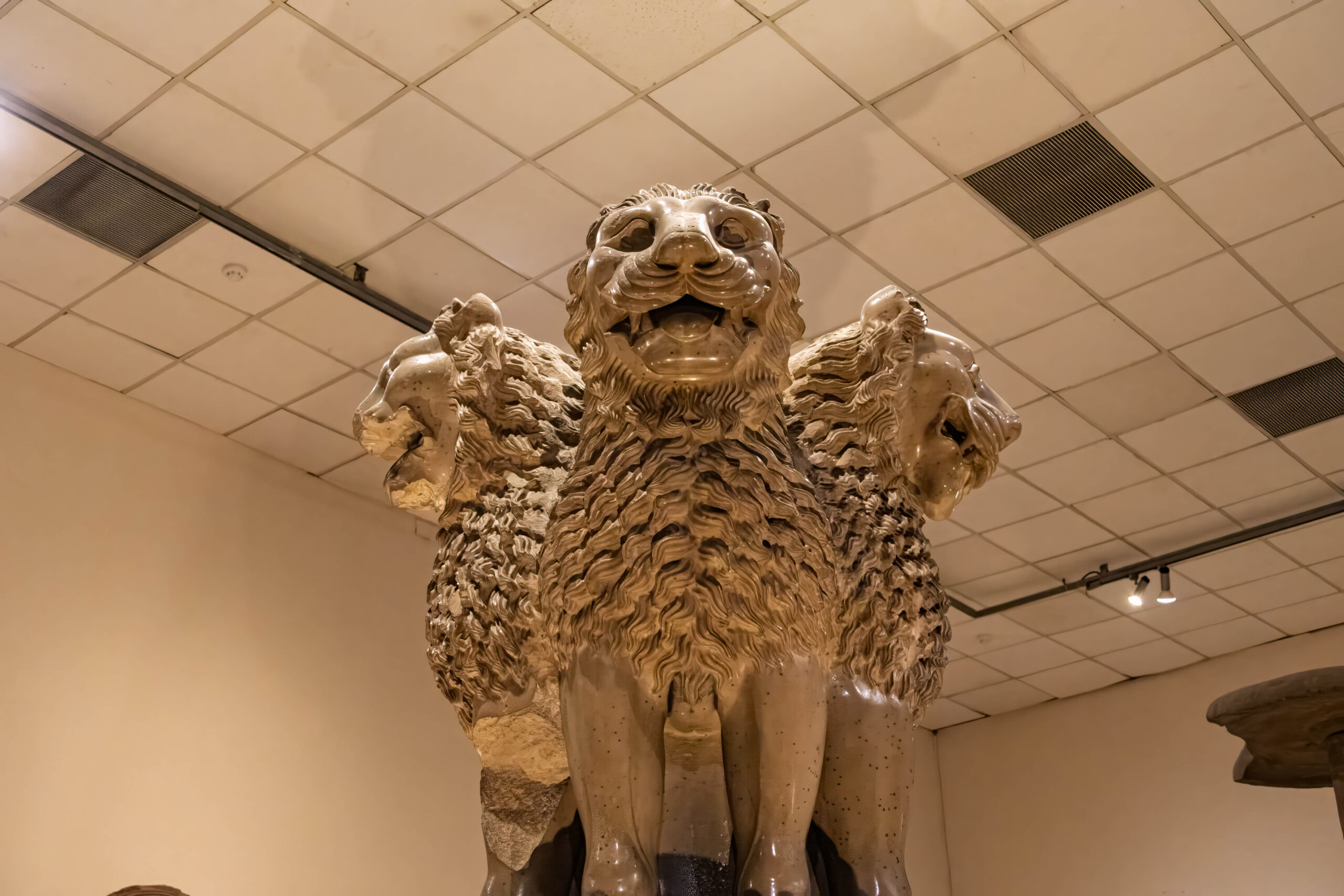
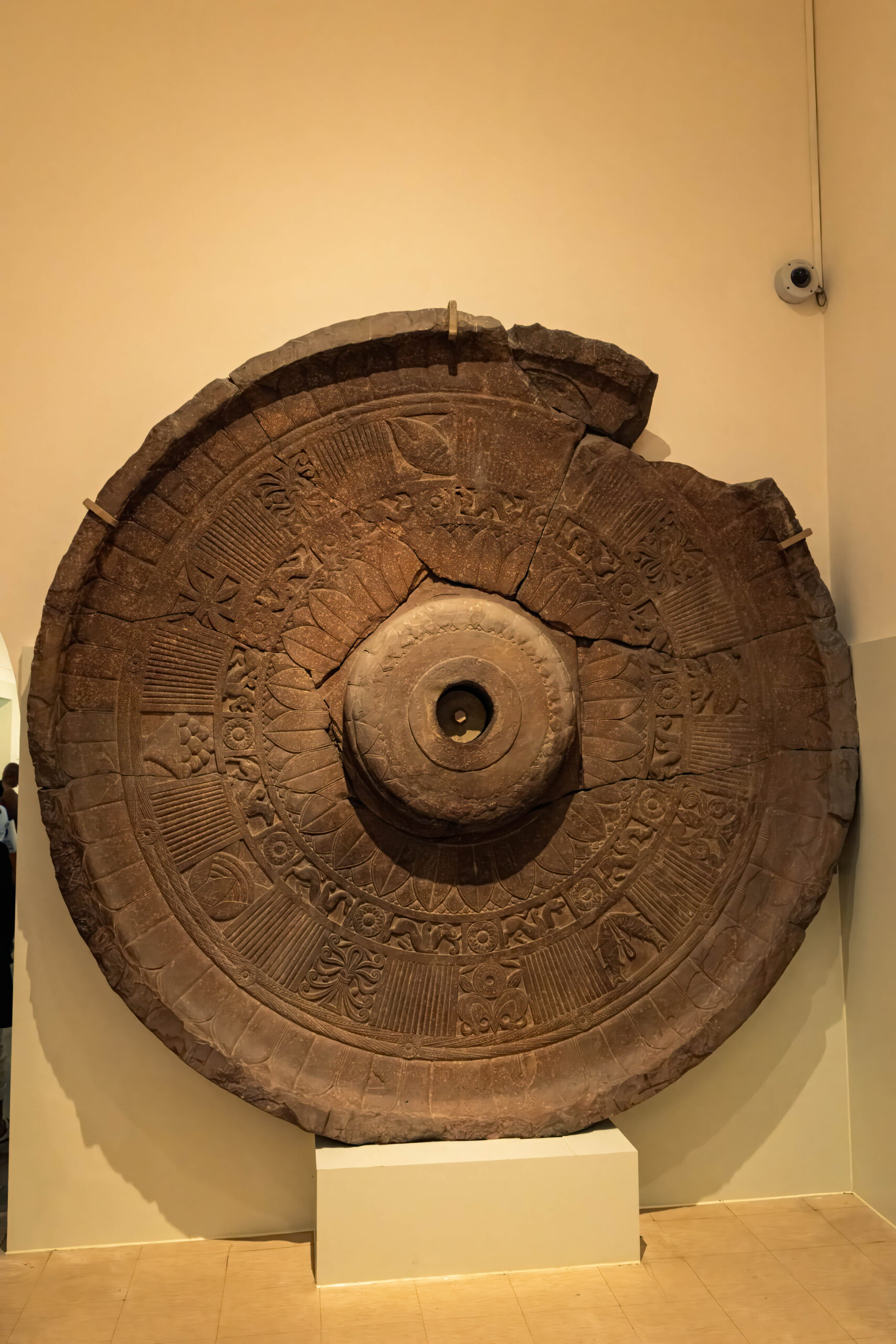
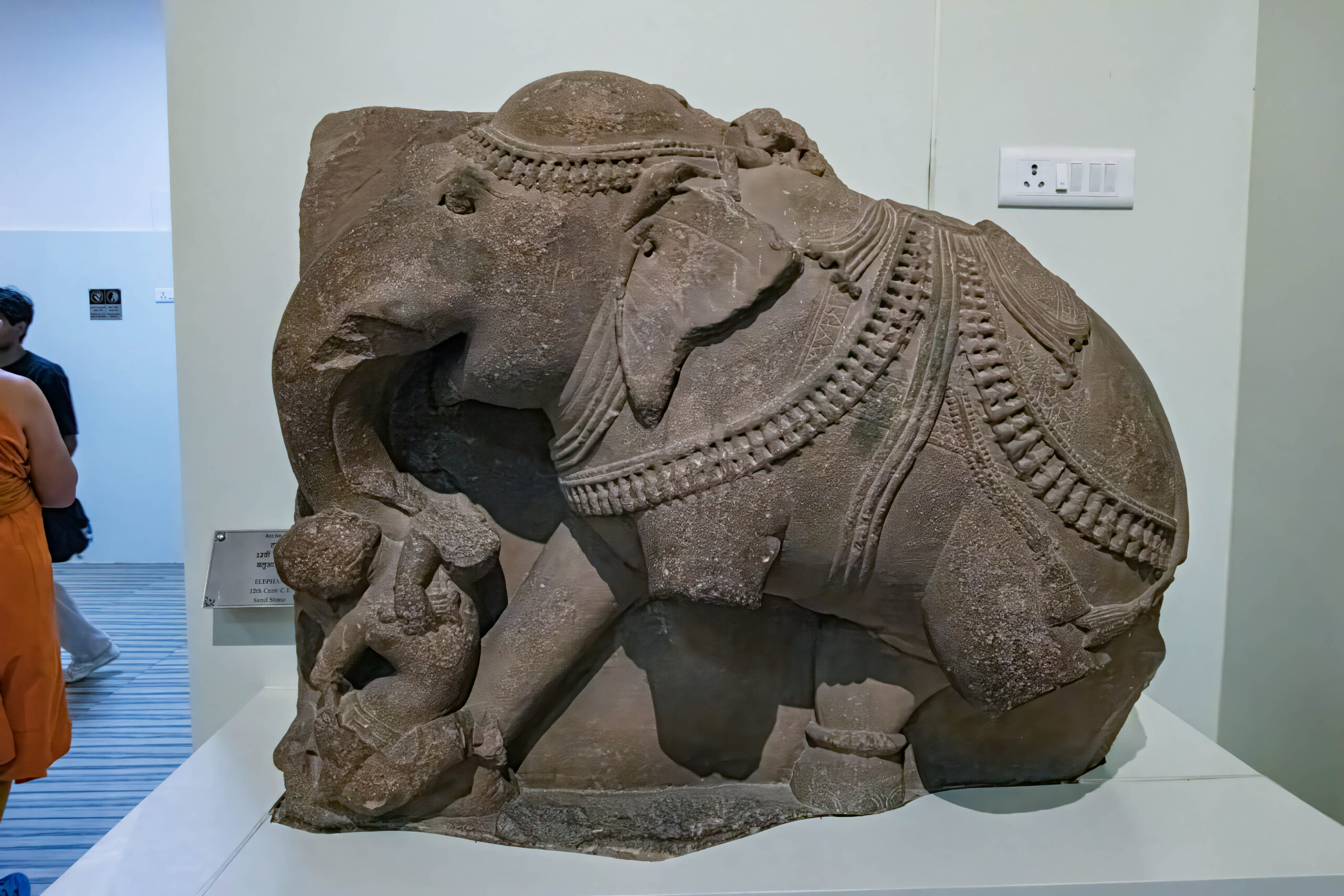
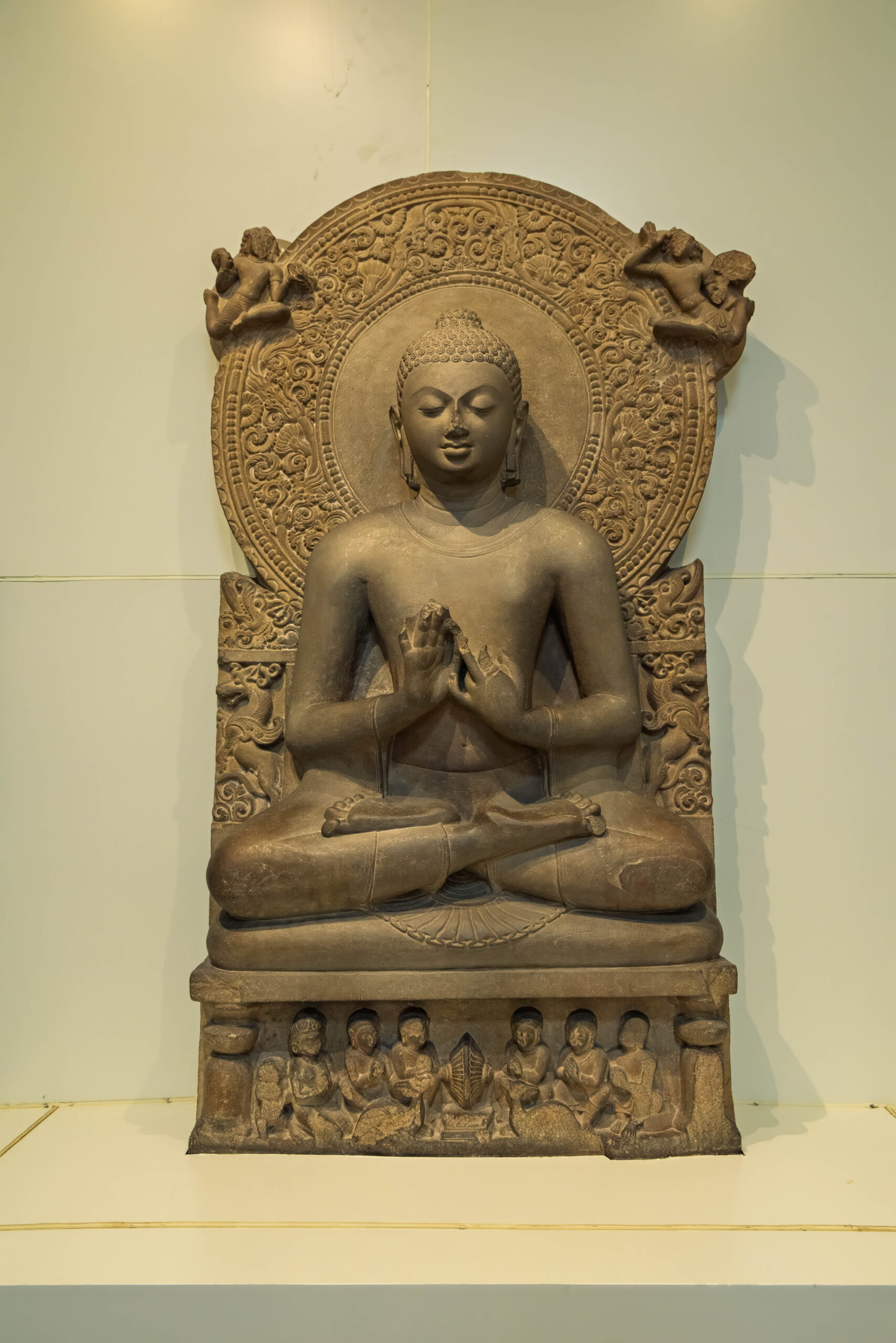
We also visited the museum maintained close by buy the Archaelogical Survey of India. The museum houses many sculptures, inscriptions and other objects of interest recovered from the excavations of the site. The most significant of these was the Lion Capital from the Asokan Pillar. The capital, featuring four lion heads, has been adopted as the National Emblem of India.
Exiting the museum, Dinesh said we could have a few minutes to shop for souvenirs. I weakened and purchased three necklaces. Why, why, why? I think I like necklaces when I buy them but then, I rarely wear them because they annoy me. I’ve done it before and already have necklaces from many countries hanging unworn in my jewelry cabinet/cheval mirror. Three more to add to the collection, ha, ha.
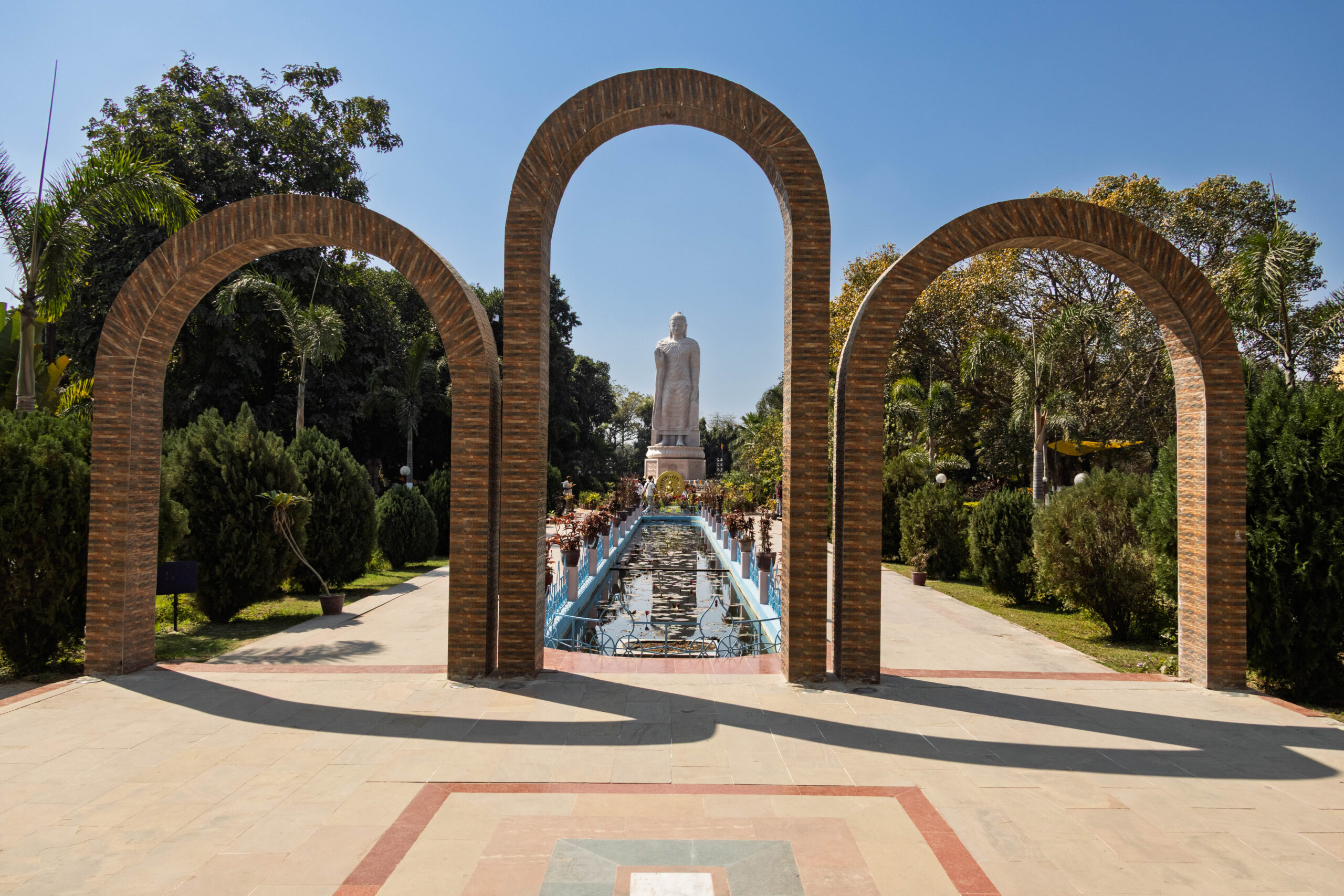
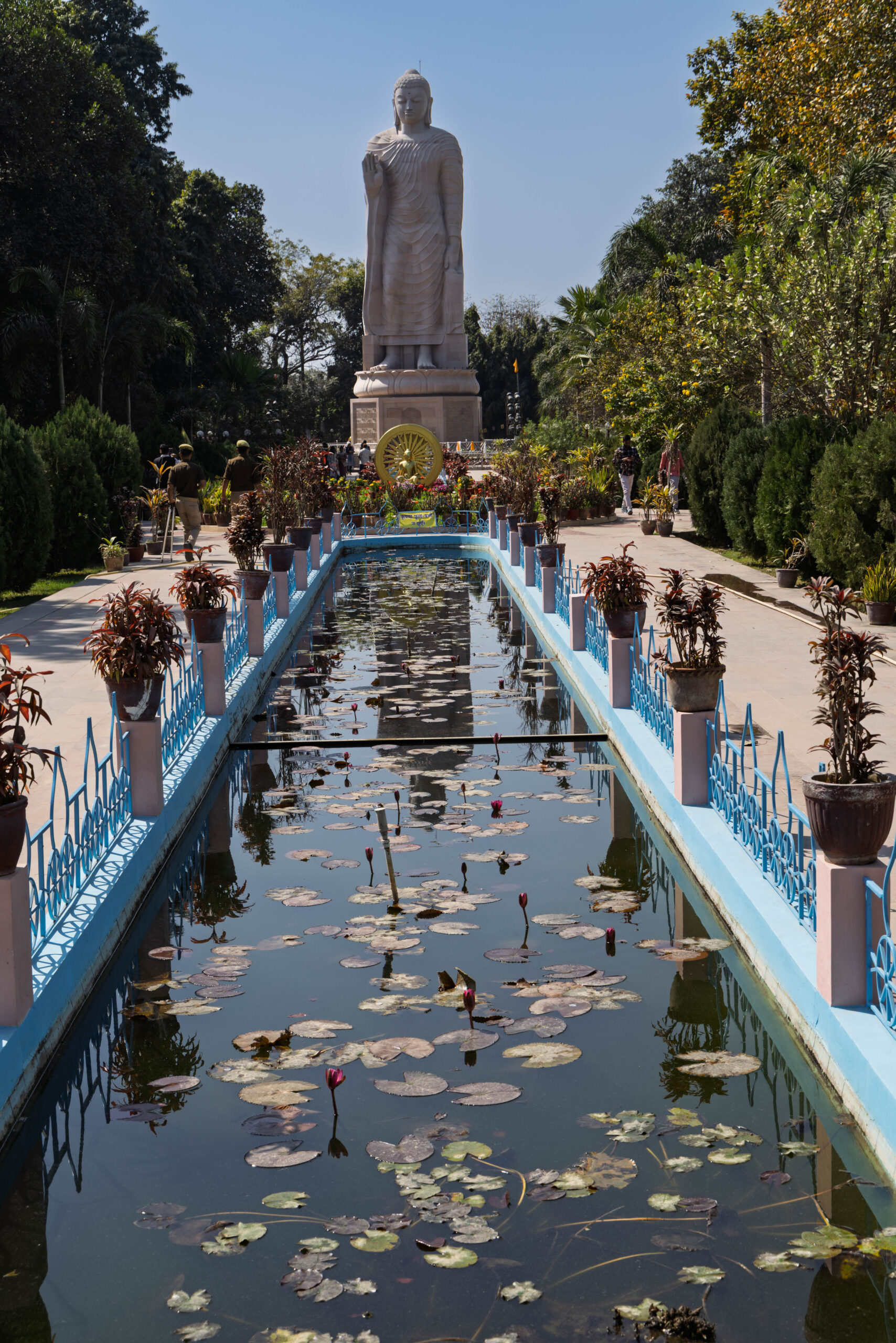
We walked from the museum to the Wat Thai Sarnath Temple, a buddhist temple built by Thai dignitaries in 1933. The temple showcases an imposing 80-foot tall image of a standing Buddha surrounded by manicured gardens and water features.
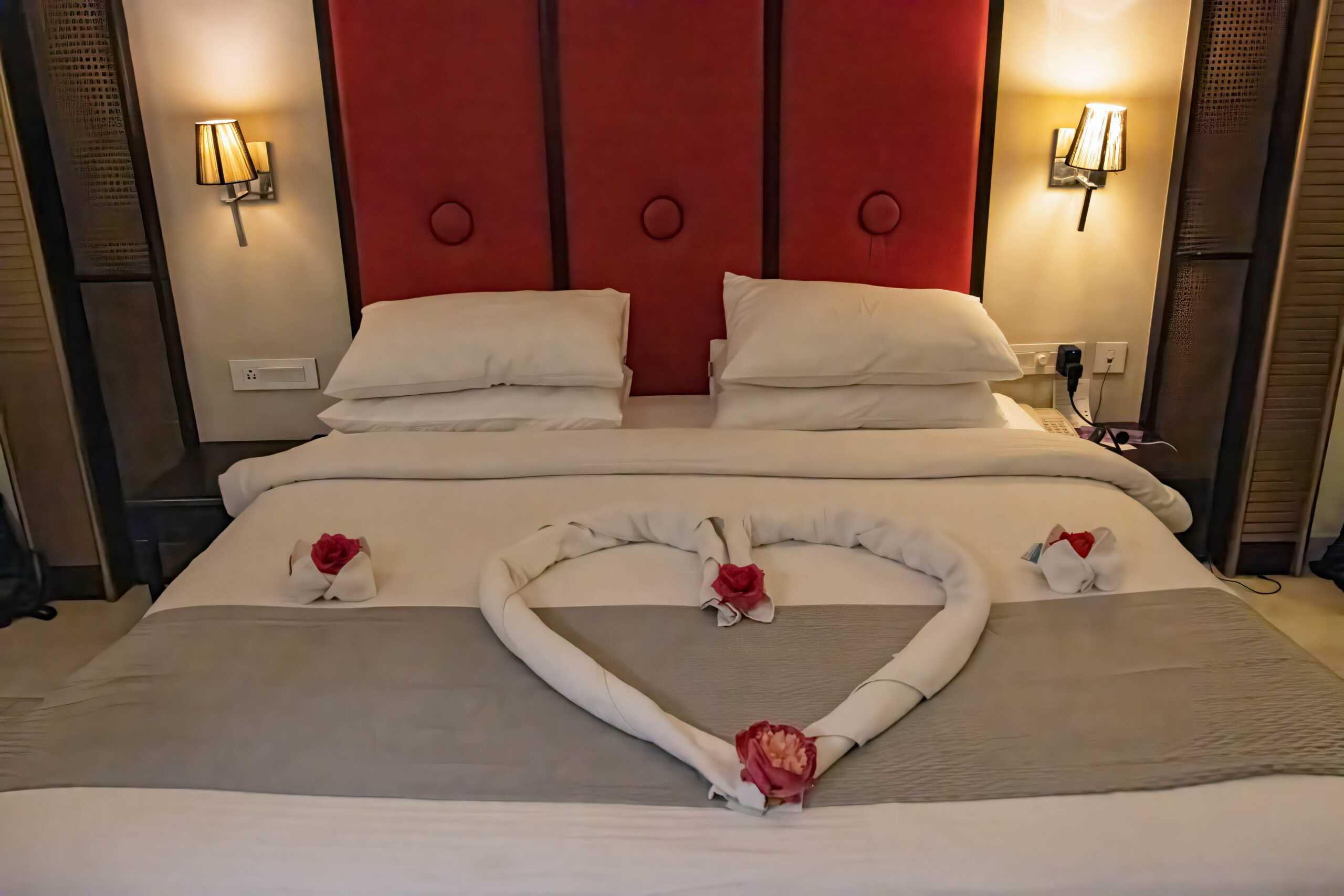
Suneet drove us back to the hotel, where Dinesh left us for a couple of hours of downtime before tonight’s activity. When we returned to our room it was to find our bed adorned with some towel art – a heart in the centre made from our bath towels with lotus flowers on each side folded from our face washers.
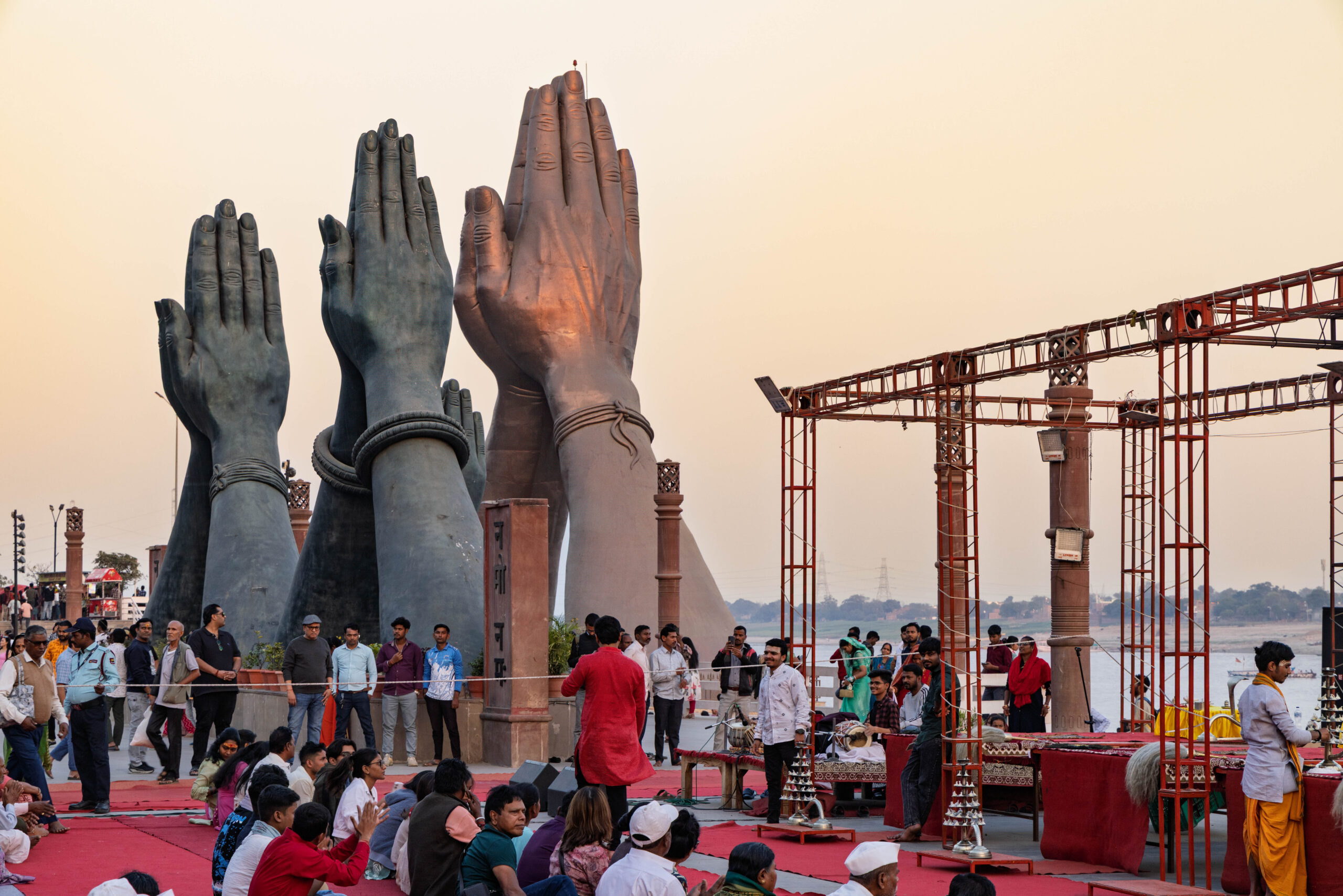
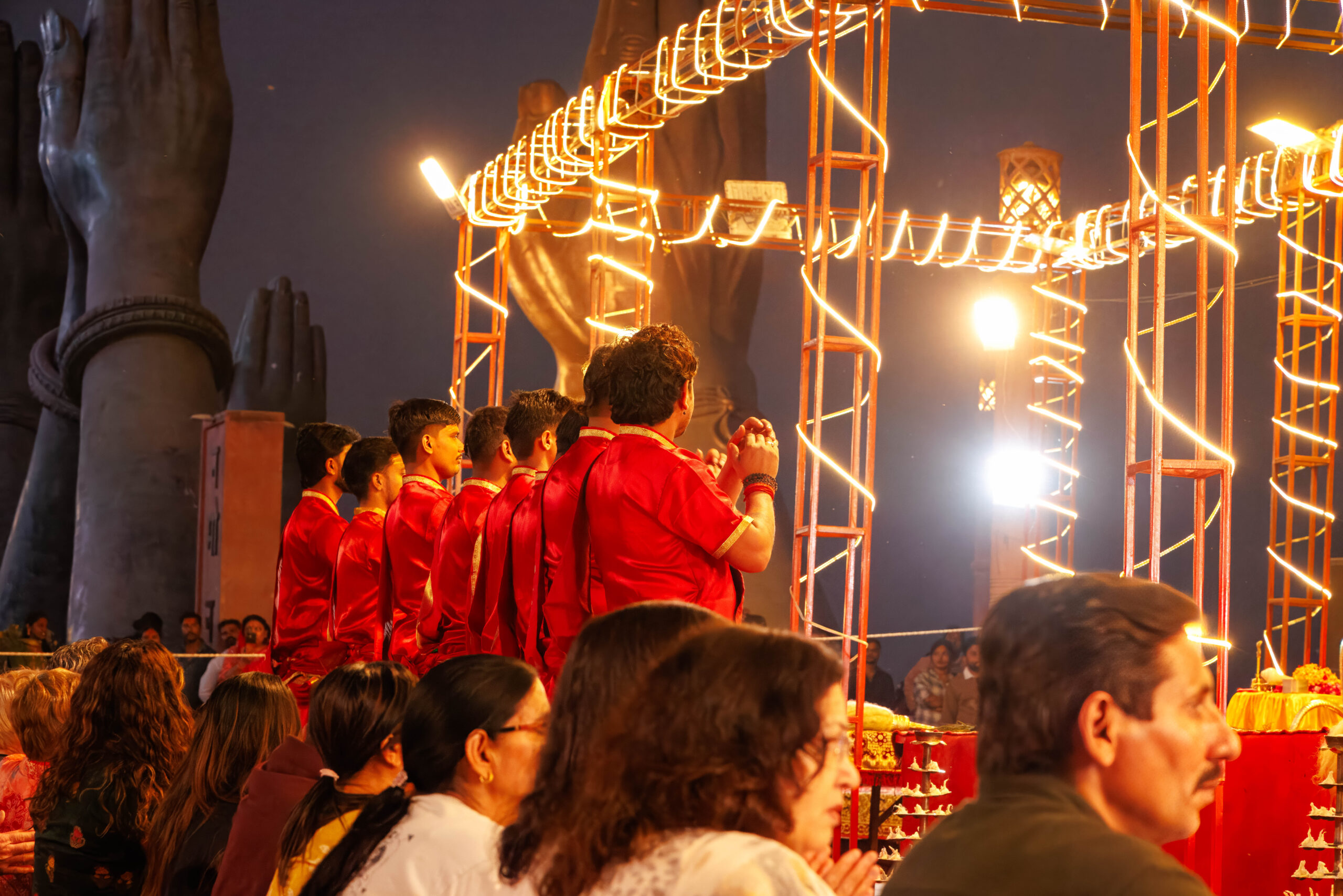
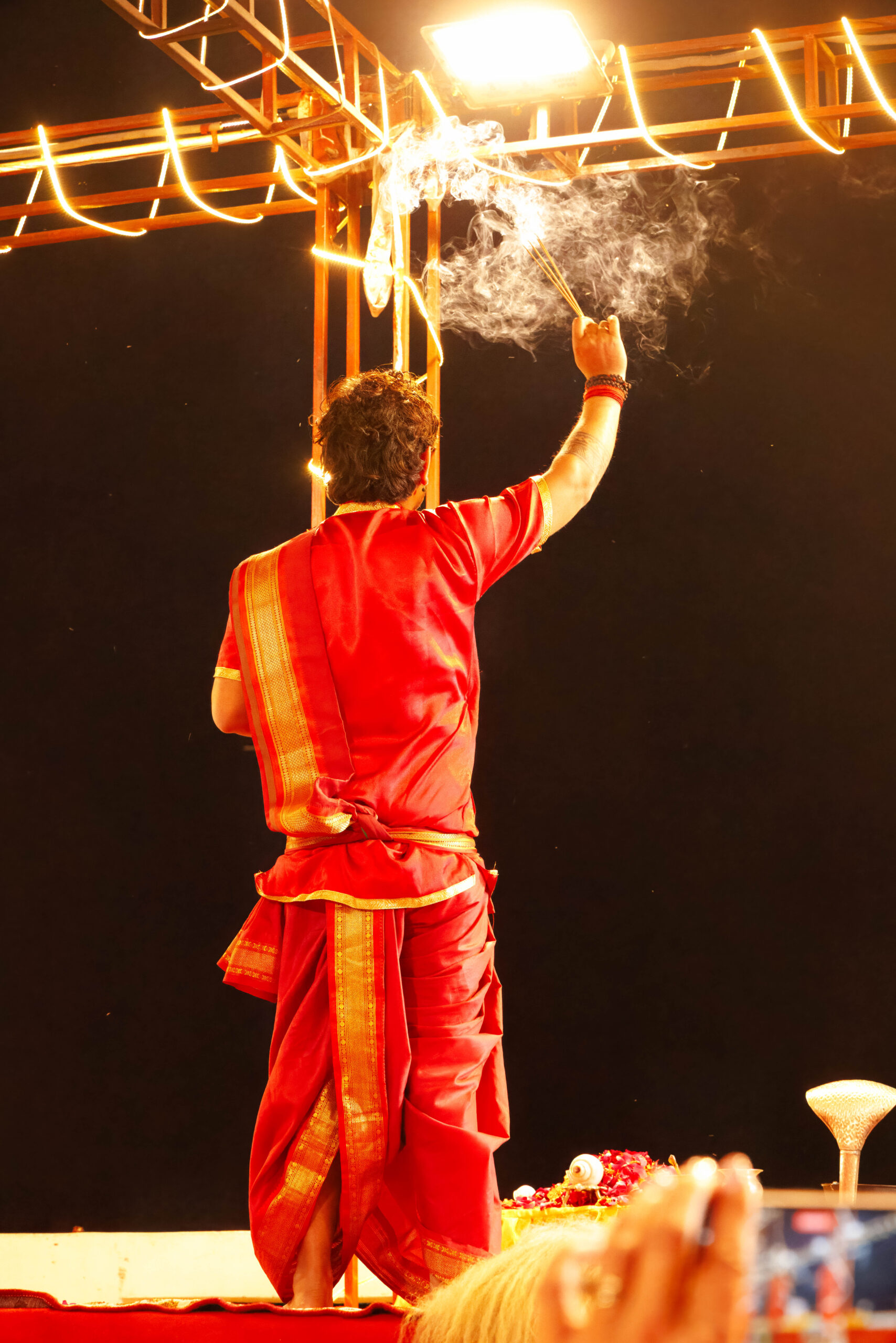
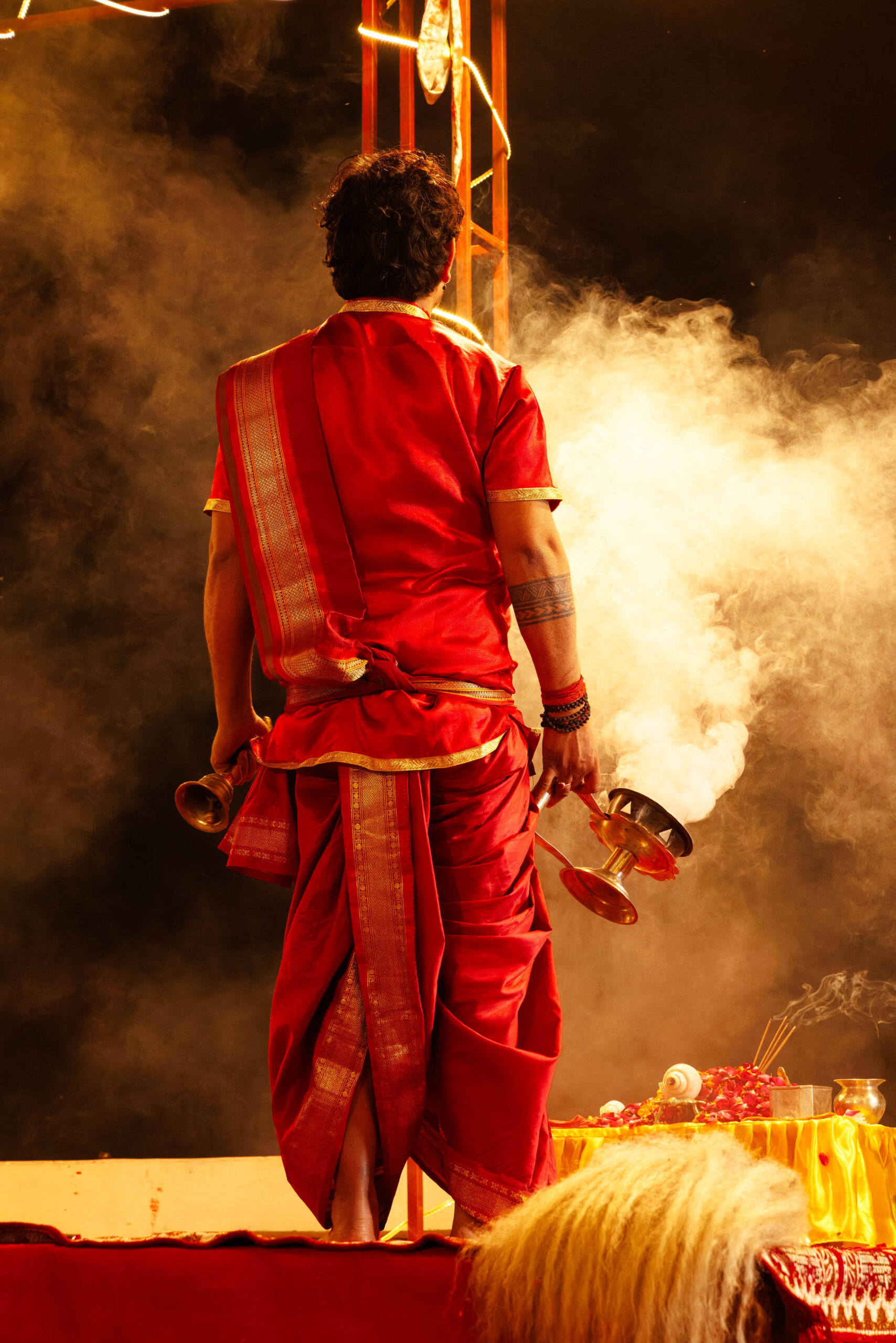
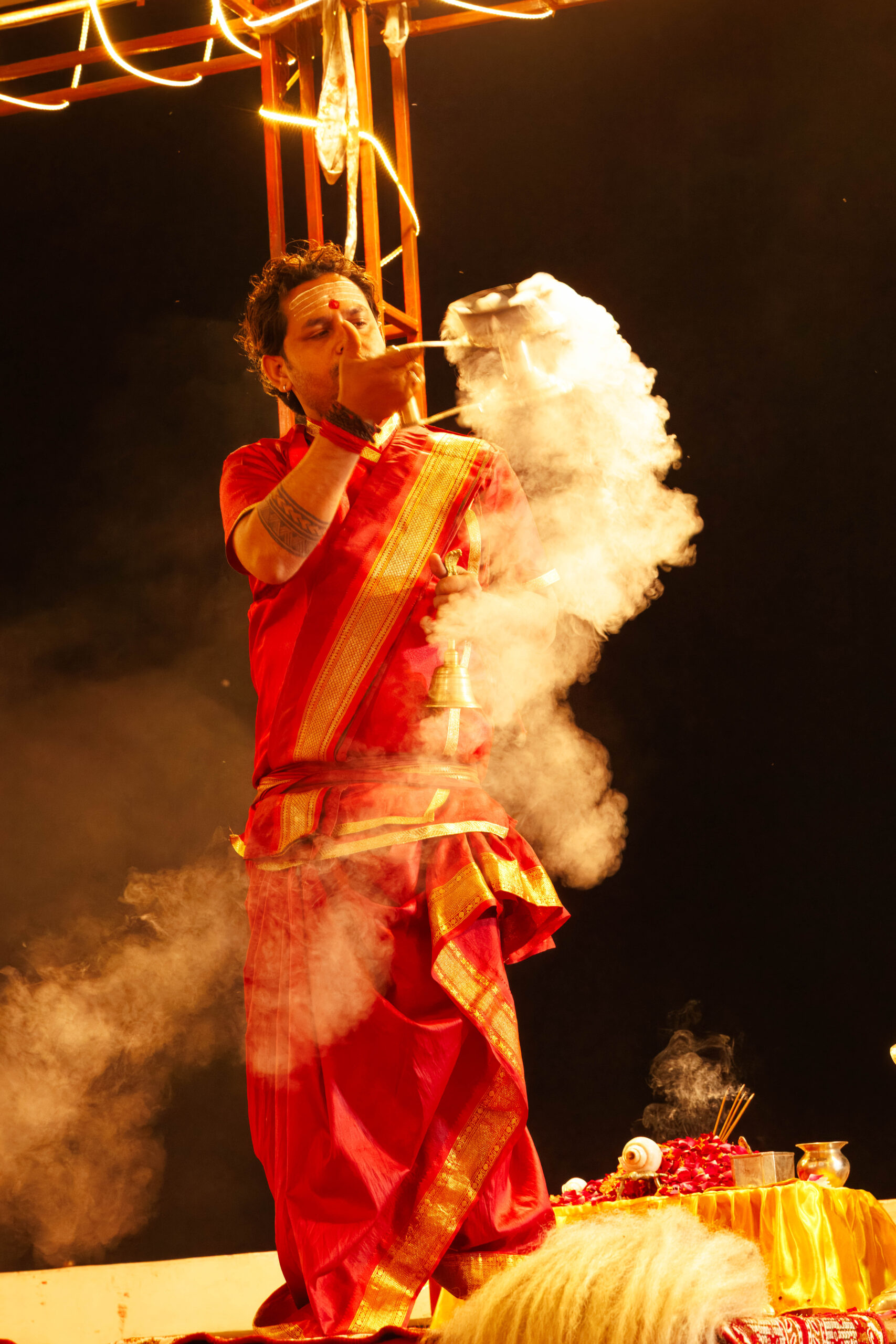
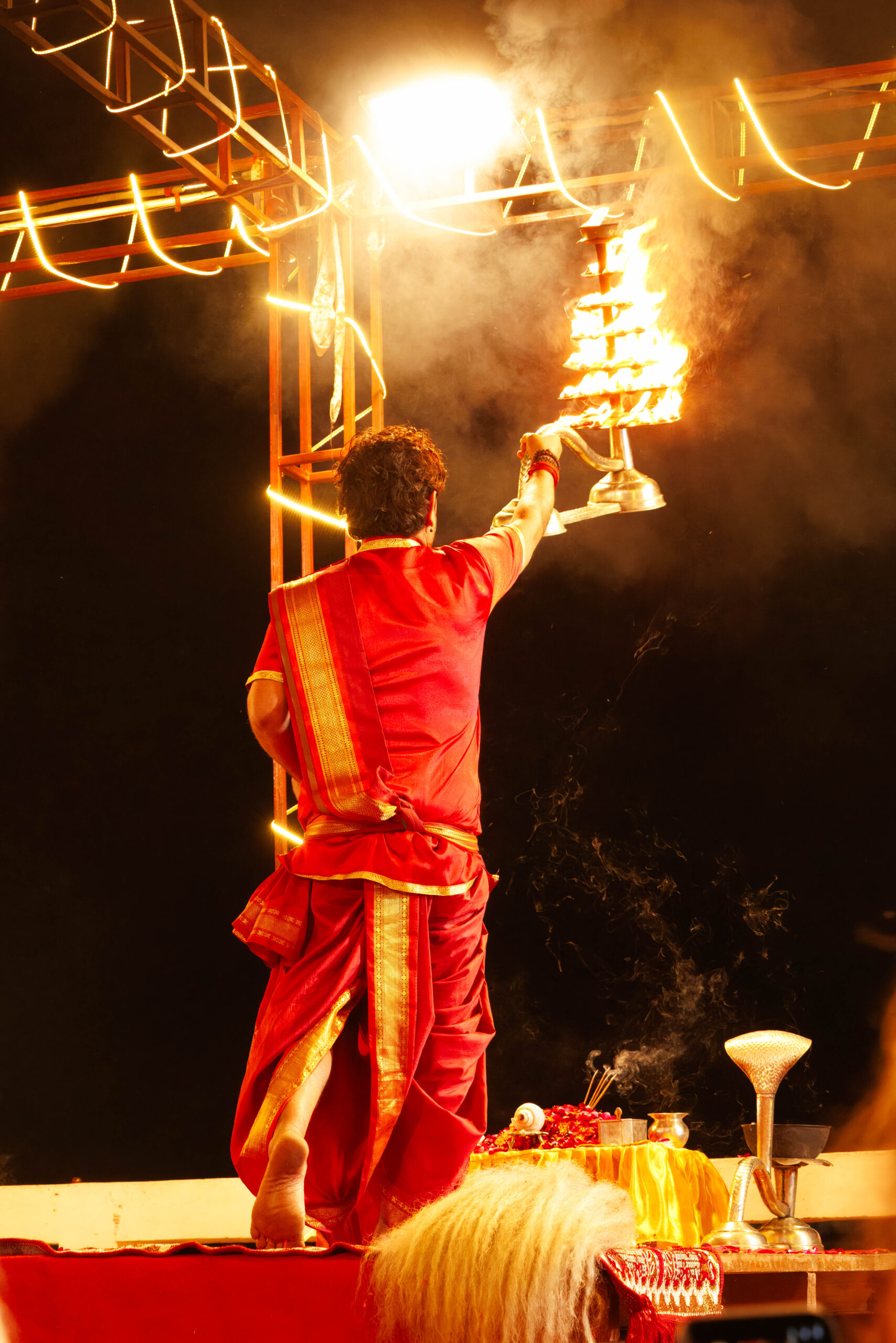
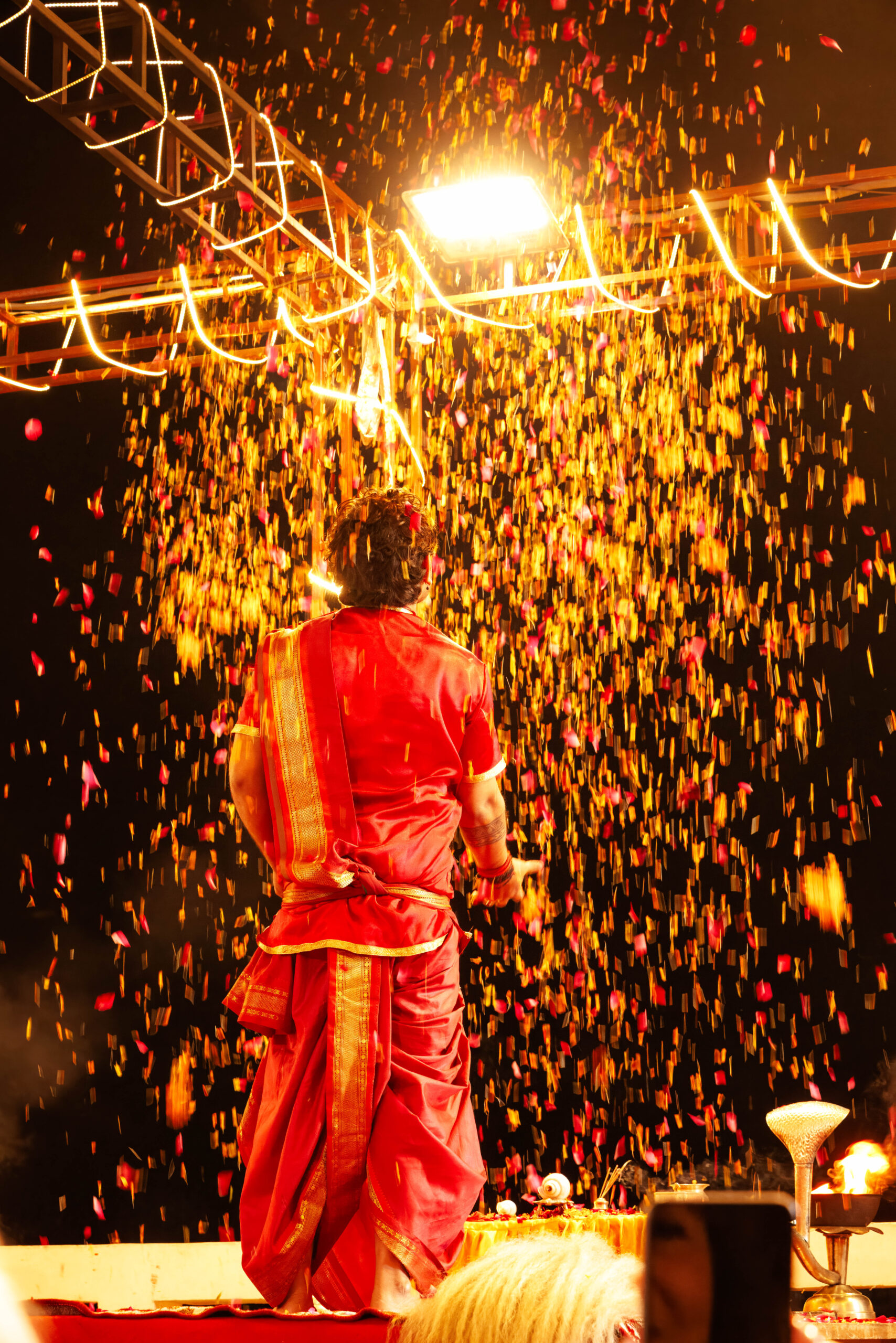
We were picked up again at 5.00pm to drive back to the Ganges River to witness the glittering Aarti ceremony that takes place every day at dusk. Once again, we joined a river of people making their way to the actual river. Dinesh secured us positions on the red carpet right in front of the ‘stages’. It was a bit hard sitting on the concrete covered with a very thin red carpet but, we were very close to the ceremony.
The ritual is performed by seven young priests in traditional attire on elevated platforms who perform choreographed movements involving incense, sandalwood tapers, heavy brass lamps loaded with burning candles, peacock feather fans, water, flowers and a conch shell horn. The ceremony symbolizes the eternal bond of the city with the Ganges River. Very intense.
Back at the hotel we went to the hotel restaurant for a late dinner deciding tonight to share a vegetarian biriyani. Once again served in a terracotta pot with the lid sealed on with what looks like bread dough. Bernie is so keen on these biriyanis that he is talking about attempting biriyani at home. I wonder if we can source a traditional clay pot??
Steps:13,495 (8.50kms)