Sunday, 26 April 2026
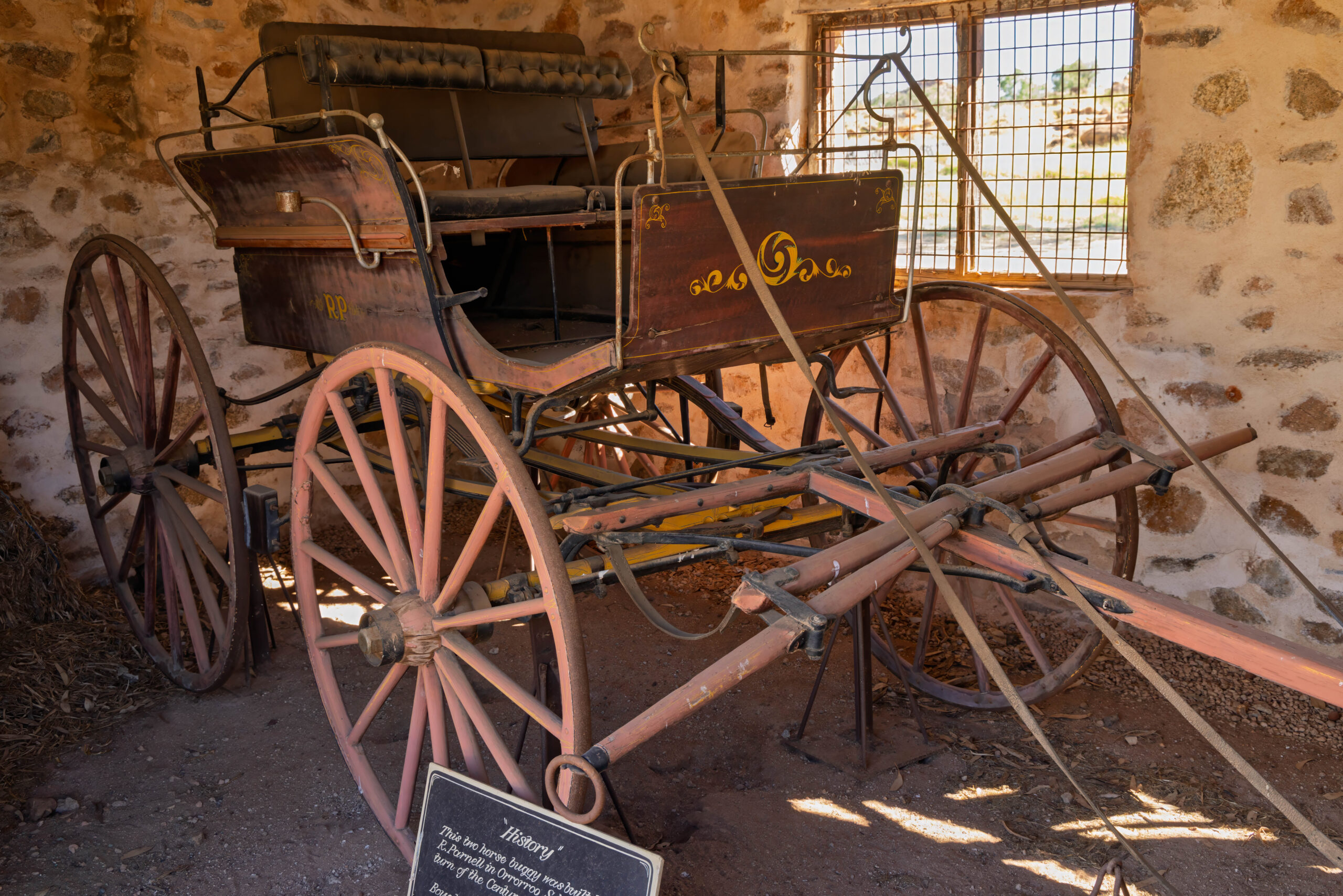
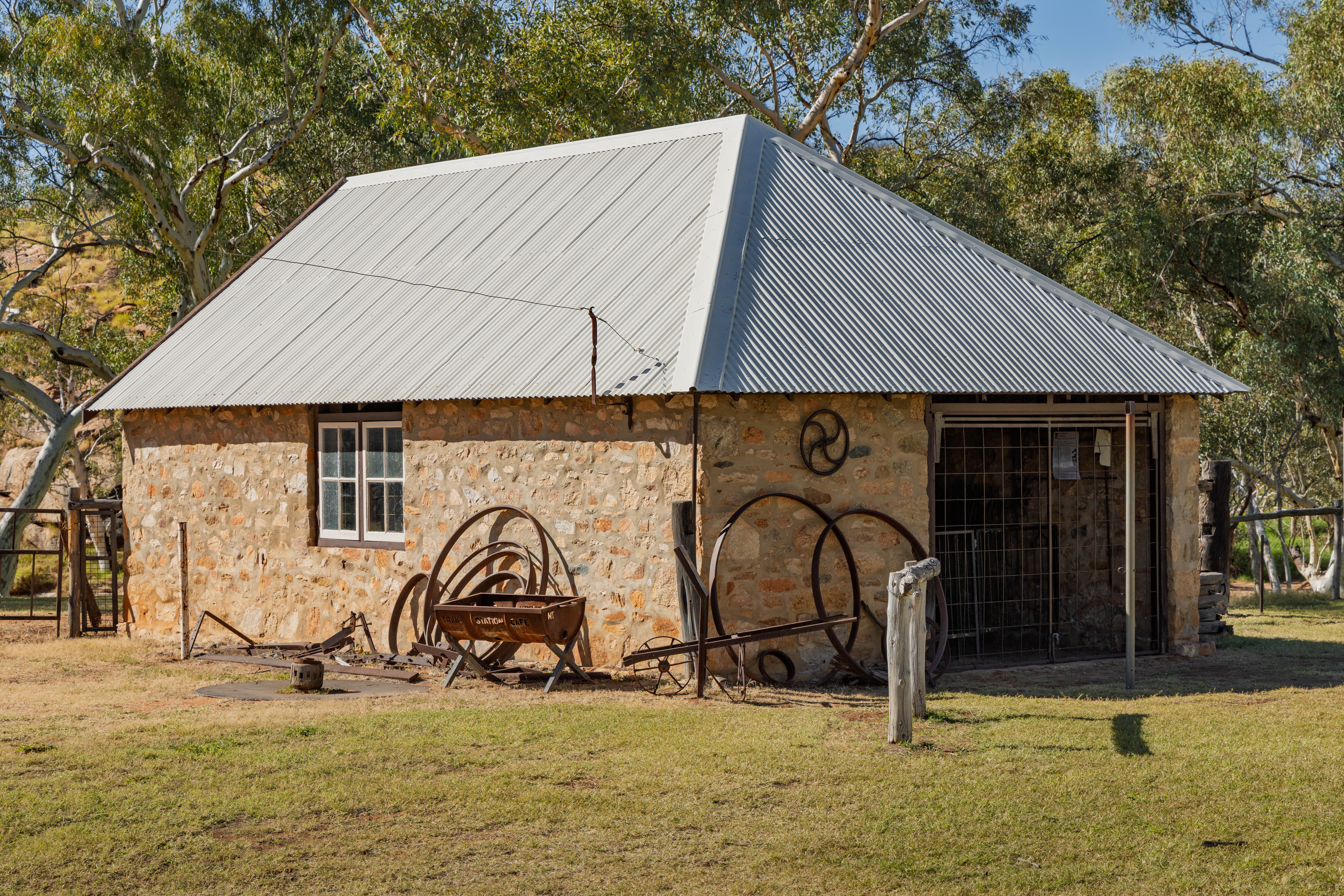
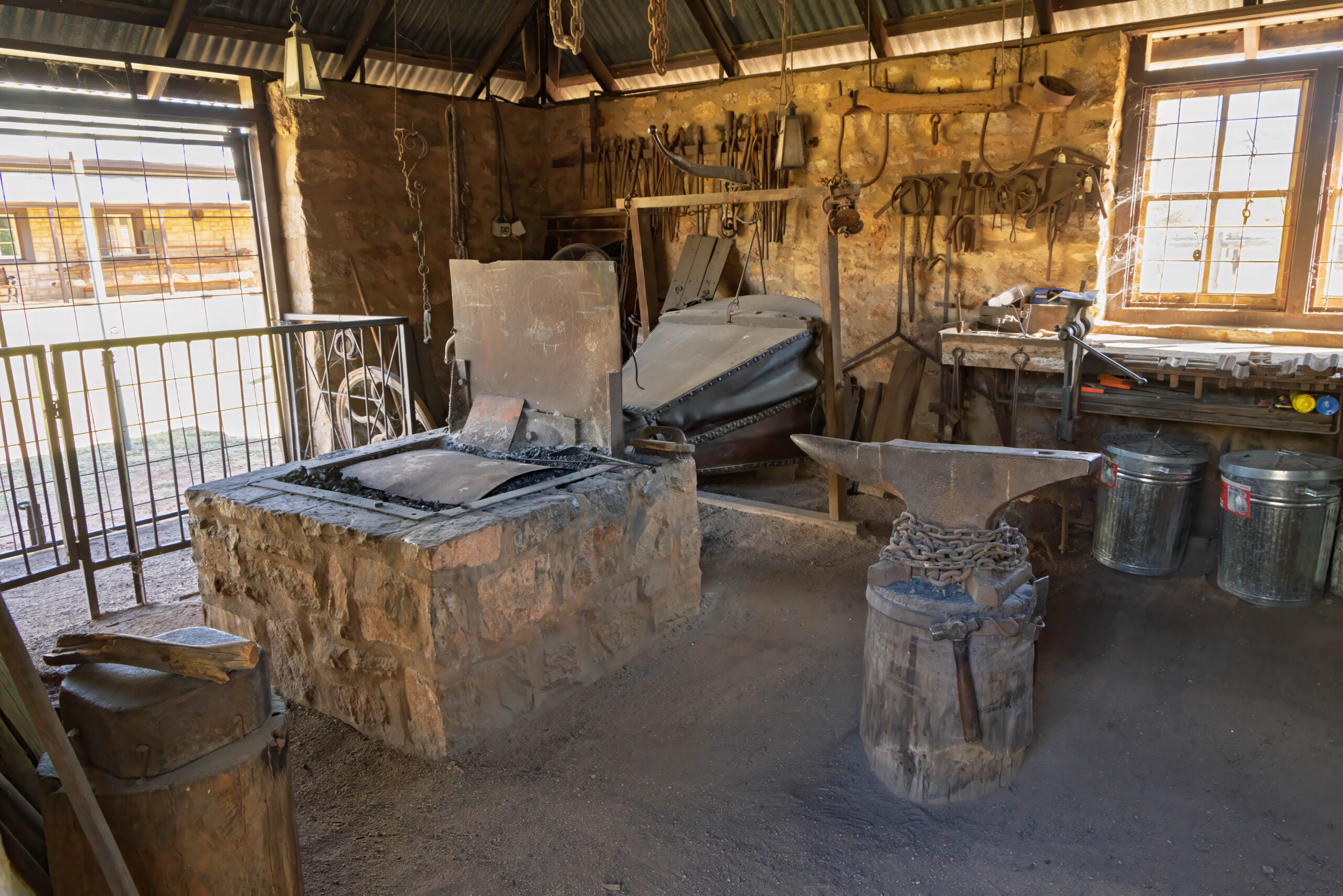
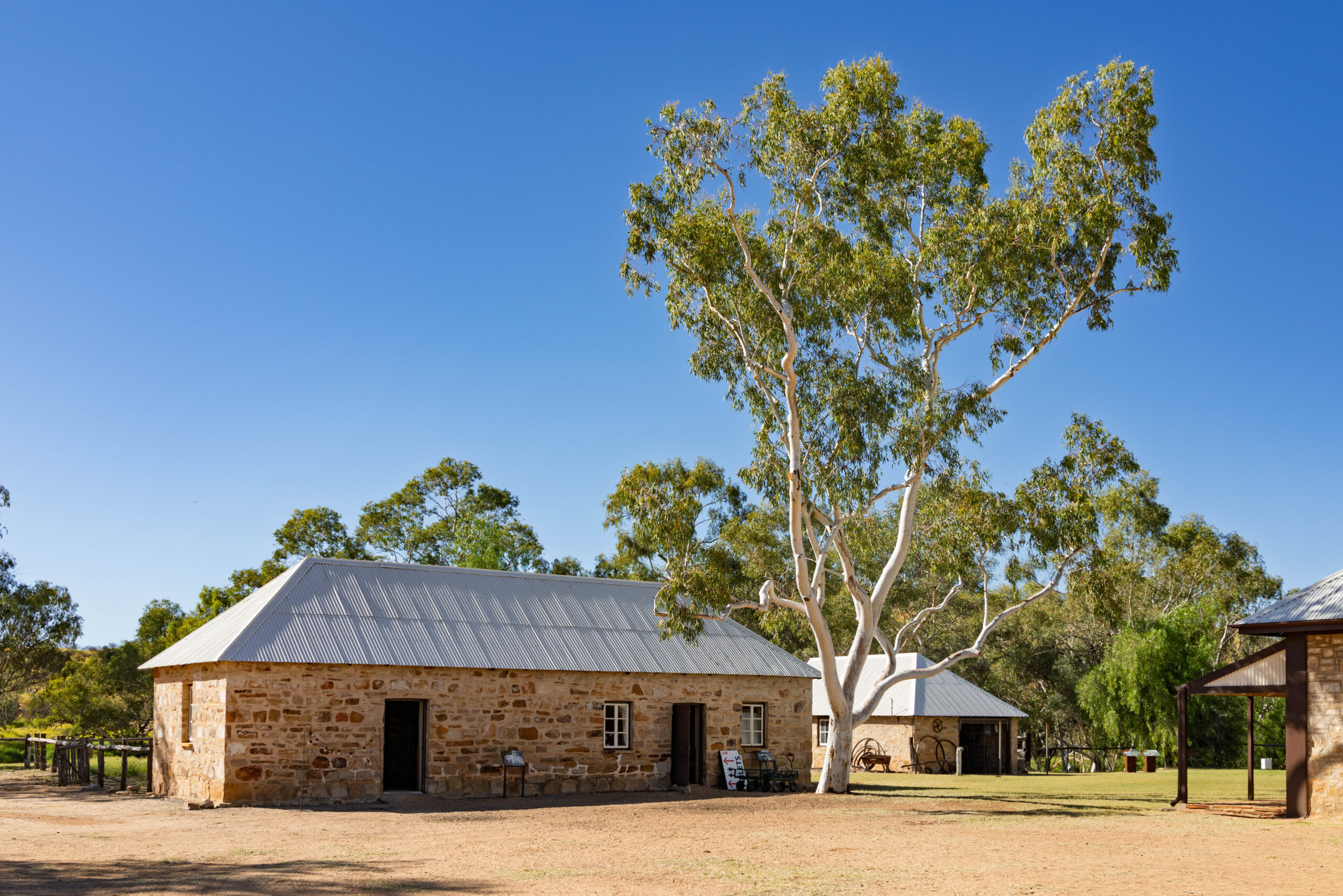
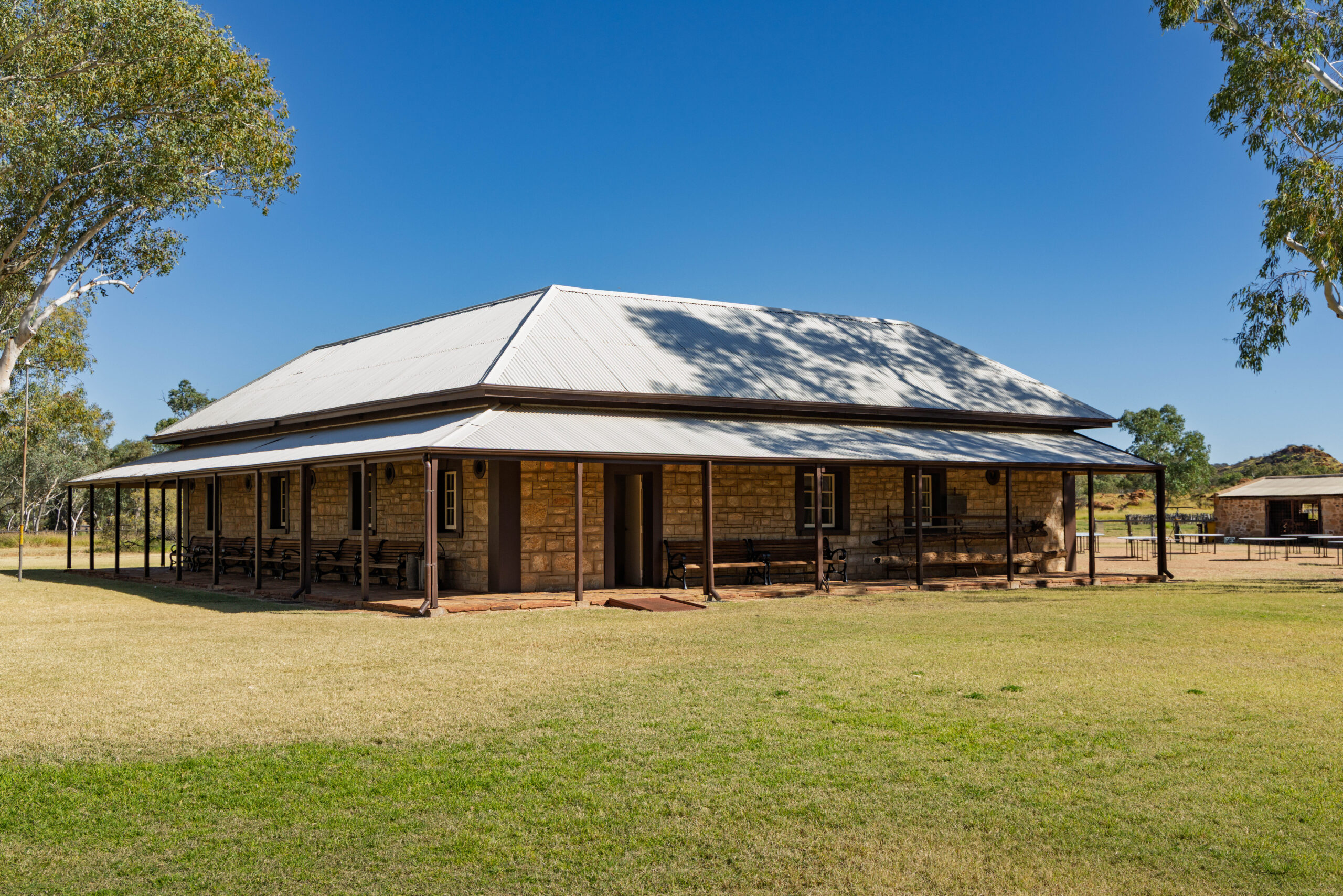
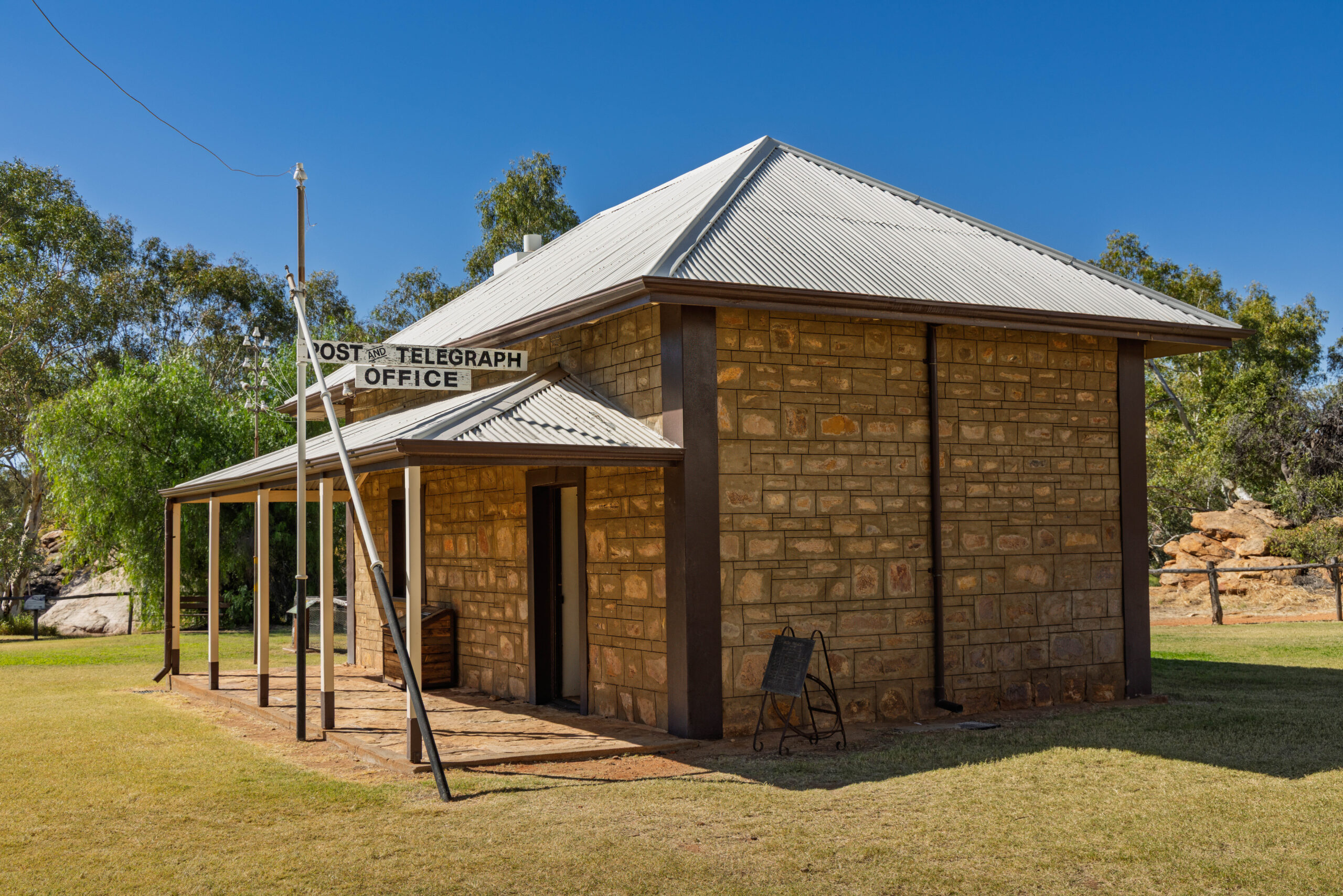
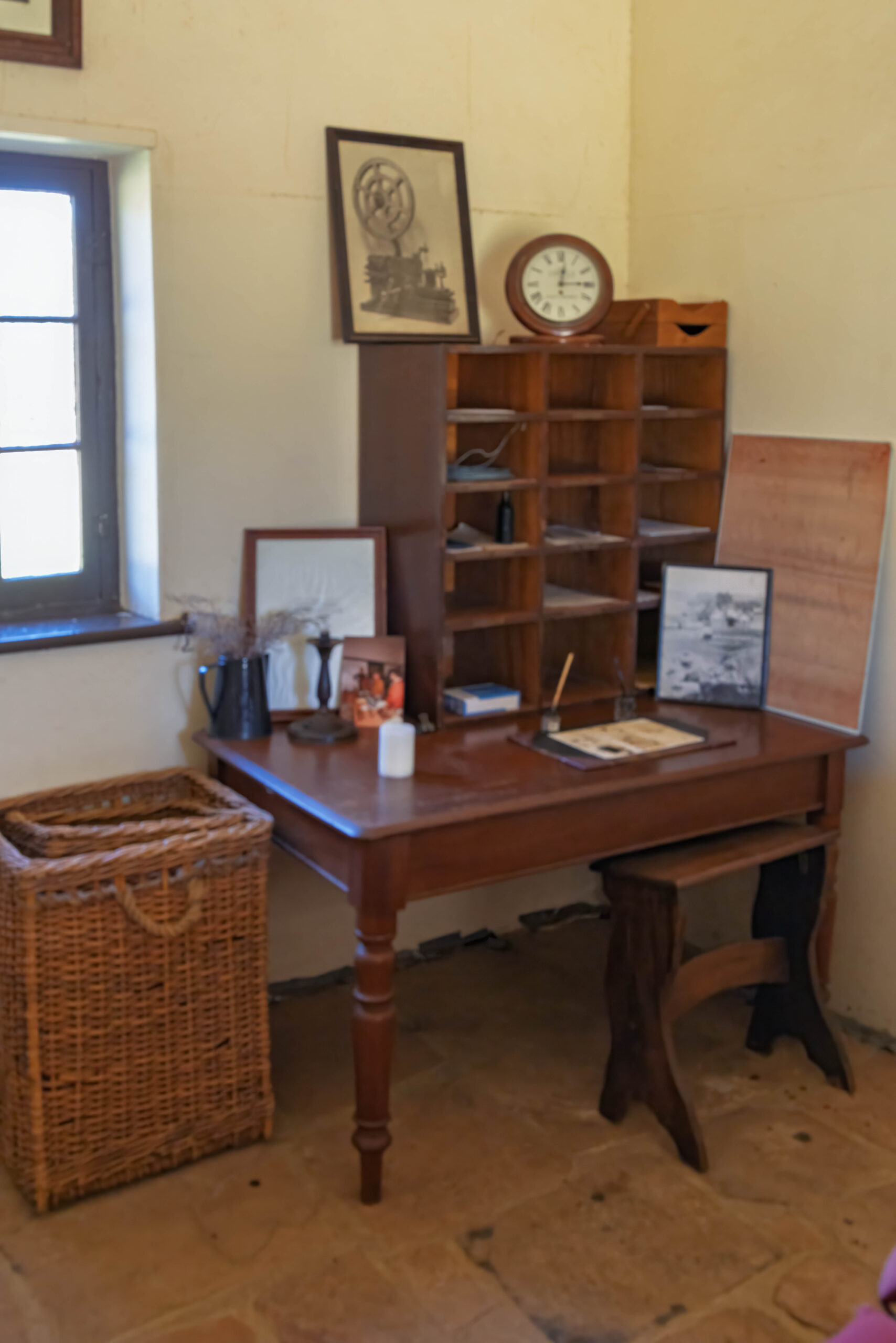
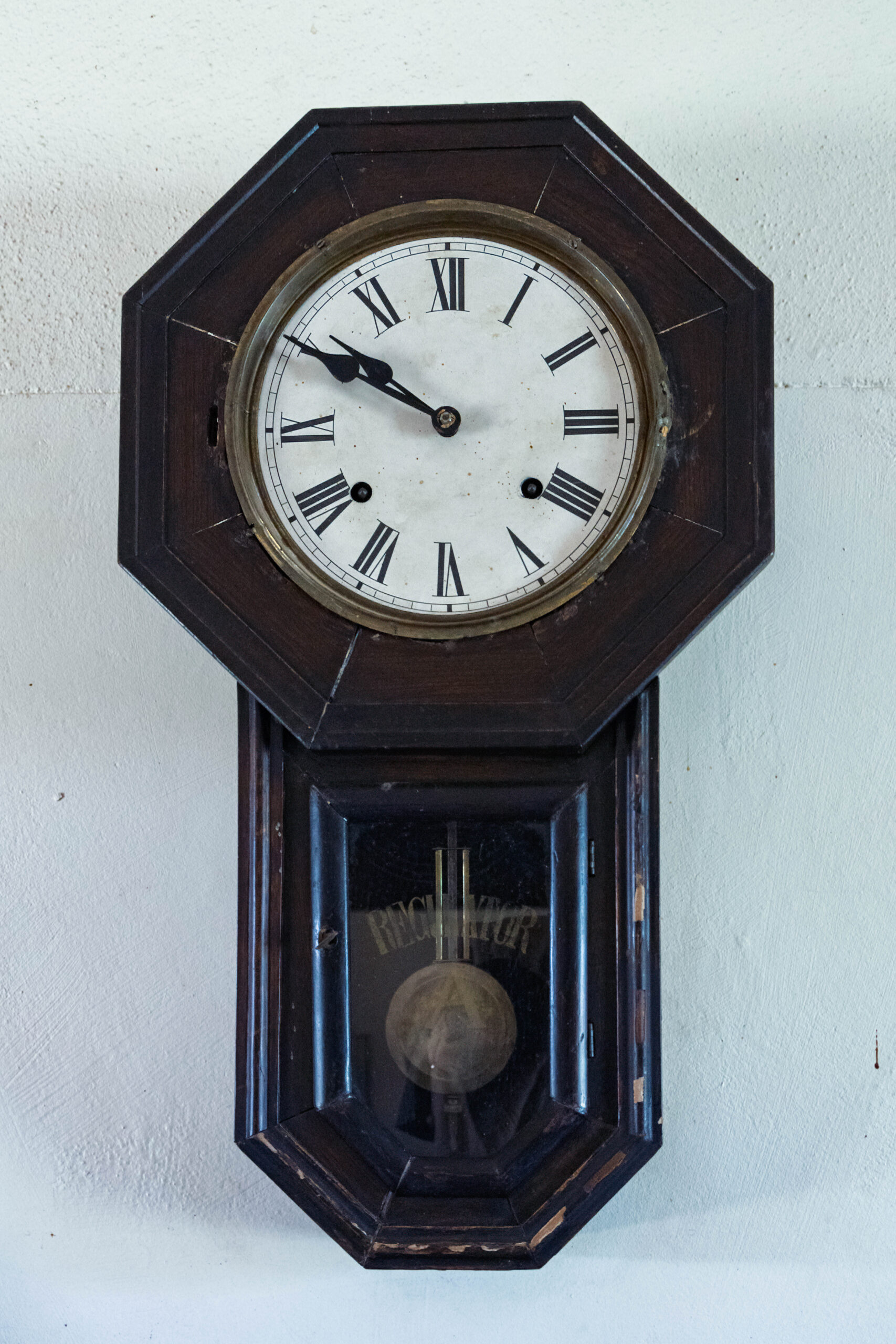
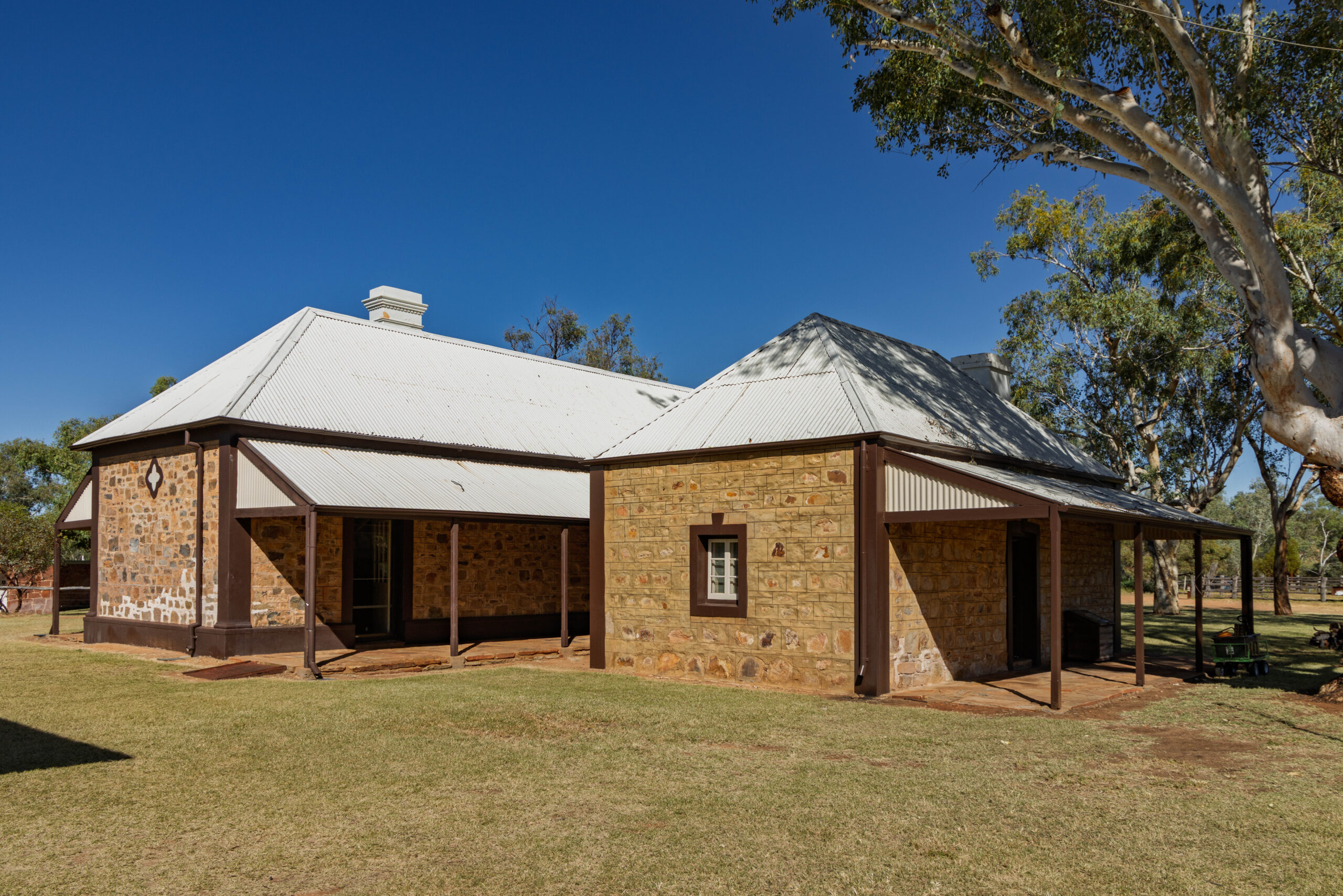
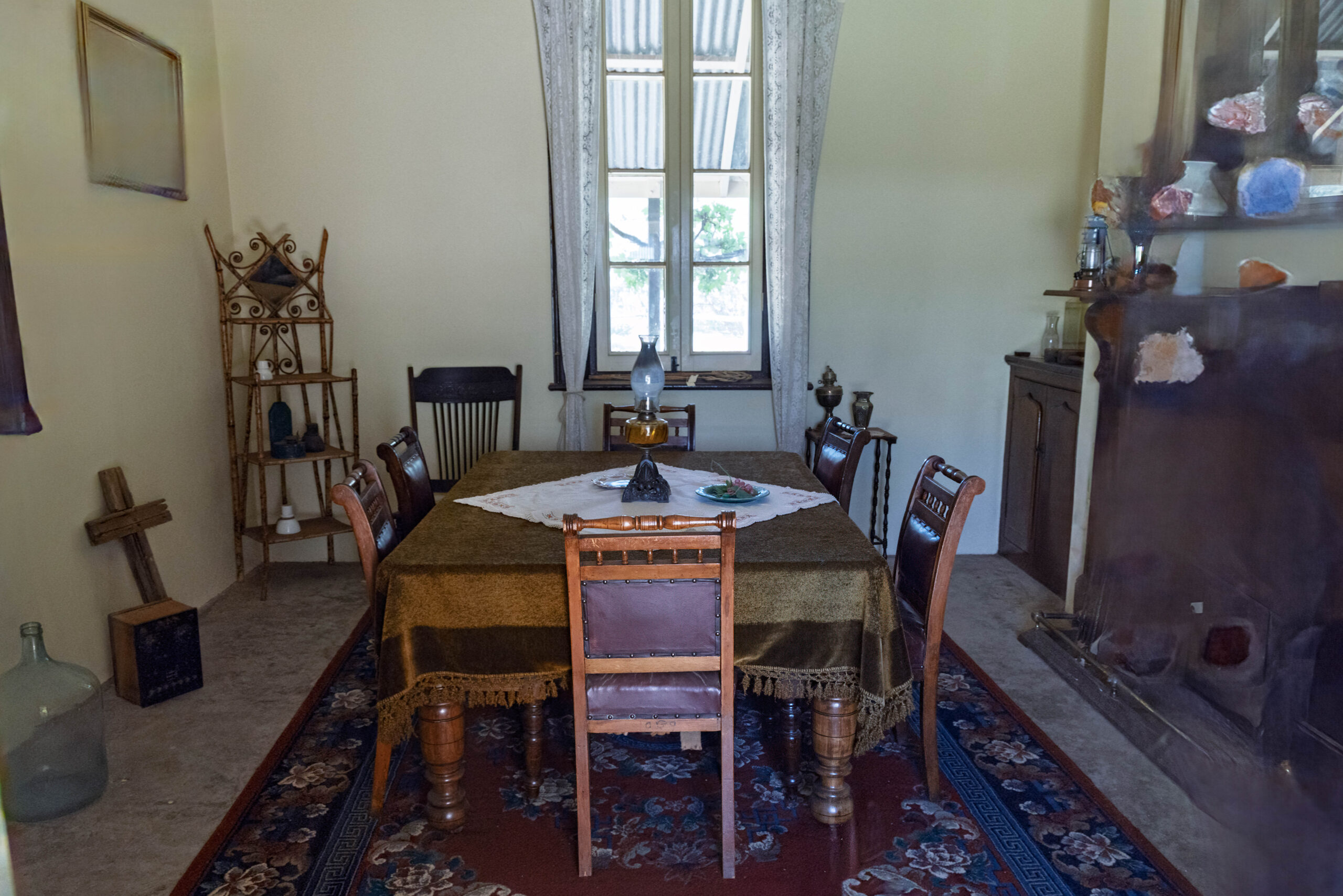
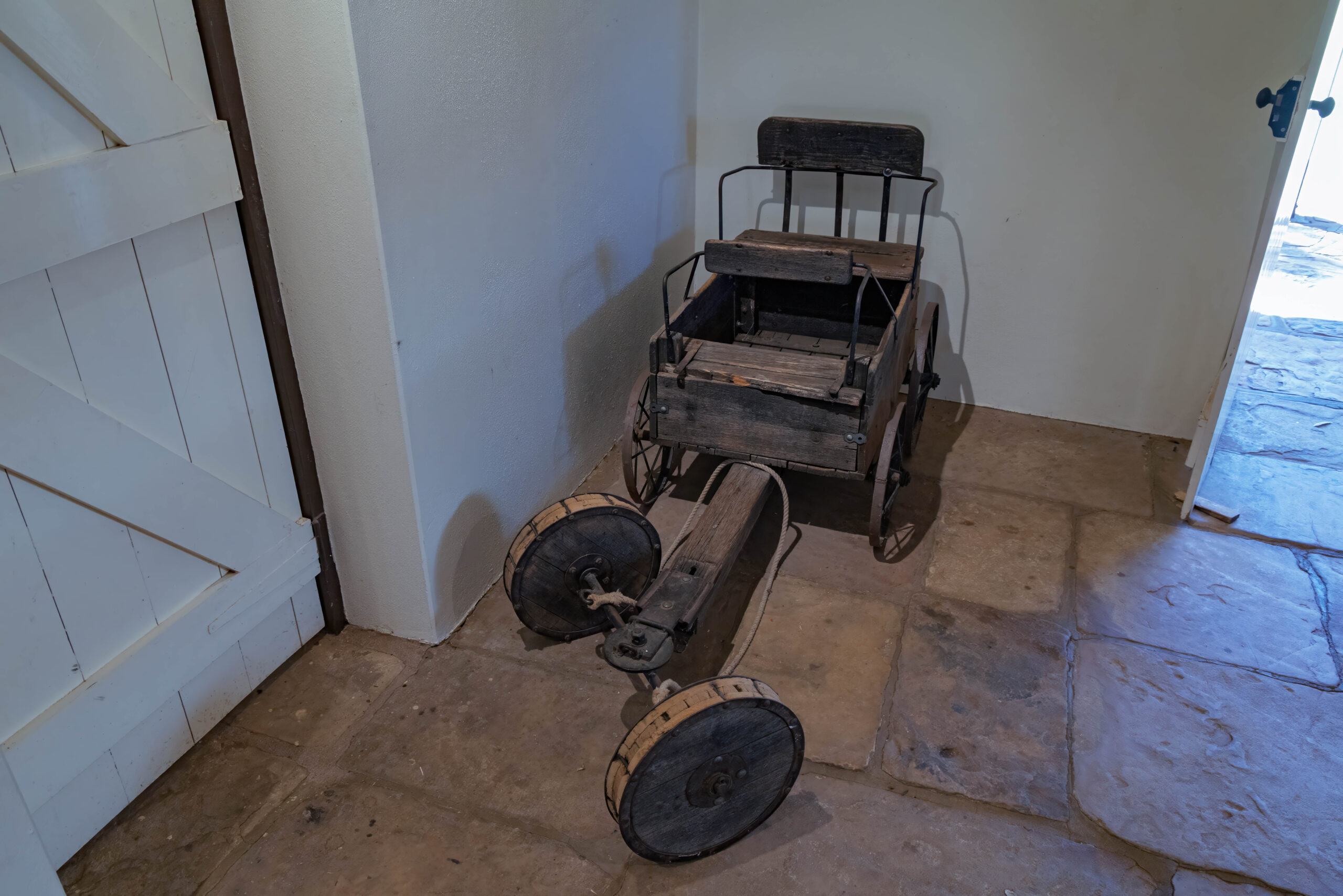
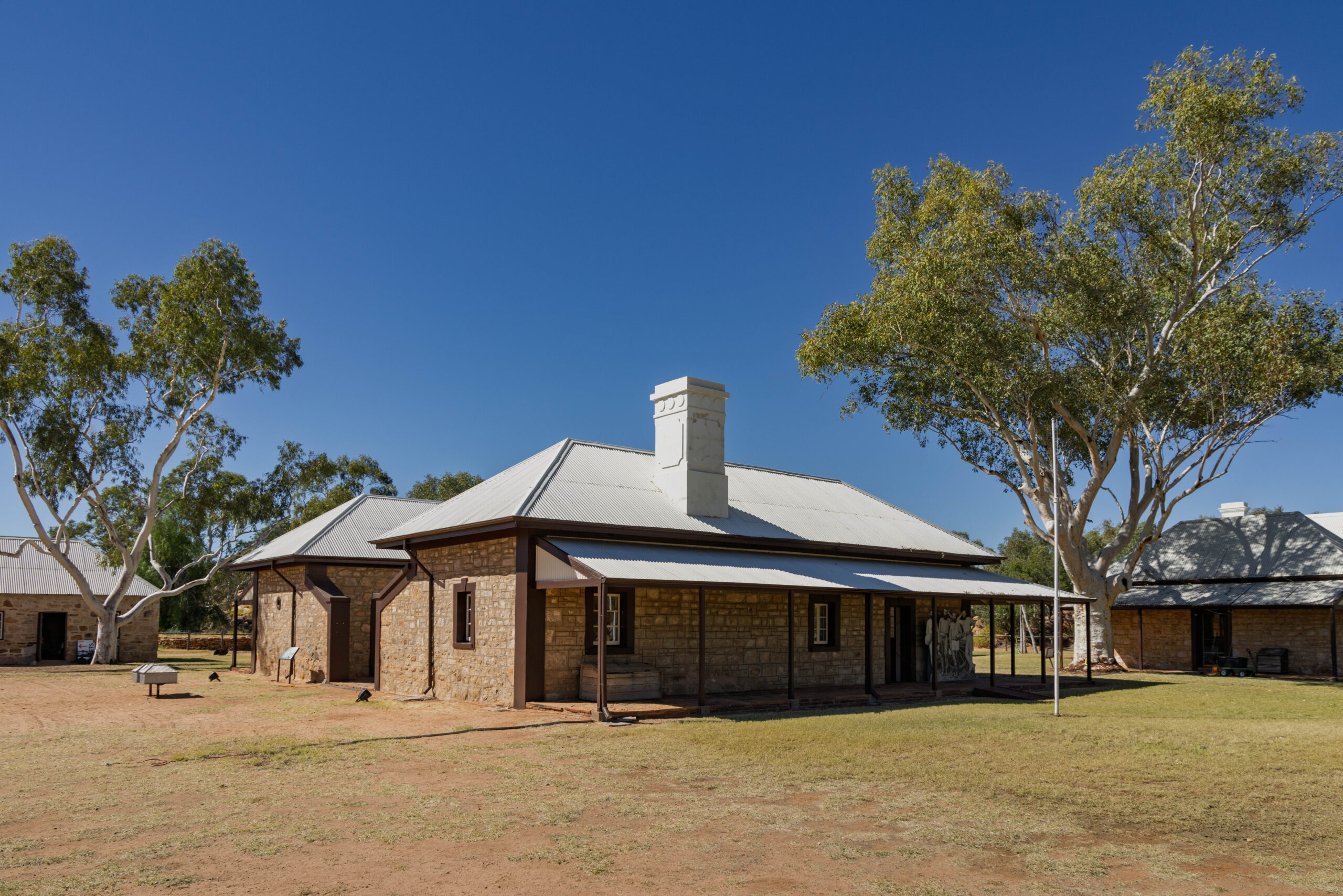
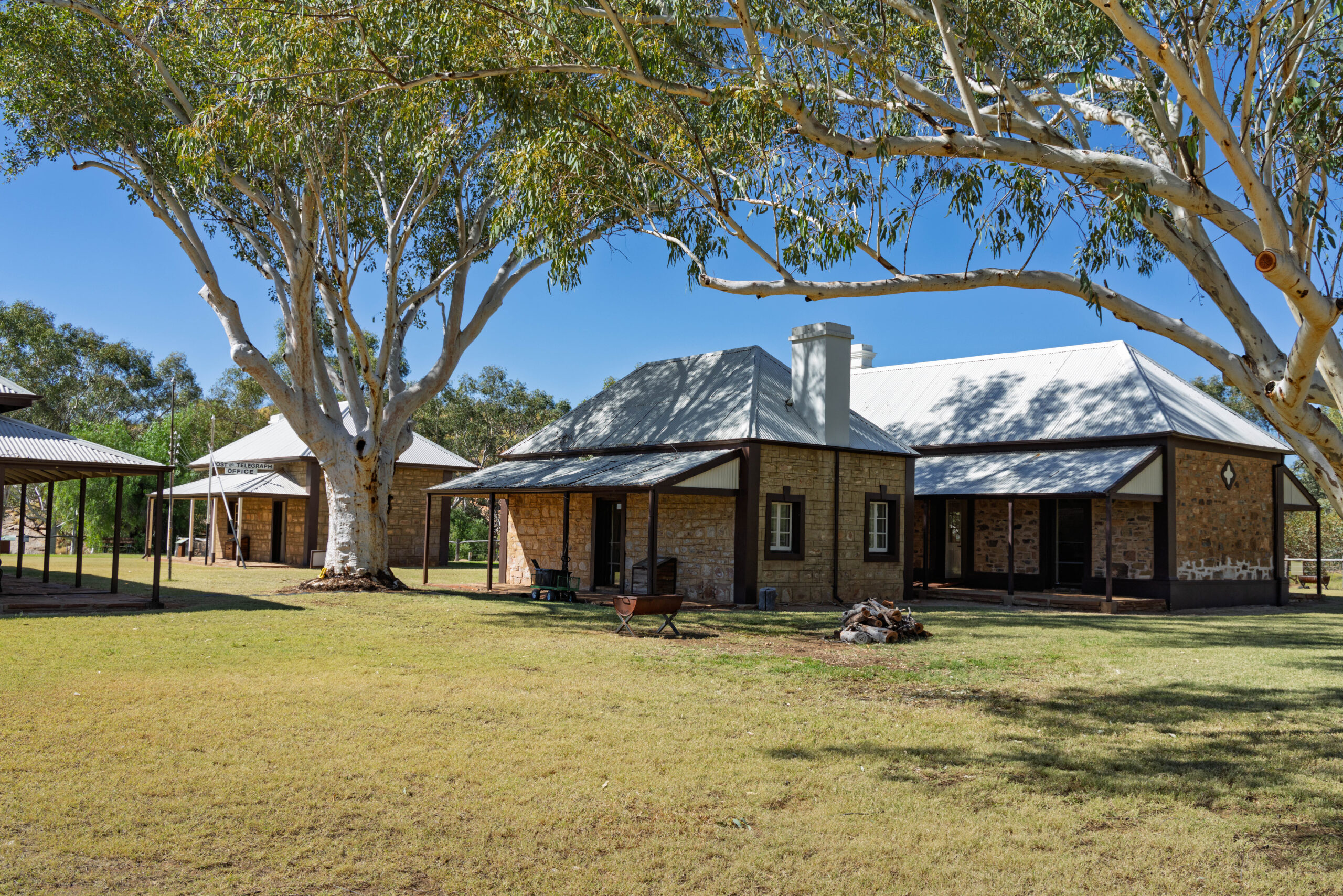
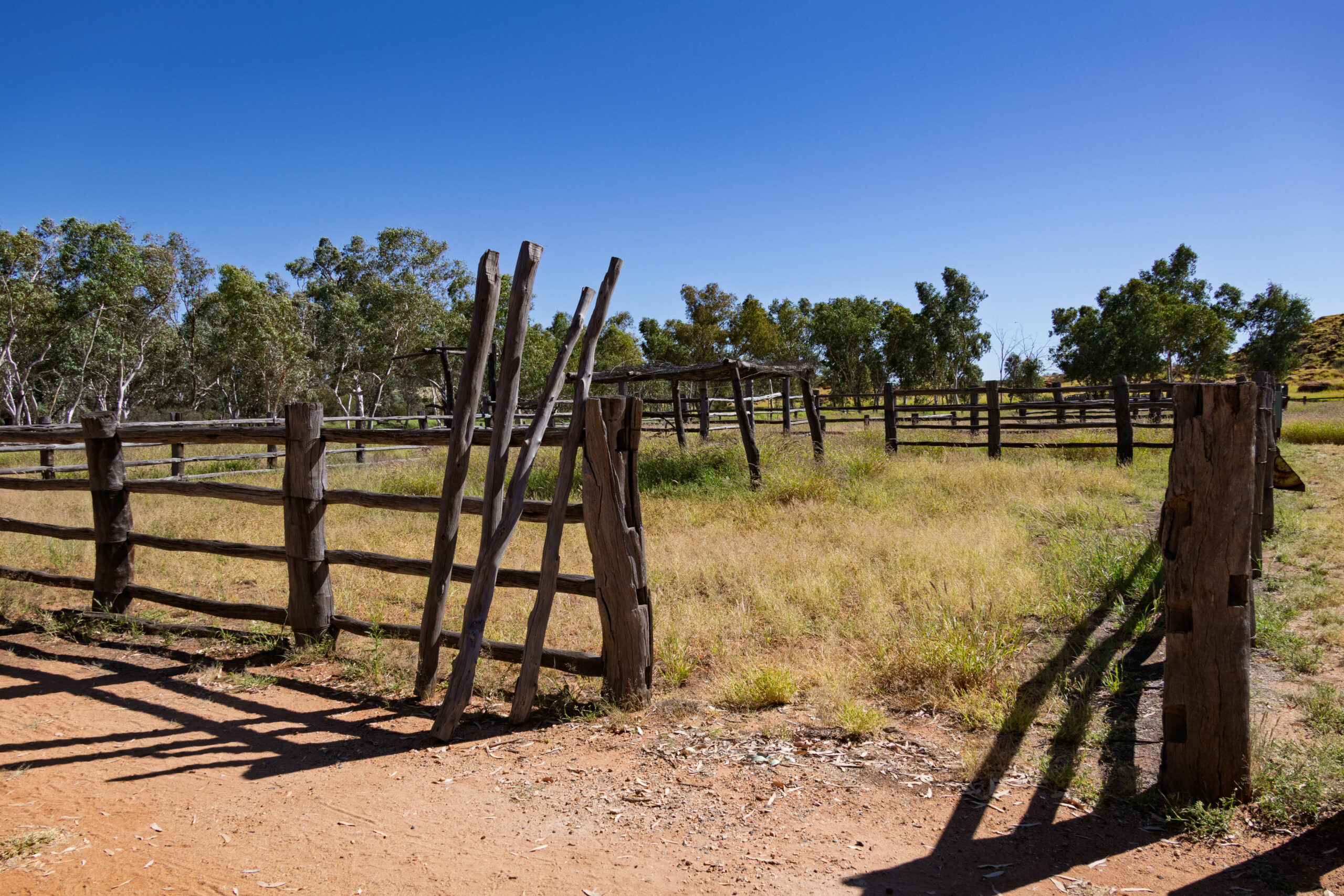
To mix up our tourist experience a bit, this morning we visited the Alice Springs Telegraph Station. We arrived before 9.30am so that we could join the 9.30am introductory tour. Our enthusiastic guide, Danielle, took three of us through the turnstile and gave us a quick history of the site, starting with the importance of the site to the Central Arrernte people, especially the Arrernte women who used the area for ceremonies. After providing us with an overview of the history of the site, she left us to explore further on our own.
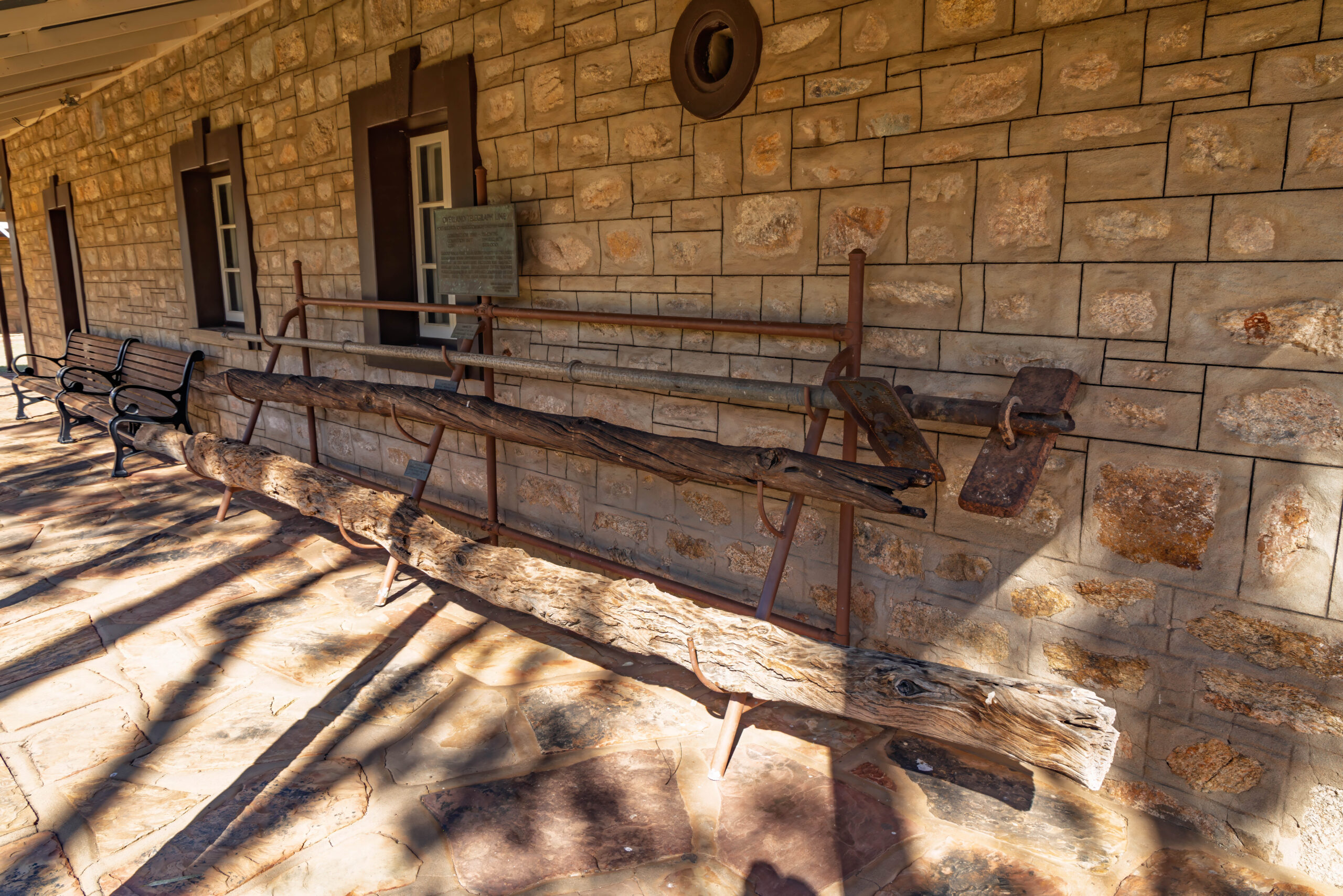
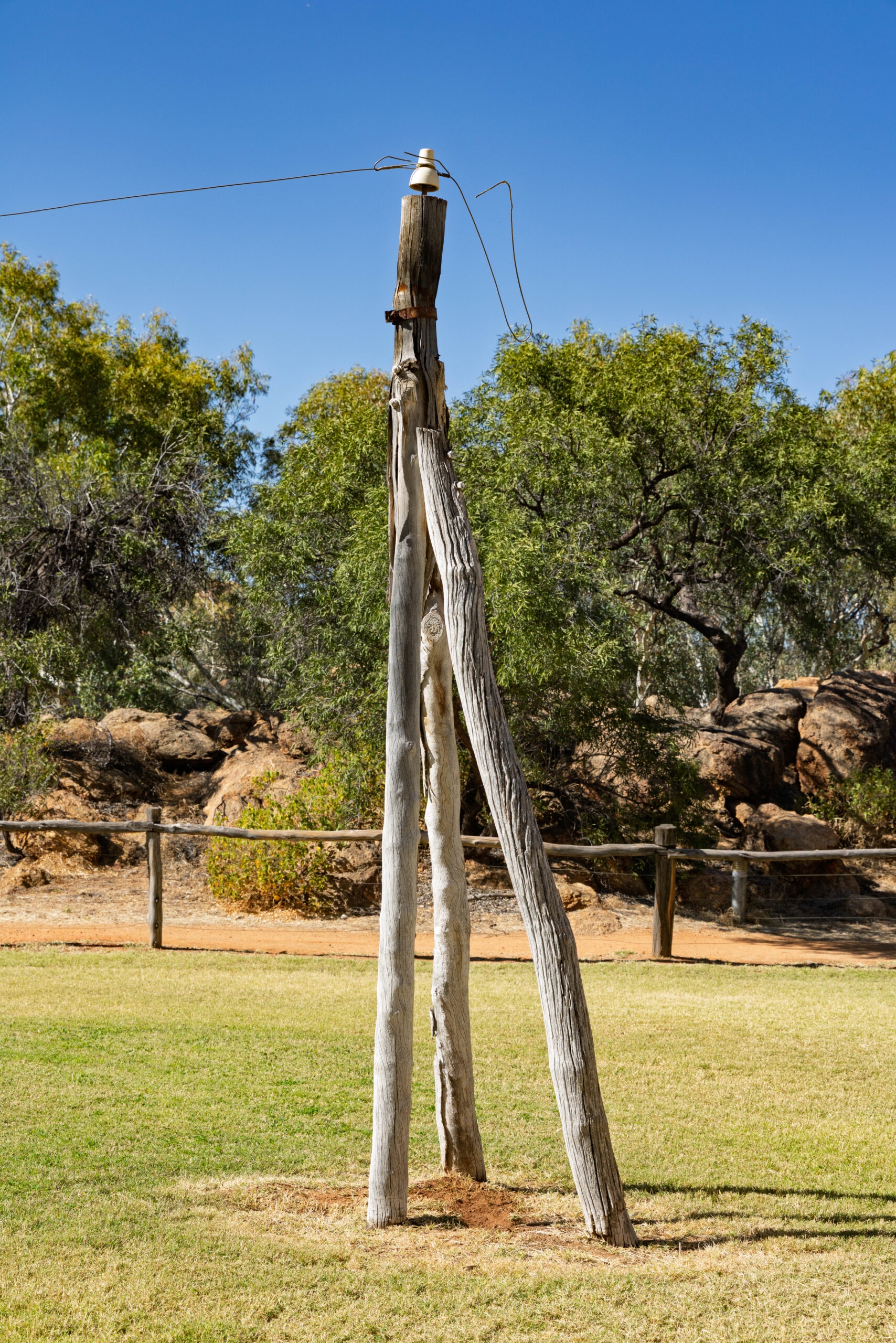
After John McDouall Stuart’s successful crossing of Central Australia in 1862 (on his third attempt) Charles Todd, South Australian Superintendent of Telegraphs, was given the task of constructing the Overland Telegraph Line from Adelaide to Darwin, to connect Australia to the world via the submarine cable laid across the Indian Ocean to the Northern Territory by the British. Following Stuart’s track for a significant part of the route, the OT Line stretched for 3,000 kilometres through some of the harshest country in the world.
There was competition between the colonies (imagine that!) with Queensland keen to connect Australia to the world by linking Rockhampton with Darwin. It was South Australia though, that completed the mammoth undertaking. Completed in sections – the Central Section, the Southern Section and the Northern Section – in just 23 months, the line was completed in 1872 and messages that once took months to reach England by sea, could now be transmitted in just hours. It was truly revolutionary for its time.
The Alice Springs Telegraph Station was just one of 12 repeater stations spaced between 250-300 kilometres apart. To support the staff at the station, the settlement of Alice Springs was established. The settlement adopted the name that surveyor William Whitfield bestowed upon a nearby waterhole (not actually a spring) in honour of Charles Todd’s wife, Alice. The information in the museum indicated that the Telegraph Stationmasters and their families enjoyed good relations with the Arrernte people. However, the maintenance track along the OT Line opened up Central Australia for miners in search of gold and other minerals and pastoralists with their sheep and cattle. The pastoralists competed with the traditional owners for land and water and conflicts between the Arrernte people and the Europeans soon arose.
The telegraph station operated on this site until 1932 when operations were relocated to the new township of Stuart, with it later being renamed Alice Springs. The buildings were re-purposed between the 1930s to 1960s as a residential institution for mixed-race Aboriginal children who were part of the Stolen Generation. In the late 1960s the station’s buildings were restored by the Northern Territory Reserves Board, preserving this heritage site for generations to come.
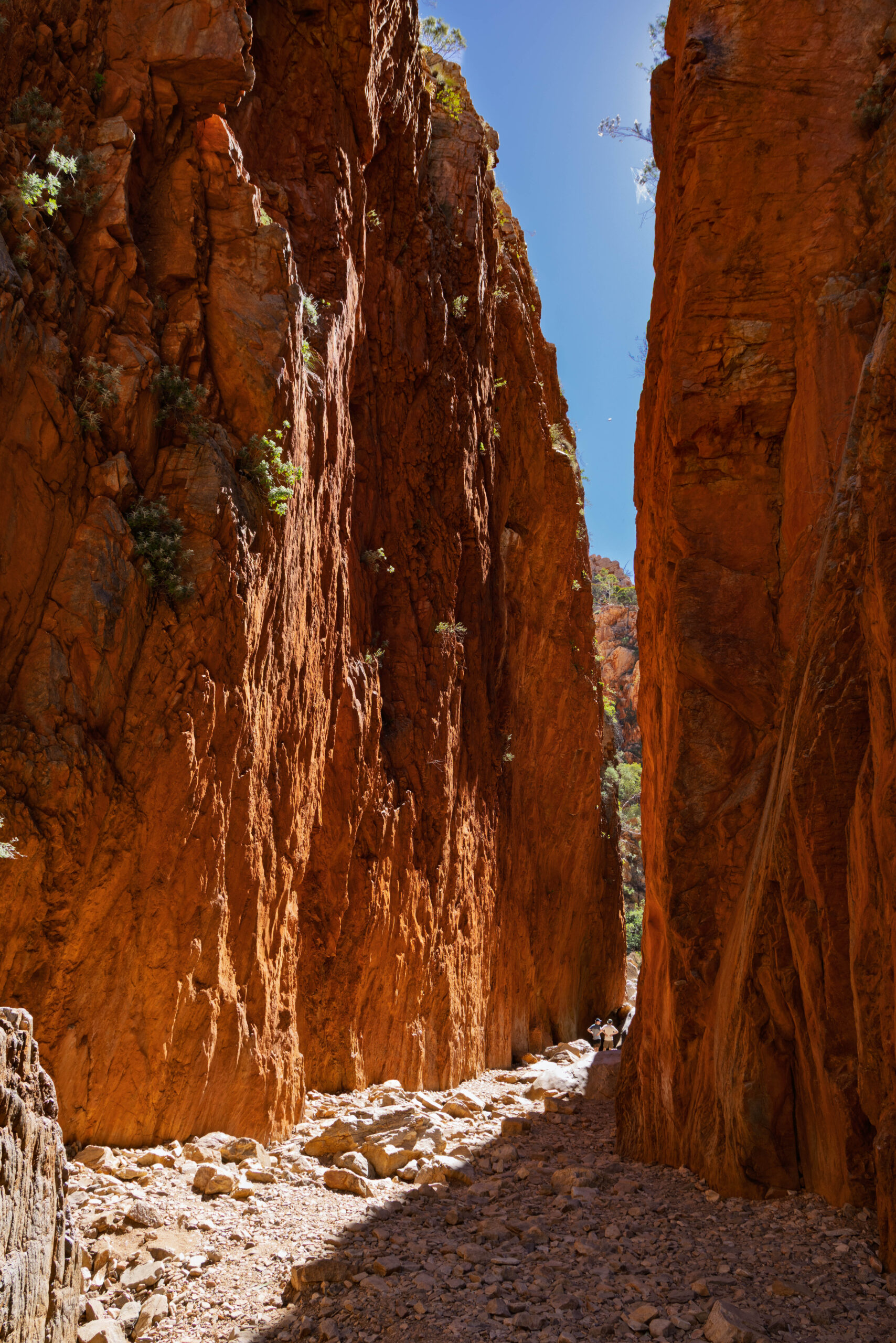
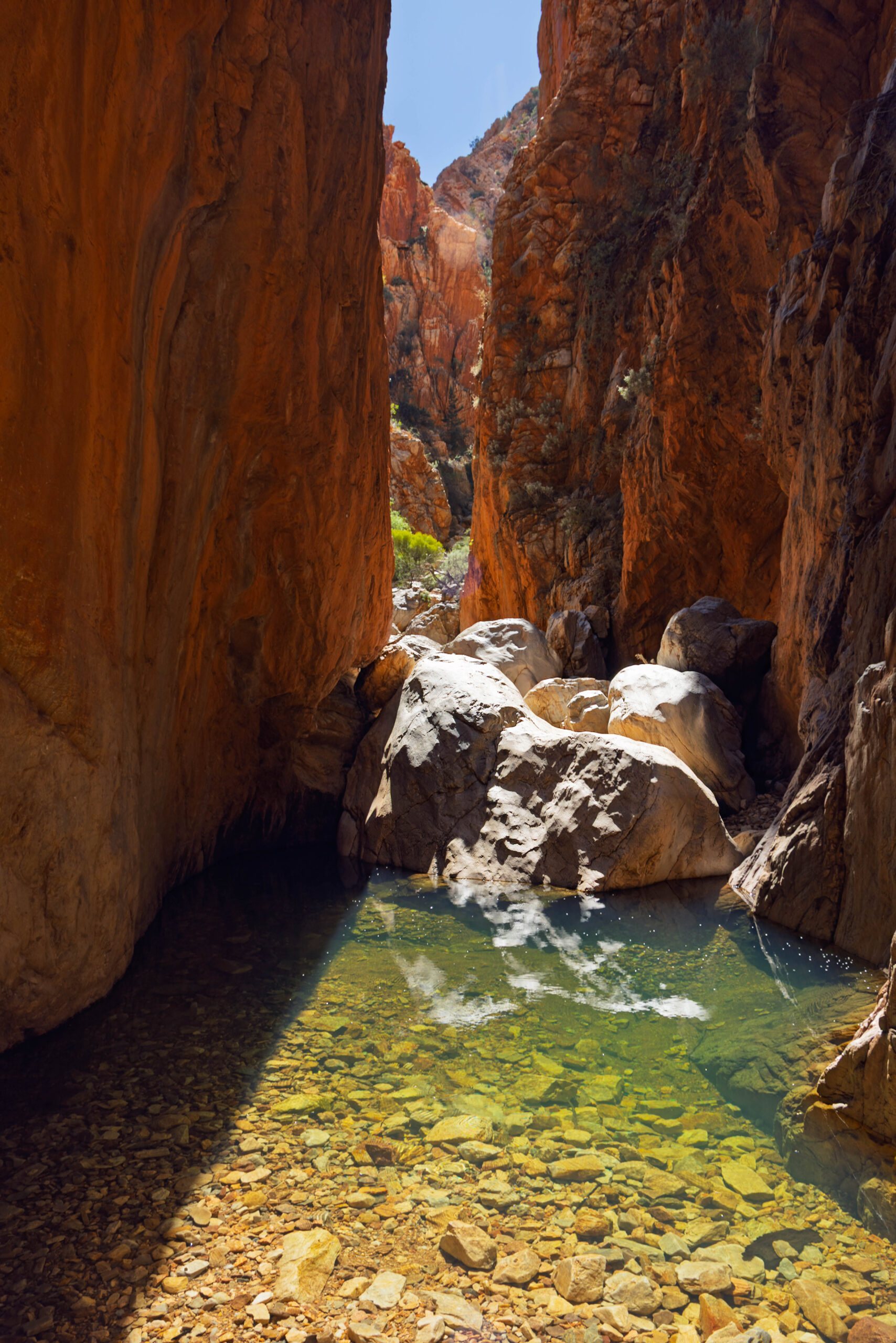
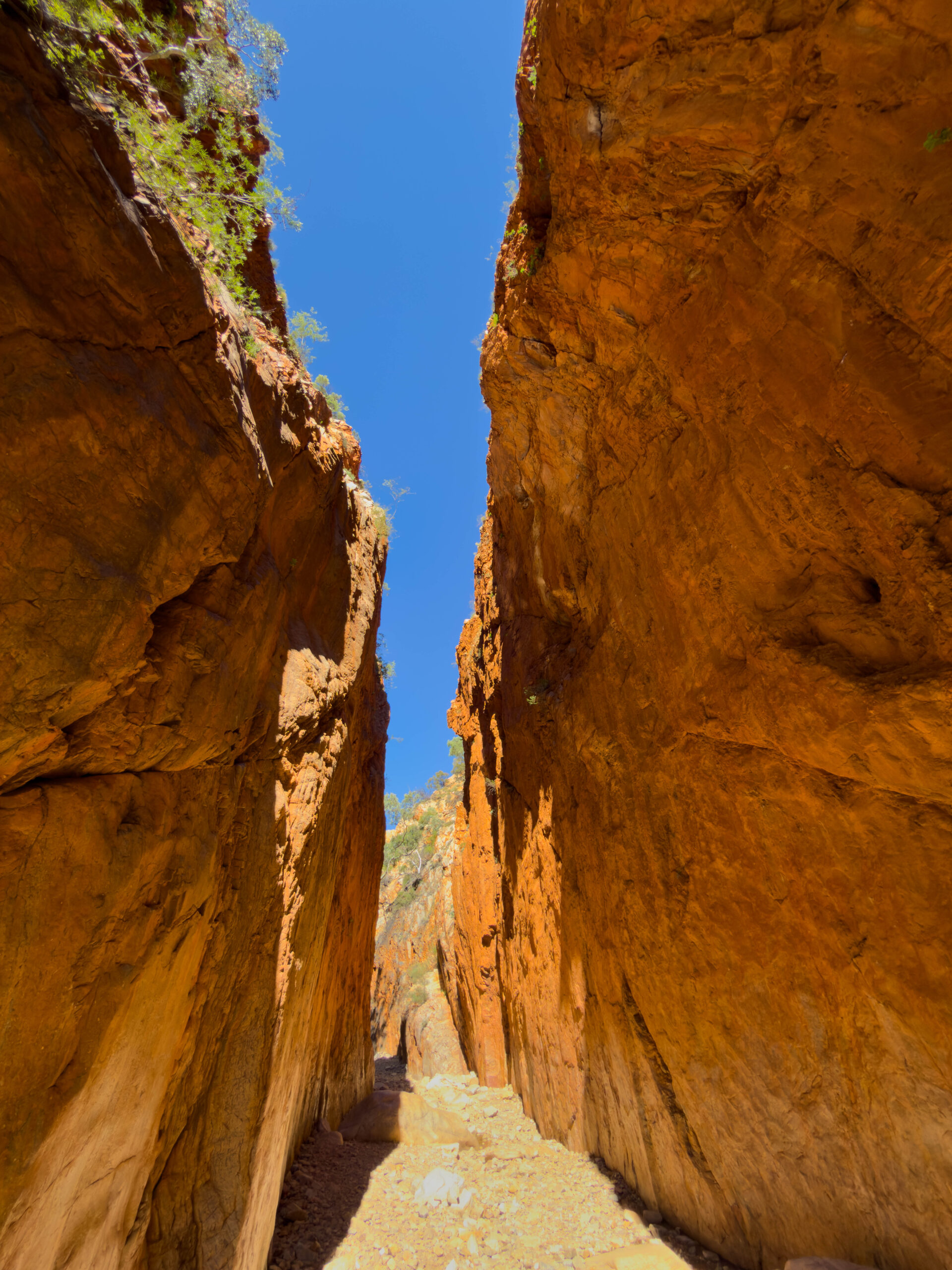
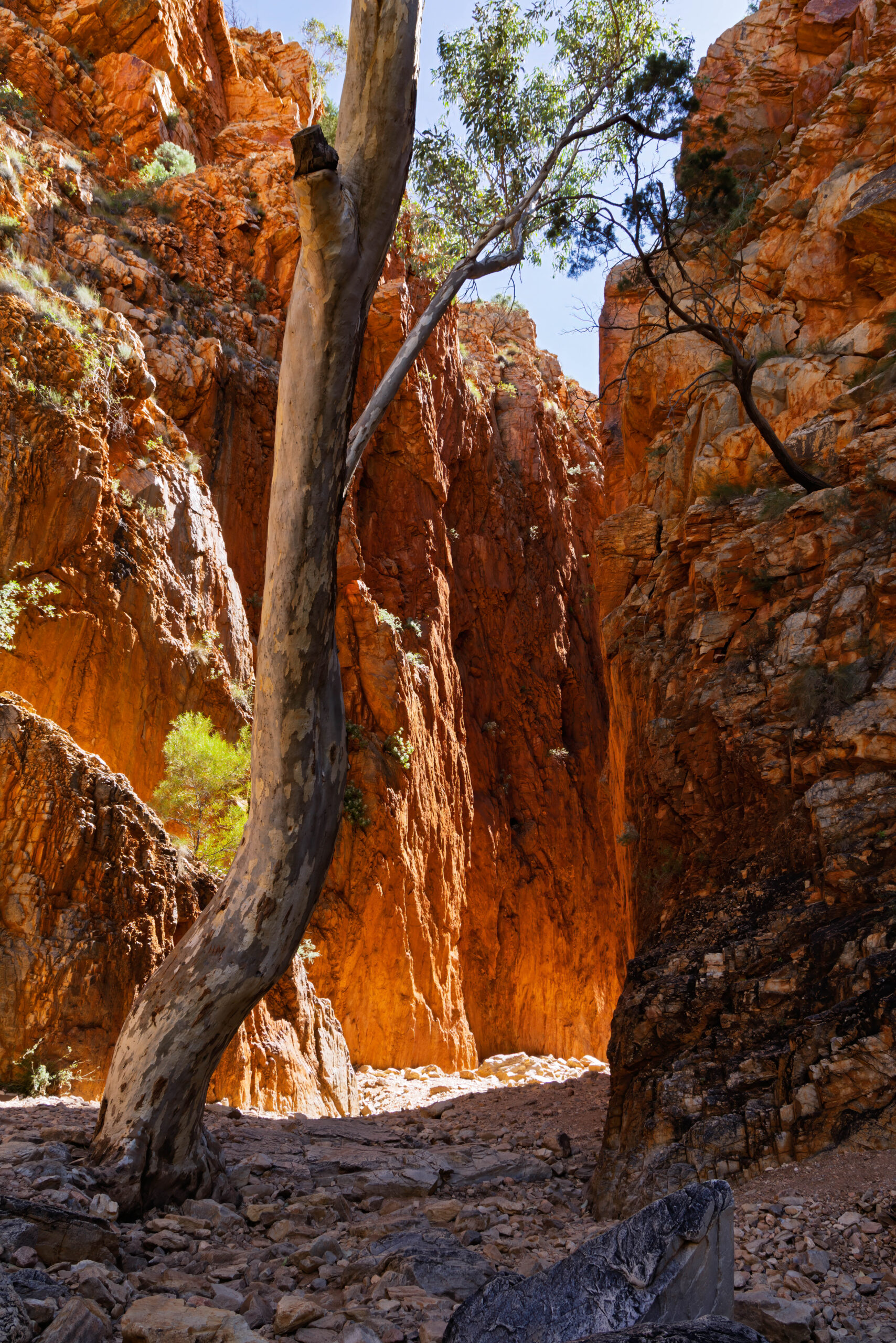
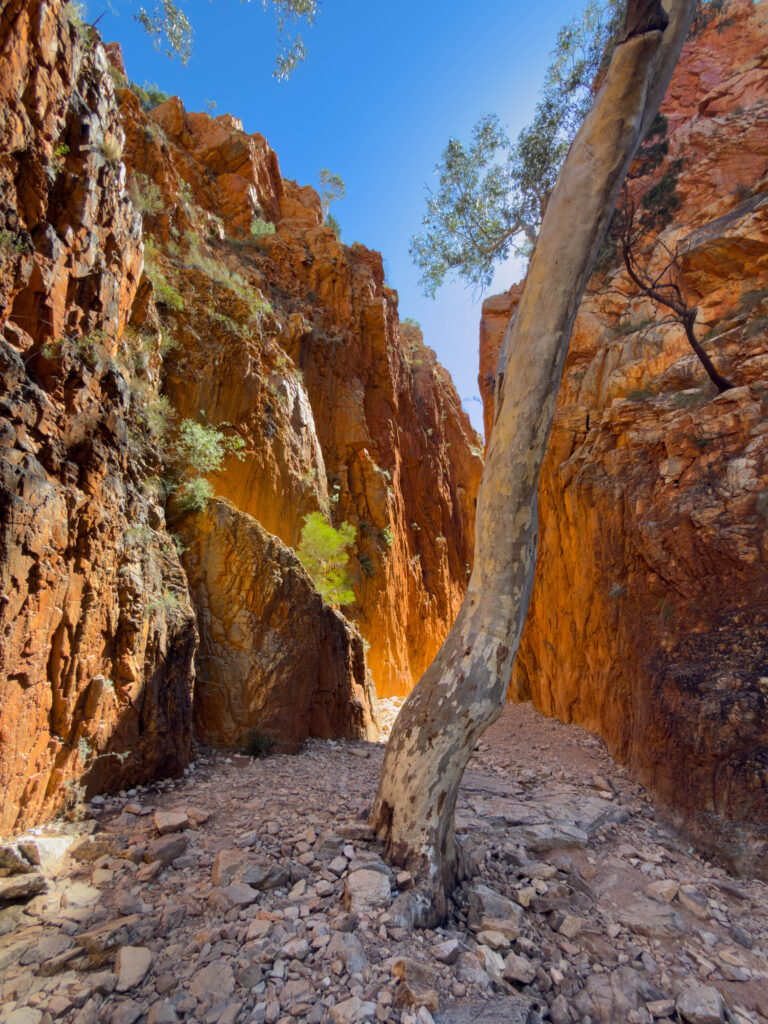
From the telegraph station we drove out to Standley Chasm (Angkerle Atwatye, which means ‘the place where water moves between’). It was given its European name in 1914 to honour Stuart’s/Alice Spring’s first school teacher, Ida Standley. The three-metre-wide, 80-metre tall chasm in the Chewings Range of the West MacDonnell Ranges has been 1,630 million years in the making and is an important cultural place of Indigenous Australia. It is sacred to women’s dreaming of the Arrernte people.
Bernie had read that the narrow chasm is especially colourful when its bold red and orange hues glow in the midday sun, so we had timed our arrival accordingly. We pulled into the car park just after 11.30am and made our way to the cafe to purchase our tickets. The site is 100% owned and operated by the local Arrernte people and the $10.50 ticket price is reinvested in the maintenance of the site and the operation of the cafe.
We walked out to the chasm, arriving almost exactly at noon, and the colours were vibrant. We were fortunate that it seemed that not many other visitors were aware of the optimum viewing time. We had passed a tour group heading out, seemingly just before the best time to visit, which seemed odd? When we arrived, we had the chasm almost to ourselves, with just two young (German?) men there with us. We were being quiet, they were being quiet and the four of us were enjoying the serenity.
Then it went a little bit to hell in a hand basket because children arrived! They were LOUD. Not just talking (yelling) to each other, but dropping their metal drink bottles on the stones and generally making a huge racket. Groan.
Bernie wanted to stay for a bit longer to see if the play of light changed much, as he had read that it’s about a ninety minute window of optimum lighting on the chasm walls. Then we had a woman sit herself down, right in the middle of the chasm, to start breast feeding. Breast feeding in public is fine BUT right in the middle of a tourist attraction seemed a bit odd to me? Another family arrived and the young son says, ‘Dad-dee, I need to pee’. Kids are so embarrassing. He didn’t drop his dacks and let him pee right there, in the chasm but, judging from the amount of time he was out of our sight, he certainly wasn’t taken back to the toilets adjacent to the car park to relieve himself. With more and more people arriving, the serenity was blown and we decided that the photos we took before the hordes descended would be good enough!
We purchased our lunch at the cafe. I ordered a tuna and cheese toastie thinking that a tuna melt would be delicious. I’m not convinced that the sandwich had any cheese in it at all, which made it very disappointing. The sandwiches were certainly not in the same league as those at the cafe in Ormiston Gorge yesterday. We might have been better off ordering a burger and chips but those options seemed a bit heavy for lunch!
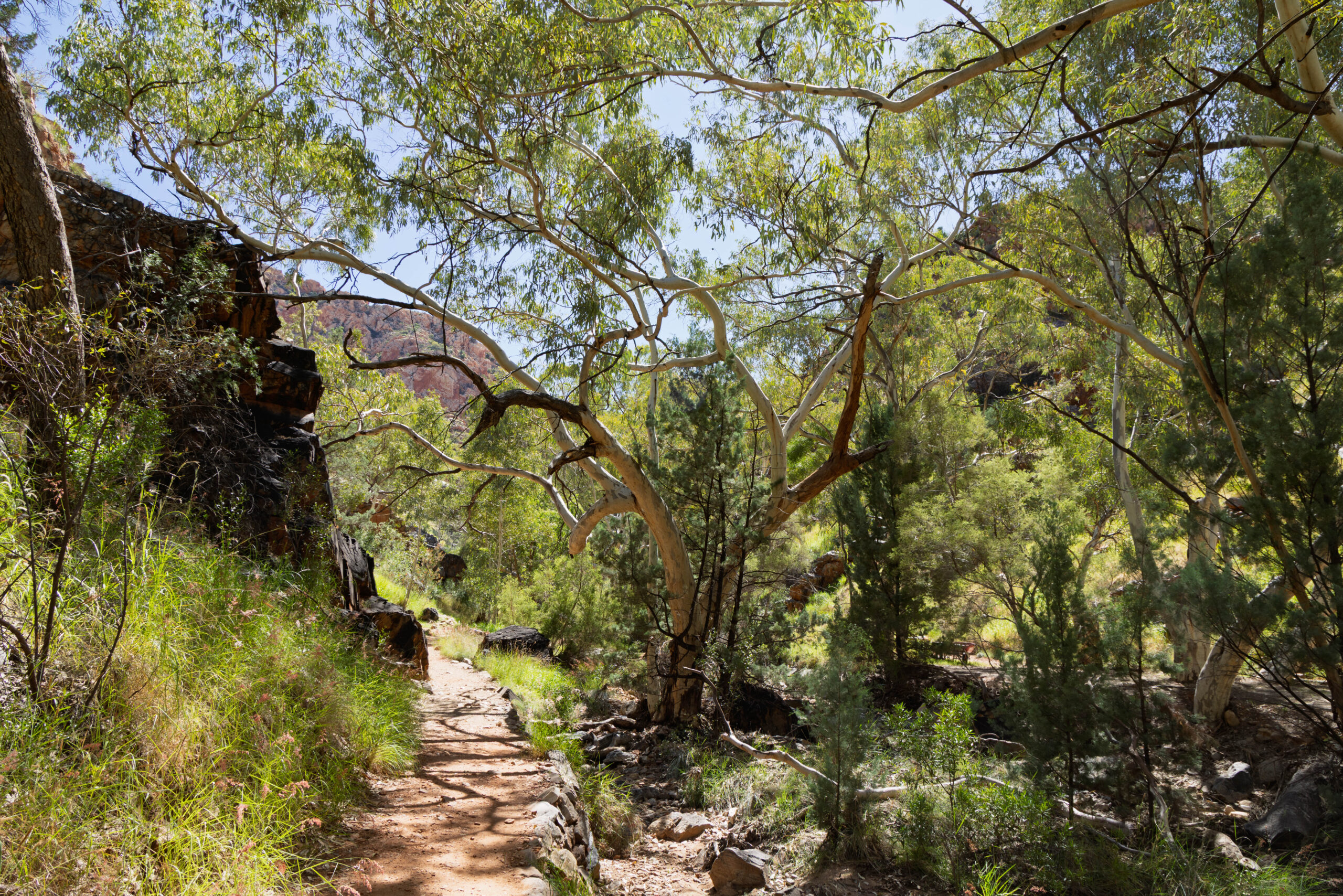
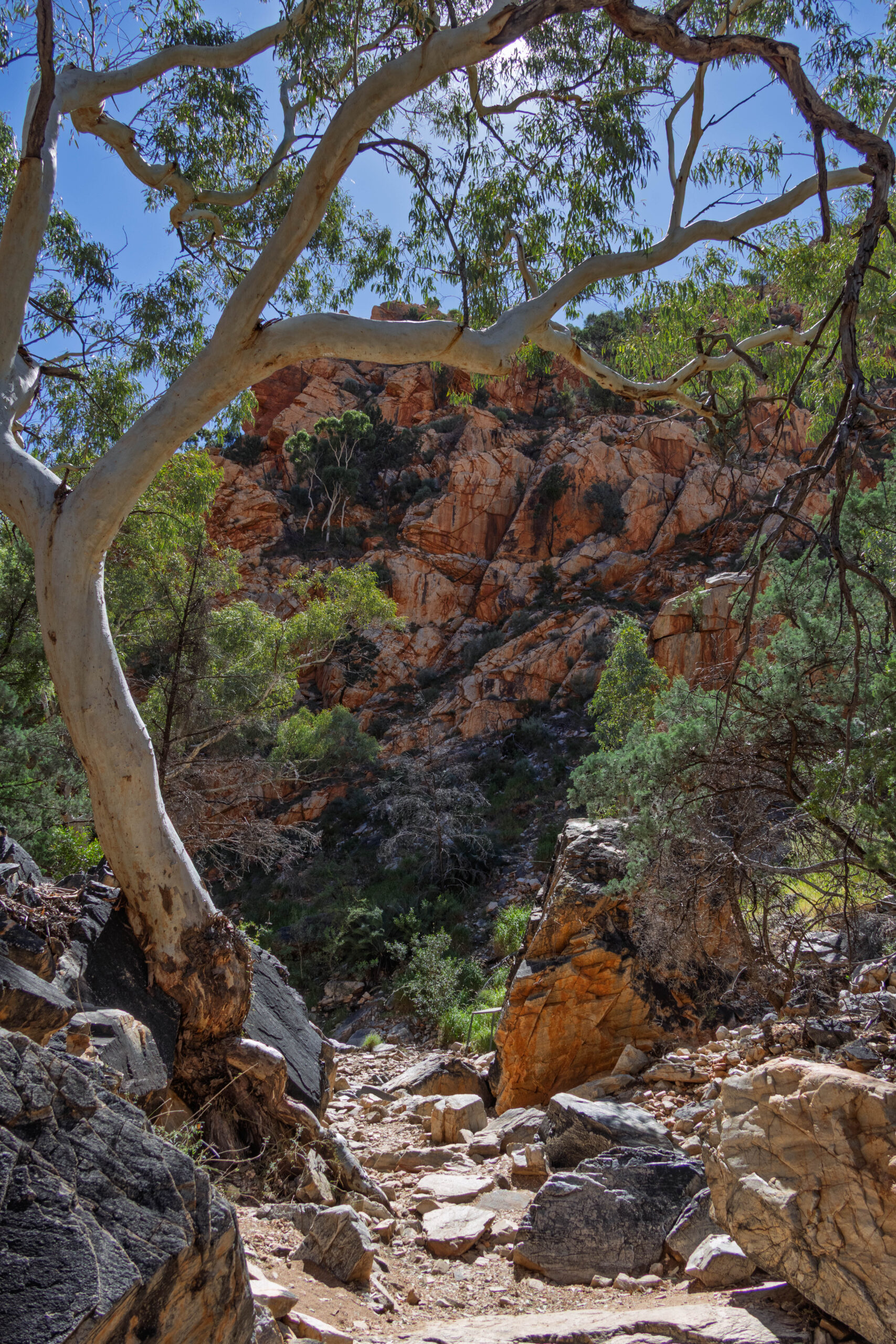
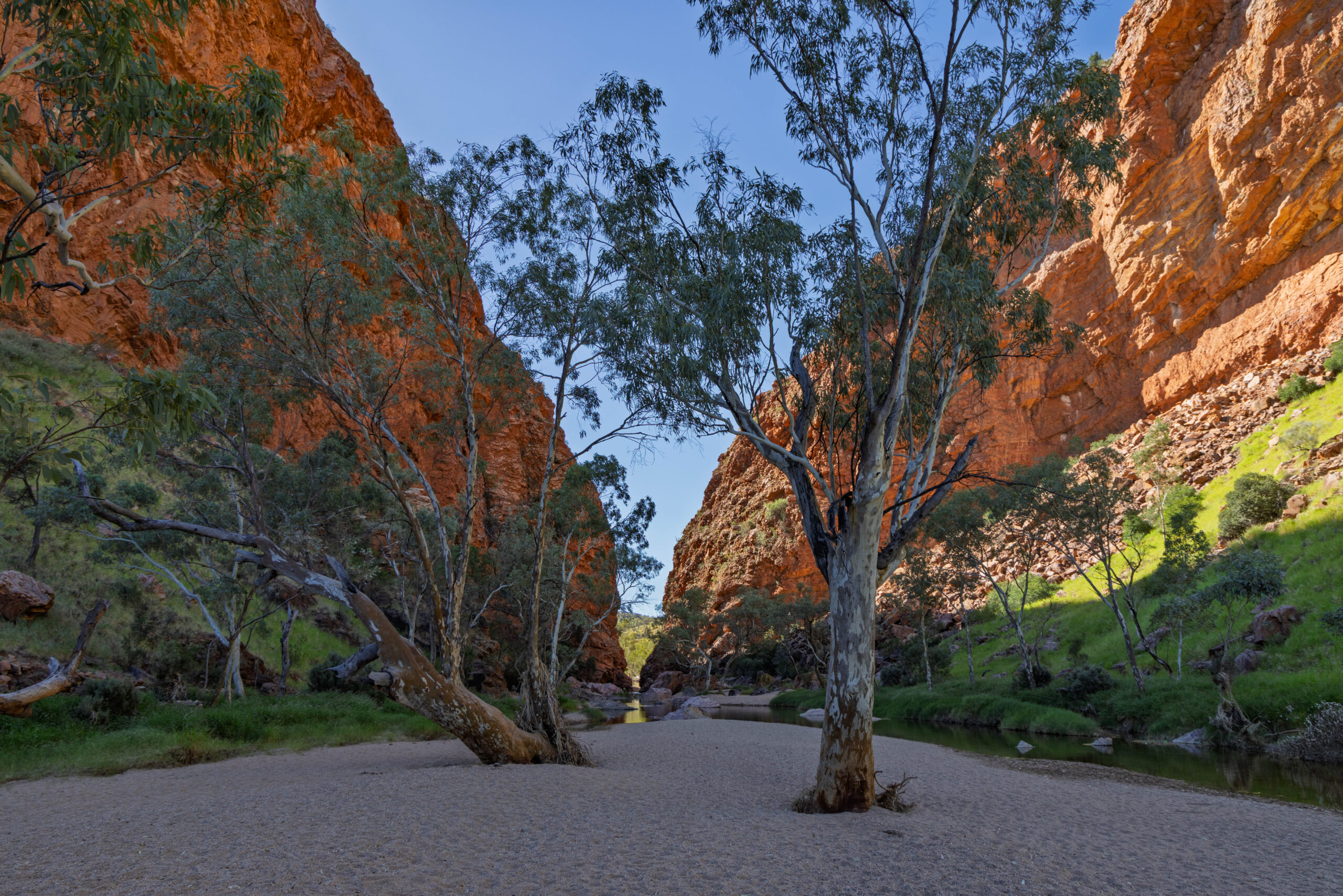
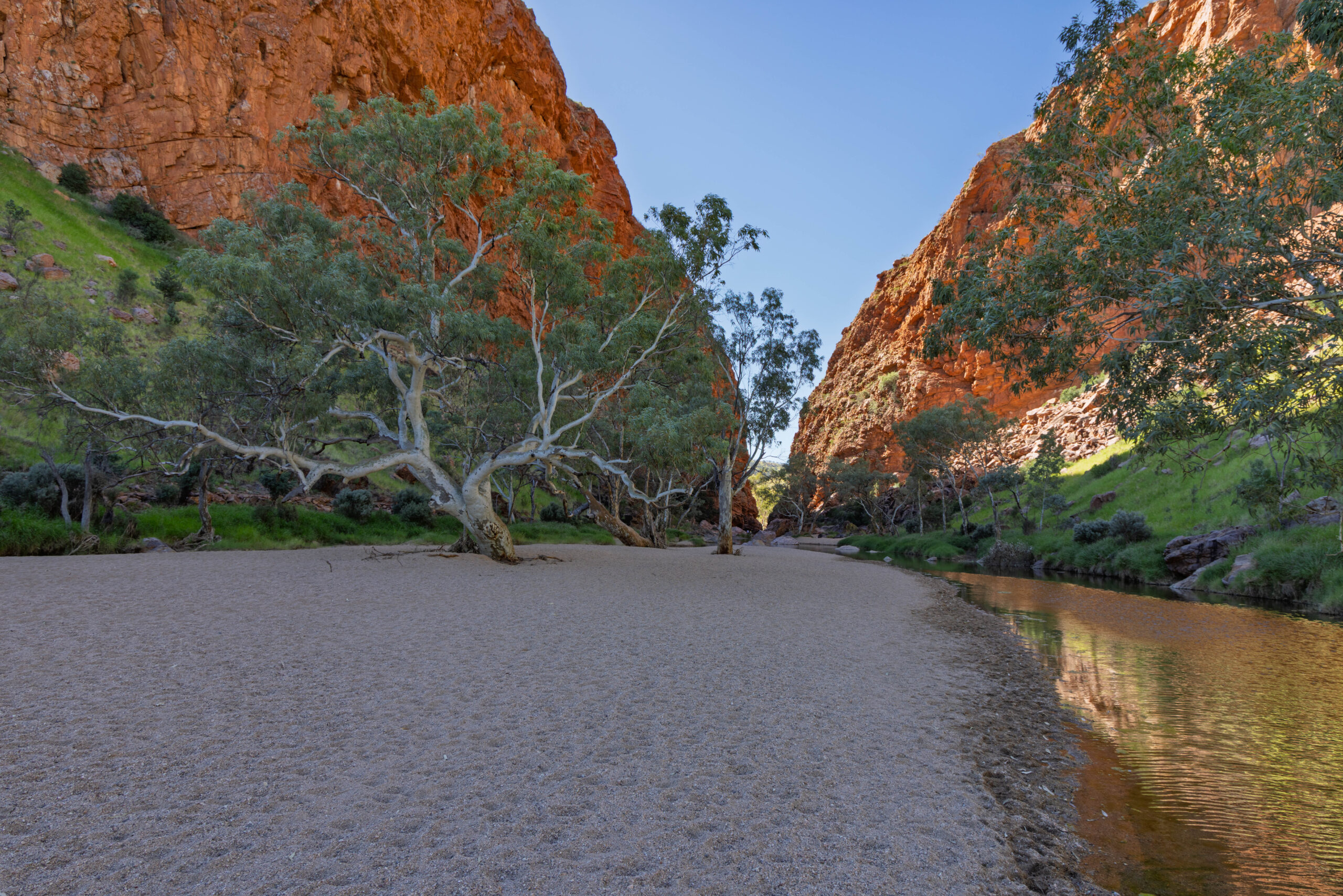
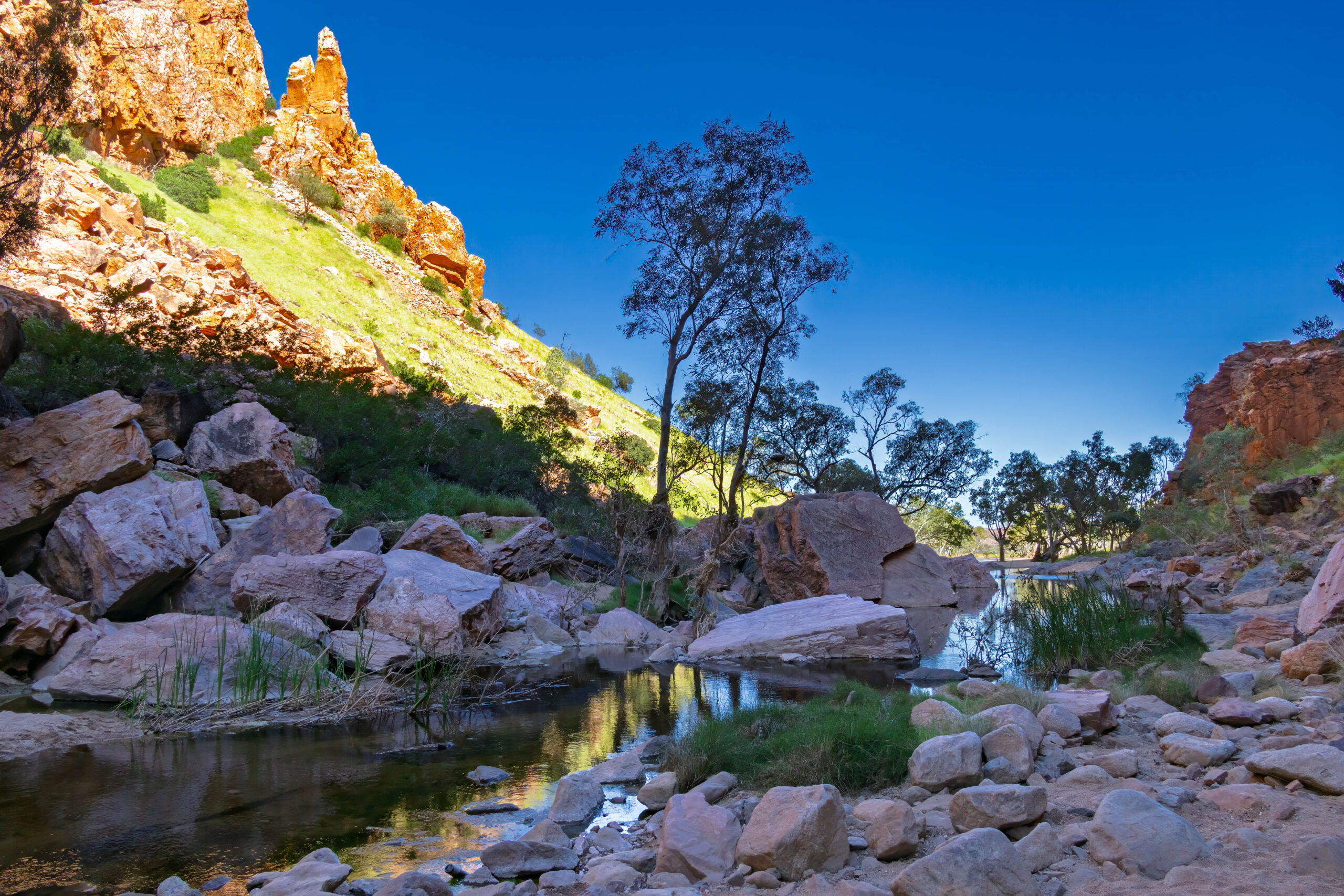
We drove back out to Larapinta Drive and turned towards Alice Springs, pulling off the main road again when we reached the turnoff for Simpsons Gap. The Western Arrernte name for Simpsons Gap is Tyunpe (pronounced Choo-N-pah) which means Perentie, as in the large monitor lizard that lives in Central Australia. There was a sign at the start of the track warning that the track was badly damaged from the early April rains and to exercise care. As we walked in on the track, there was a Rhodes Scholar tour group heading out. Good timing again that we were arriving as the tour group was leaving.
The path certainly did have some washed out sections that made passing the tour group coming the other way a little precarious. After the tour group had passed us we encountered Fred and Linda and had a lovely chat with them about New Zealand. It turns out that their daughter and son-in-law live in Nelson as do our former next door neighbours. They are from Adelaide but holiday regularly in NZ visiting their grandchildren.
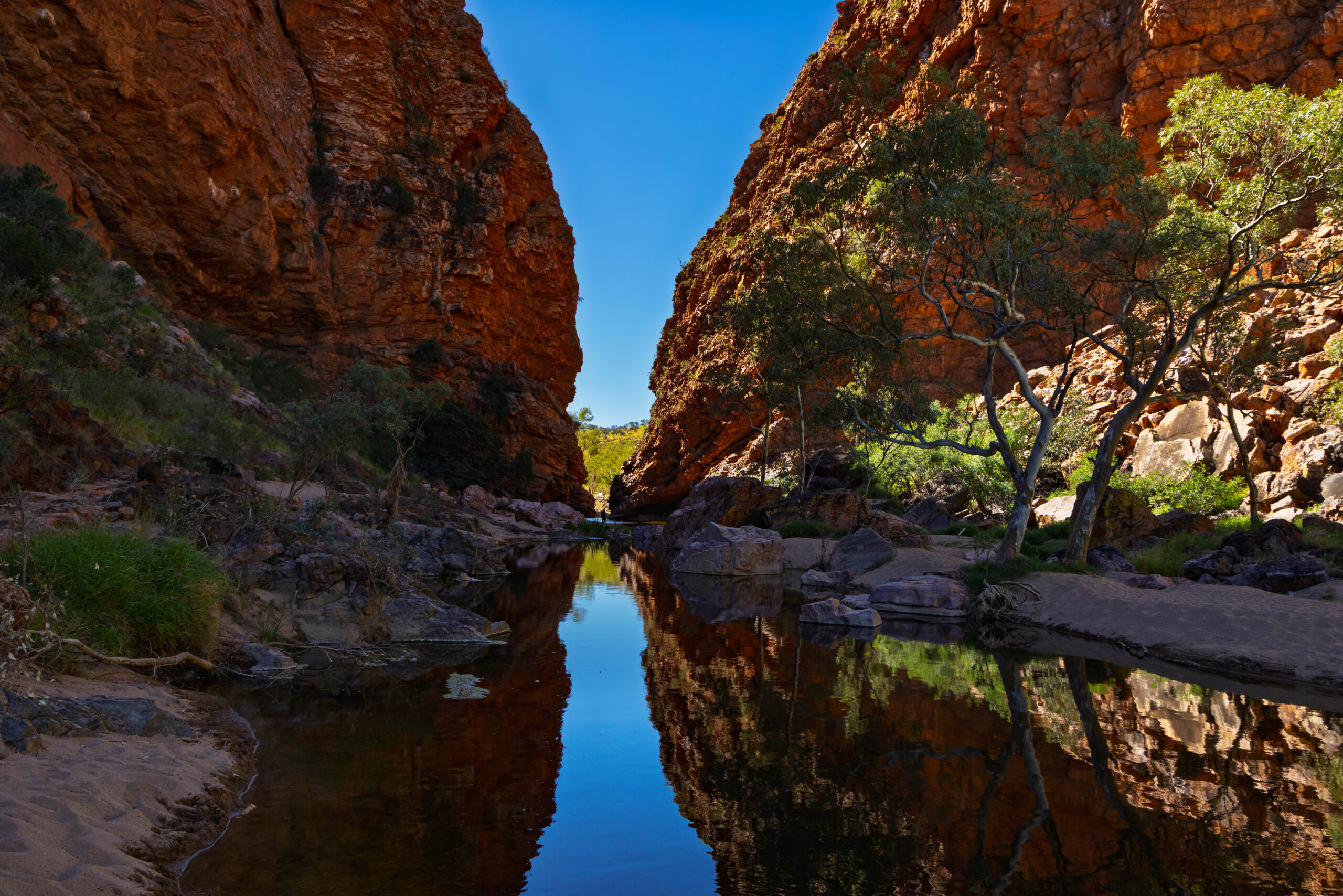
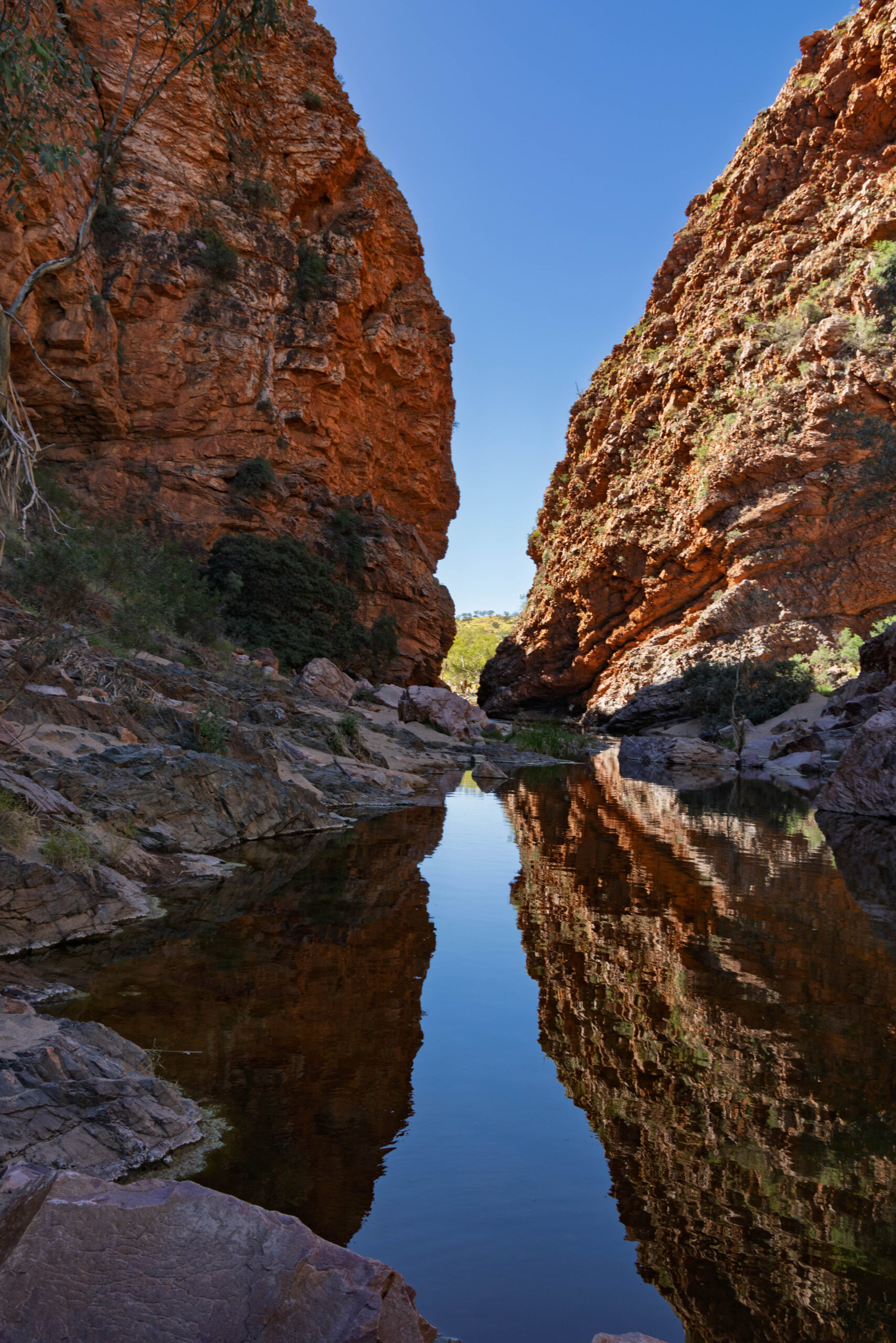
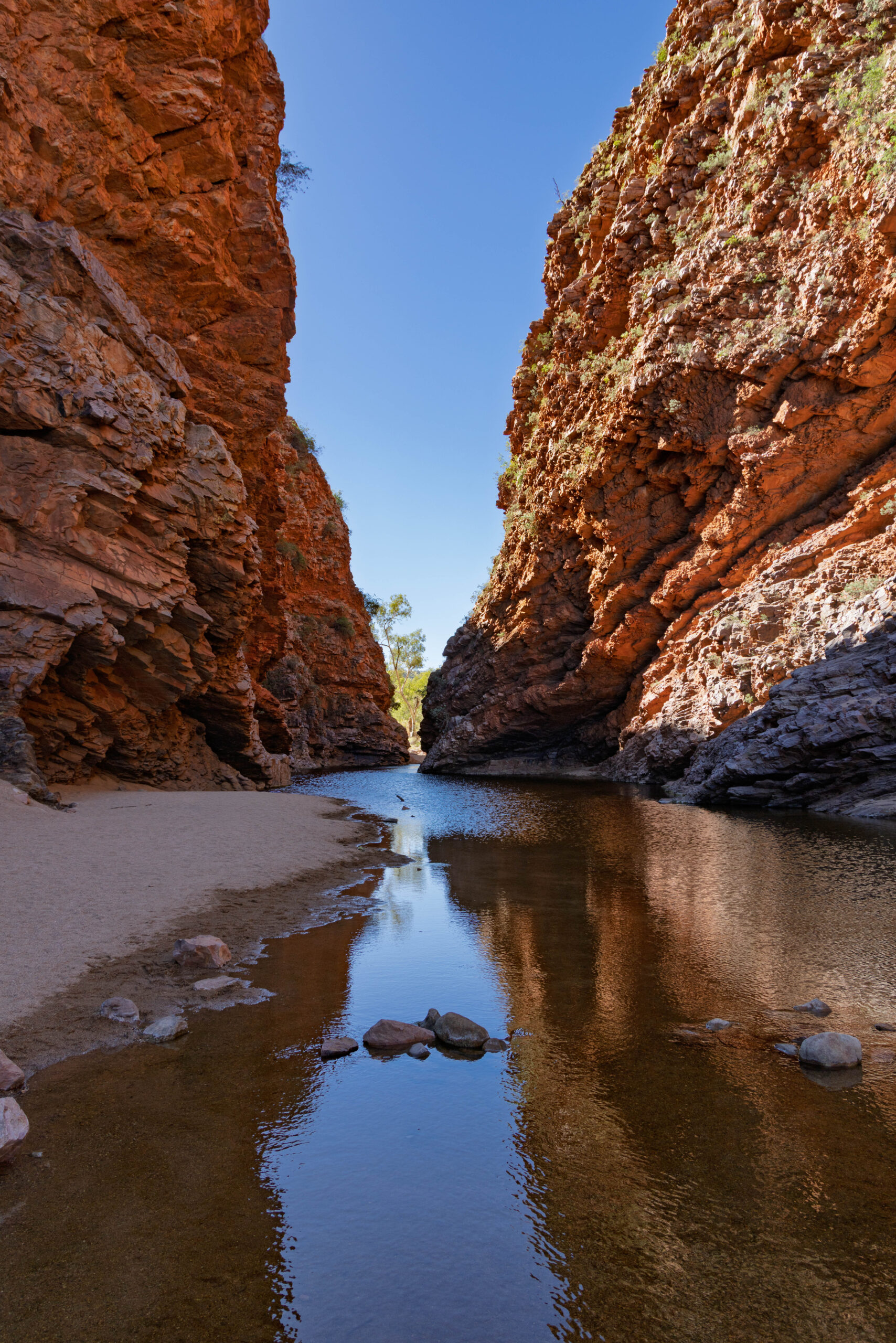
When we reached the end of the path, it was to find sand-covered stairs and mangled steel posts and chain. Having been here 46 years ago, I was struggling to find any of it looking familiar and, overall, I was disappointed that the view didn’t really seem like the images that one sees of Simpsons Gap. Then there was the woman sitting in the middle of the ‘beach’ reading, giving everyone the stink eye for disturbing her peace, as they tried to take photos without her in them.
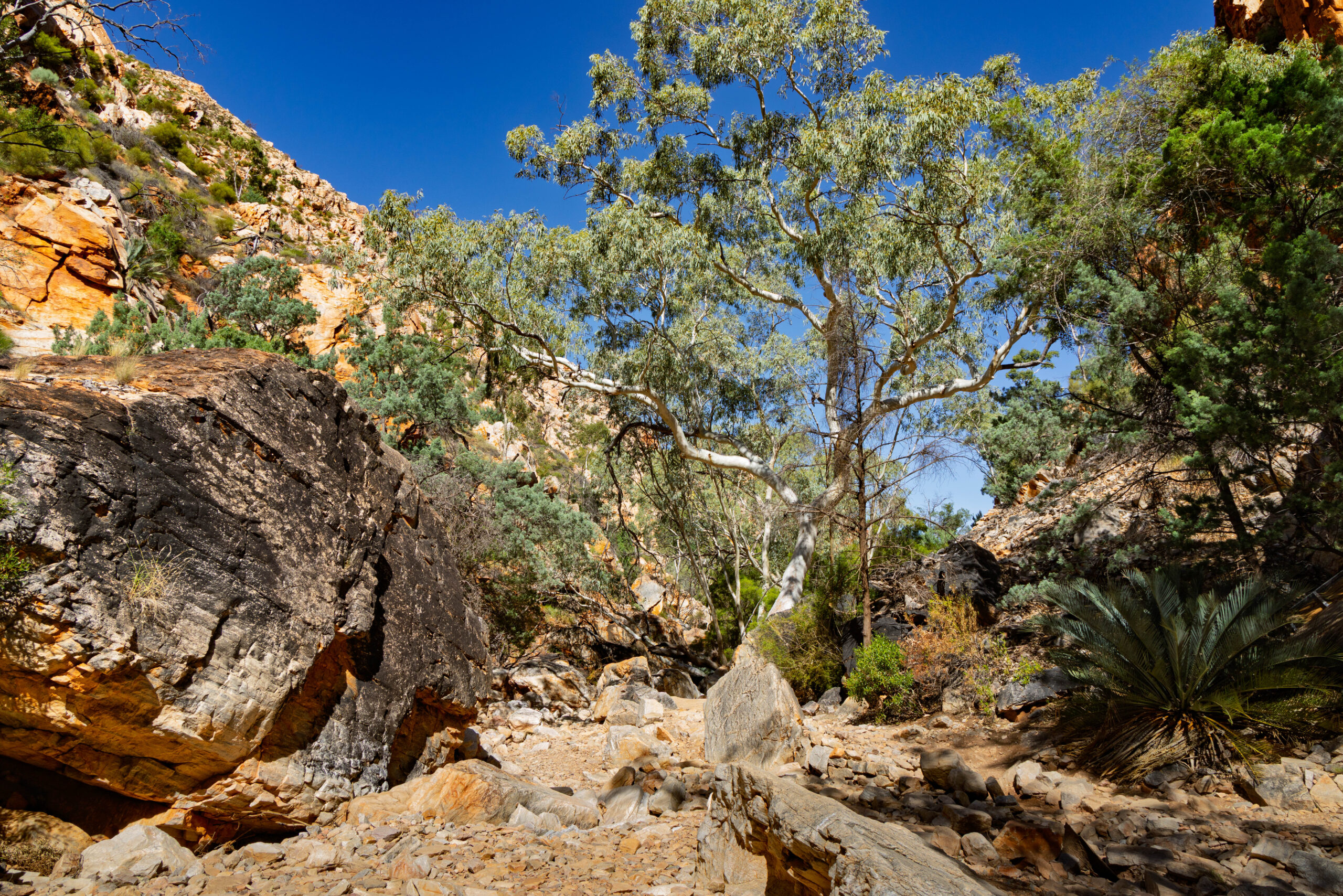
Walking back along the path we had our eyes peeled for black-footed rock wallabies but we were not lucky enough to spy any. I noticed a path down to the riverbed so ventured from the path onto the sand. Aha, that was better, that was the image of Simpsons Gap that I was looking for featuring Roe Creek, the magnificent river red gum, and the orange cliffs of the gap behind. So pleased I decided to slog back along the ‘beach’ rather than follow the path.
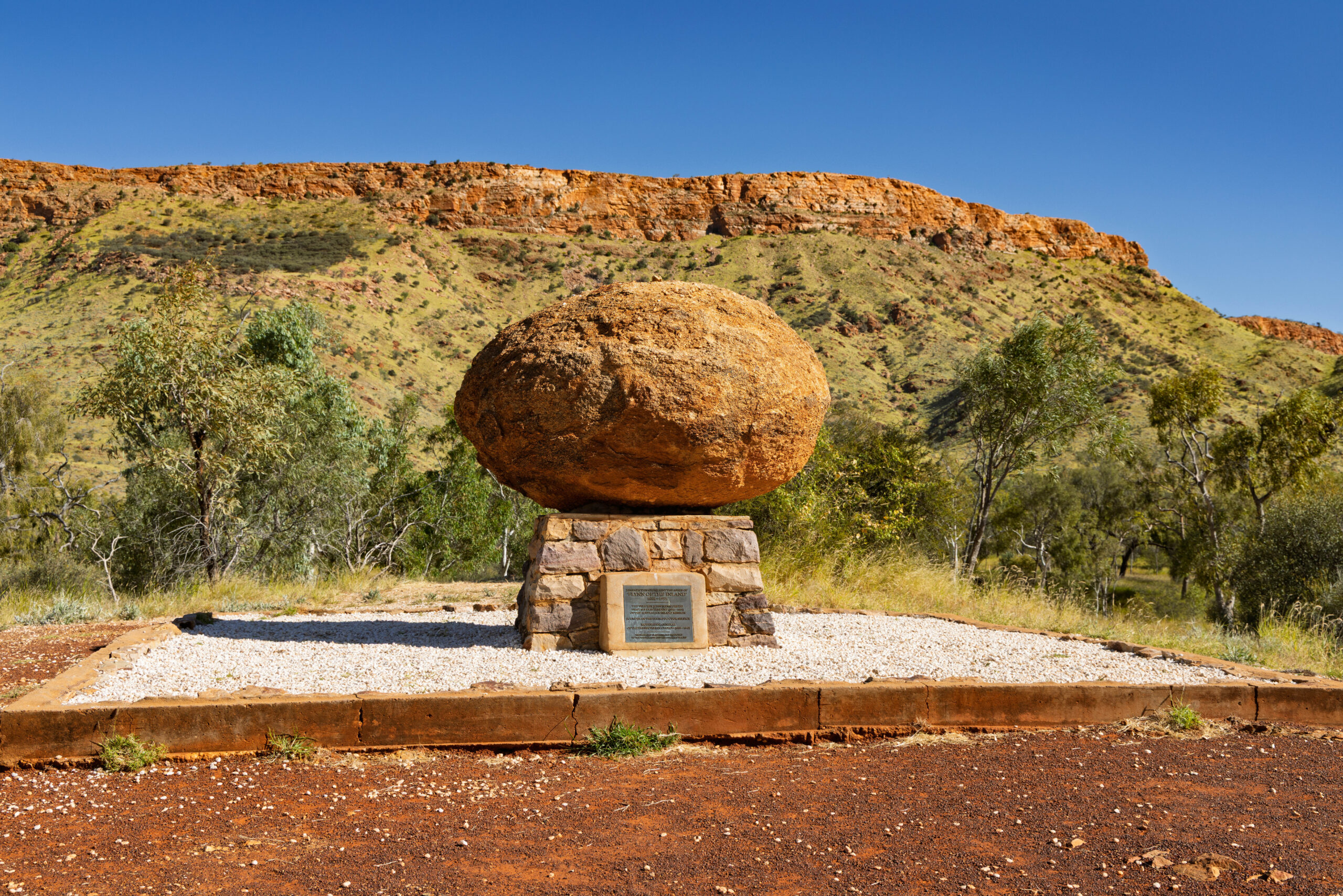
We made one more stop on our way back to The Alice at John Flynn’s Grave. John Flynn was the first superintendent of the Australian Inland Mission and he is credited with setting up the first flying doctor base in 1928 in Cloncurry, Queensland. When he died in 1951 he was buried here beside Mount Gillen. The year after his death, a large round stone was taken from the highly sacred women’s site of Karlu Karlu (The Devils Marbles) and used as a marker for his grave. For over 20 years its owners, the Warumungu and Kaytete people pressed for the return of the stone. The local Arrernte people stepped in as peacemakers, eventually supplying a replacement gravestone from a sacred Caterpillar site in acknowledgement that John Flynn’s life’s work, establishing the RFDS, was for ALL people living in Central Australia.
Back at our cabin, Splice o’clock was at afternoon tea time today. Some washing was done (by Bernie, I admit it) and we put our feet up until dinner time. Tonight we wandered along to the Alice Springs Brewing Co for dinner, enjoying classic pub fare, beef schnitty with chips and slaw. Can’t be cooking three nights in a row, we’re on holidays!
Steps: 11,015 (6.97kms)