Thursday, 16 April 2026
We spent today exploring Coober Pedy. We started with an underground mine tour at Tony’s Opal Mine. As we waited for the tour start time to come around we chatted with the owner, Paul, who said that they have noticed a downturn in business without as many visitors as they had expected during Easter and the school holidays. Their high season is still a few weeks away and they remain hopeful that more tourists will arrive then. With only three of us booked on this morning’s tour, Paul noted that we had set a new lowest visitor total for this time of the year. The flow-on effects from this fuel crisis are dire for people out here in the outback.
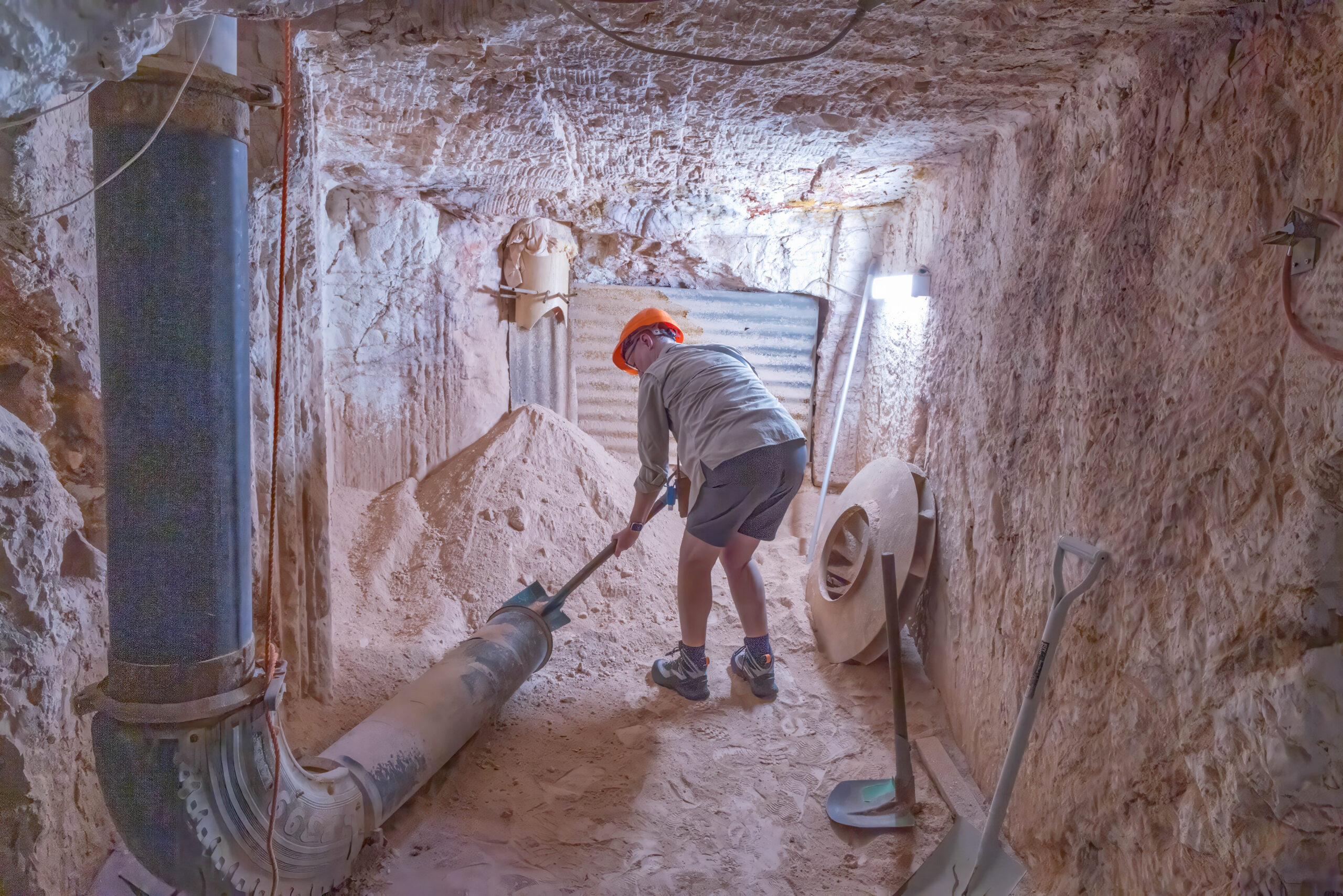
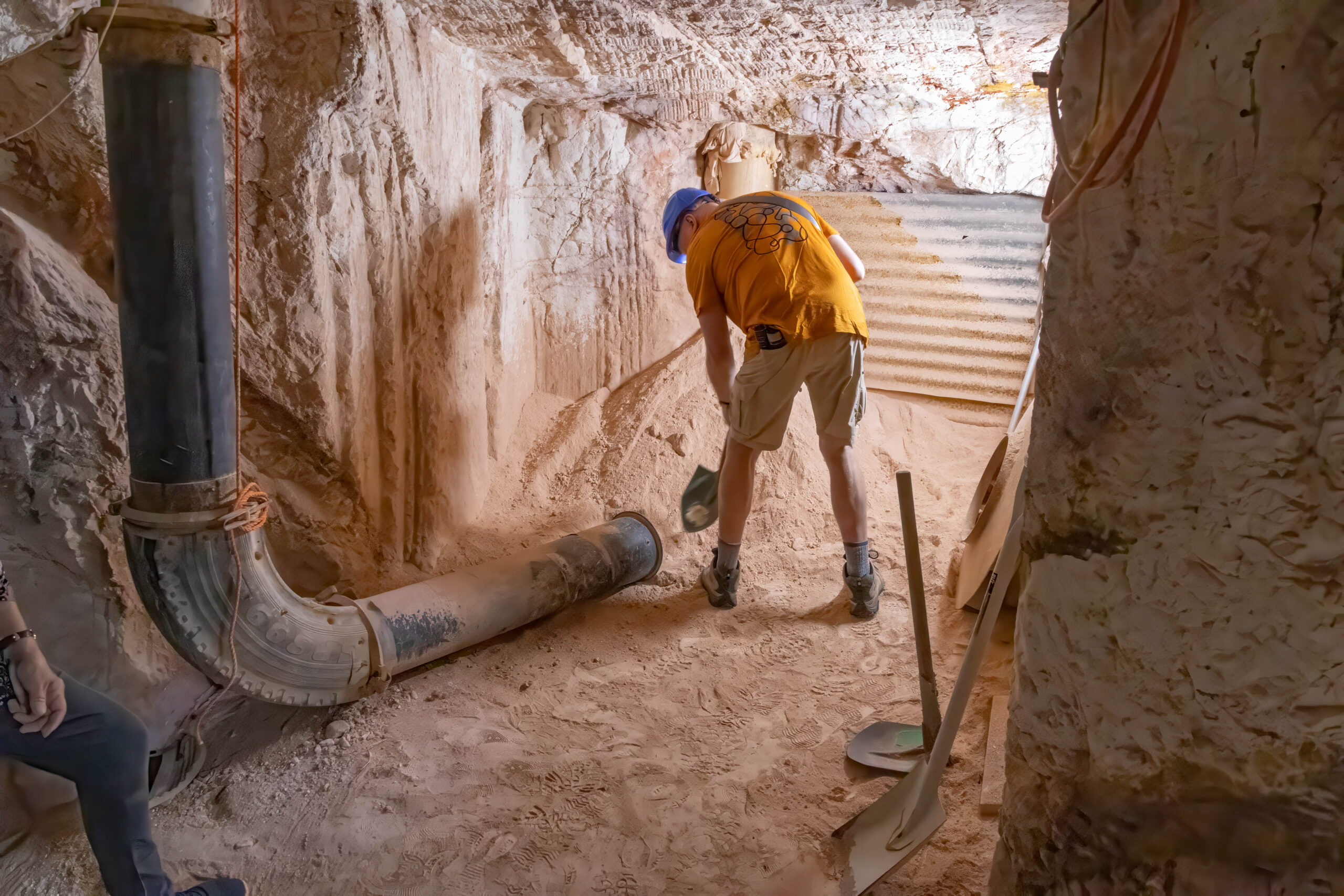
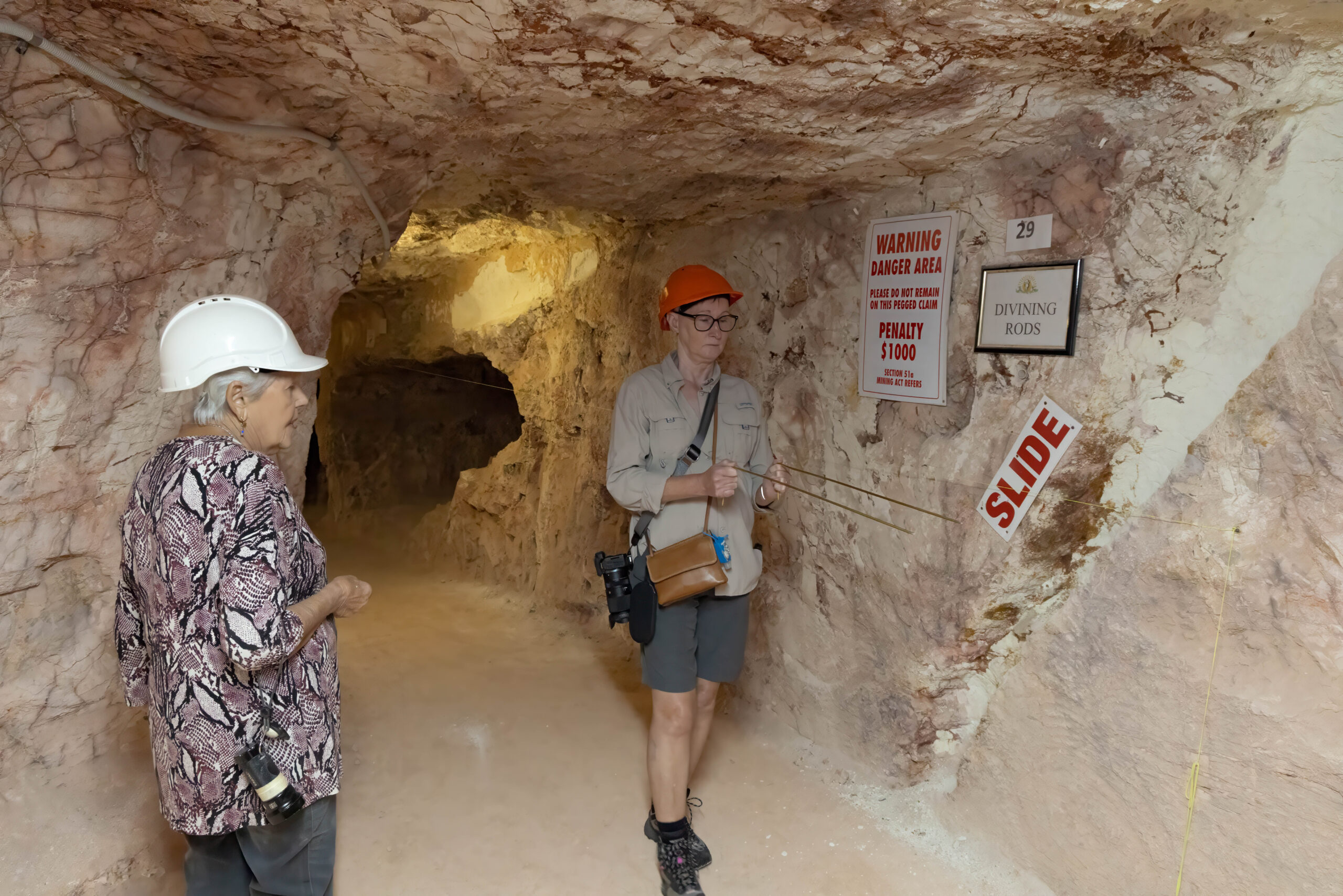
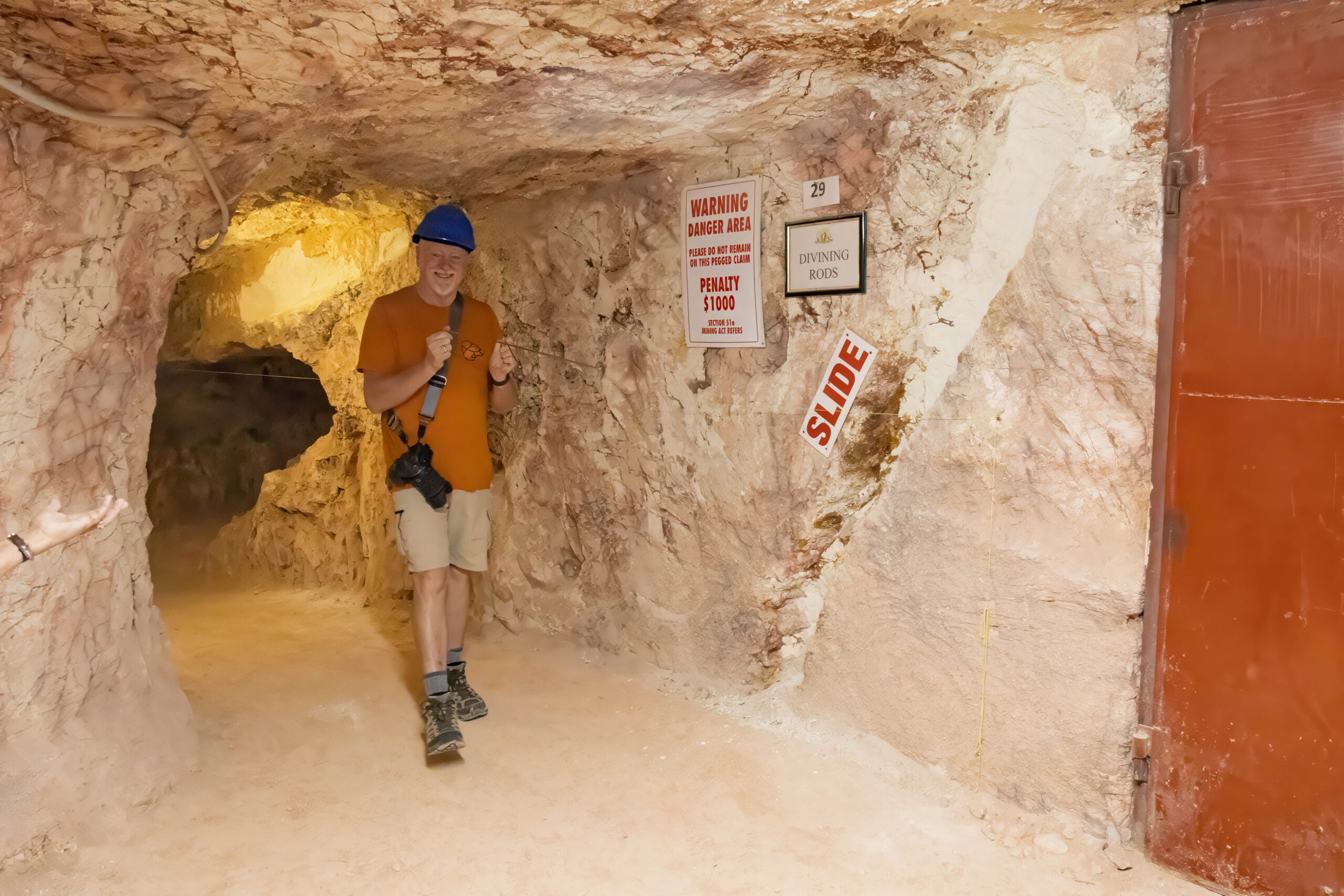
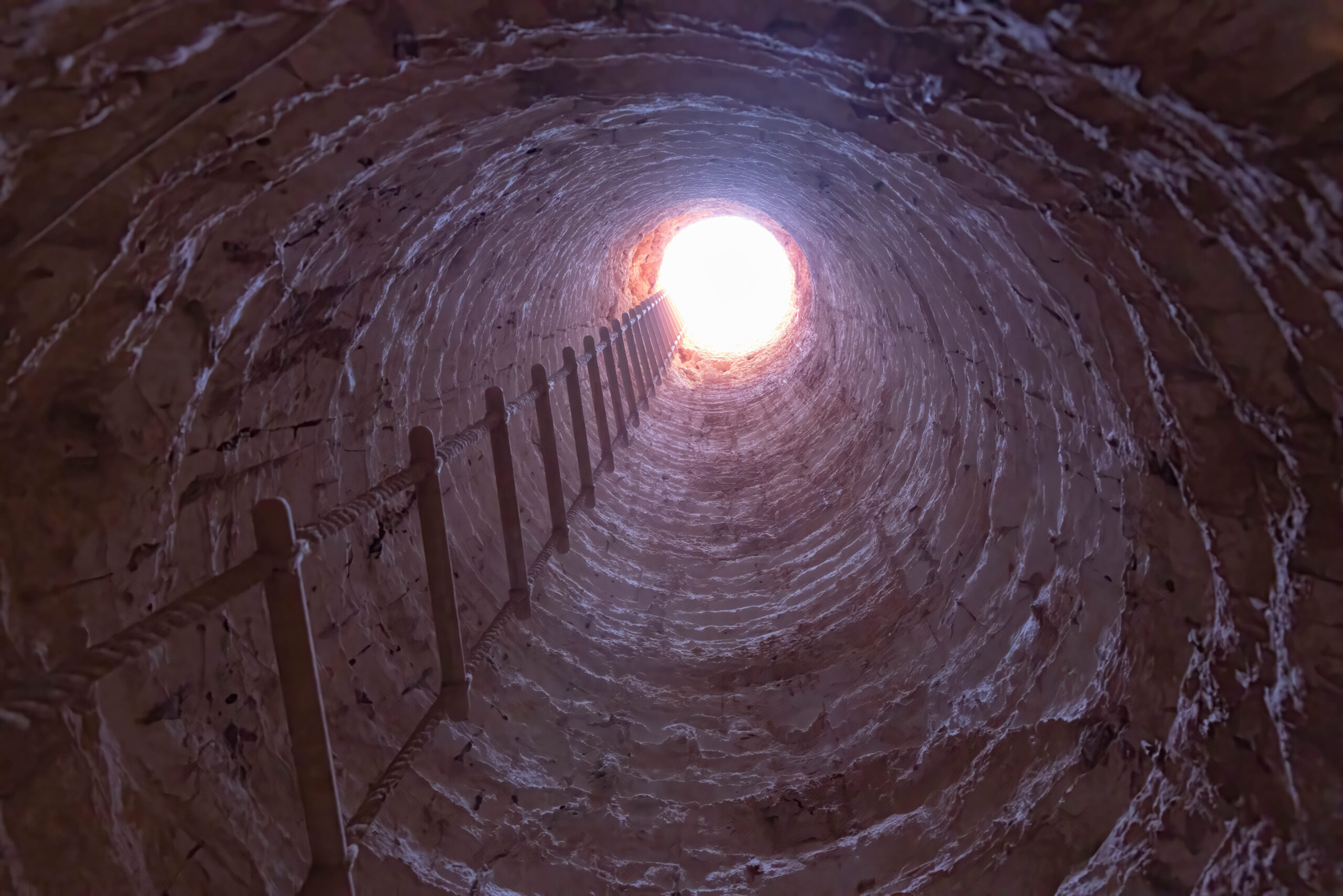
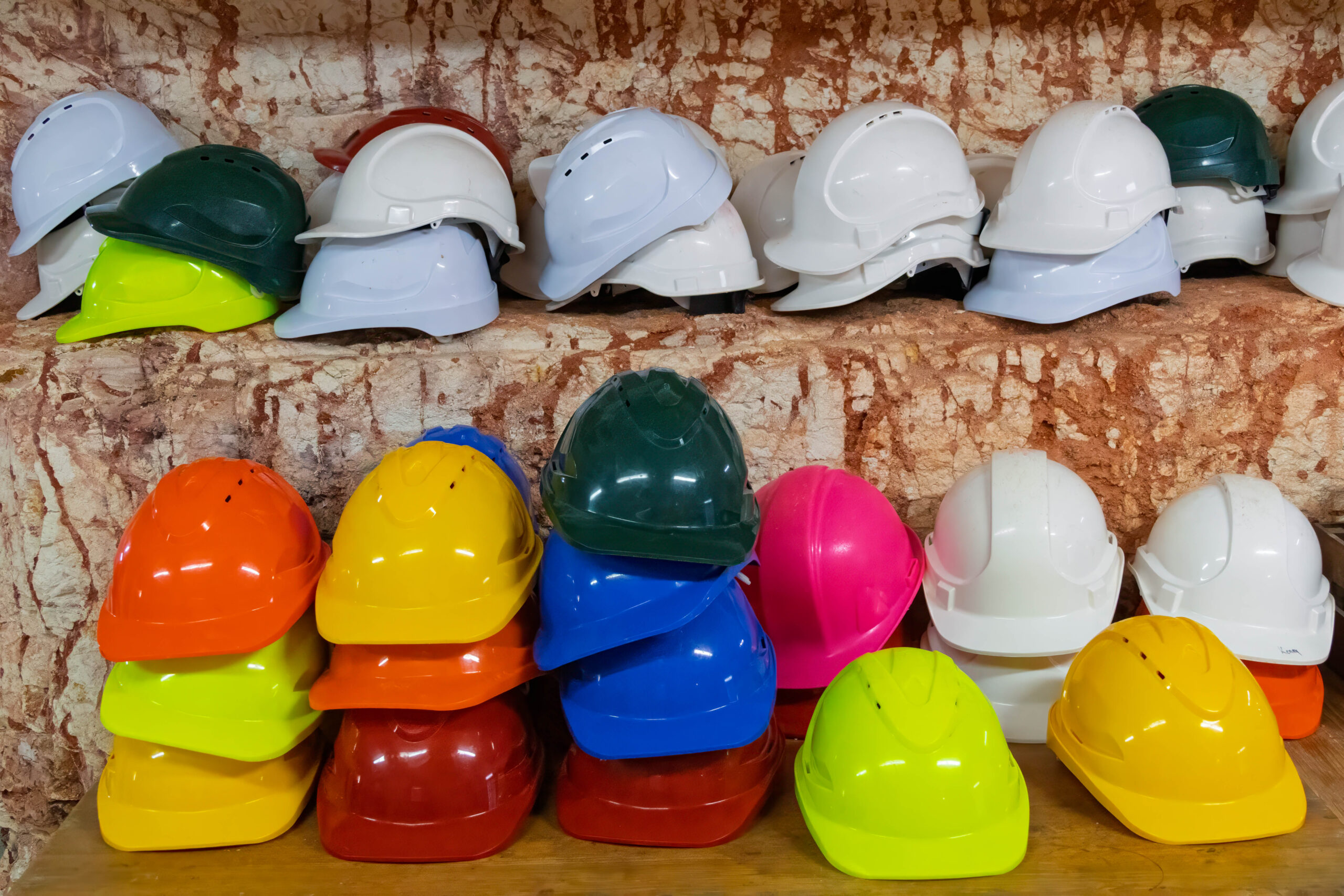
At 10.00am our guide, Mila, issued us with hard hats and UV torches and we headed into the mine. Mila arrived from the Czech Republic in the late 60s and settled in Coober Pedy and … what a stupid idea that was she said!! Anyhow, she stayed and mined with her husband for many years, back in the day when most of the mining was done by hand. She told us it was very hard work for a woman who only weighed 48 kilos at the time! Her husband has passed away now, but her sons still mine.
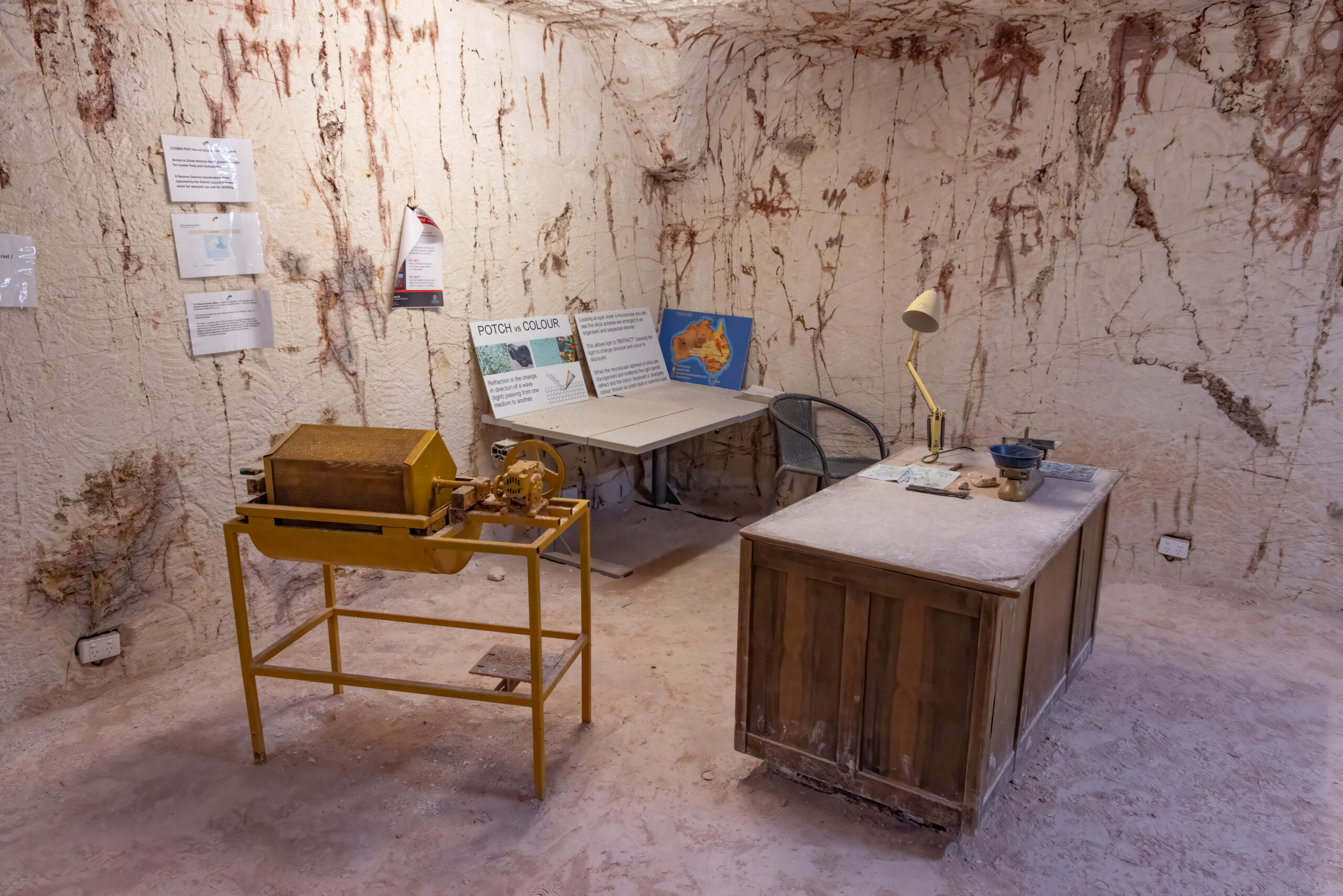
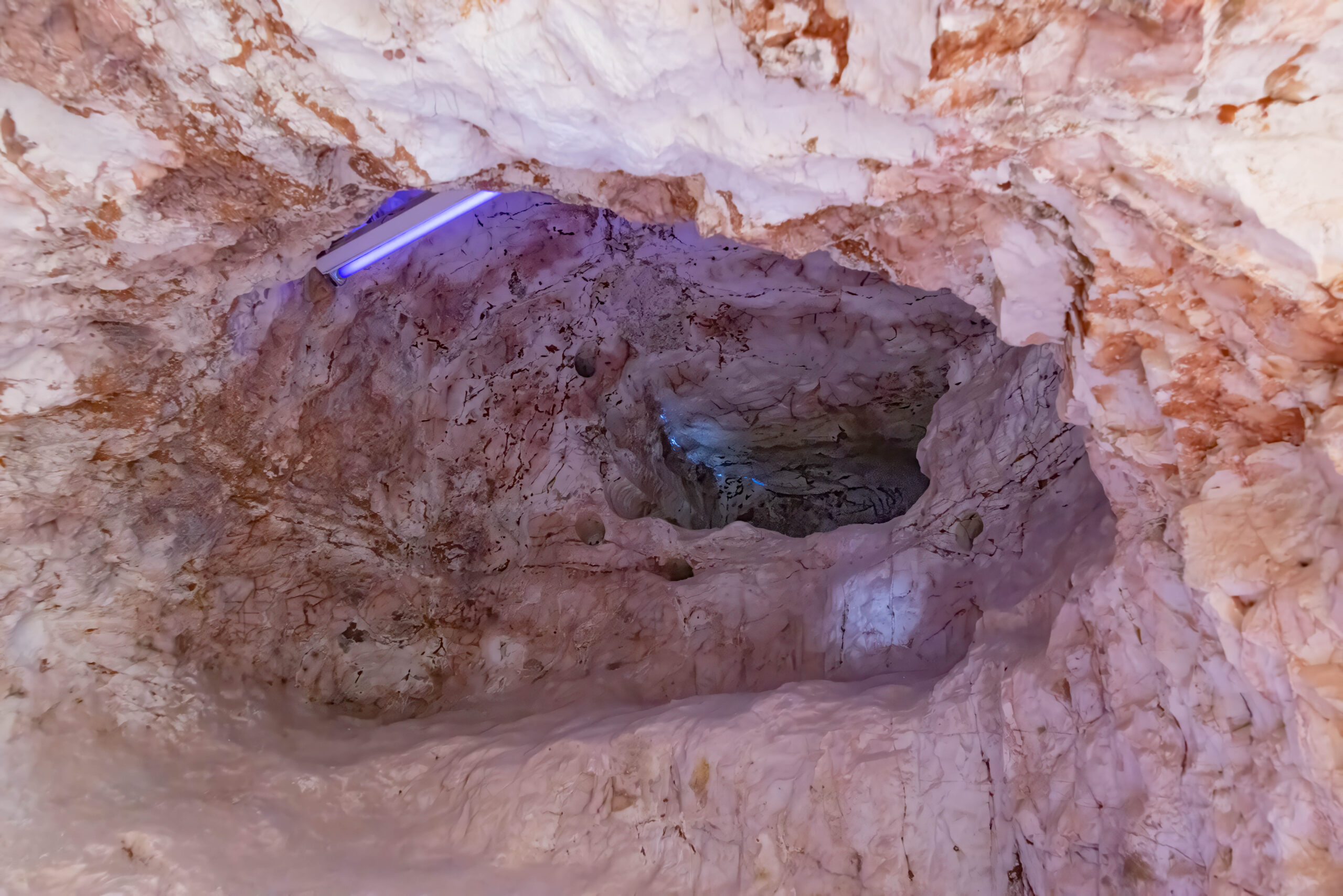
She is working with her boys to remember places that were mined earlier, where they discarded a lot of potch. Potch is opal, but it has no colour and was generally considered rubbish back then. However, it still fluoresces under black light and there is a new market for it in India where they use it to make beaded jewelry that is popular in the night clubs.
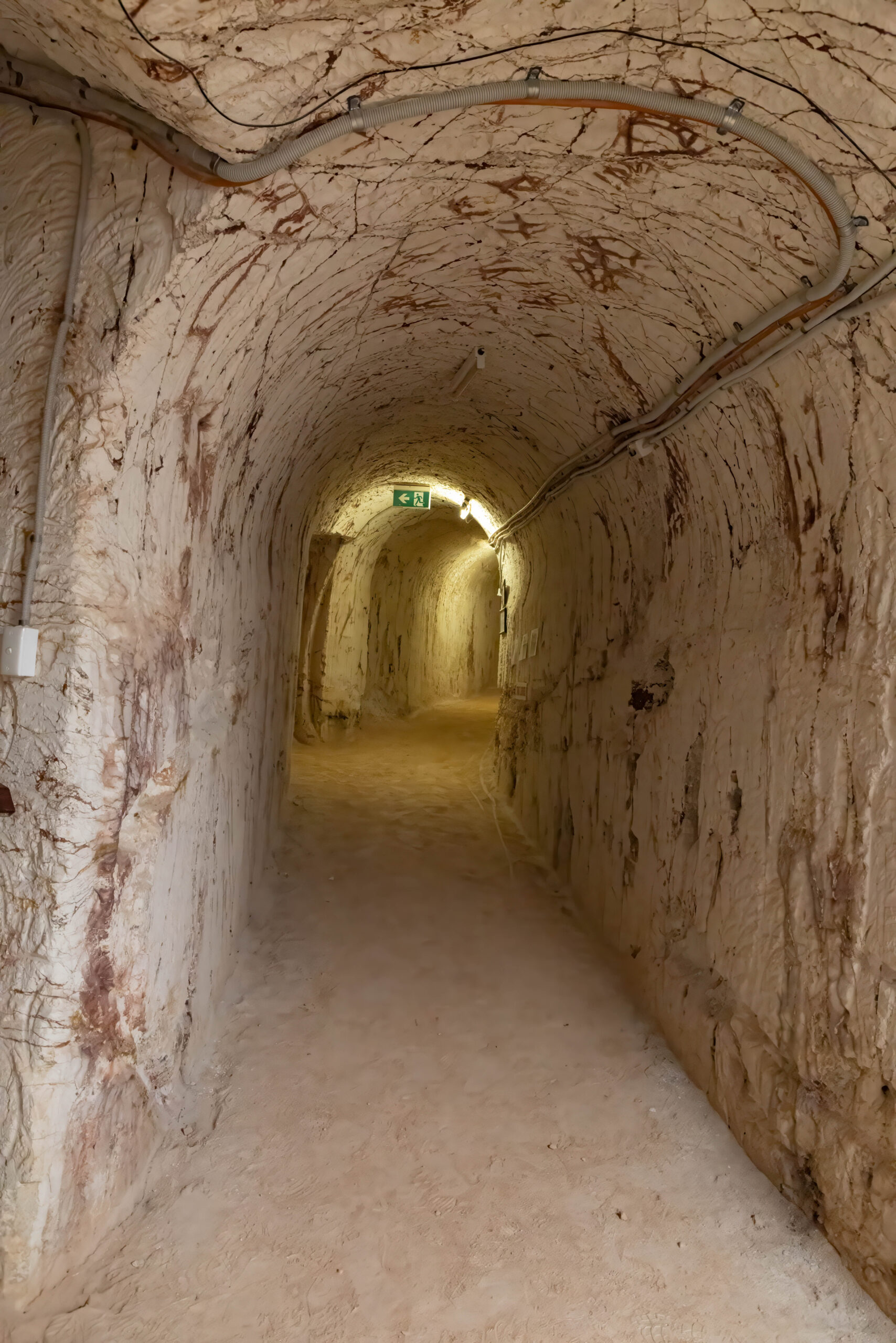
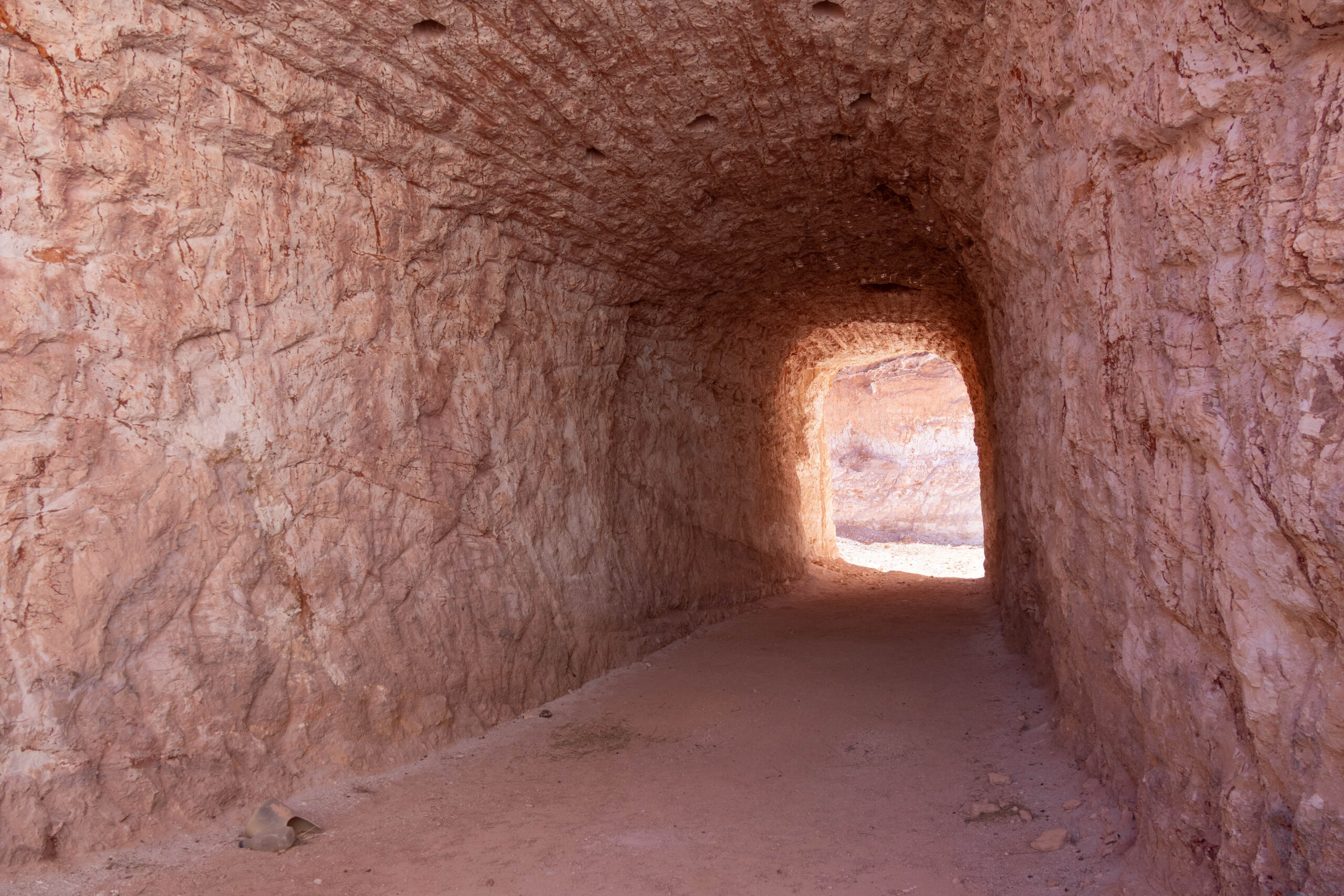
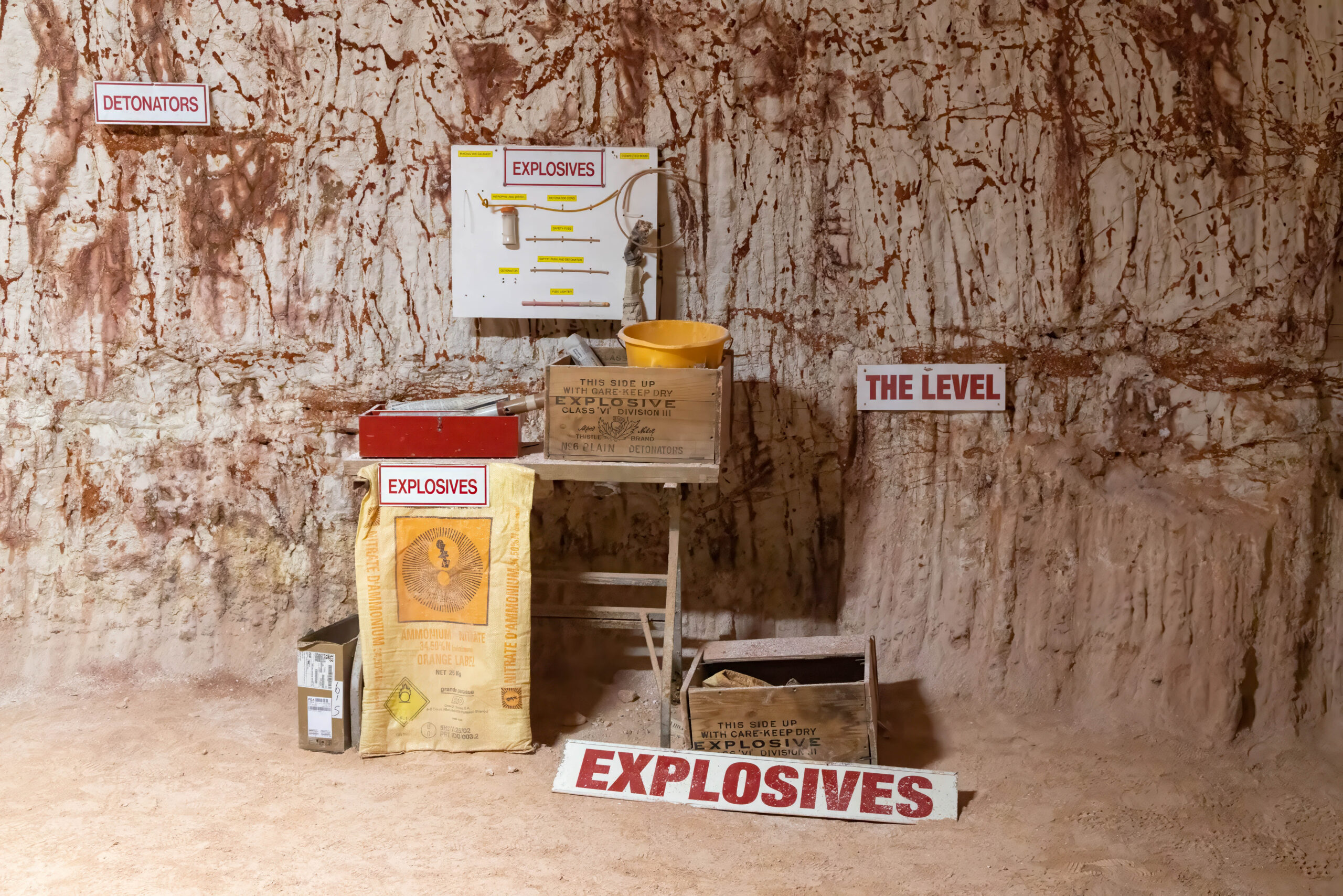
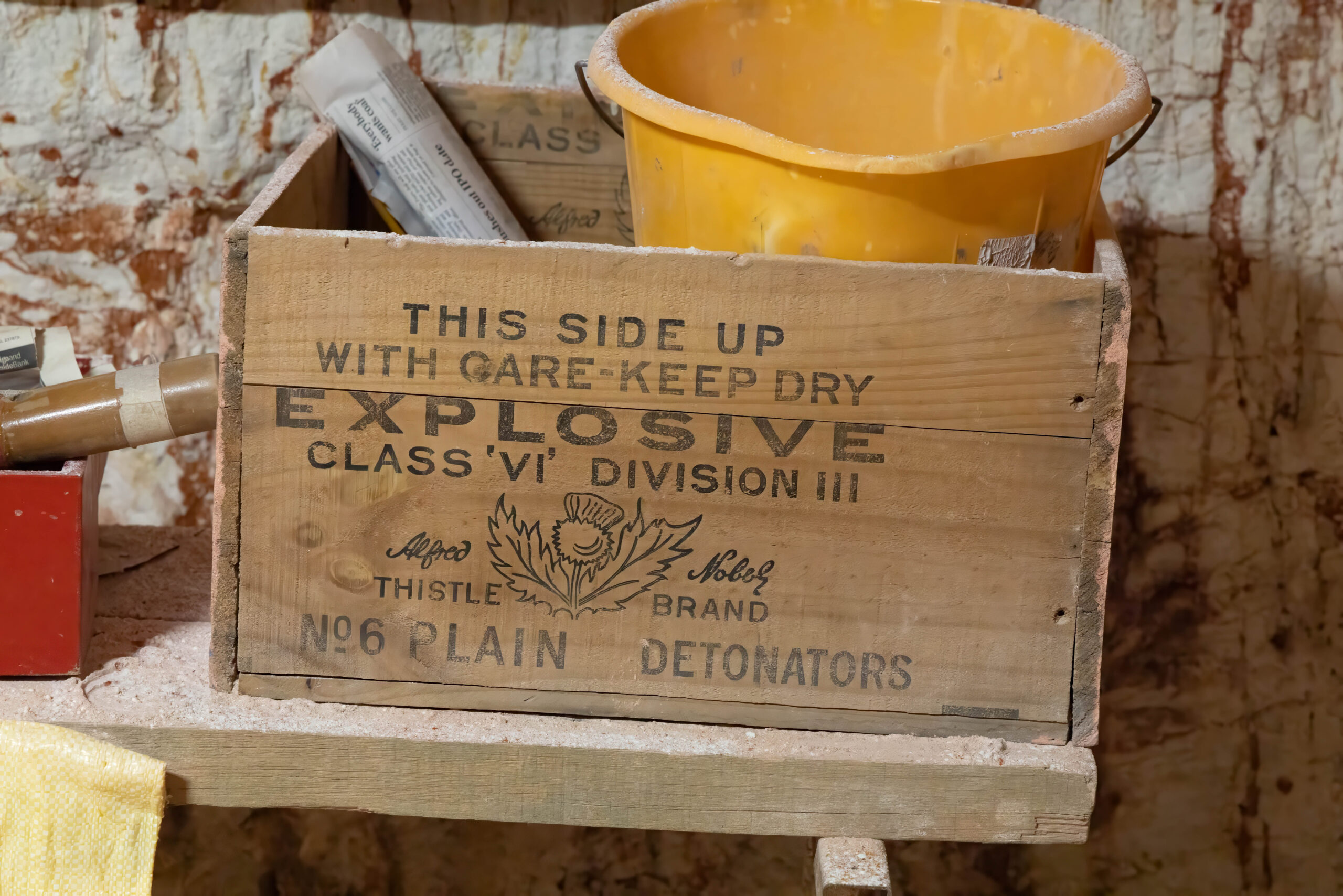
The mines here are very different from those at Lightning Ridge. Not only are the opals different – milky/white vs black – the sandstone is harder here so they can make much larger tunnels without props. We were able to walk through most of the mine without having to stoop at all. The funniest story Mila told us was when she was relating the era when they started using explosives to mine. Back then the use of explosives was barely regulated and she told us she would work down the mine after dropping the kids at school, until the afternoon school run, when she would pick up the boys, then go to the supermarket for bread and milk and a box of gelignite. Yup, they sold it at the supermarket!! And the boys used to help wrap the ‘sausages’ in newspaper and add the fuses, ready to be placed in the holes drilled in the mine the next day.
At the conclusion of the tour we returned to the reception area/ showroom for morning tea. Our tour included a coffee (from the new coffee machine) and freshly baked scones with raspberry jam and cream. Who doesn’t love a scone with jam and cream? The best bit though? There was absolutely no pressure to look at the opal jewelry and certainly no pressure to buy. So refreshing after all our craft excursions in India where we felt very pressured to buy.
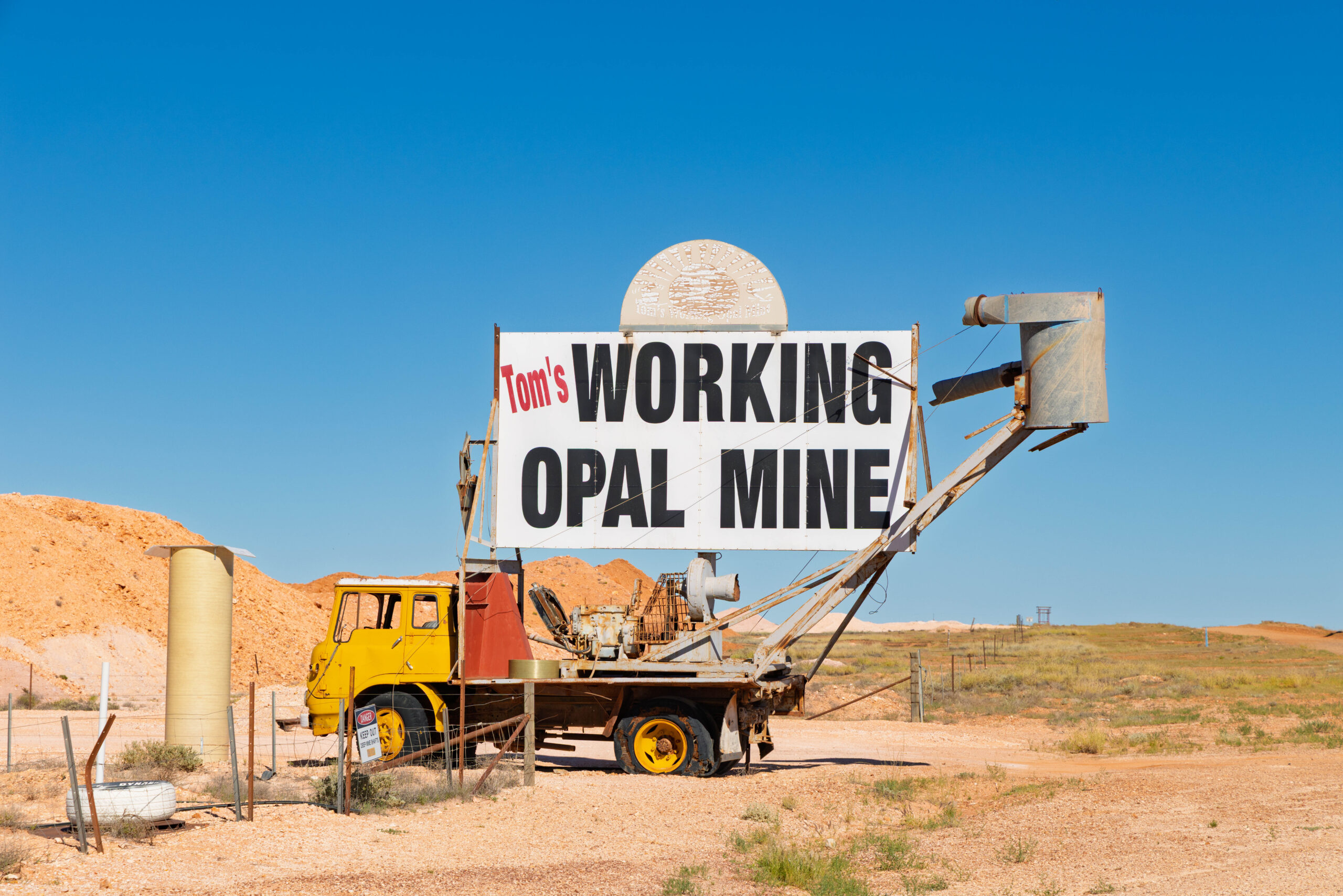
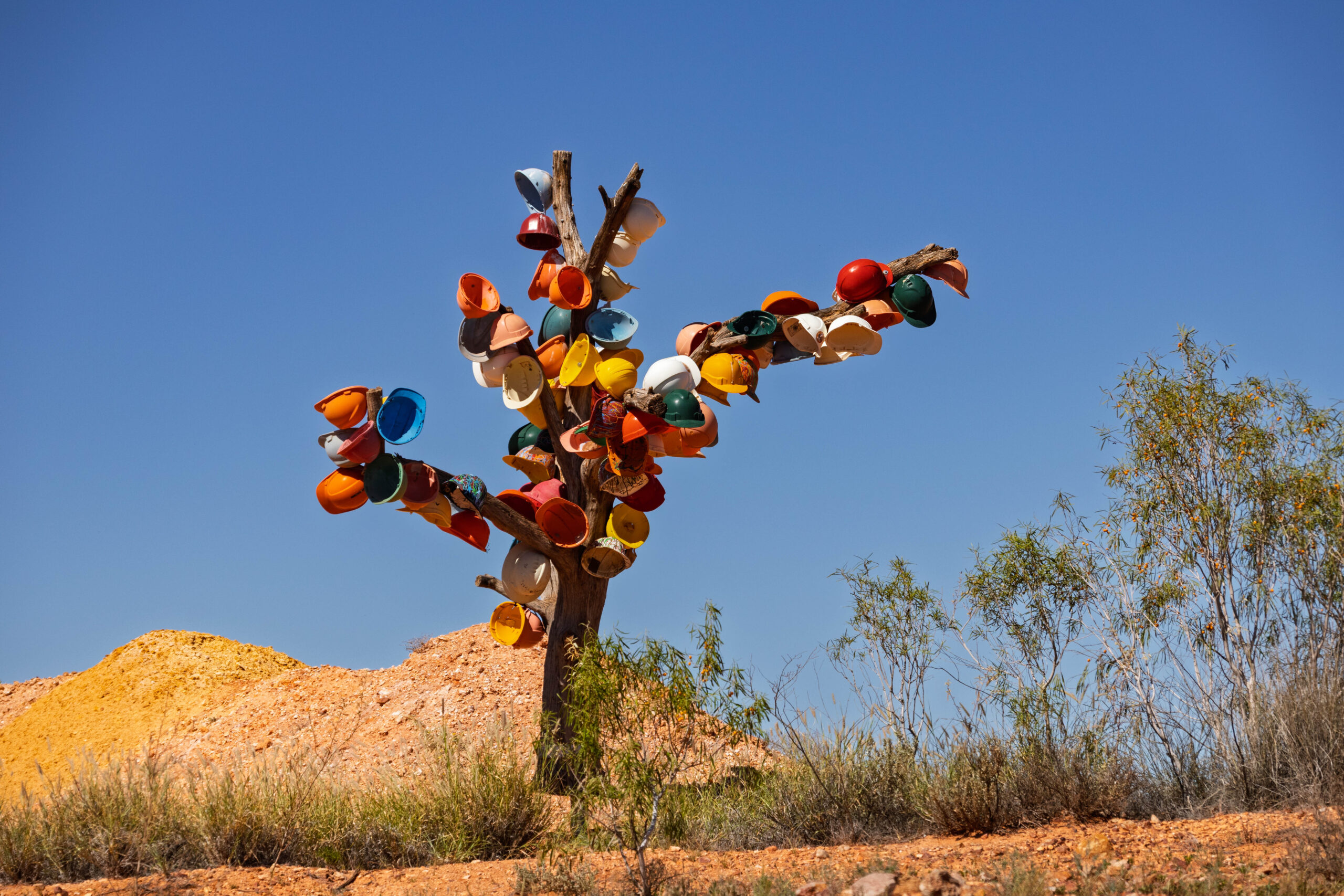
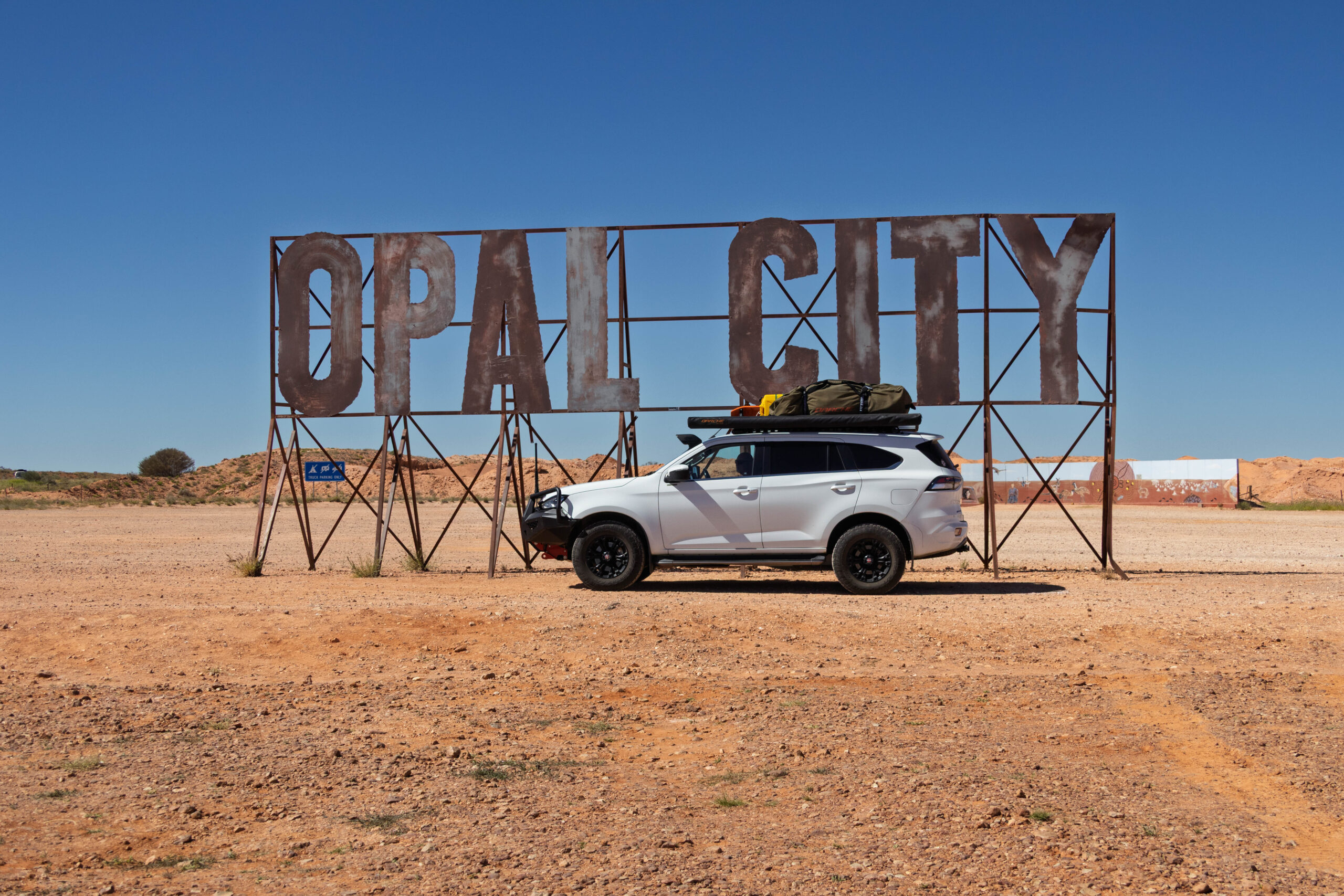
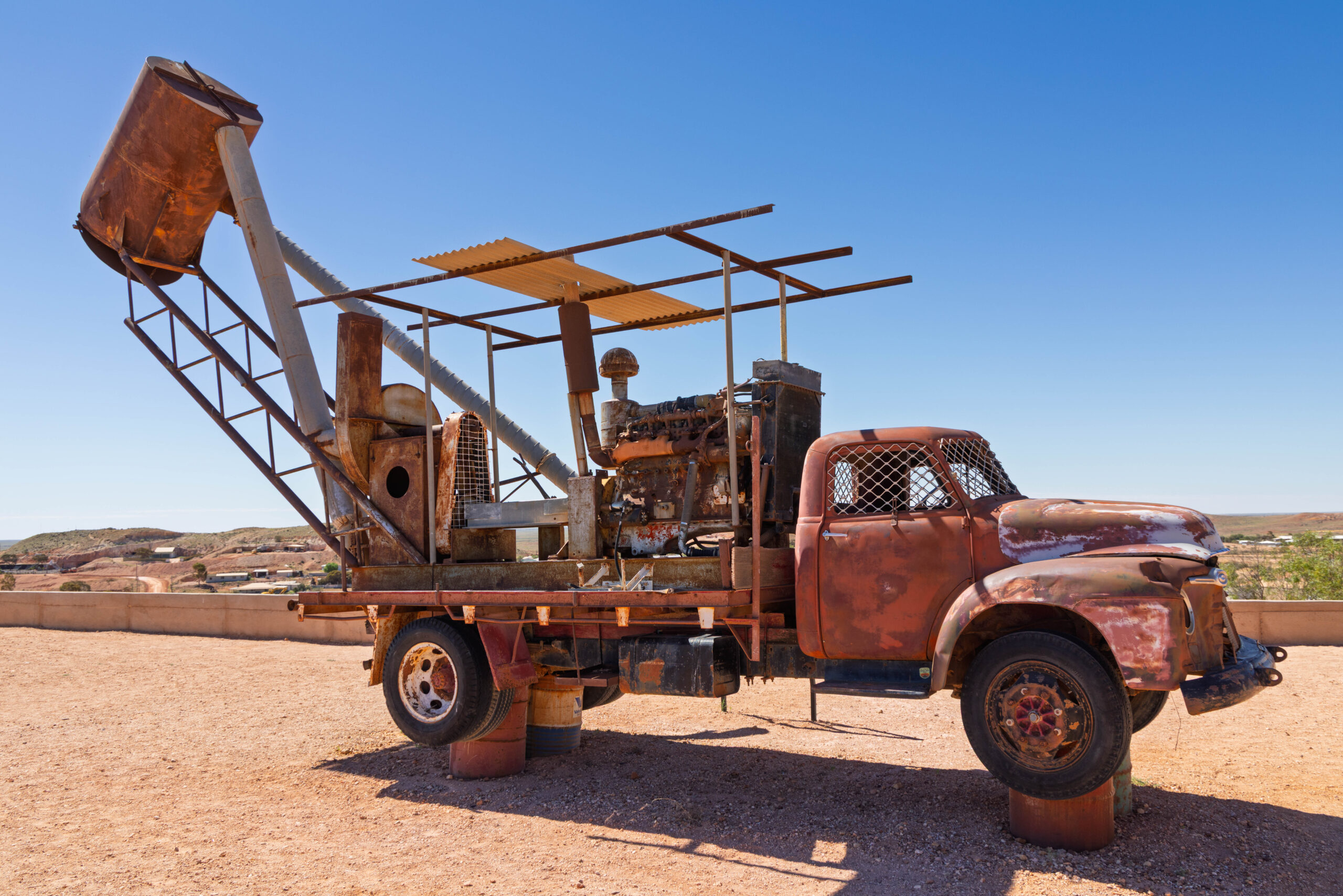
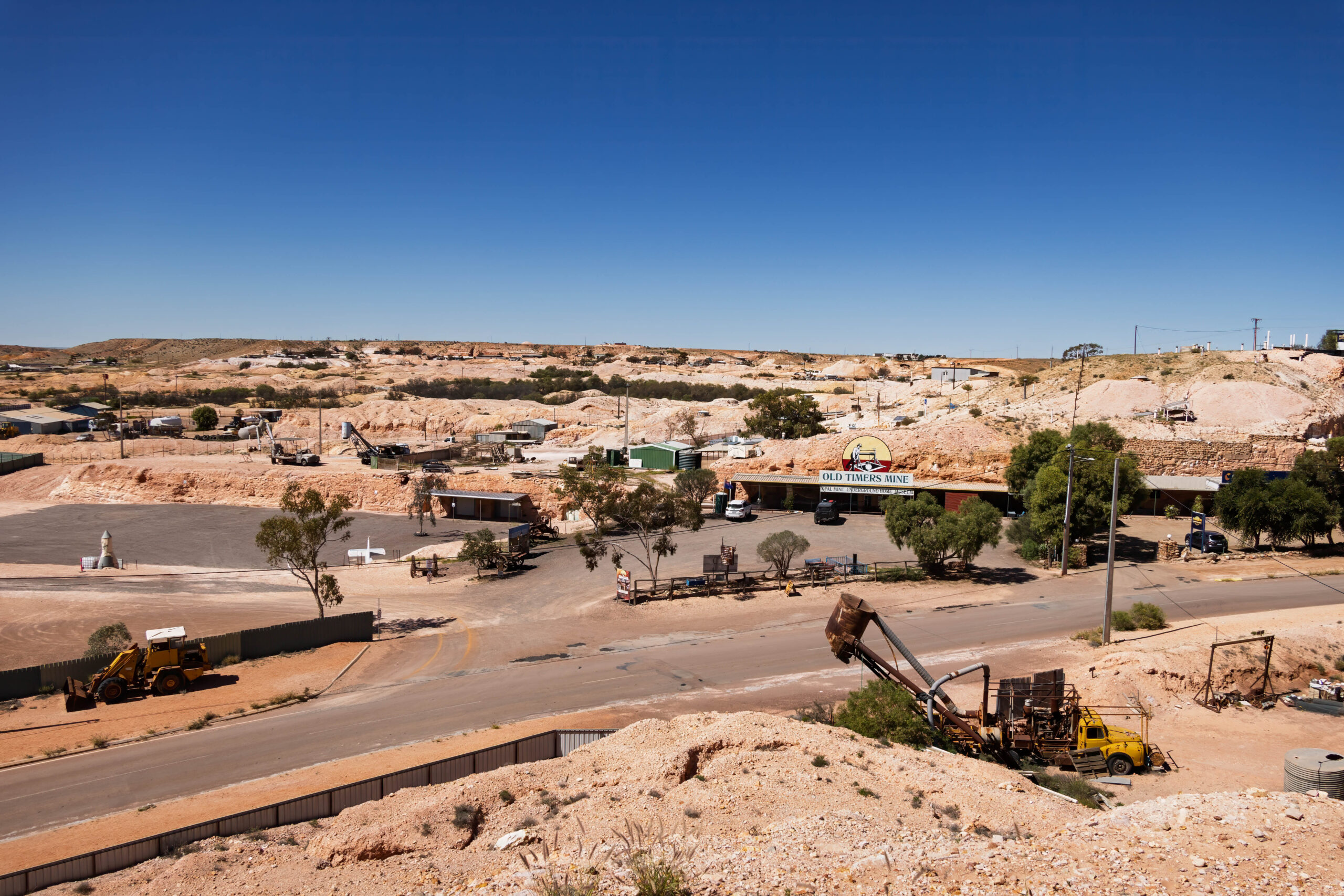
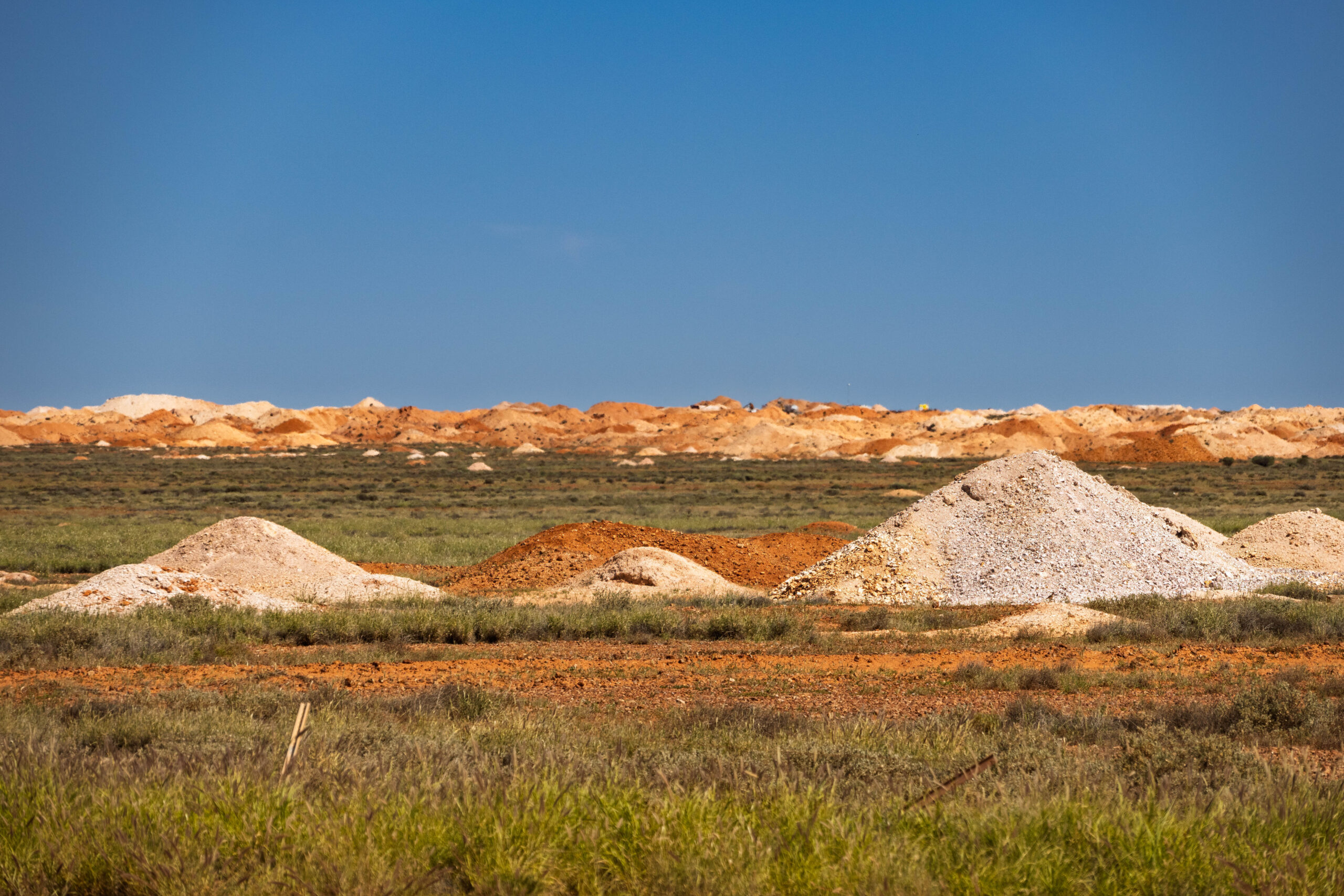
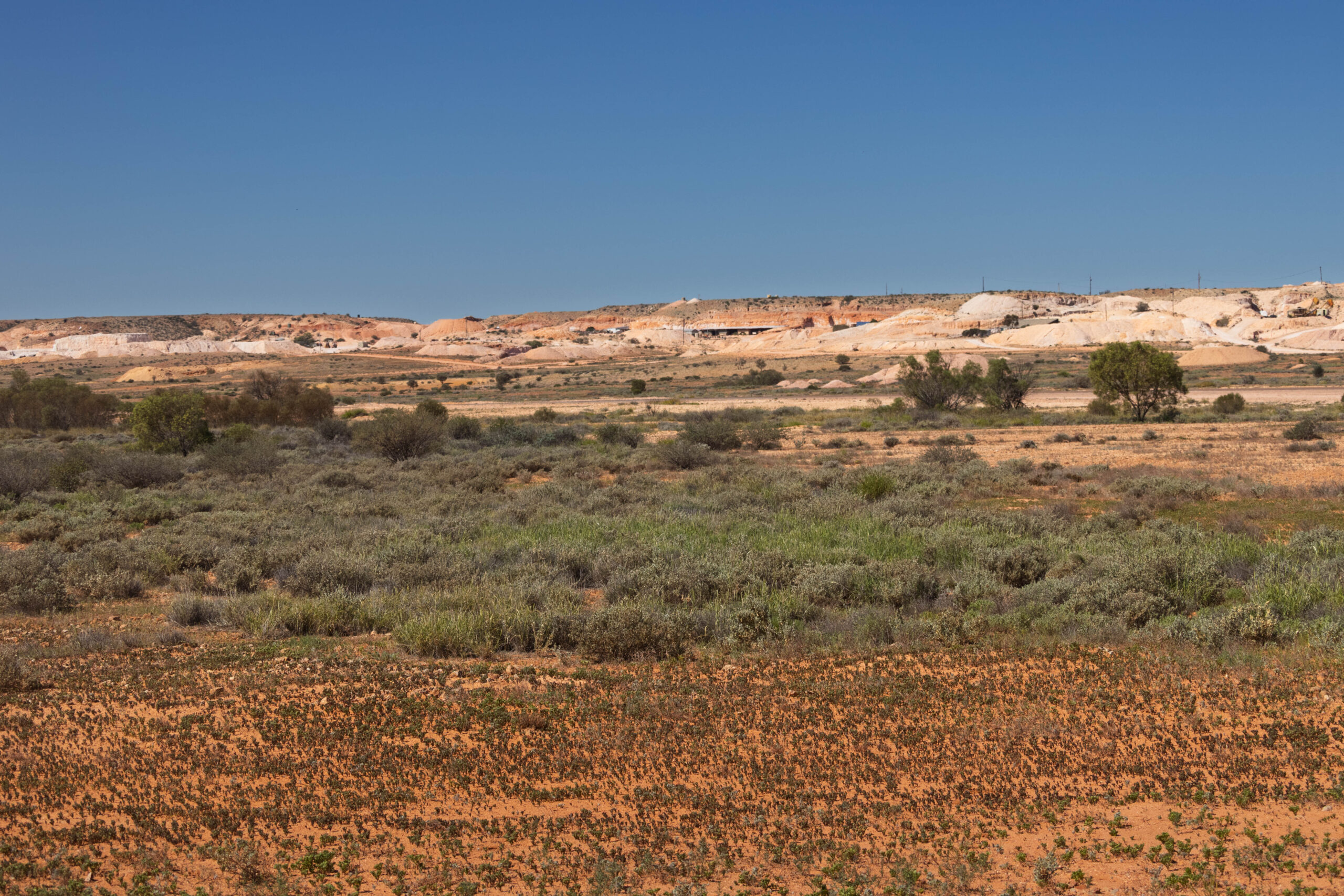
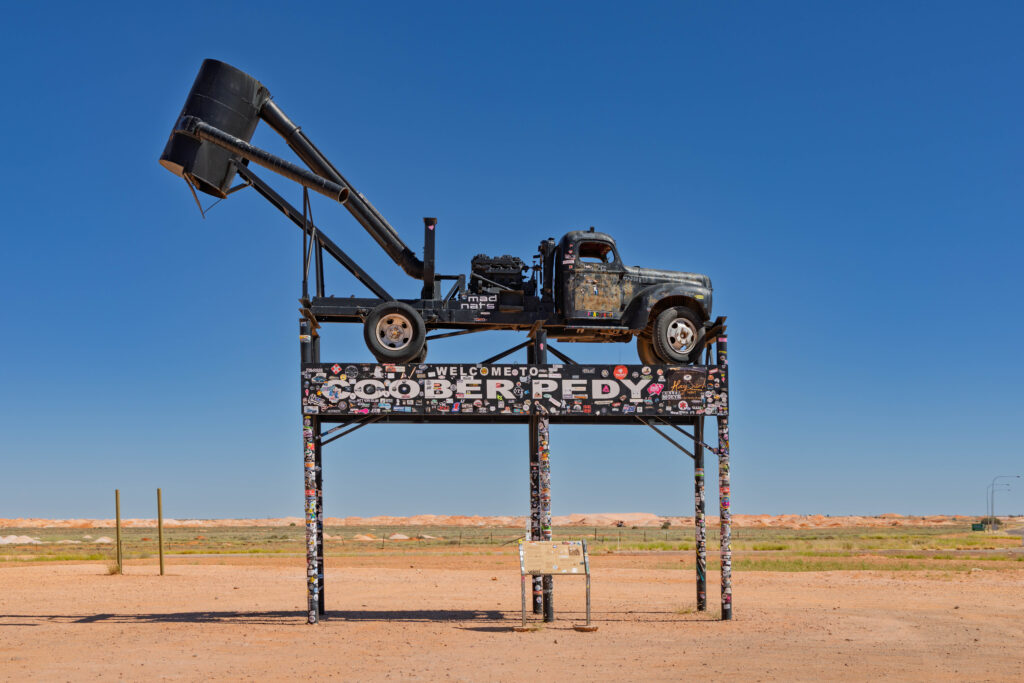
From the mine, located out on the Stuart Highway, we drove back towards Woomera to photograph a few things that we didn’t stop for yesterday afternoon. Very touristy shots along the highway of the Hard Hat Tree, the iconic blower truck with the Welcome to Coober Pedy sign and the OPAL CITY sign. We rounded those out with photos of the mullock heaps and the house fronts on the hillside that are the only visible part of the underground homes.
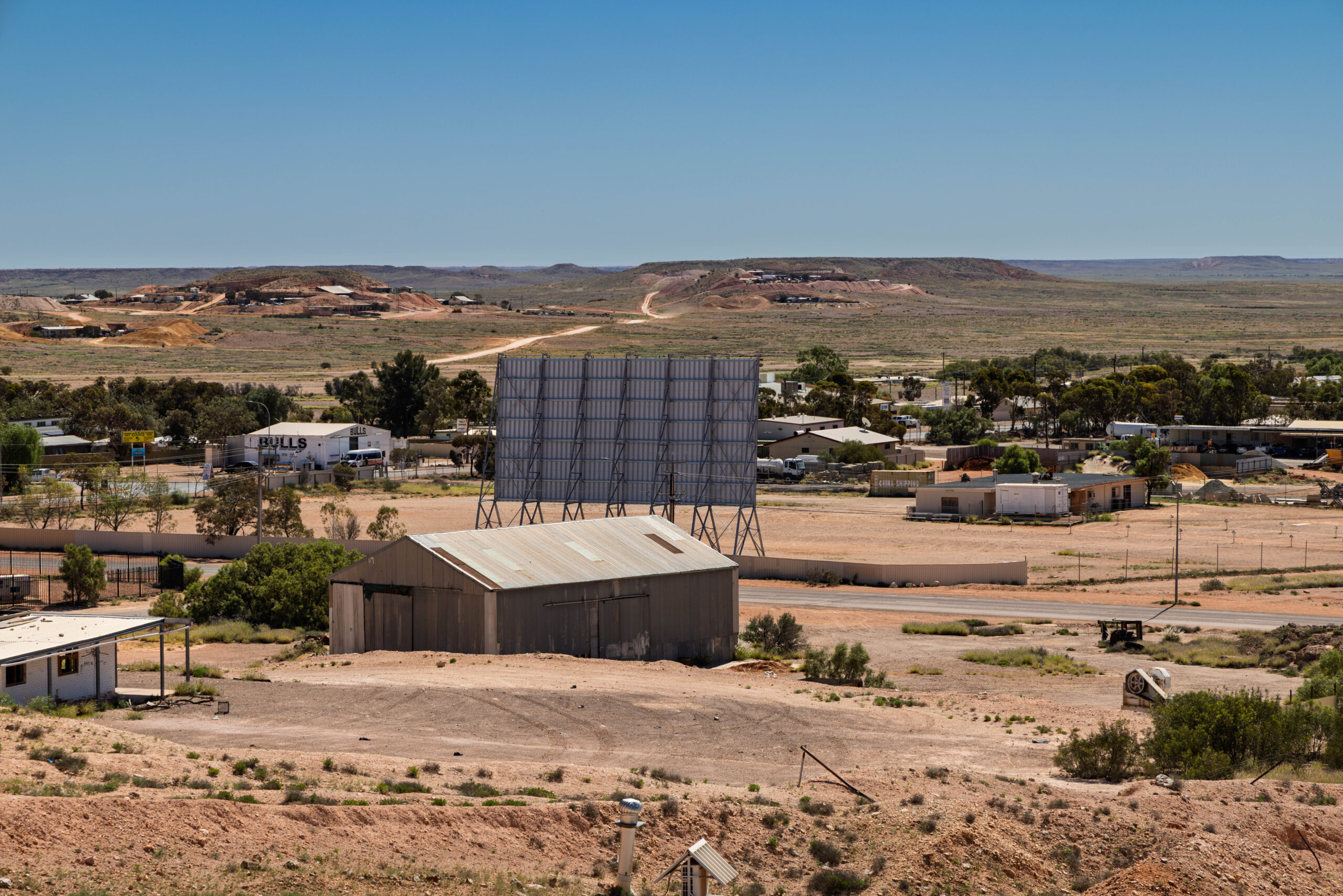
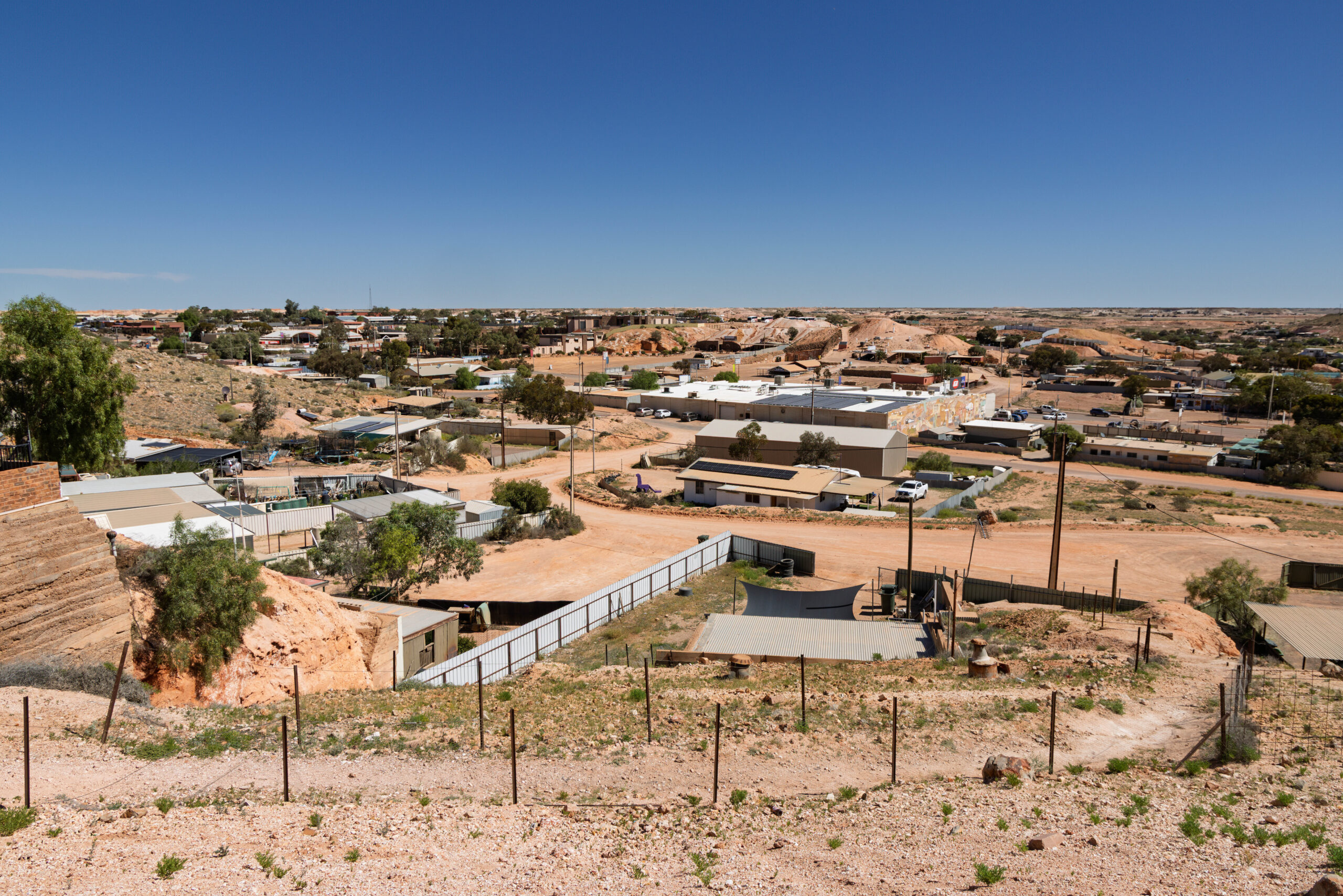
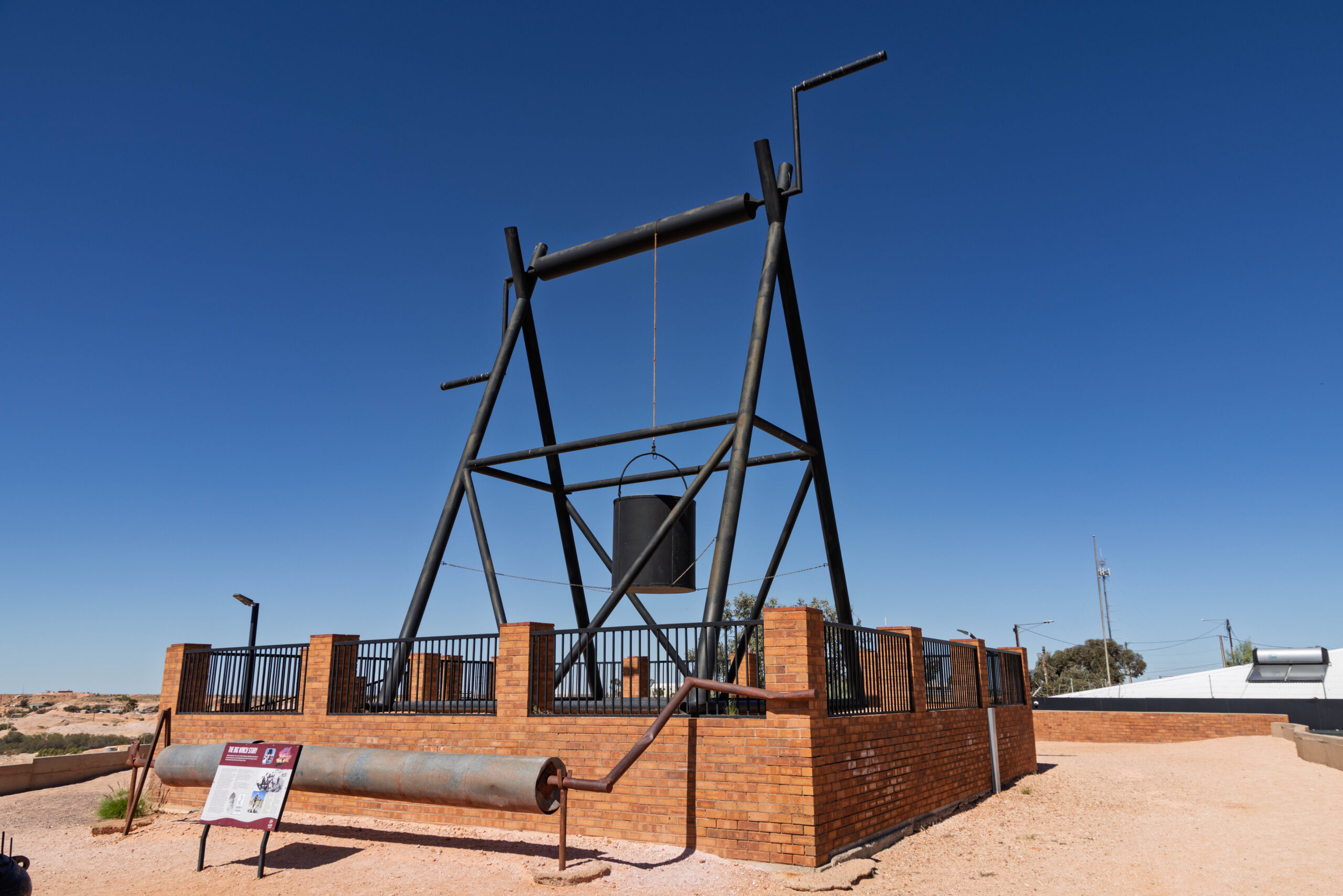
Returning to town, we drove up the hill to visit the Big Winch. With spectacular 360° views over Coober Pedy, the Big Winch has been a popular attraction and meeting place for visitors and locals since it was built by Claus Wirries in the early 1970s. Arriving in Coober Pedy in 1967, Claus was a colorful character who mined, cut and traded opals, spending several months each year selling stones in Europe.
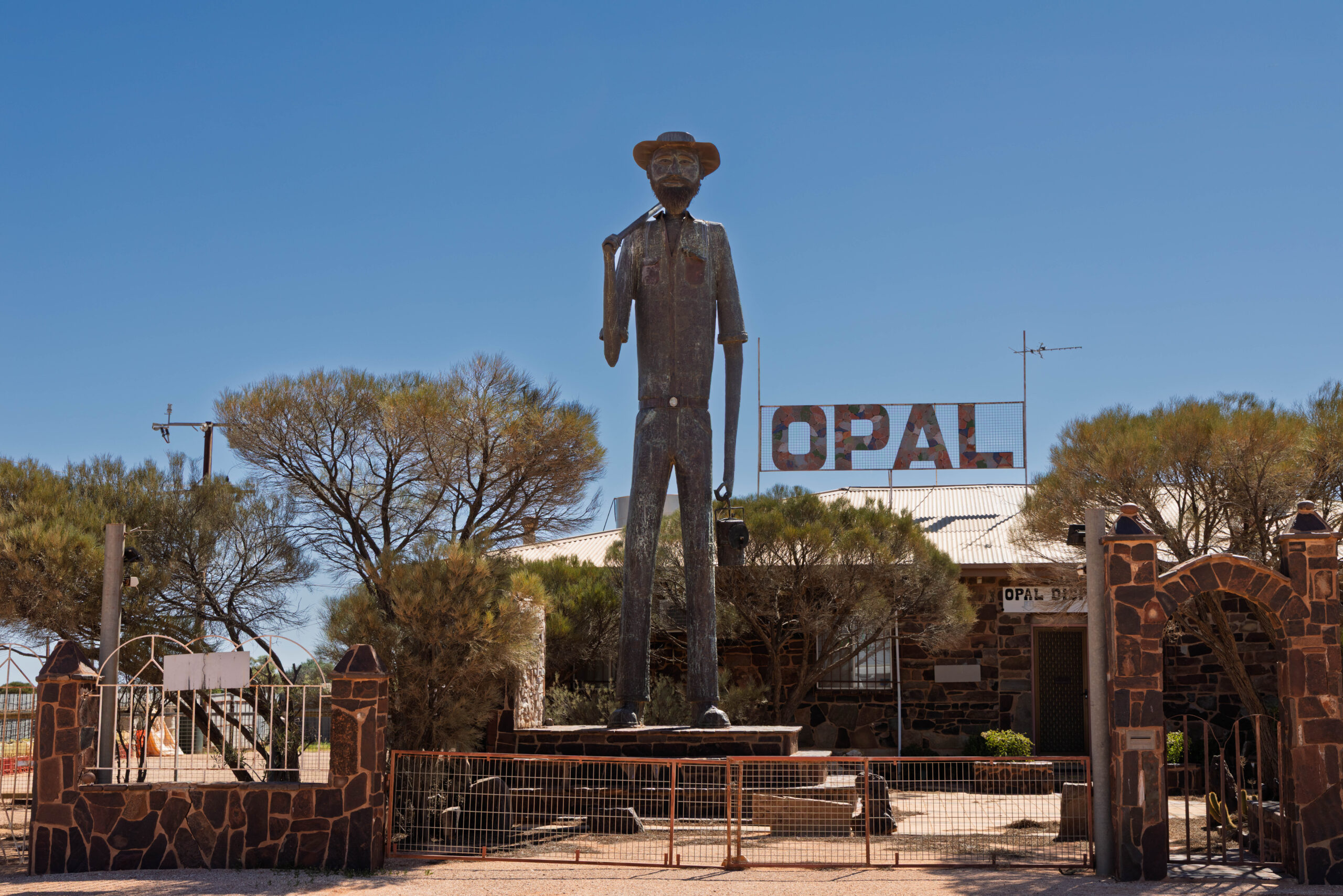
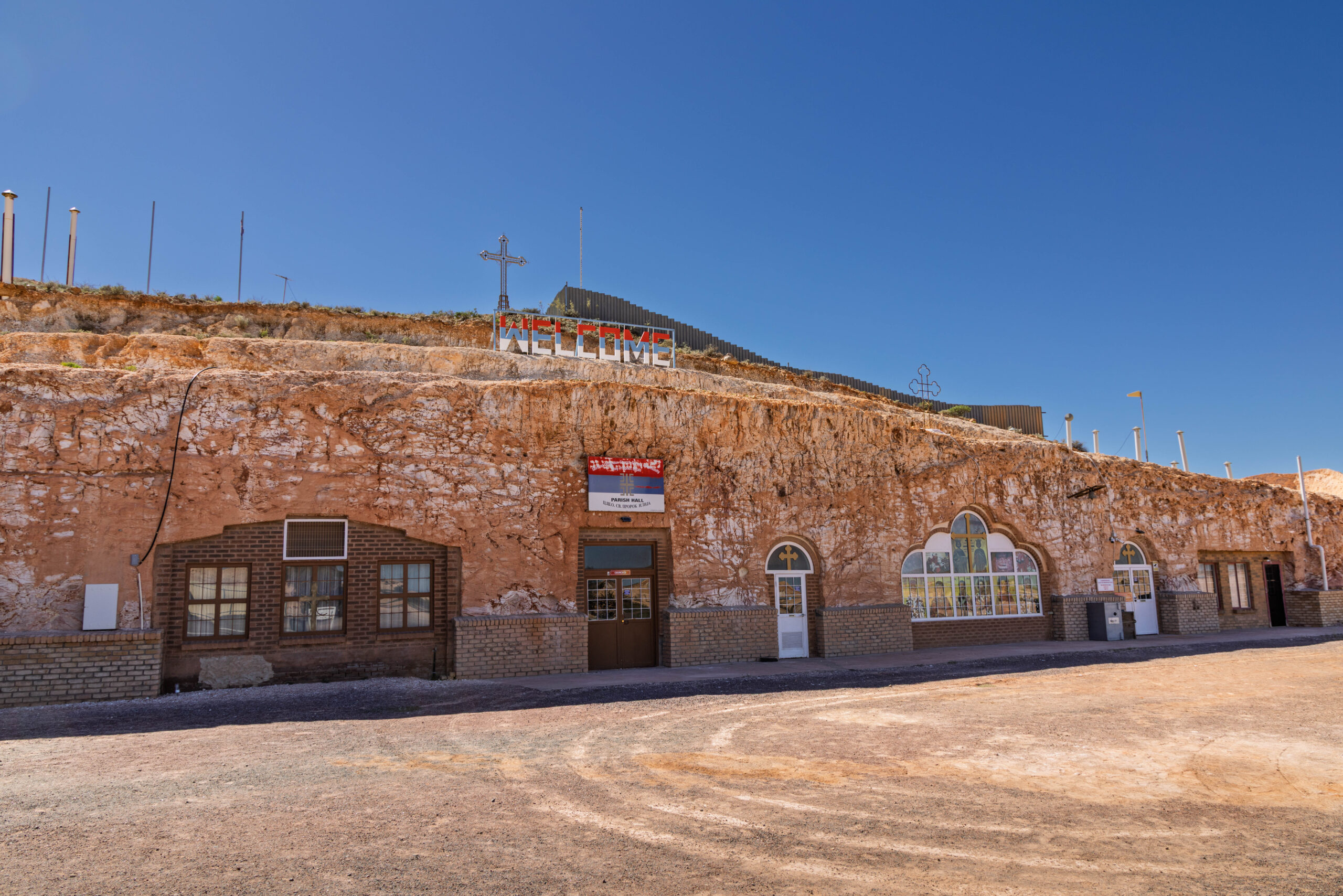
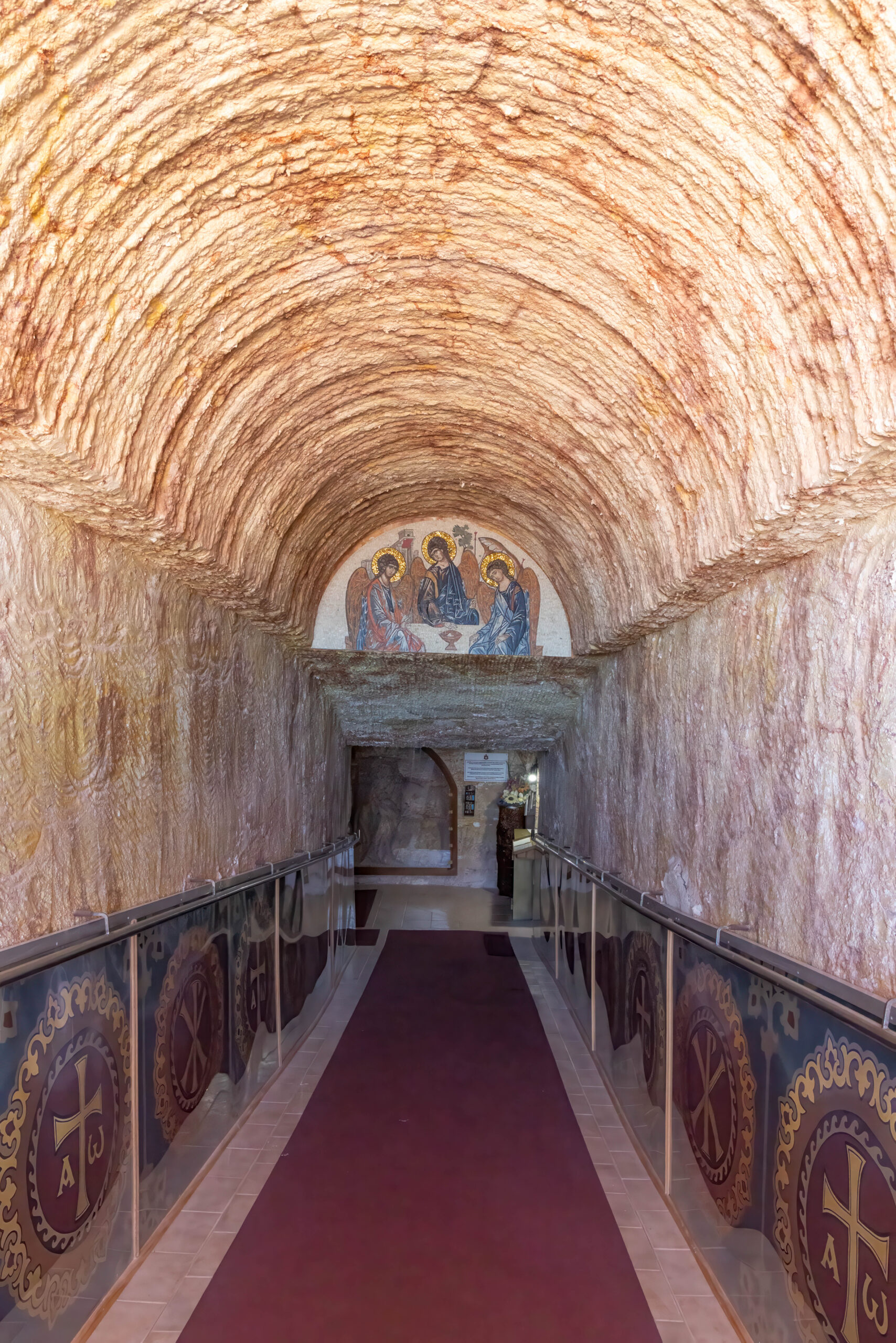
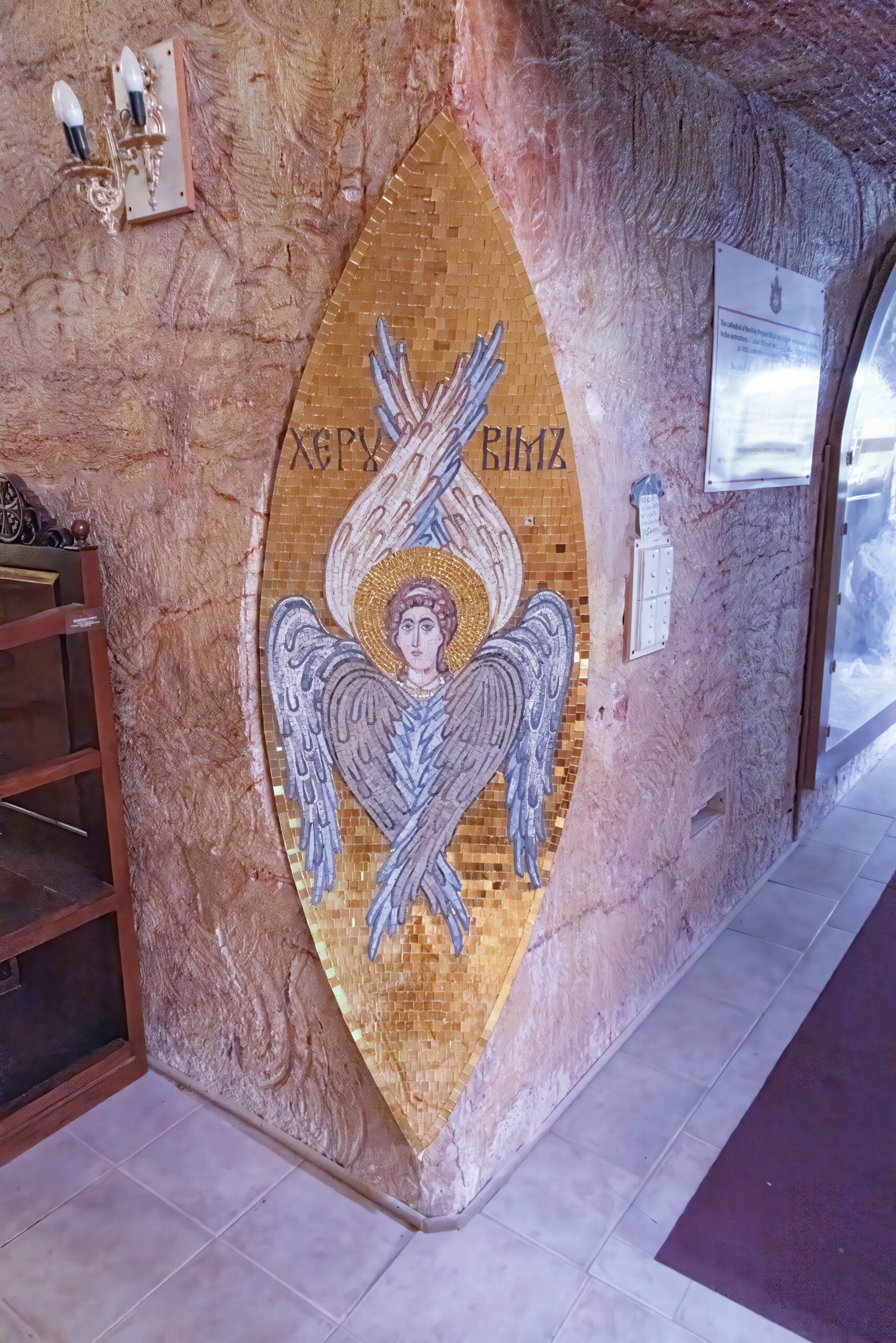
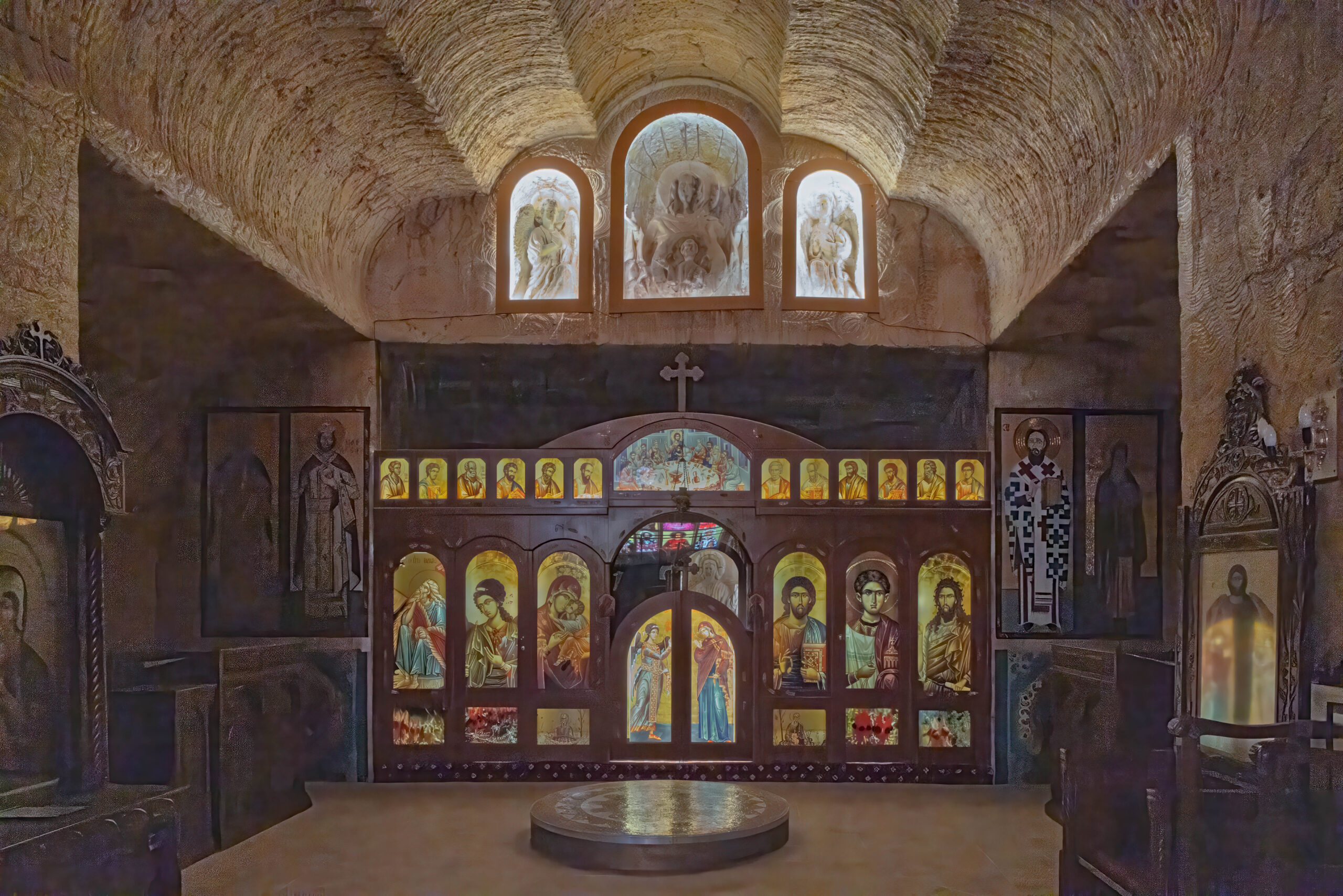
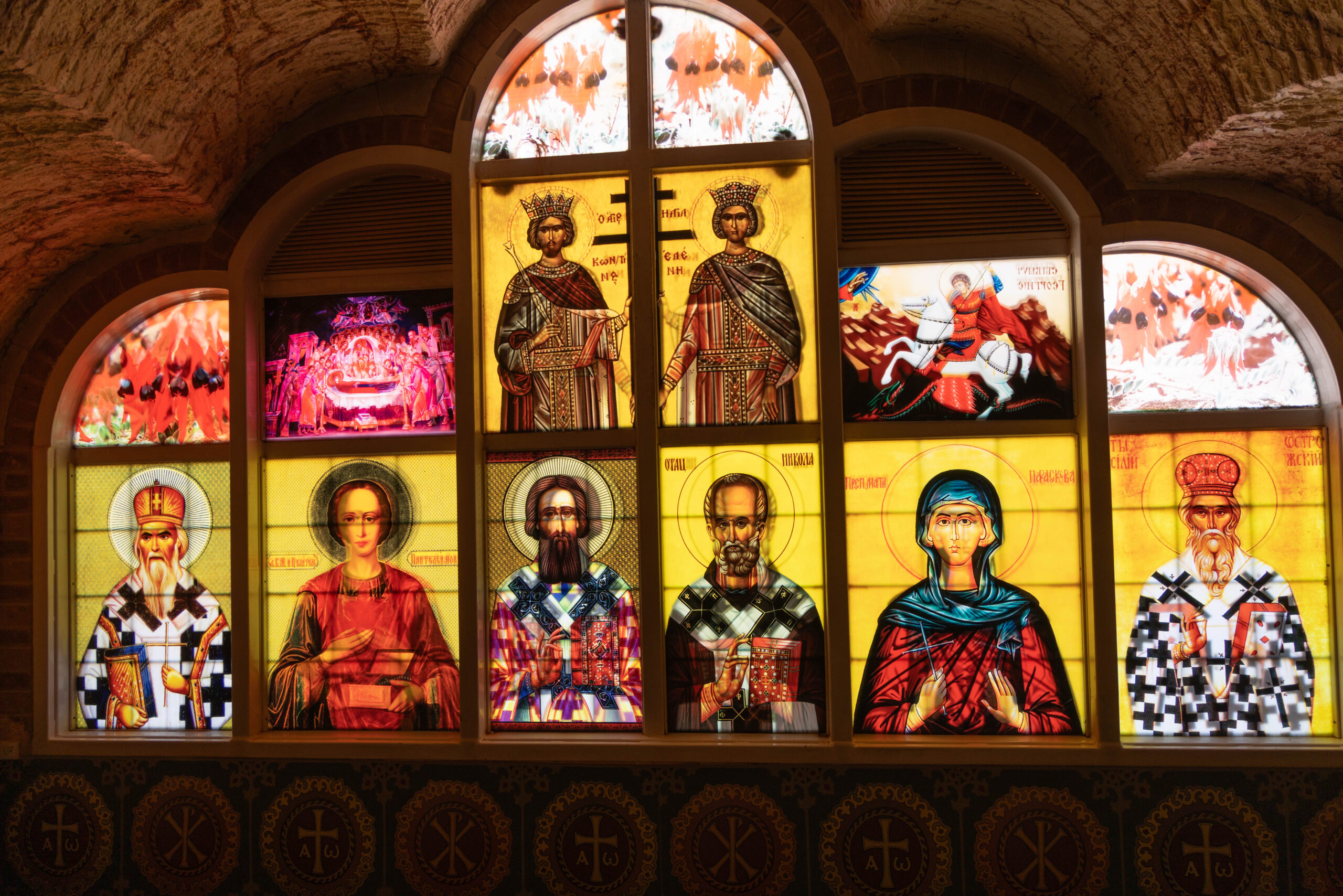
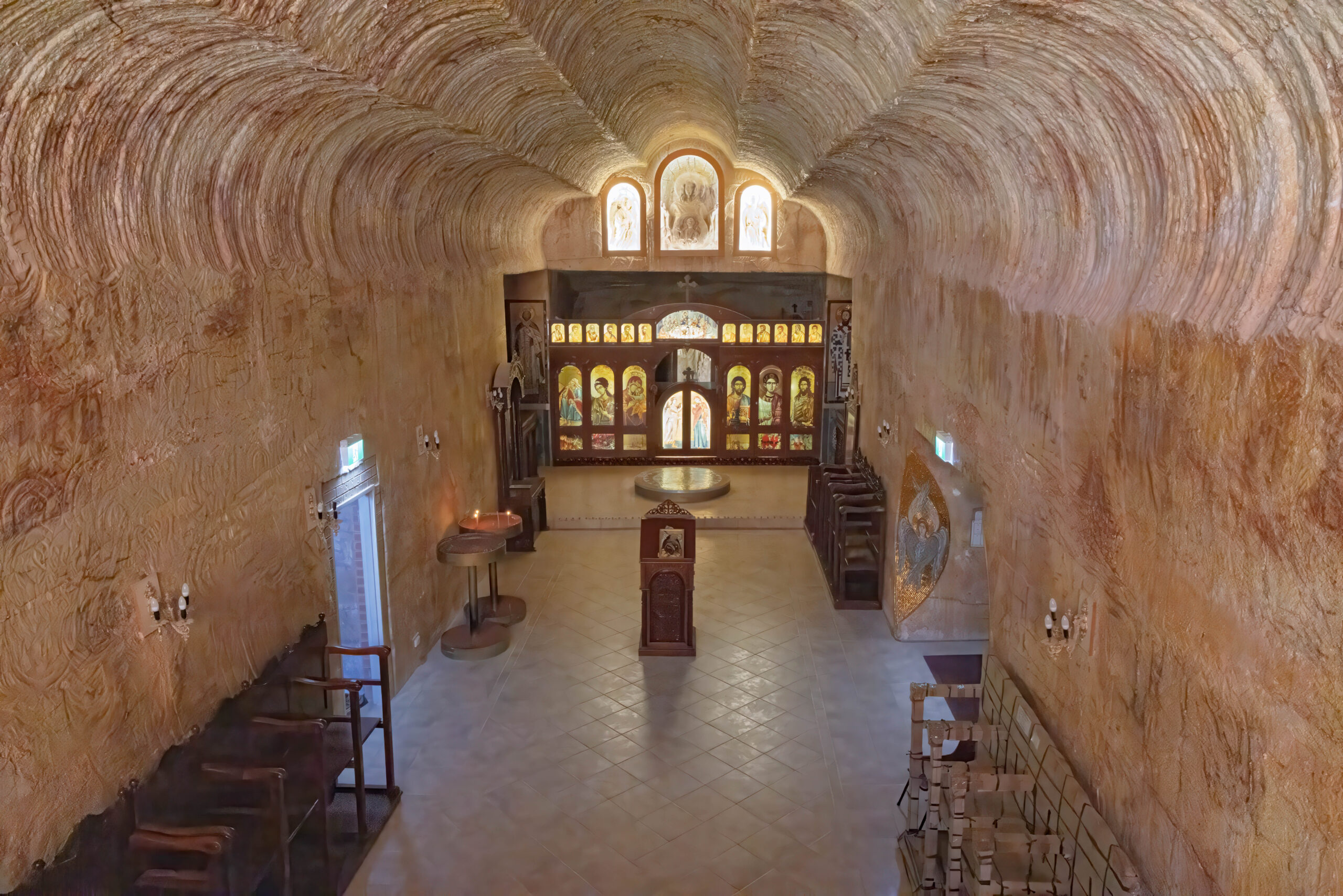
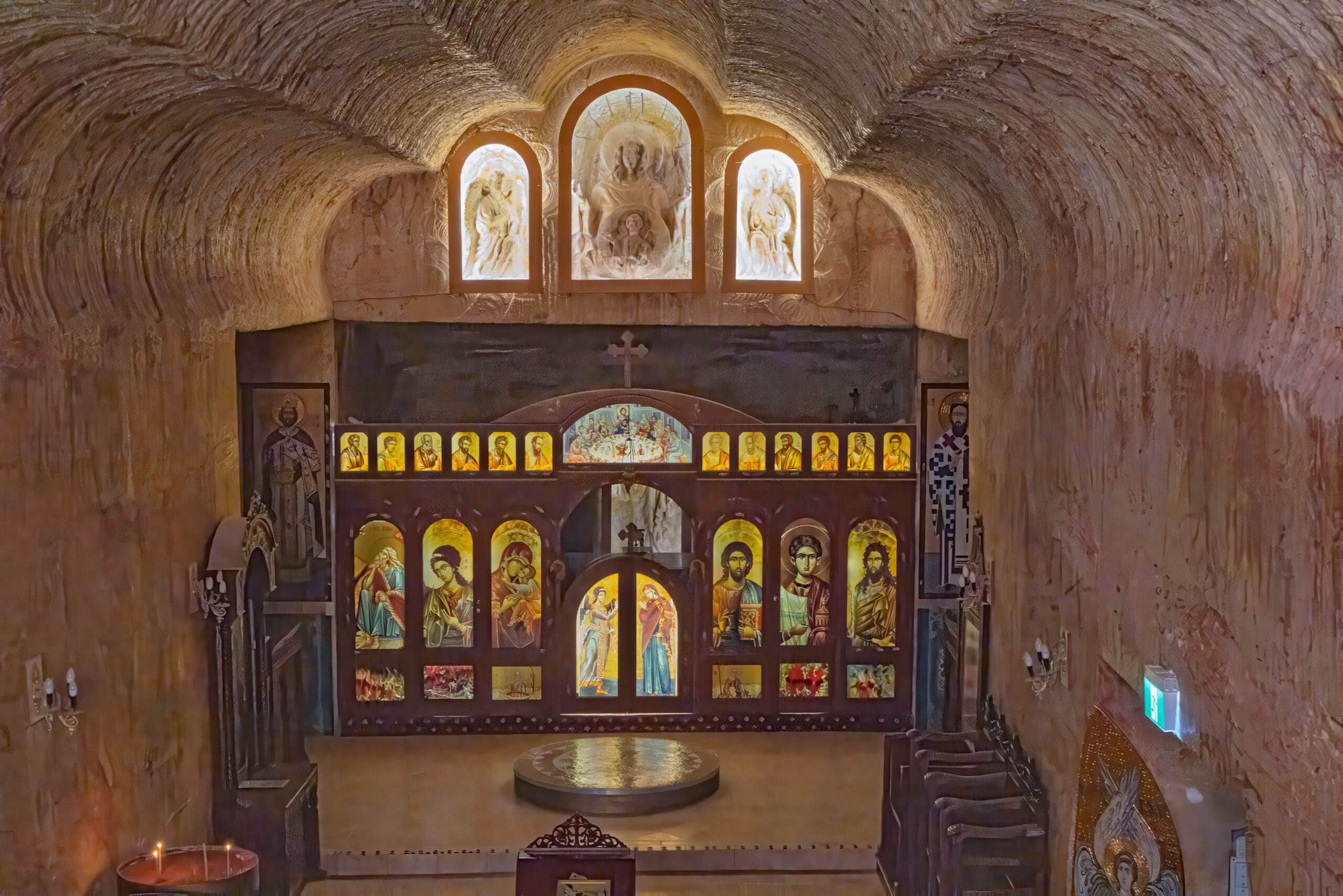
After sharing a delicious Turkish bread BLAT in the cafe at the Big Winch, we drove back down the hill to visit the Big Miner, who stands out the front of an opal jewelers shop on Simmos Street. Next on the agenda was the underground church tour of Coober Pedy. We started at the Serbian Orthodox Church which is spectacular. It was built, or rather carved into the hillside, in 1993 and is known officially as the Church of Saint Elijah, the prophet.
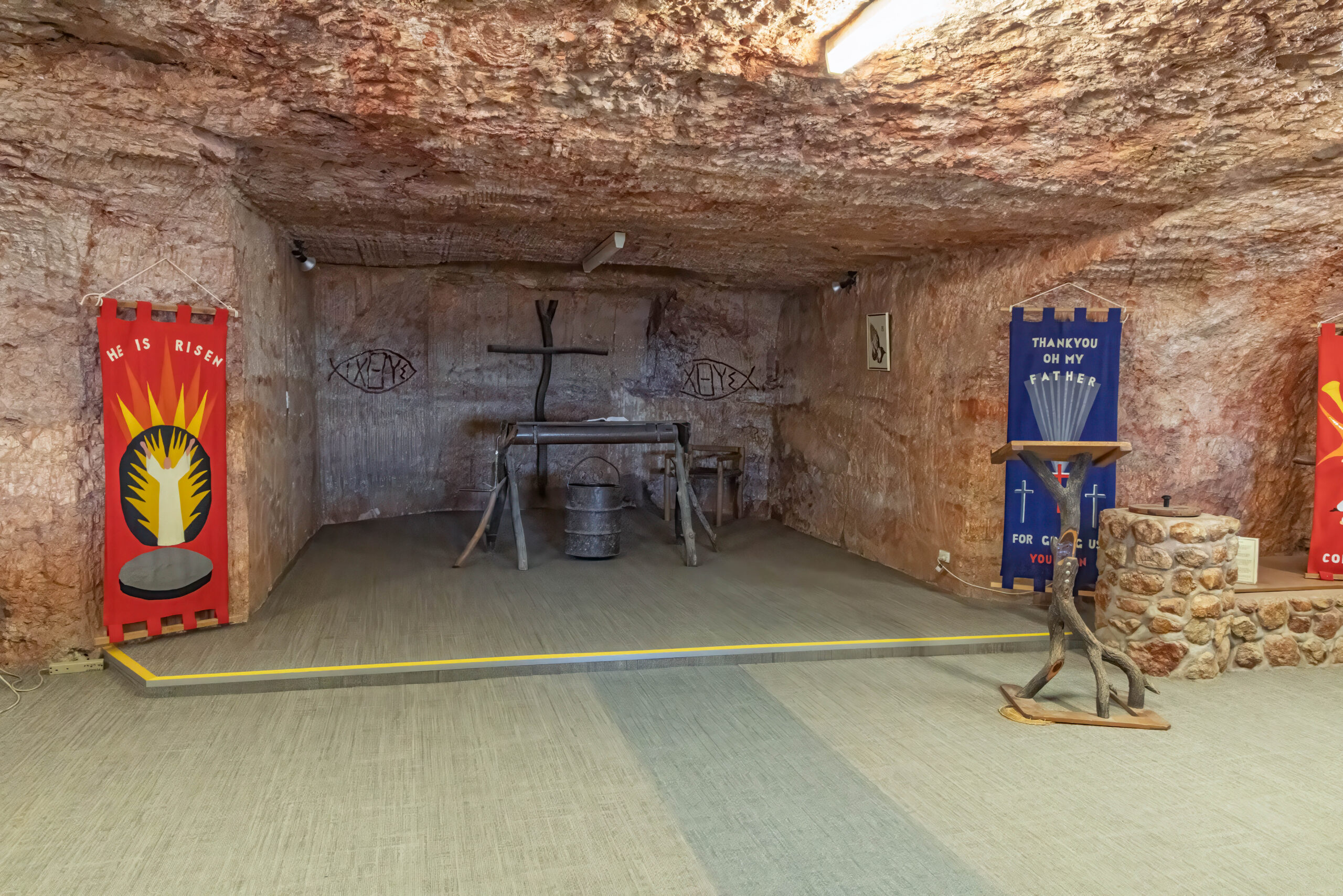
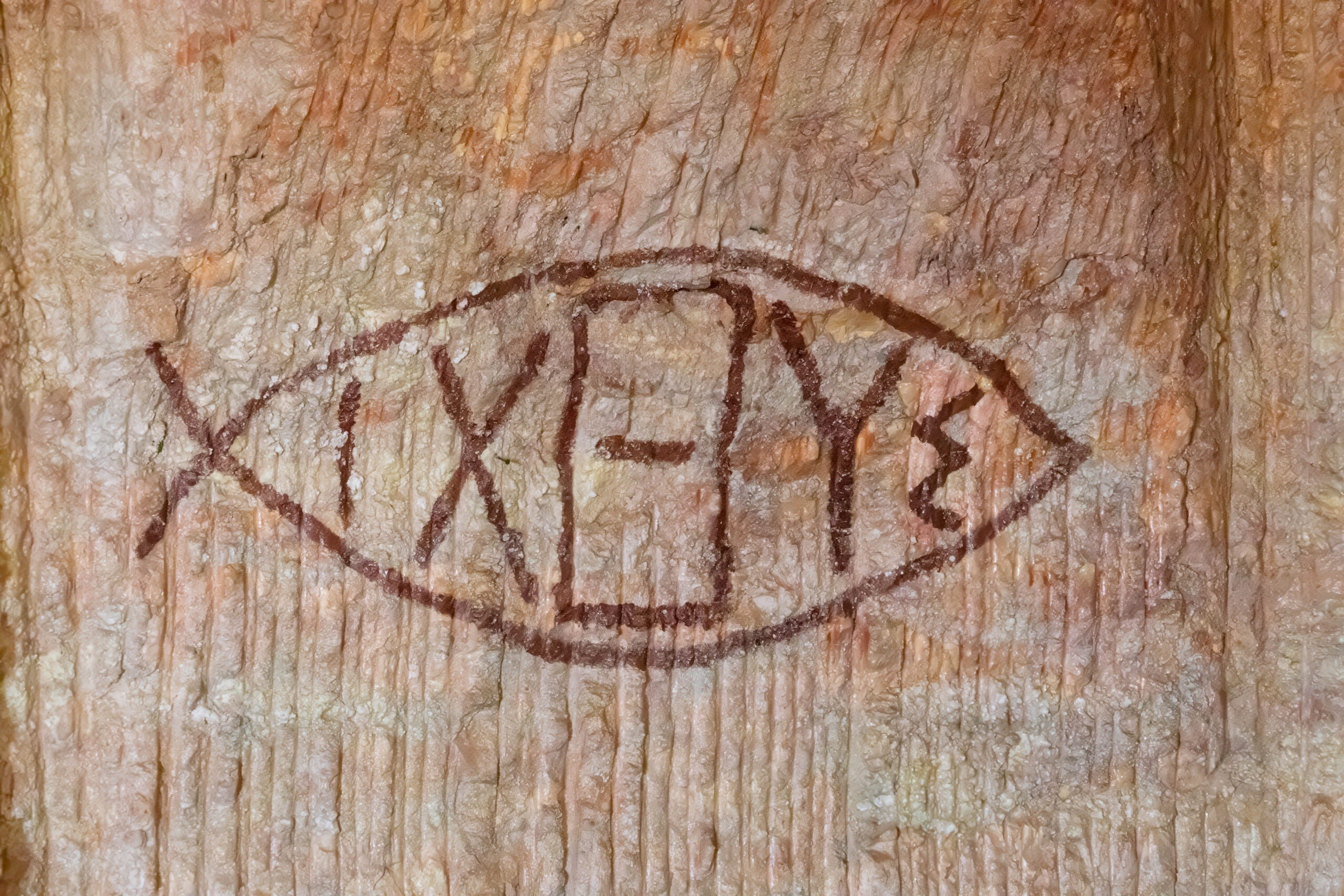
Our next stop was at the Anglican Catacomb Church of Coober Pedy. The church and rectory sites were originally dug for people to live in but were never completed and became available for the church to purchase. Services were commenced in the Rectory dug out in 1973. The Catcomb Church dug out was formally completed in June 1977, with services moving into that space thereafter. Because the space is underground and used by Christians, it was decided to name the church after the Catacombs of Rome, which were used by Christians in Roman times to bury their dead and escape persecution by the Roman Emperors.
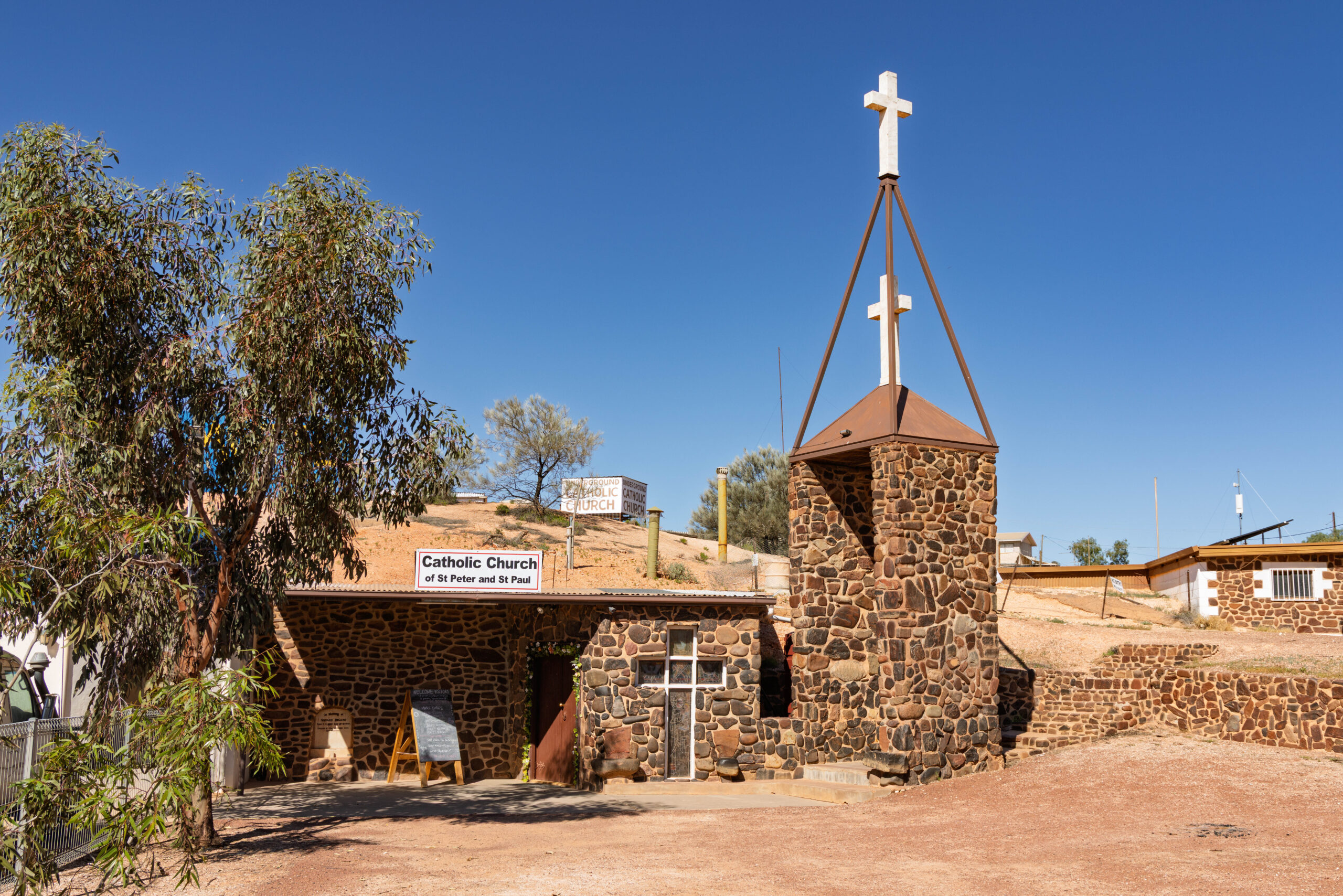
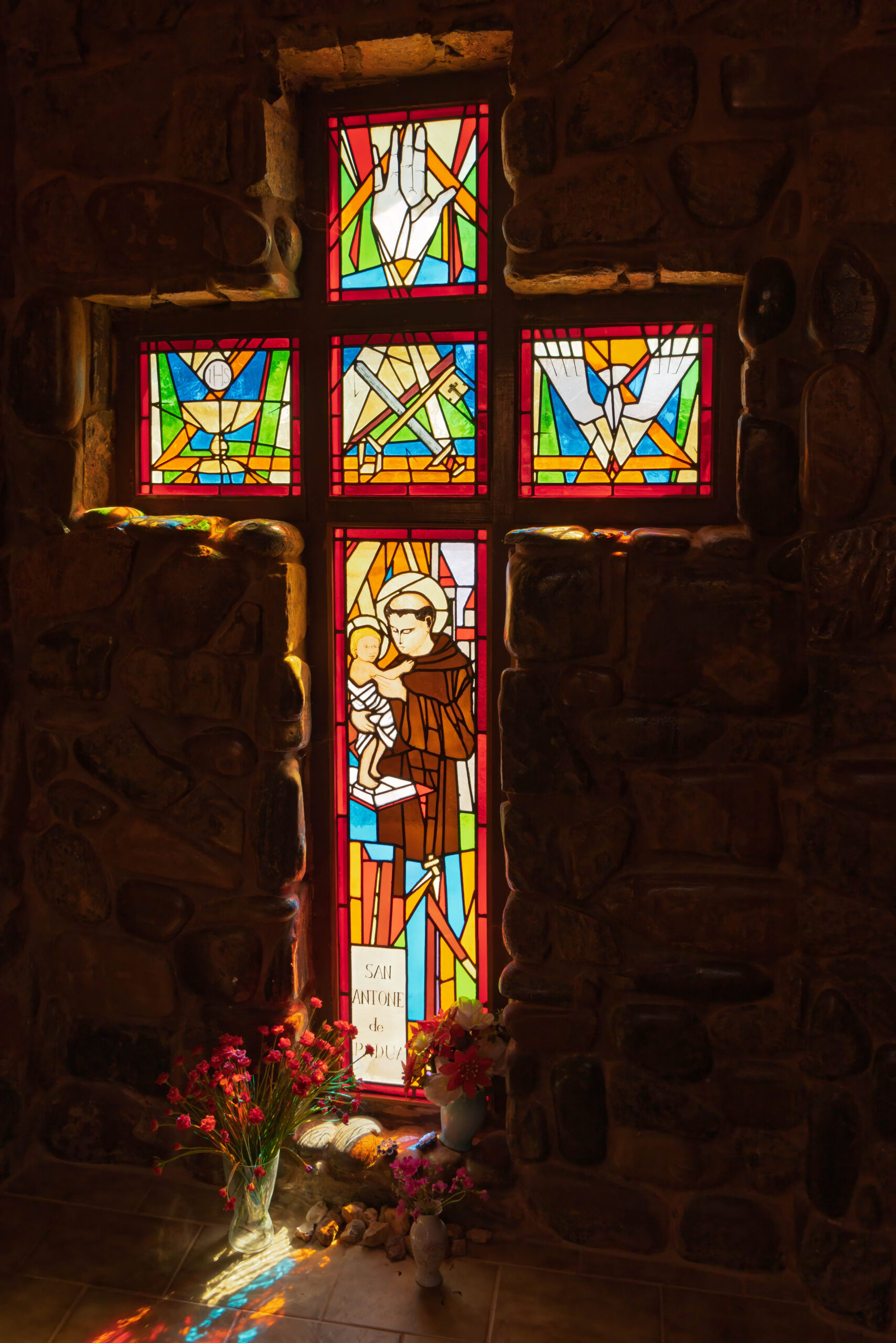
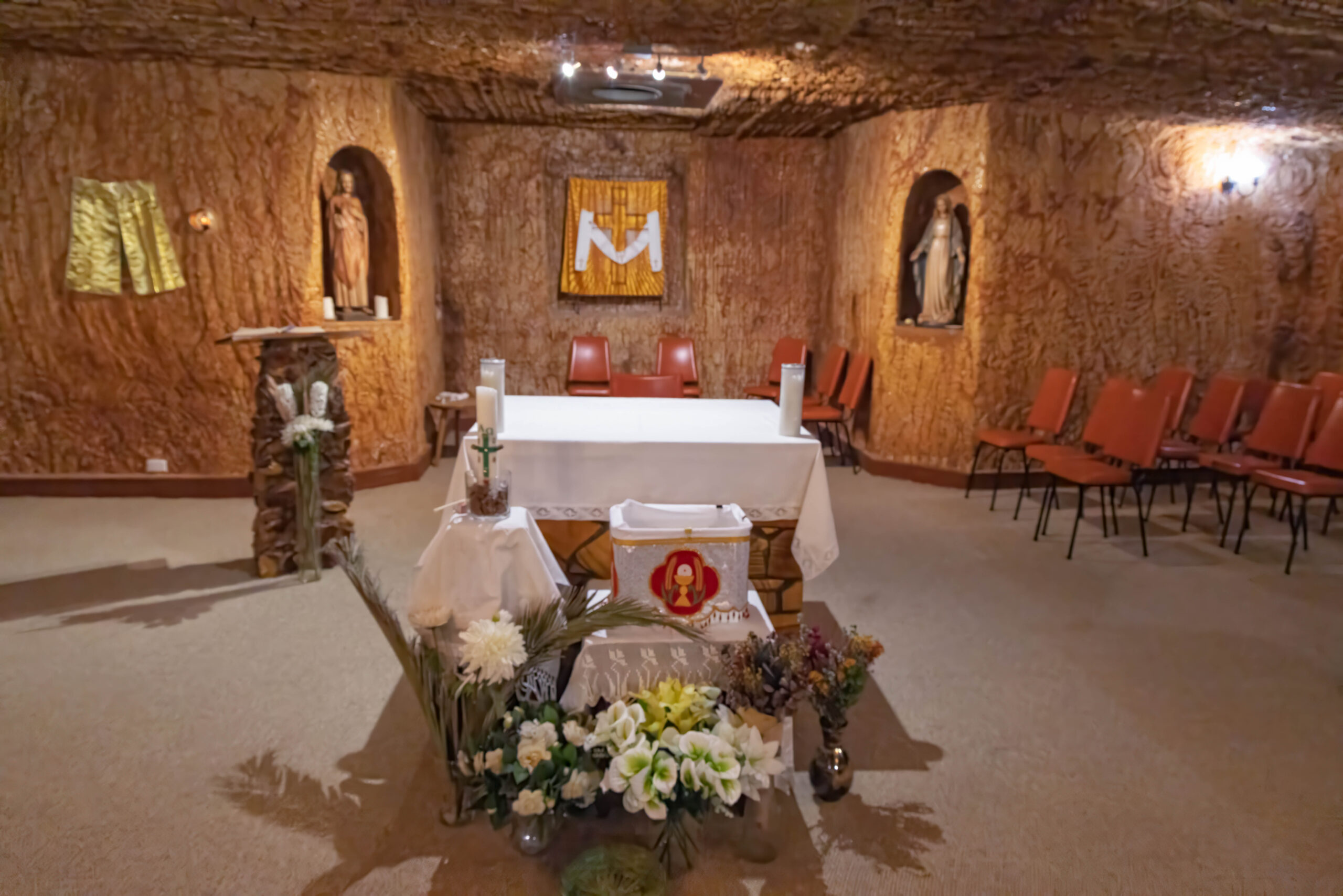
Next we drove to the St Peter & St Paul Catholic Church on Hutchison Street. There has been a priest based in Coober Pedy since 1965, caring for an outback flock in a huge parish that includes Uluru and borders Western Australia, the Northern Territory, Queensland and New South Wales. This small church dug into the side of the hill hosts services most Sundays … when the Priest is not out bush!
We stopped in at the IGA to buy some more coleslaw. Hmmn, we only used half the bag of coleslaw last night intending to finish it off tonight. However, the fridge had other ideas and froze the bag of cabbage and carrot overnight. Groan! We were pleasantly surprised by how much fresh fruit and veg the IGA had. Impressive for an outback town indeed. We almost bought more coleslaw, but then spied a Greek salad mix and decided to mix it up a bit and have that with our steak and leftover potato salad tonight. With our fresh food and another cask of water secured we spied the ice-cream freezer and declared it Splice o’clock.
We’ve spent the rest of the afternoon lazing around our room. We thought about going for a swim but … just couldn’t get motivated enough!

Fascinating images, it seems such an interesting, unique place to visit. Your photos bring it all alive.