Wednesday, 6 May 2026
Today we did more urban sightseeing. We had to meet our guide, John, in the city at 8.30am so that meant getting up a bit earlier, to leave the cabin before 8.00am, so that we could drive in, park the truck and walk to the meeting point. We were the only people on the tour this morning so, basically, a private tour! While we were at the meeting point at the corner of Smith Street Mall and Knuckey Street, John regaled us with an overview of Darwin’s history. Now, because we drove up, there was a bit of repetition because, we have actually been paying attention and learnt quite a bit on our way!
About things like John McDouall Stuart being the first to forge a route from south to north and the building of the overland telegraph. Then, of course, we learnt about the Darwin bombings and Cyclone Tracy at the museums yesterday. However, what John was able to save me from having to Google was – the naming of Darwin. Having not really thought about how Darwin was named over the last 60 odd years, I noticed on the map the other day that there is also a Charles Point and a Beagle Bay and said to Bernie – Oh, Darwin must have been named for Charles Darwin. John was able to tell us that Charles Darwin’s good friend, Lieutenant Stokes, sailed into the bay on board The Beagle (yes, that Beagle) in September 1839, and decided on the name Port Darwin.
Also new information, thirty years later, the port was selected as a possible site for a settlement. The South Australian Government sent its Surveyor General, George Goyder, and a survey party to Port Darwin to establish a camp, and to identify and survey town sites. This was after he had surveyed the Goyder Line (basically a geographical demarcation between good agricultural land and pastoral land) in South Australia in 1865. When he arrived in Port Darwin, John said he brought the plan for Adelaide’s city centre with him and rotated it slightly to fit on the plateau upon which Darwin was laid out.
With this historical overview completed, we wandered along the mall, stopping at the pictorial seasonal calendar of the Larrakia People. Europeans divide the year into two seasons – wet and dry. The Larrakia People recognise seven distinct seasons, which take into account rainfall and what bush food is available for the season. In May we are in Damibila, which is barramundi and bush fruit time.
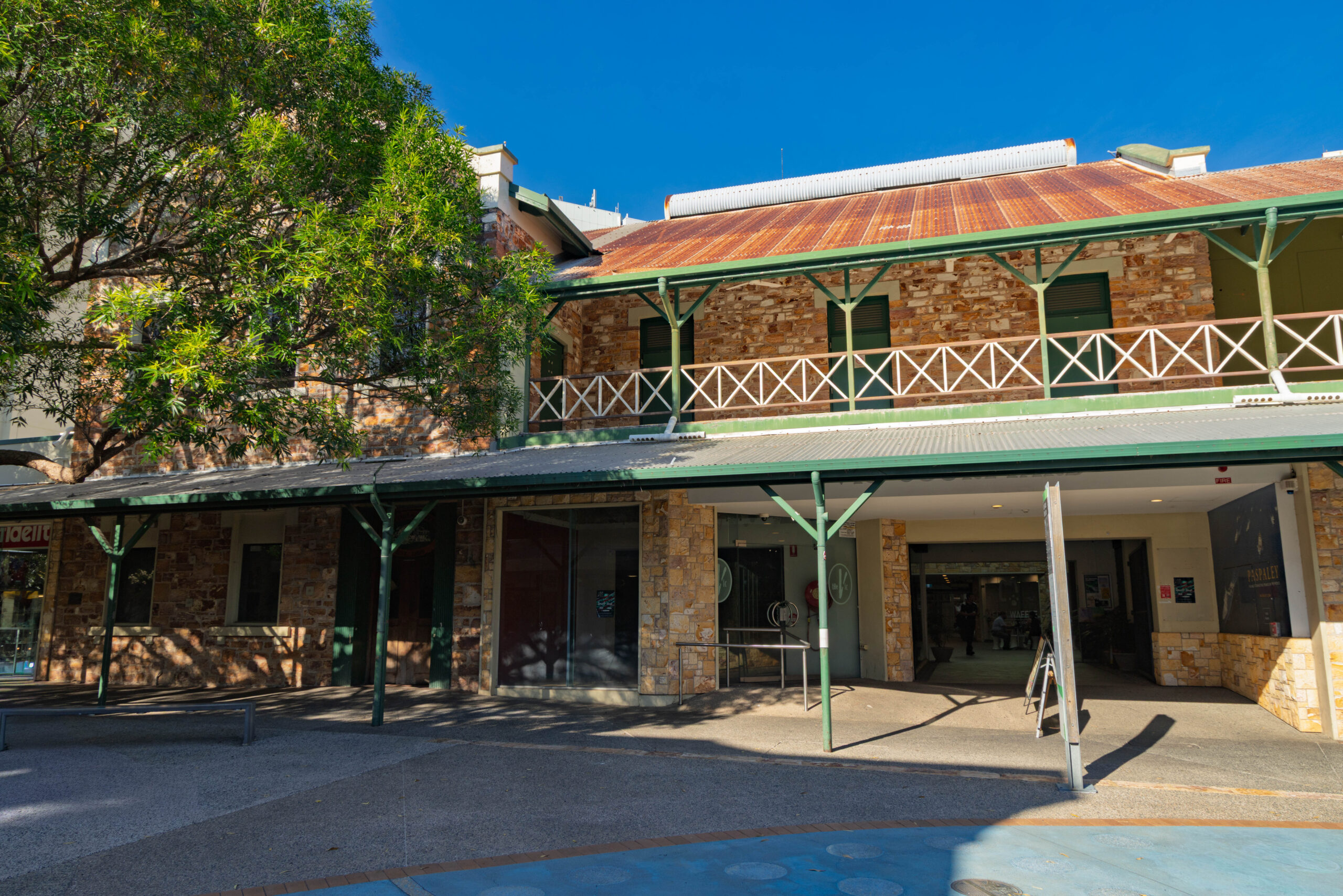
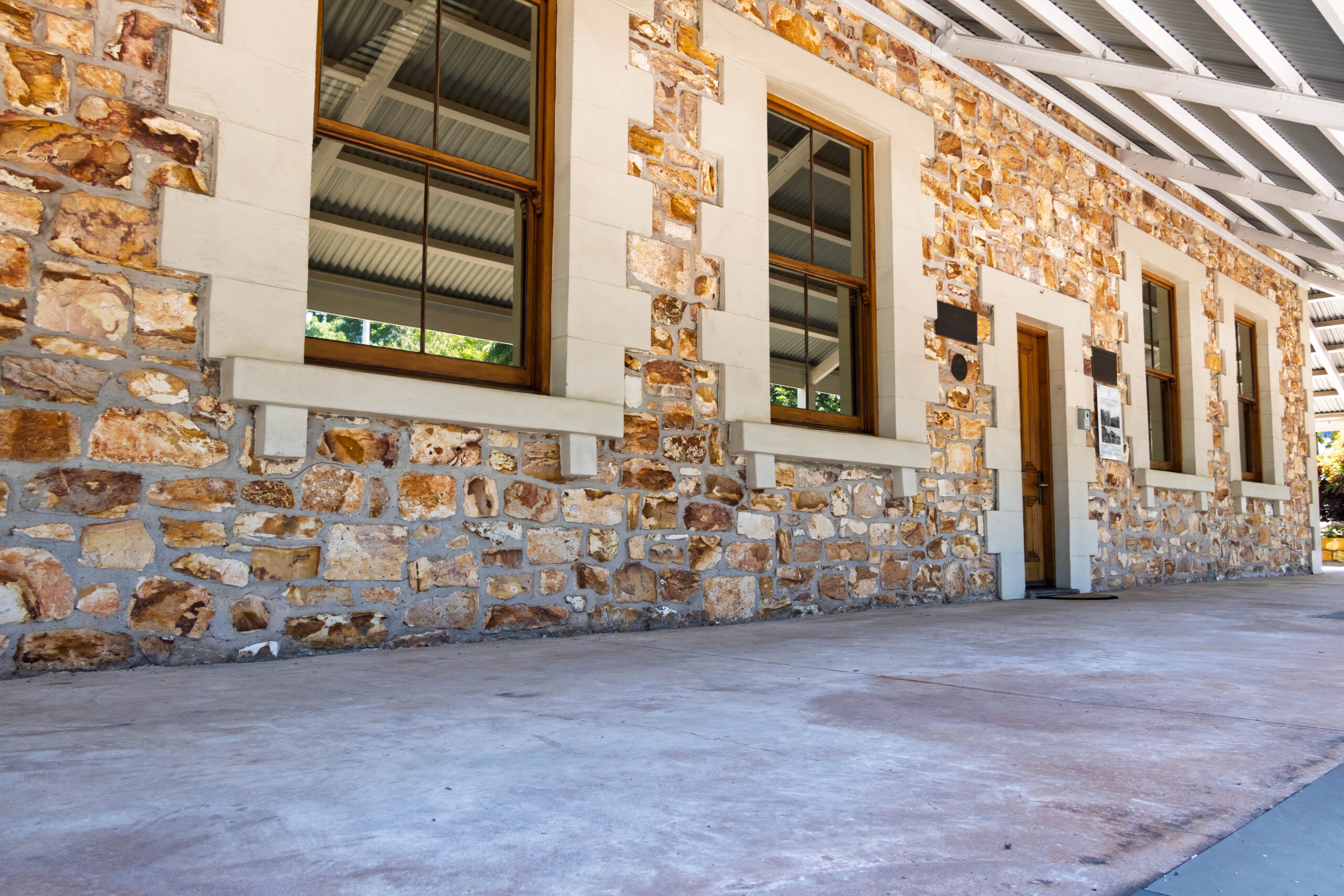
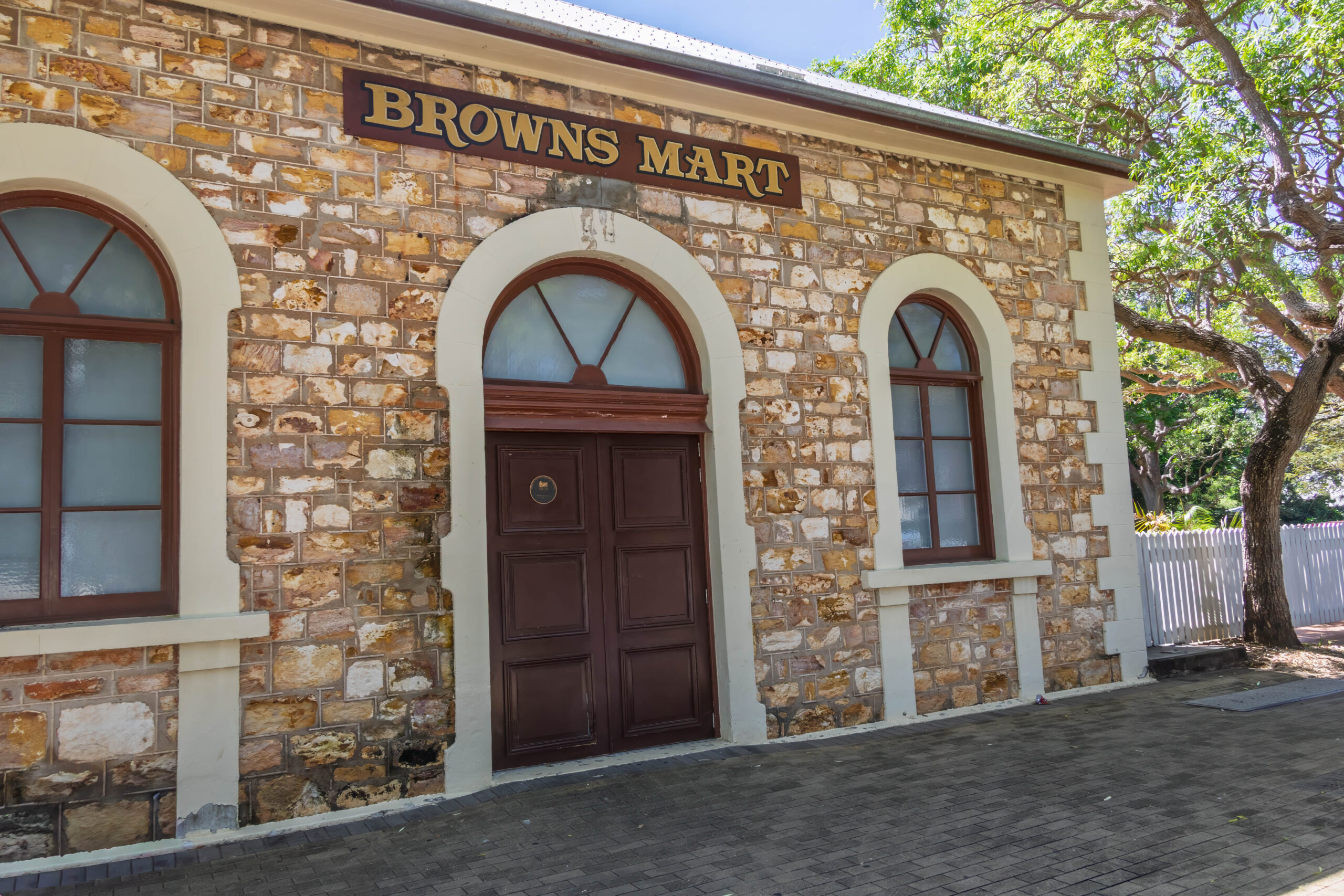
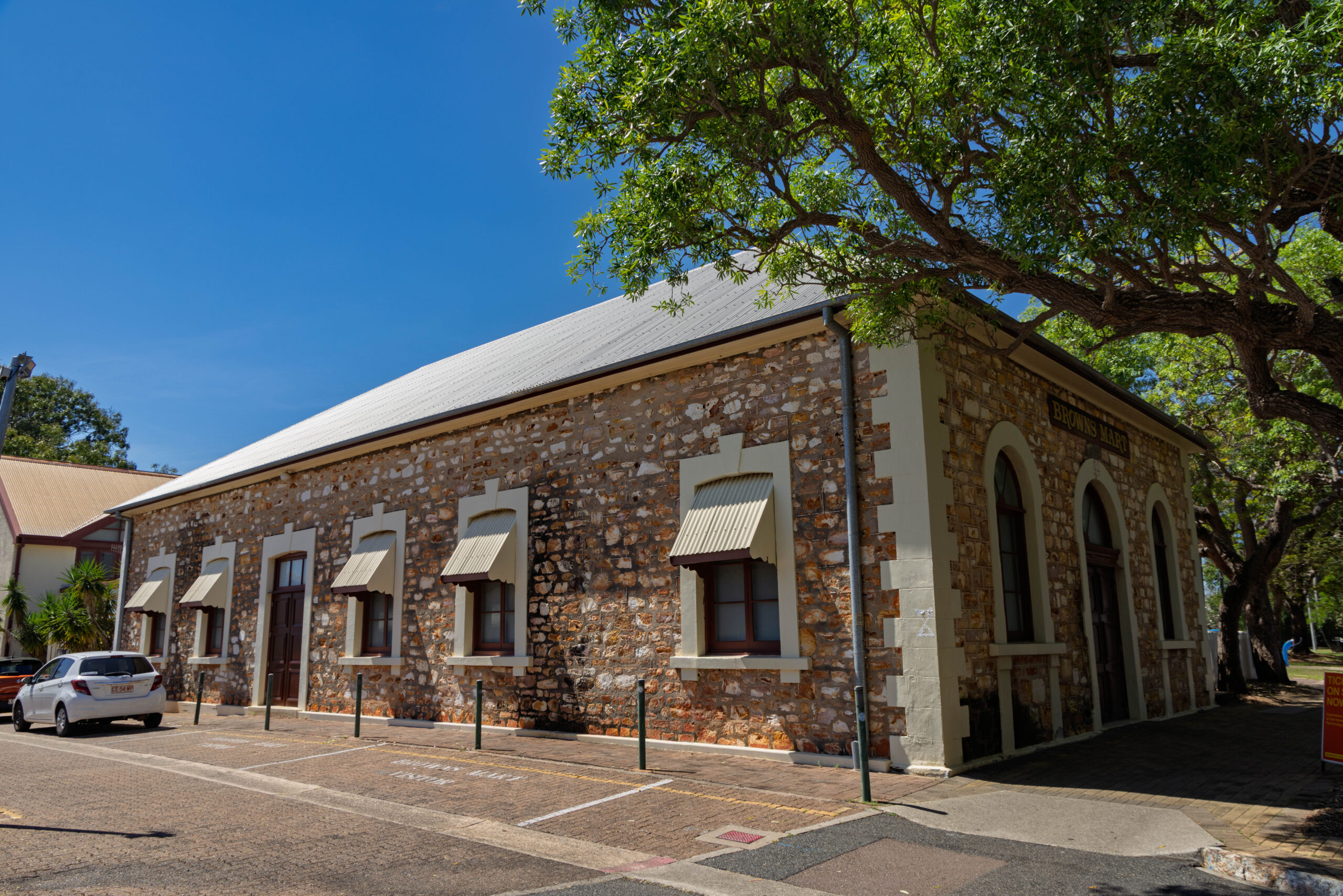
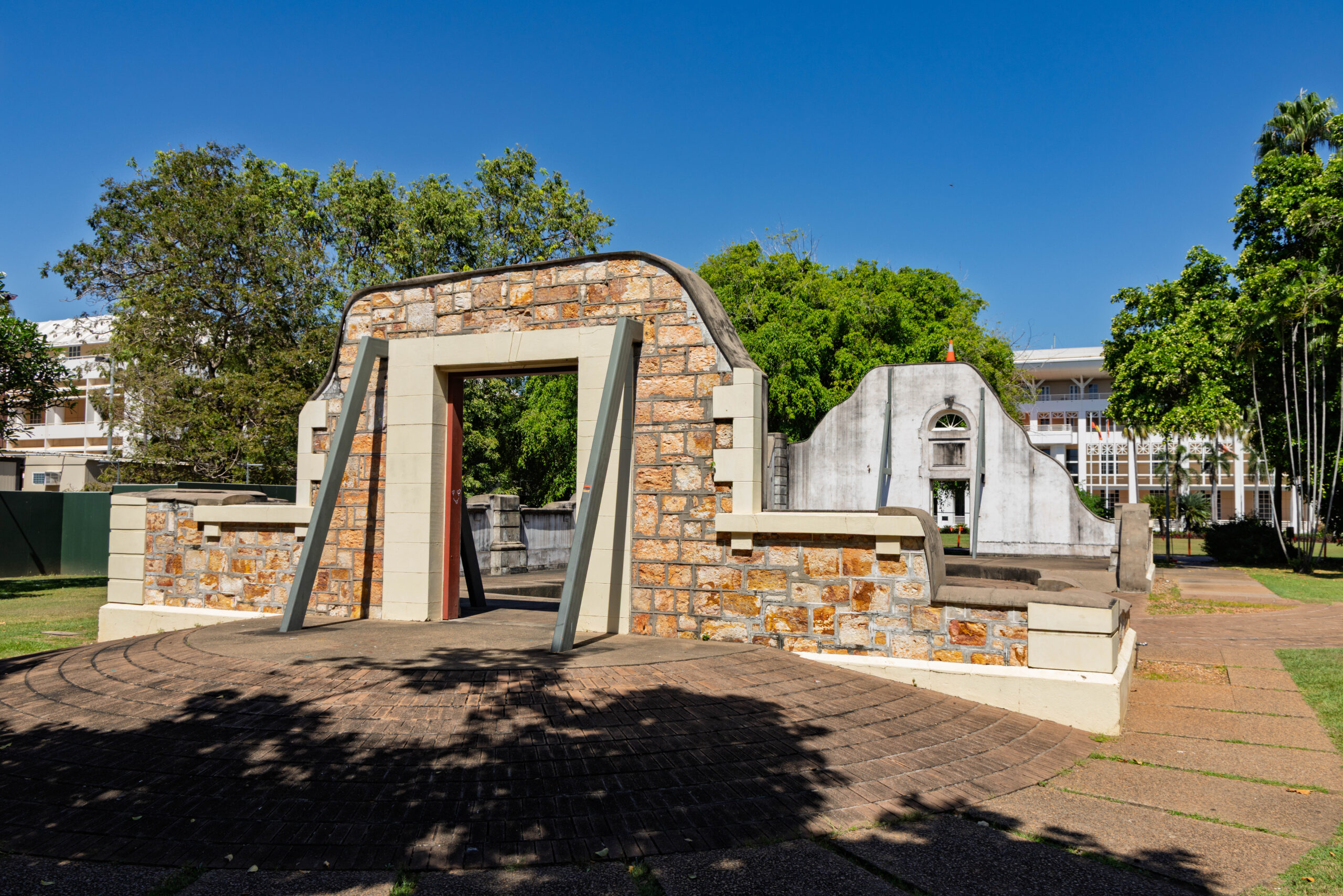
We continued past a couple of the oldest buildings in Darwin’s city centre although these are really only facades these days that have been redeveloped to house modern businesses. Leaving the mall behind, we came to the corner that used to house all the banks in town and Brown’s Mart, with the ruins of the old Town Hall opposite. The ruins have been retained as a testament to the might and fury of Cyclone Tracey.
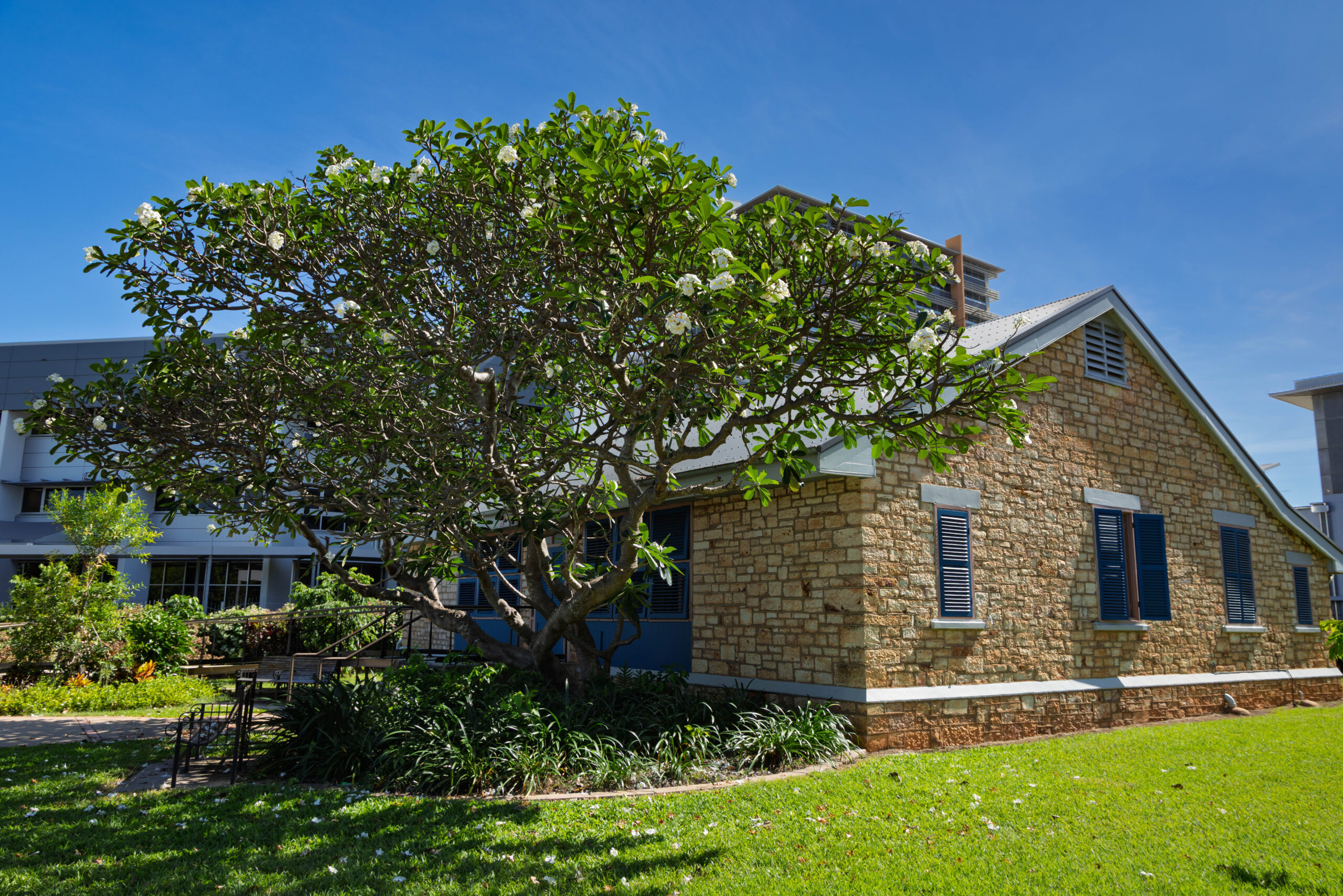
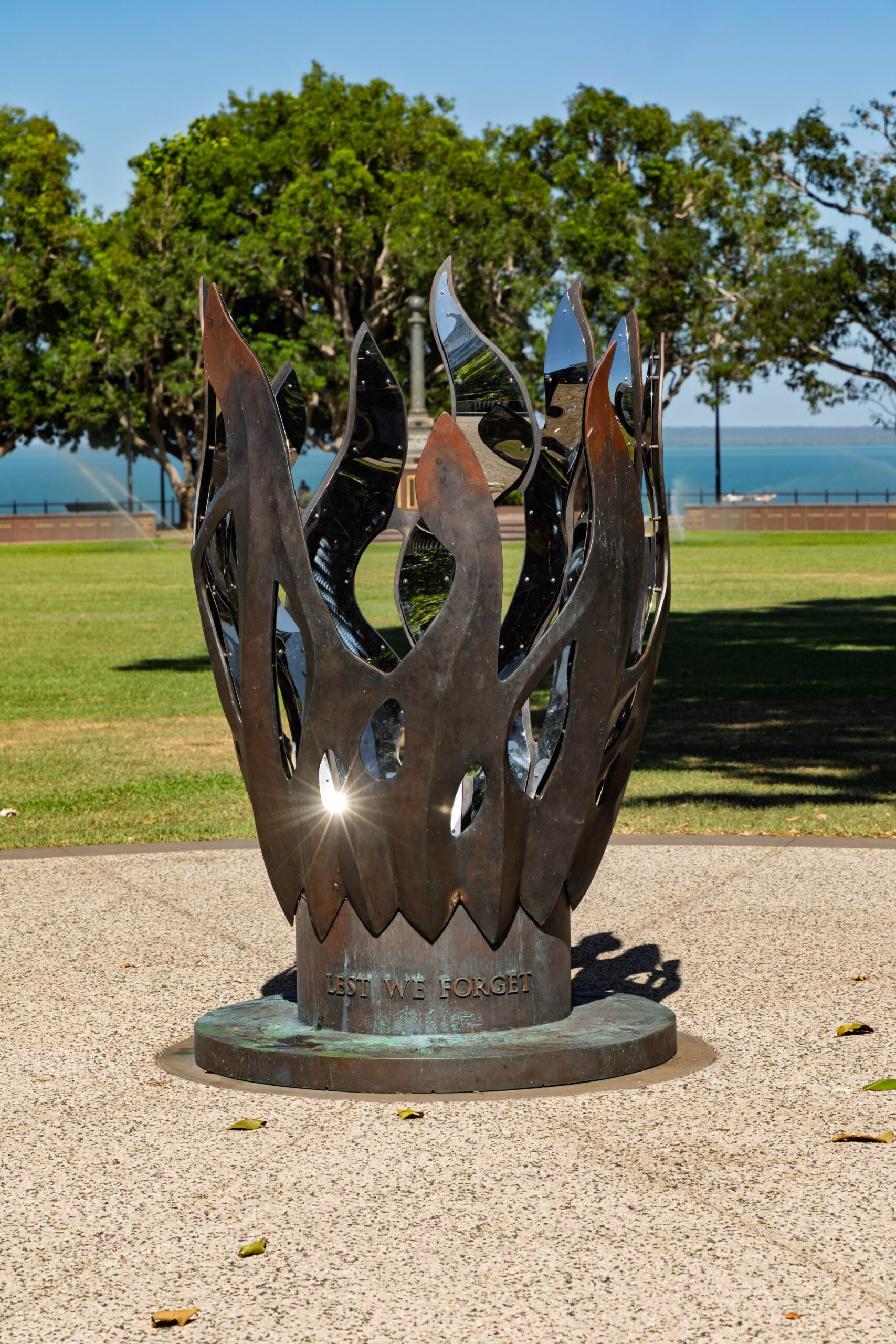
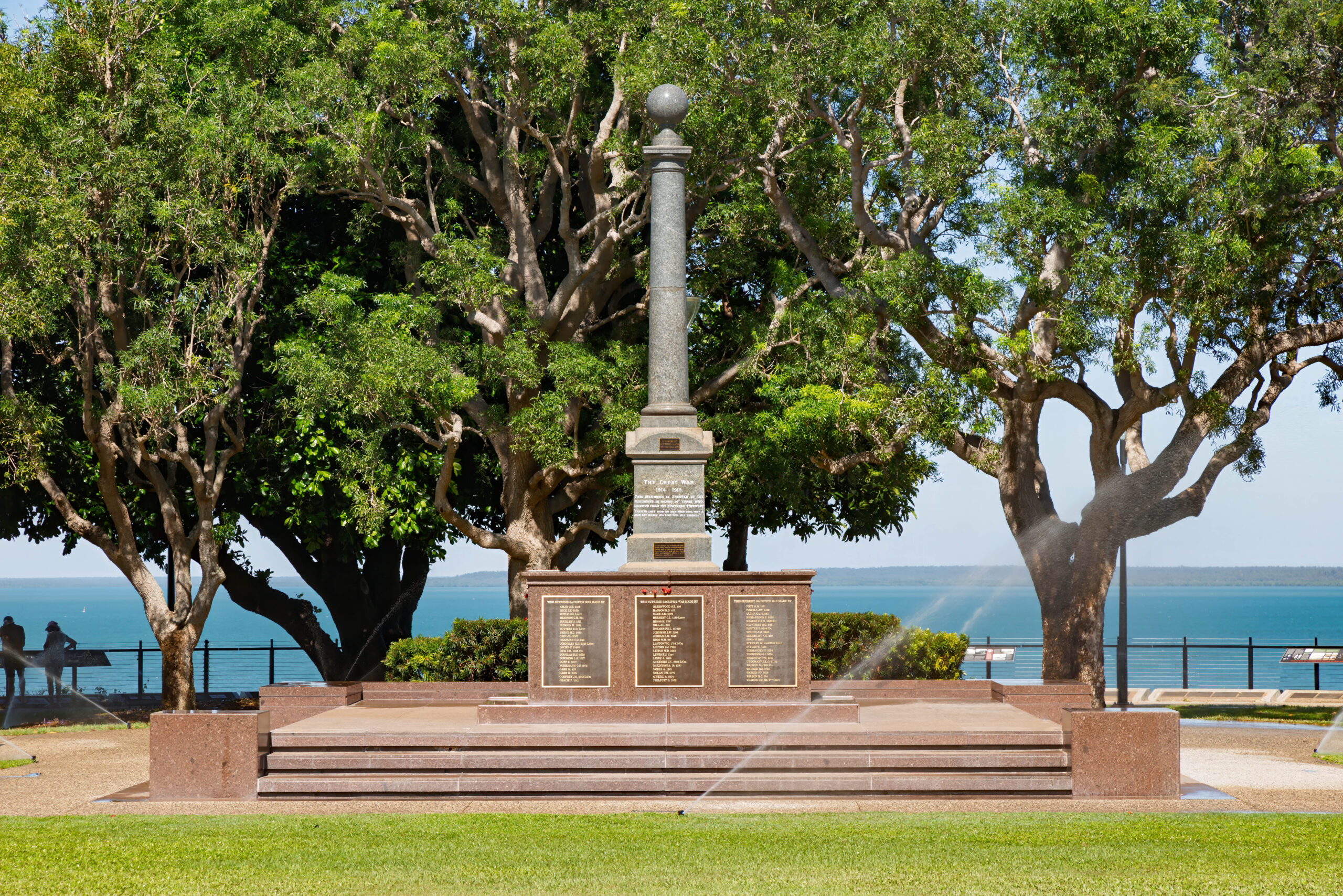
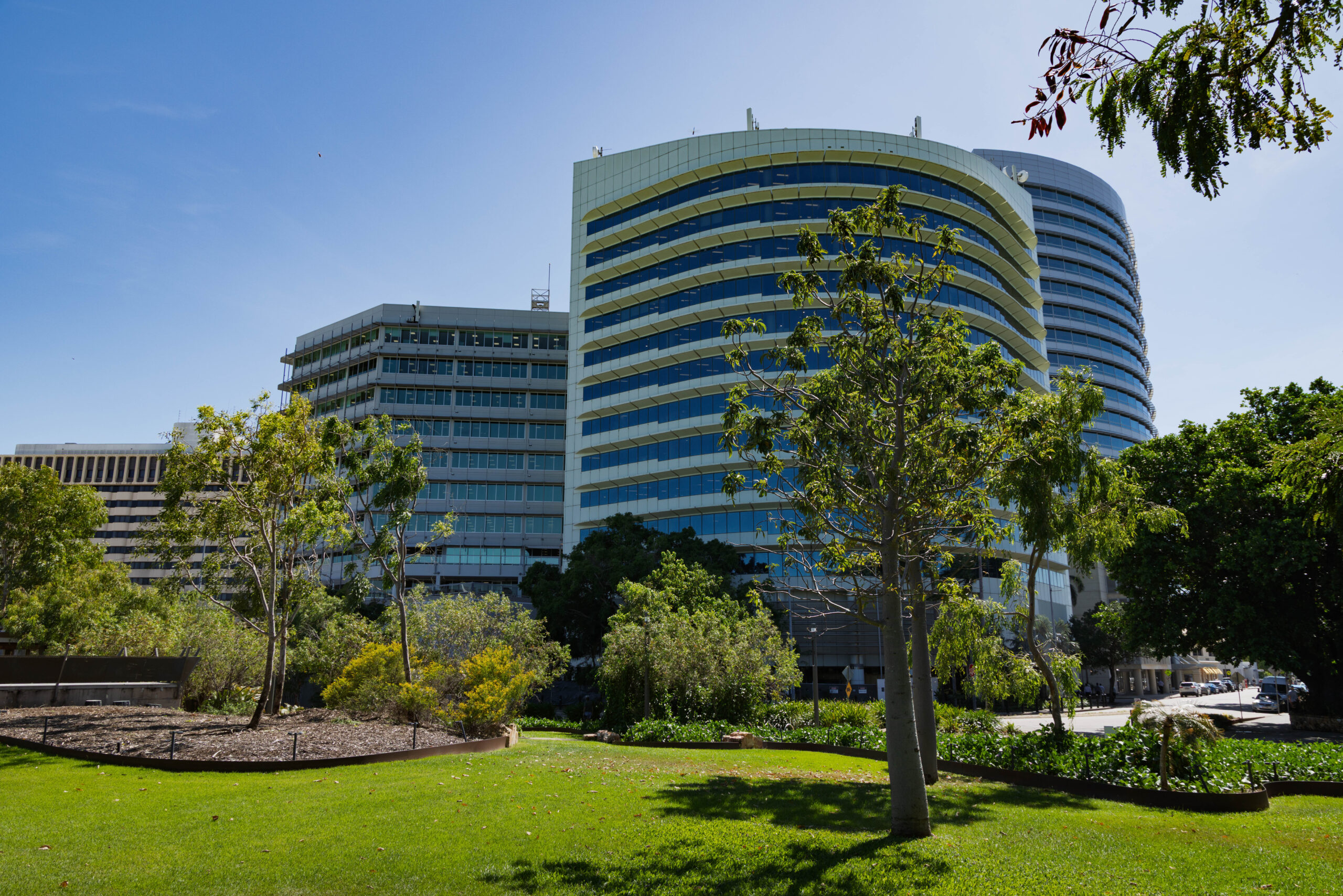
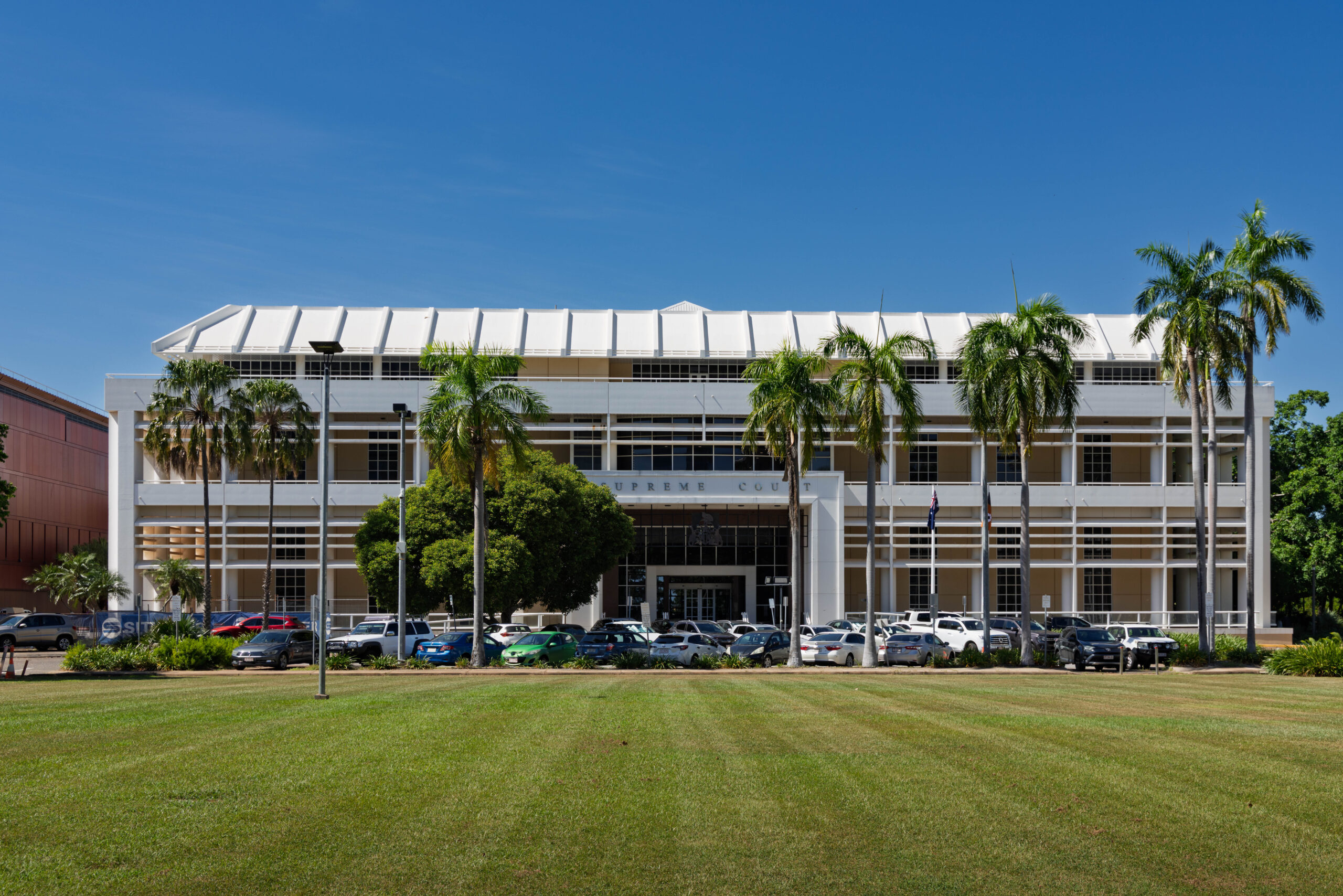
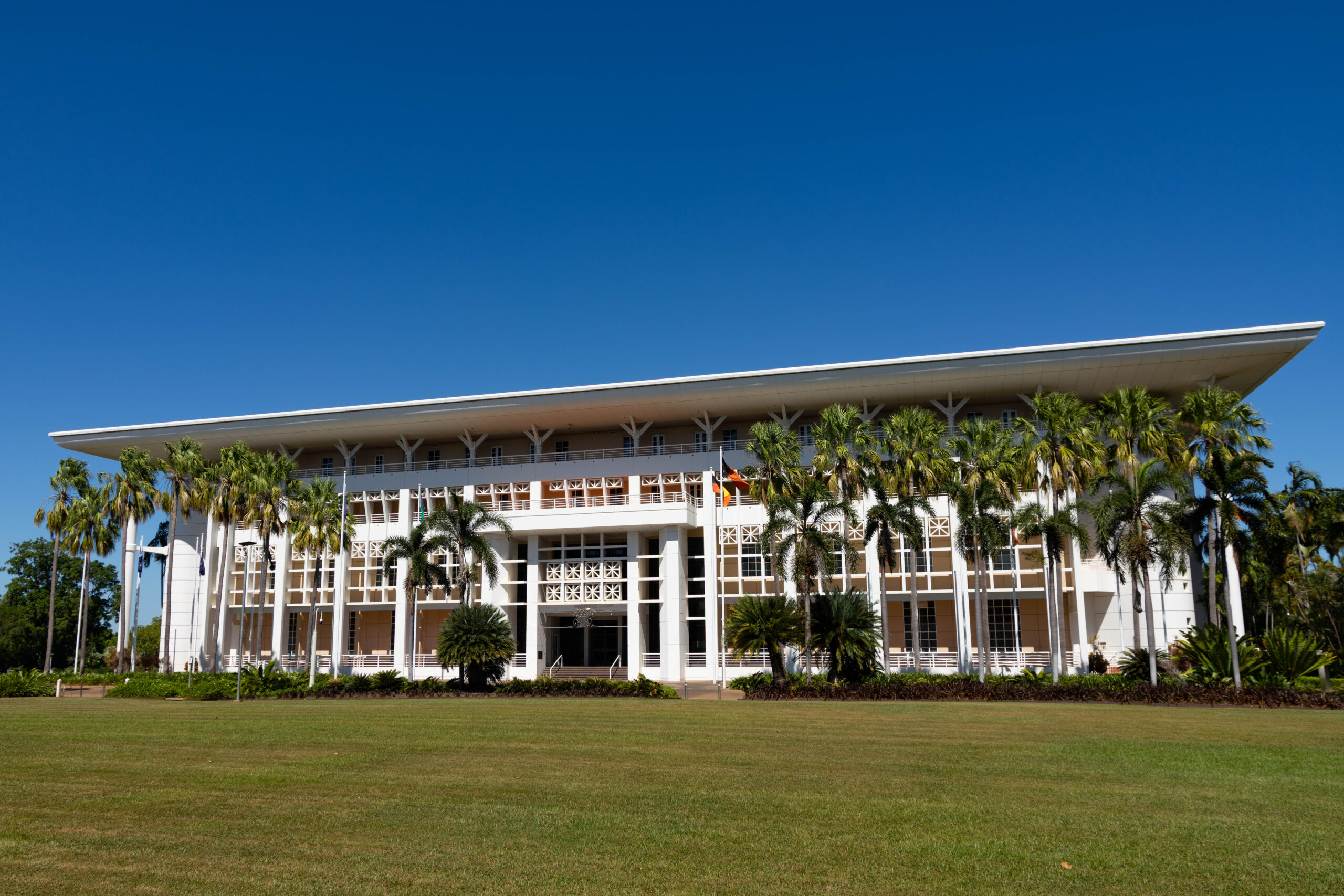
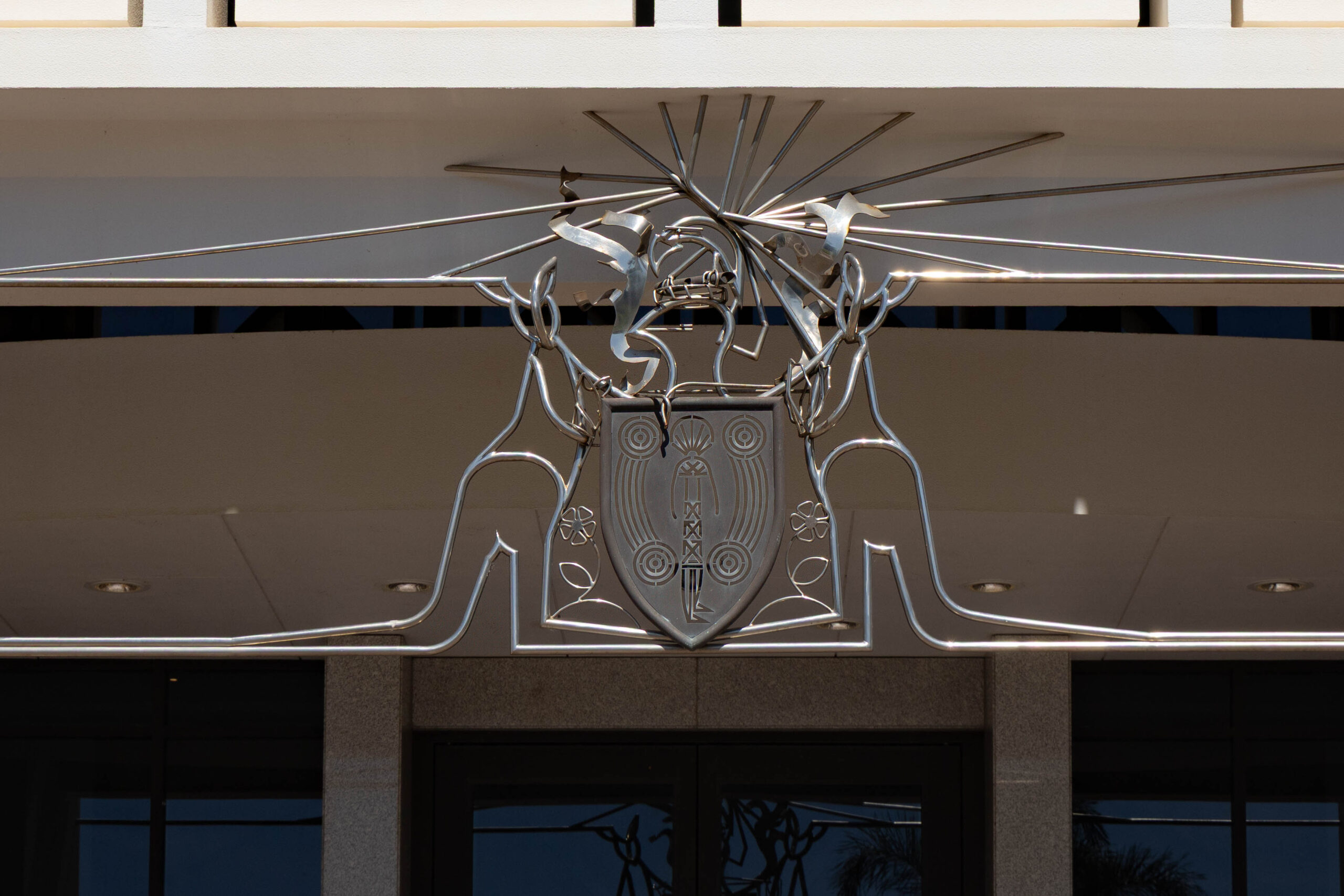
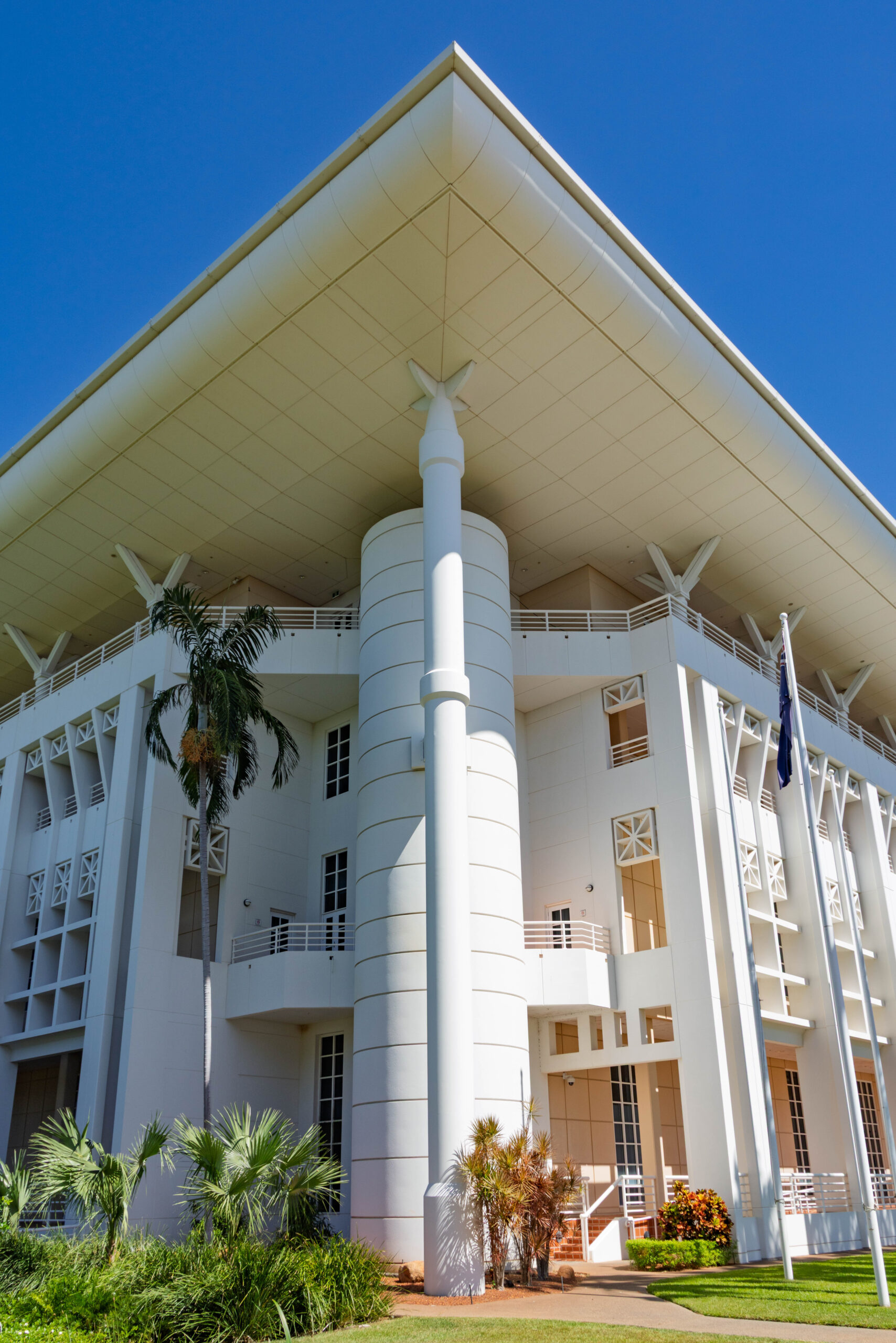
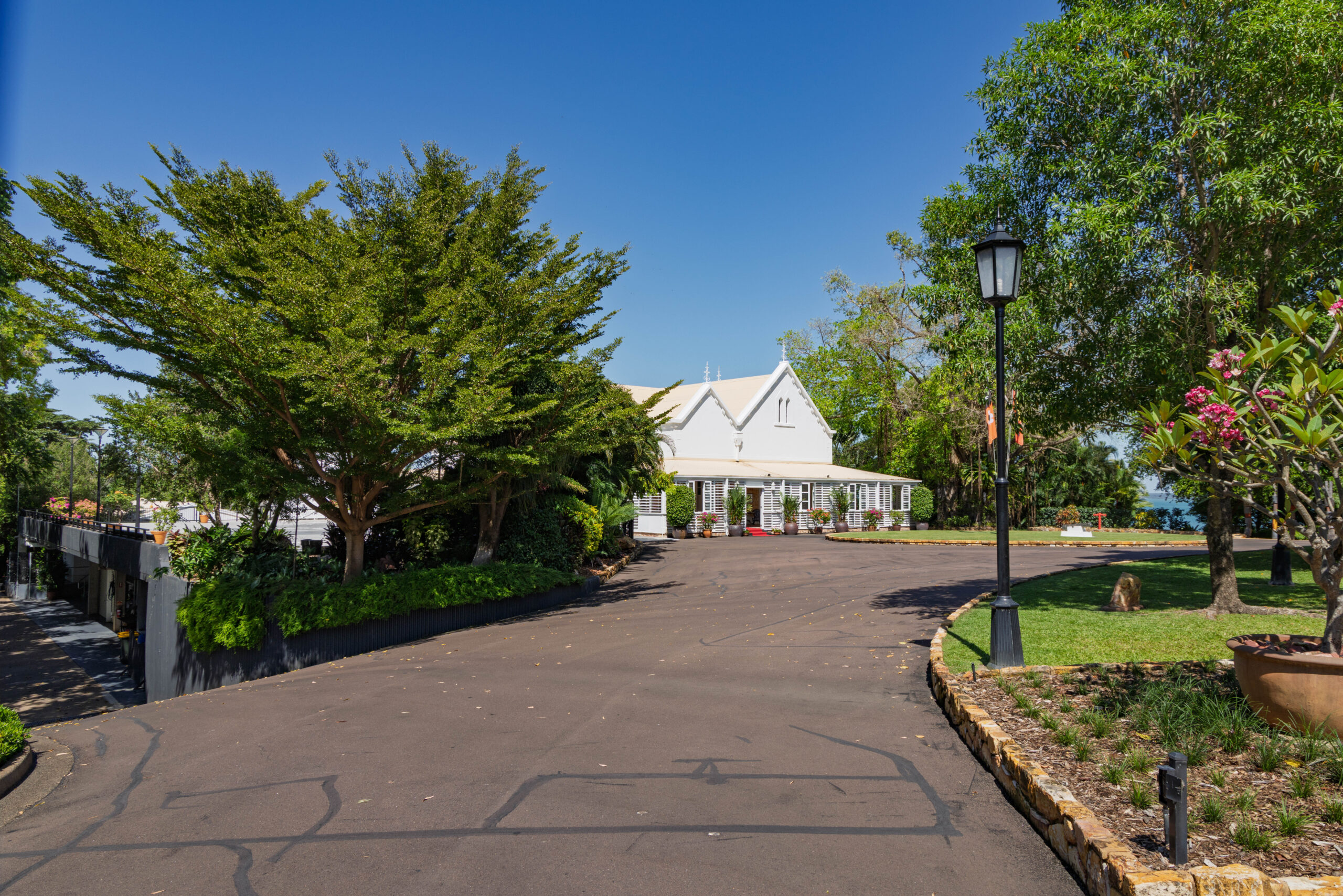
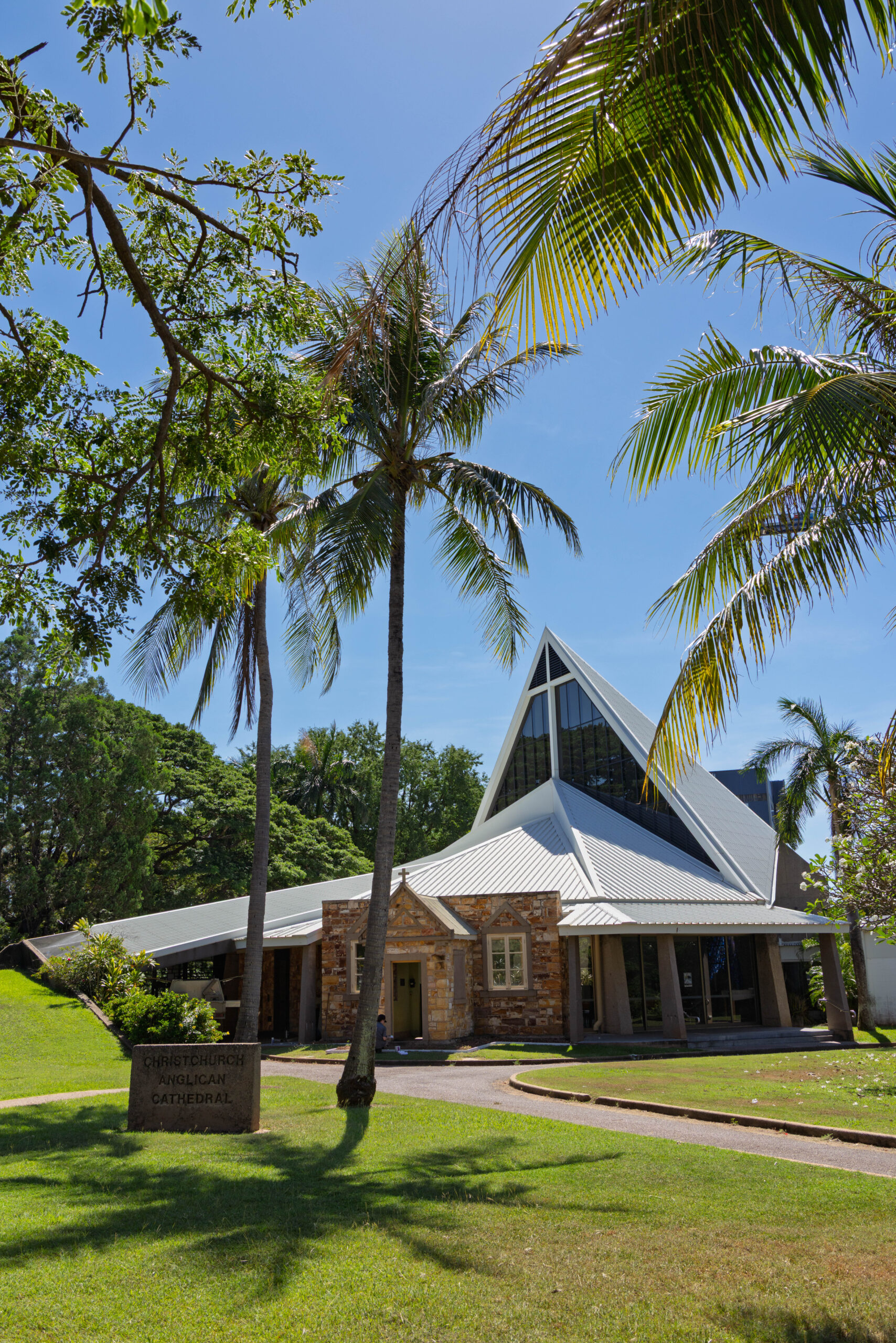
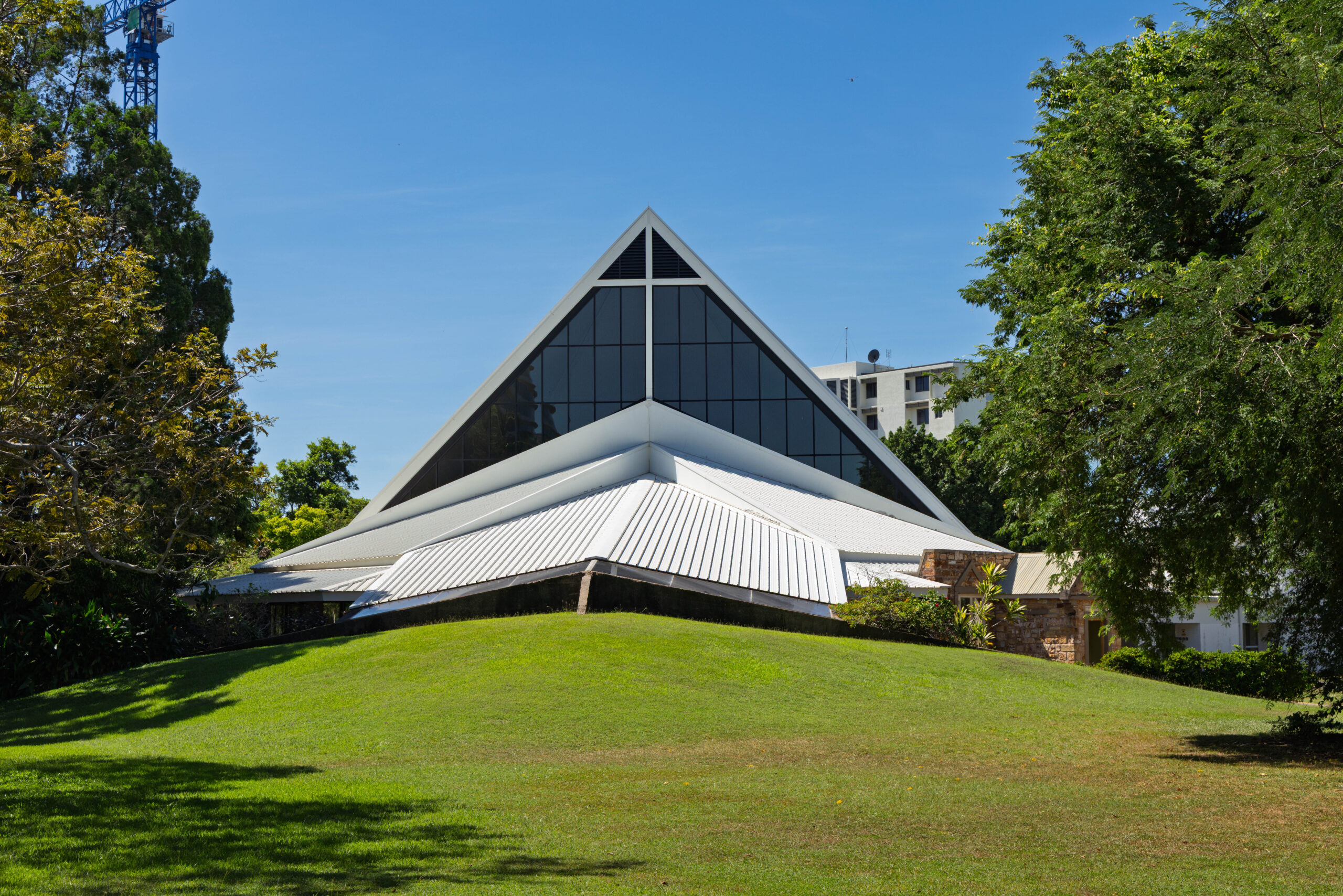
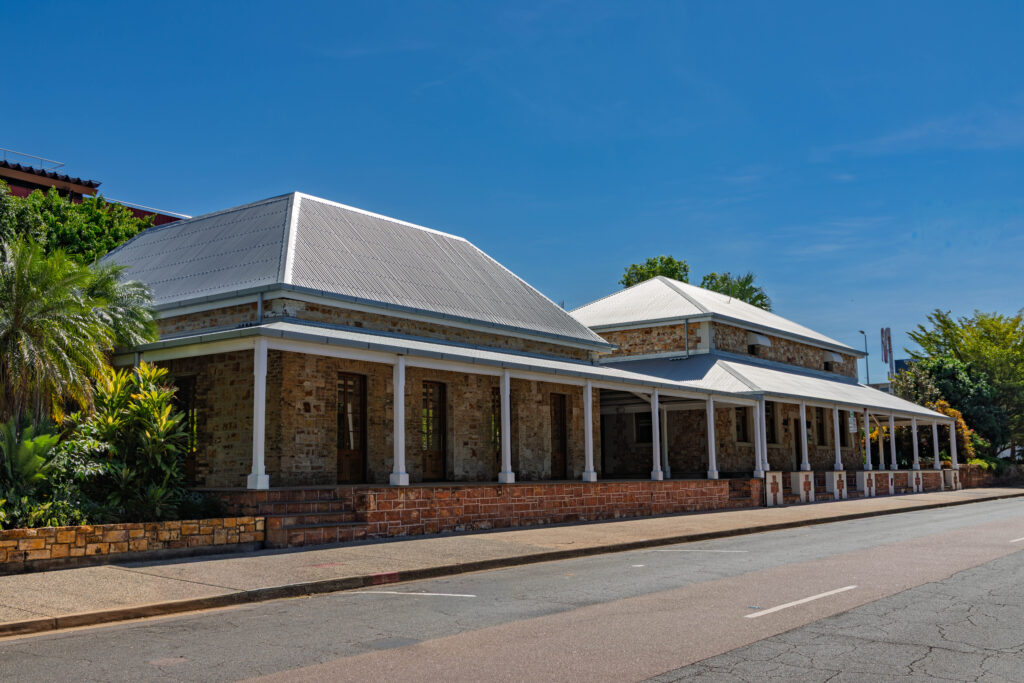
With the day starting to warm up, we meandered past Christ Church Cathedral and then crossed the road to the Administrator’s Office, before rounding the corner to walk past the Supreme Court of the Northern Territory. A few more steps brought us to Parliament House. Continuing along The Esplanade, John pointed out the Darwin Cenotaph before concluding our tour at Lyon’s Cottage, the 1925 home for telegraph workers.
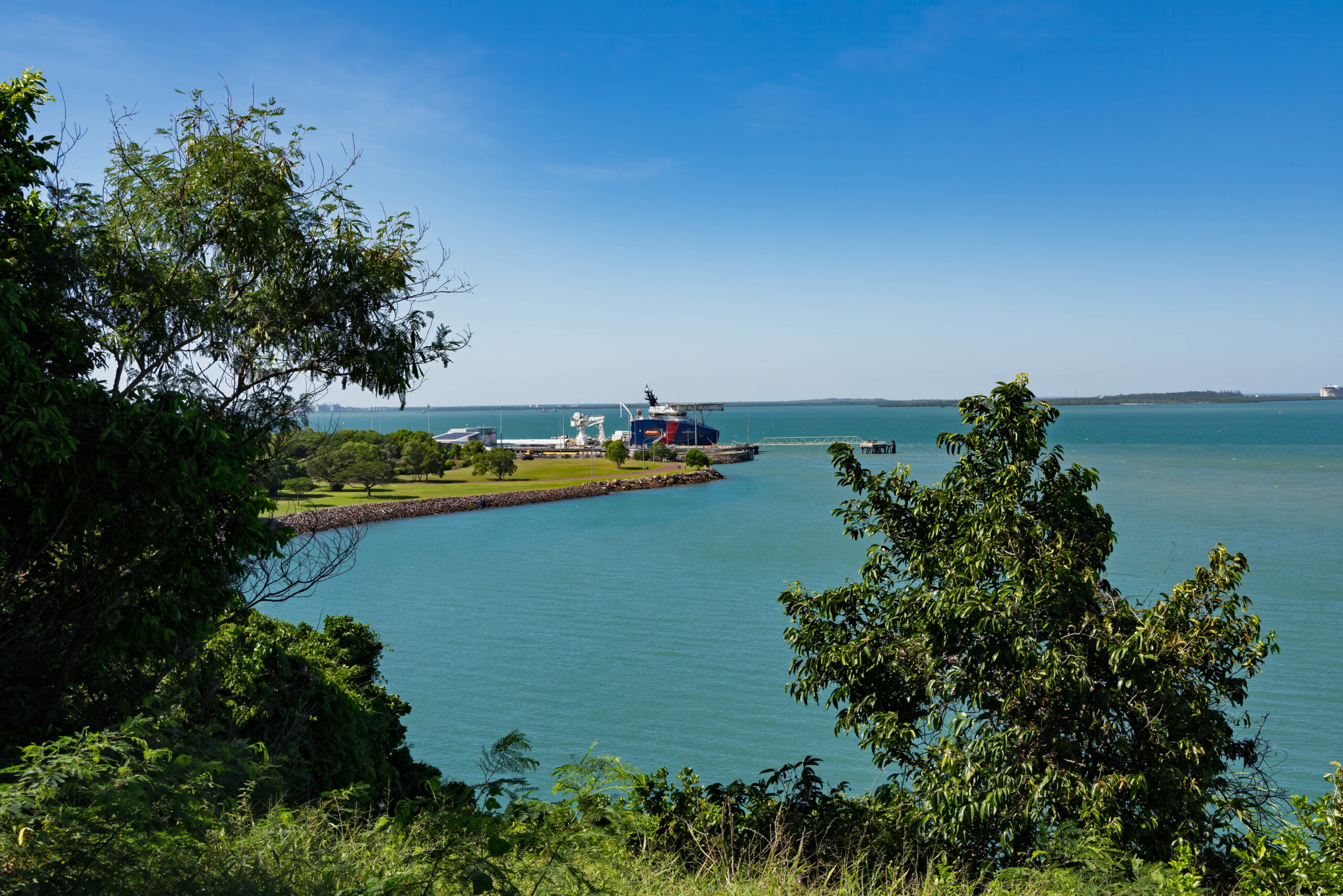
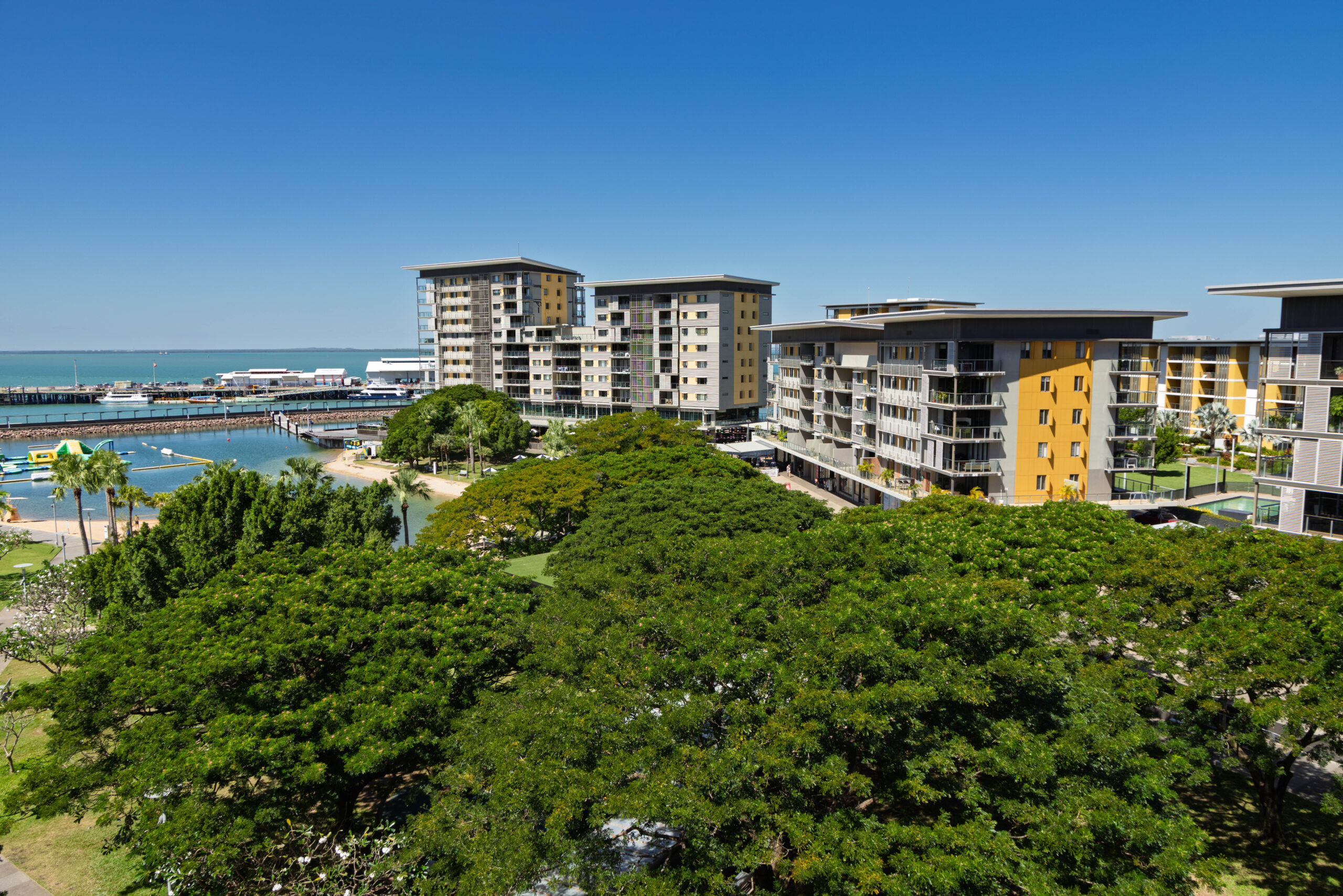
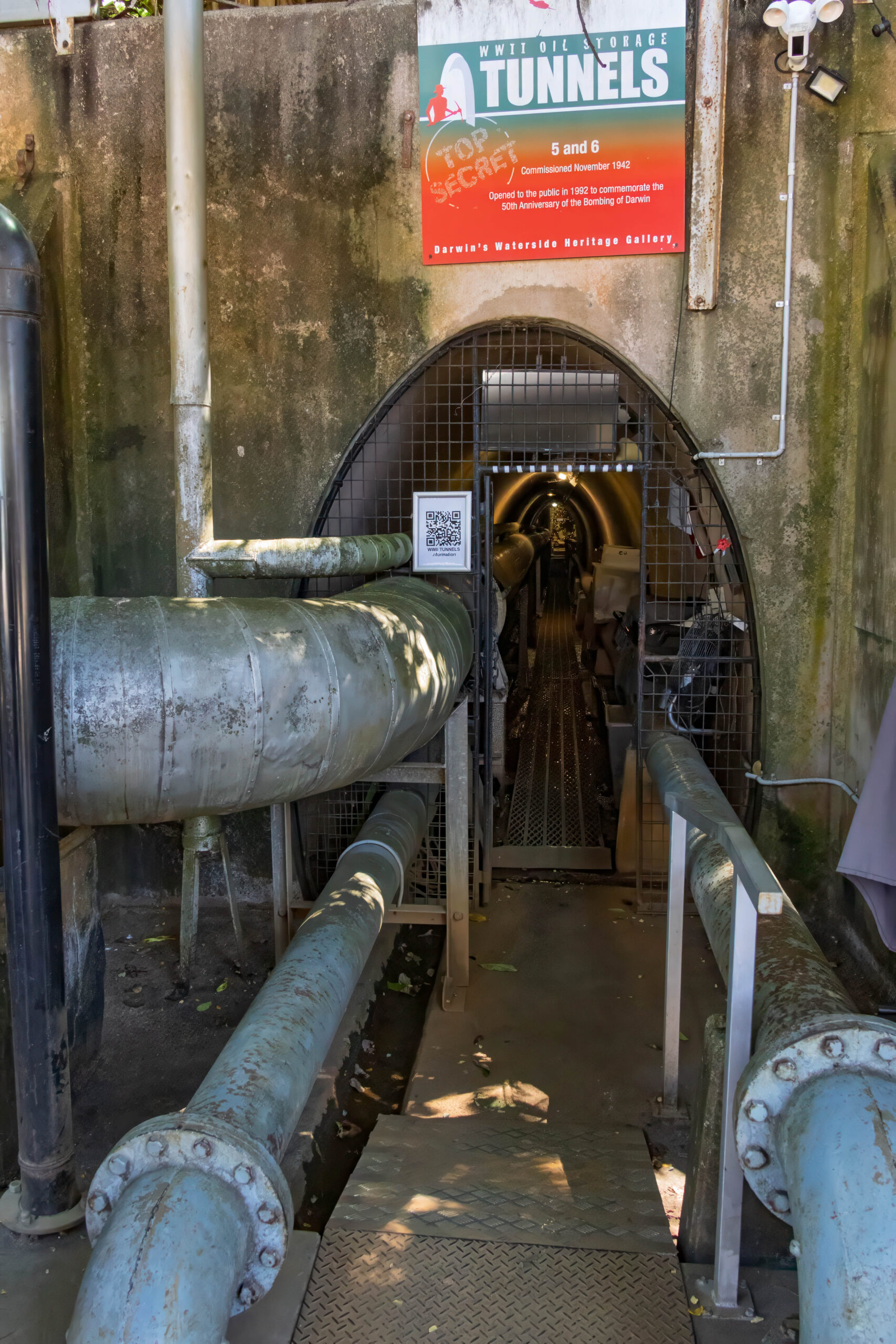
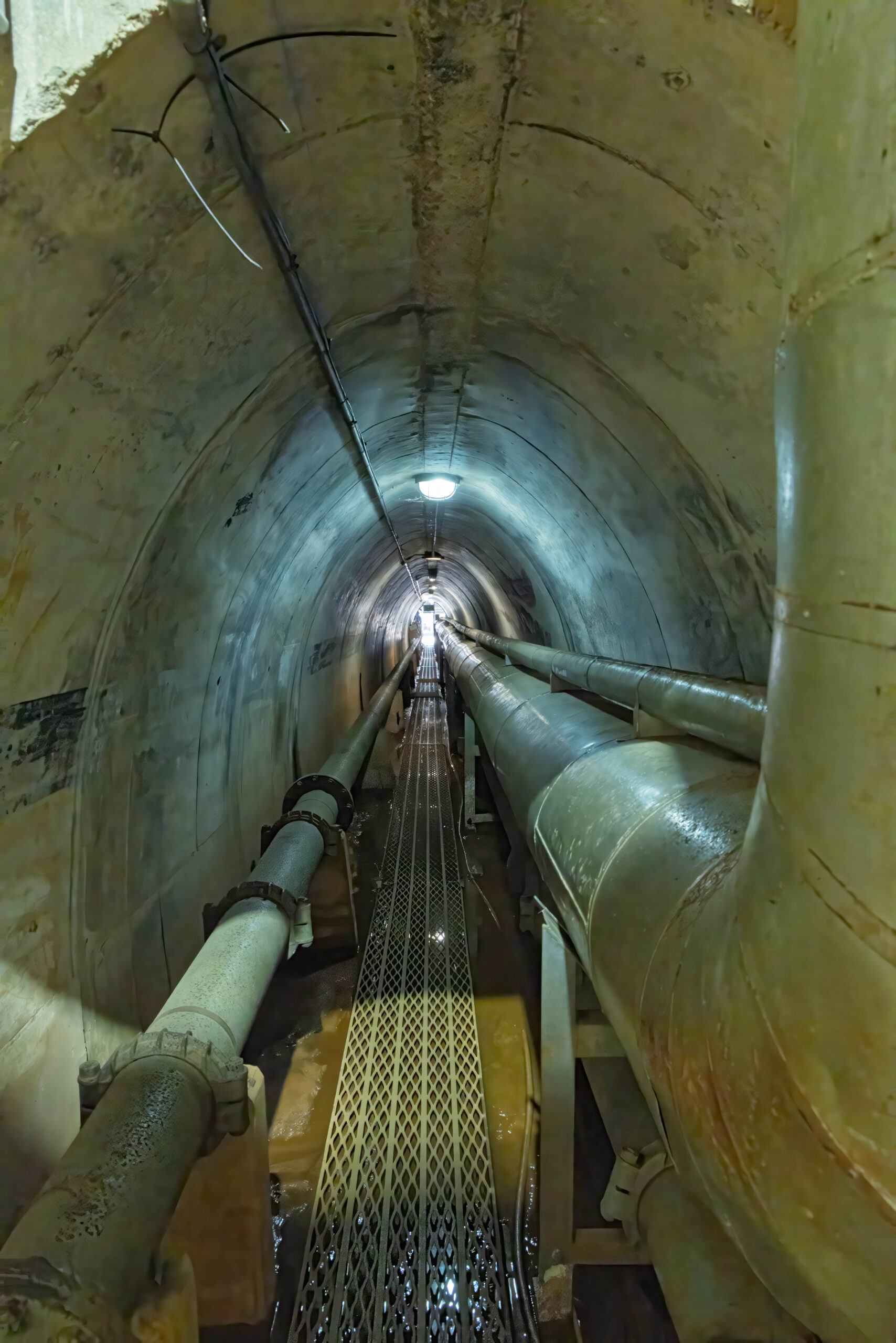
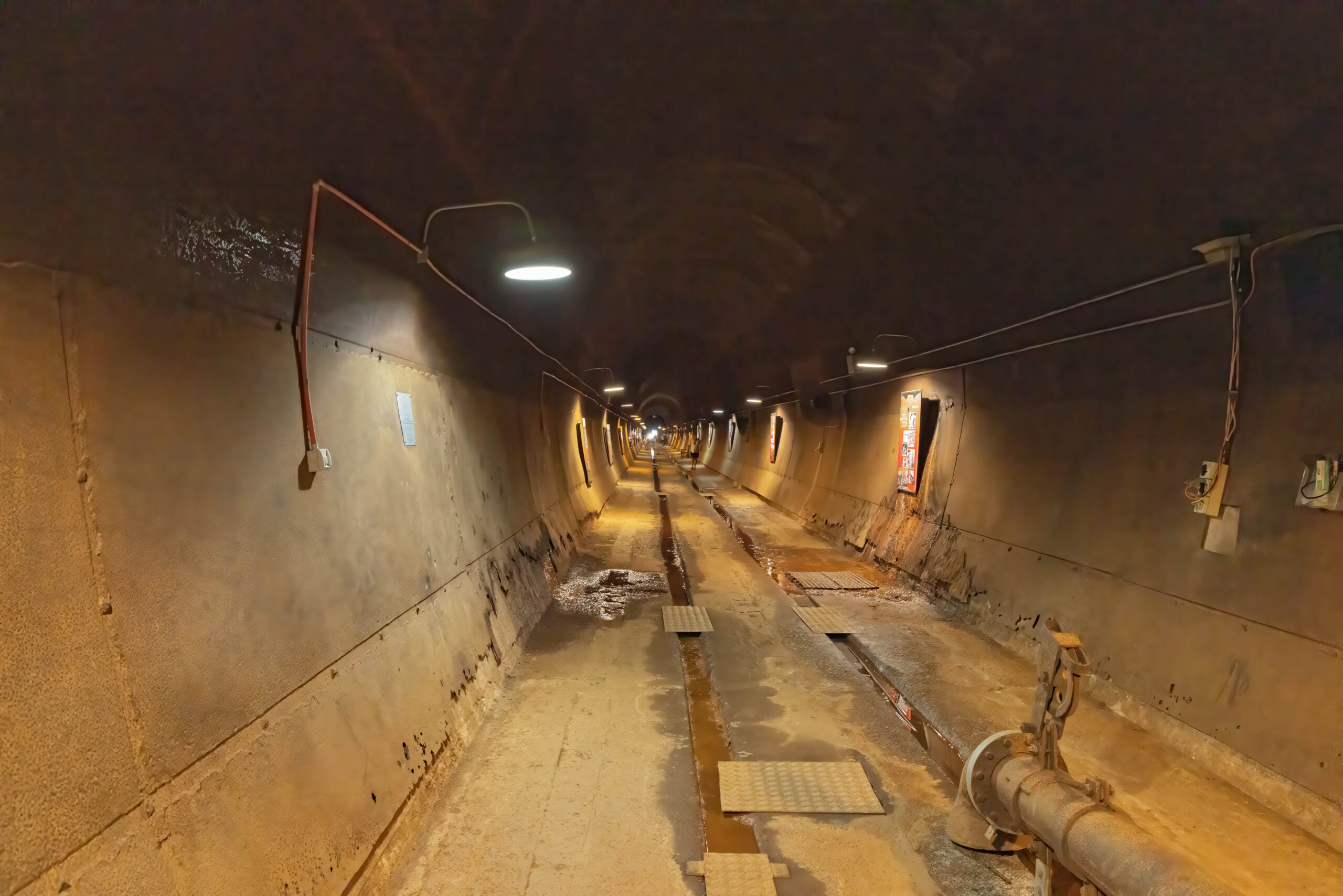
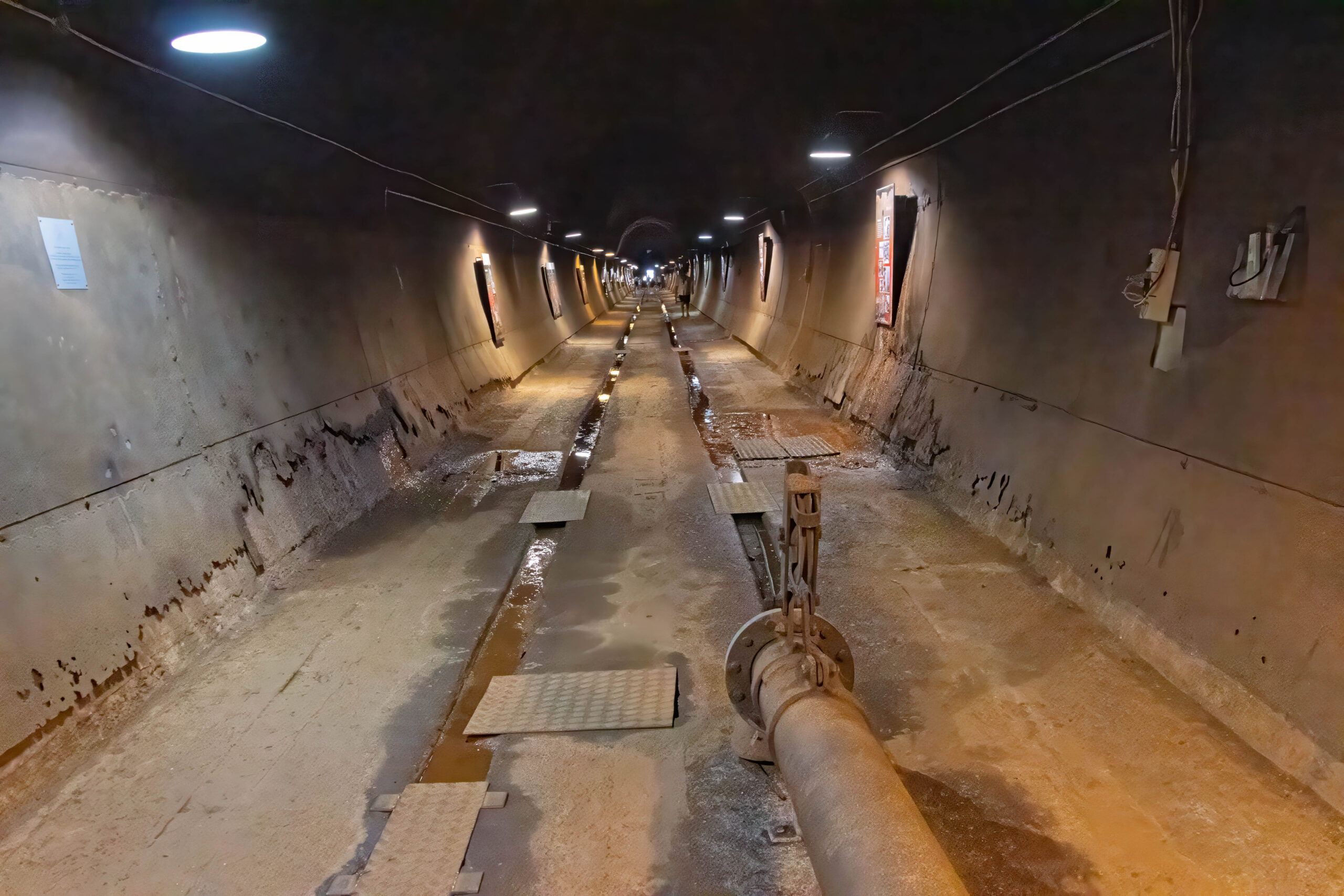
After John left us, we re-traced our steps to take photographs. We limited the number of photos we took while John was talking to us, knowing that we would have to head back the way we had come, to make our way to the Darwin Museum Underground WWII Oil Storage Tunnels. We took the lift back down to the waterfront and found the entrance to the tunnels. Here we learnt that, between the wars, an Imperial Defence Conference identified Darwin as a key location within the Singapore-Australia defence line, and it recommended developing it as a naval refuelling station for British ships stationed in Asia. This resulted in above ground oil storage tanks being constructed on Stokes Hill. Most of these tanks were subsequently destroyed when the Japanese bombed Darwin in 1942.
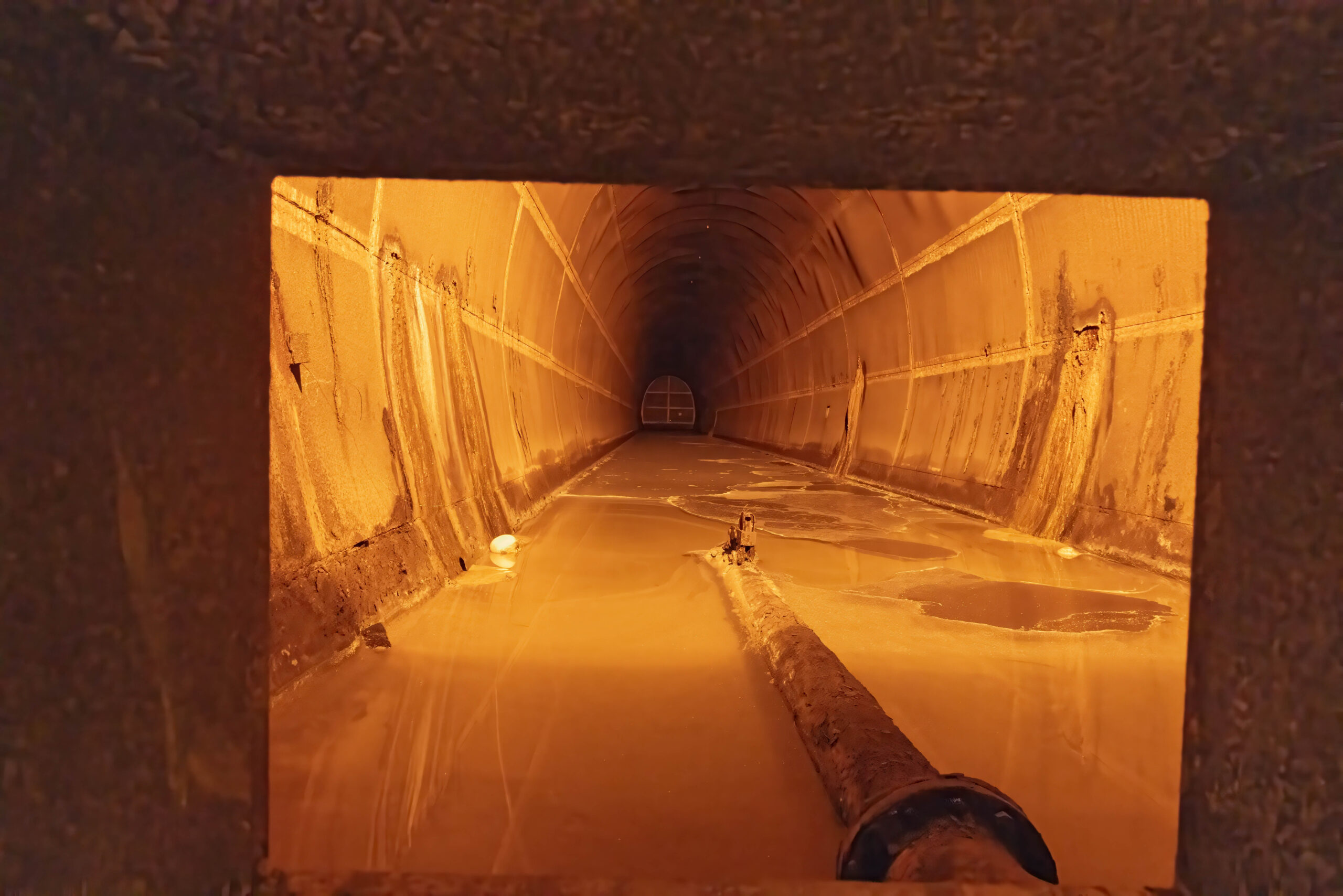
After this, it was decided that oil storage tanks should be dug underground as an alternative, bomb-proof oil storage option. The work to dig the tunnels was gruelling, so much so that prisoners were brought in to do the work, rather than the members of the Civil Construction Corps who were volunteers and conscripts between 18 and 60 years old, not otherwise engaged in defence work. Even after the tunnels were dug, the project was plagued with problems such as fumes from the diesel pumps and water leaking into the concrete and steel-lined tanks. This resulted in significant cost over runs. Before a drop of oil was put into the tunnels, the war ended.
A couple of the tunnels were used in the 1950s to store kerosene for use as jet aircraft fuel for the RAF and RAAF bombers of the time. This role was short lived because, in 1955, disaster struck and £2,000 worth of kerosene was spewed out into Darwin Harbor. The tunnels were then closed and few people knew of their existence.
The storage tunnels were officially opened to the public on the 19th of February 1992, to commemorate the 50th anniversary of the Bombing of Darwin. The tourist experience was upgraded with new interpretative signage to coincide with the Centenary of ANZAC in 2015. The tunnels are an interesting, but rather grungy part of Darwin’s history, with only a minimum of work having been done to make the tunnels ‘safe’ for visitors.
We had a bite to eat at the Lime Cafe on the waterfront and then … and then … we spied a gelato and sorbet shop across the other side of the plaza. So, of course, we indulged in our first ‘proper’ ice-creams in a cone for the holiday.
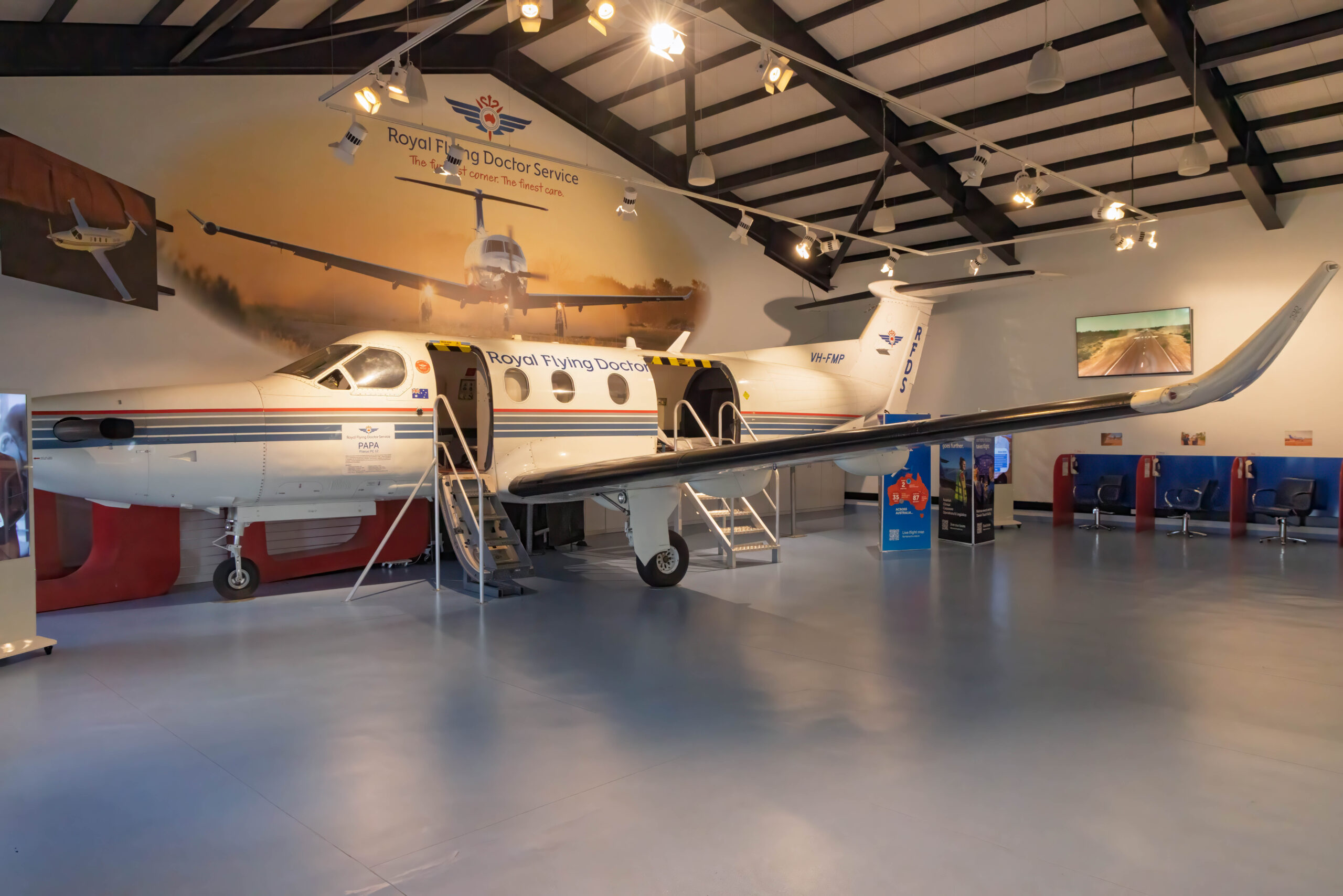
Our next stop was at Stokes Hill Wharf for the RFDS Darwin Tourist Facility. This was the other extreme from the grungy oil storage tunnels, featuring state of the art, interactive experiences. Their newest display, only opened a couple of weeks ago, featured (presumably) AI generated images of Japanese POW, Sergeant Hajime Toyoshima and Prime Minister, John Curtin, talking about their experiences relating to the Bombing of Darwin.
On the hour, every hour, a short video is projected on a panoramic screen in the foyer, giving visitors an immersive experience of what it was like on the Stokes Hill Wharf during the bombing raid. Very confronting. All the names of those who died are then screened as poppies fall. Very moving.
From the foyer, we went into the theatre that screens two holographic presentations. The first was of Rear Admiral Etheridge Grant narrating the 1942 bombing of Darwin. I have to confess that, after traipsing around Darwin in the heat all morning, I may have dozed off a little bit during this presentation. I was sitting down … it was dark … The second presentation, which started soon after, was of RFDS founder John Flynn telling his story. We have been to RFDS museums before but the story of this incredible organisation never grows old.
After three tourist activities, it was definitely time to head back to the Discovery Park for a swim.
Steps: 11,592 (7.26kms)