Wednesday, 12 August 2026
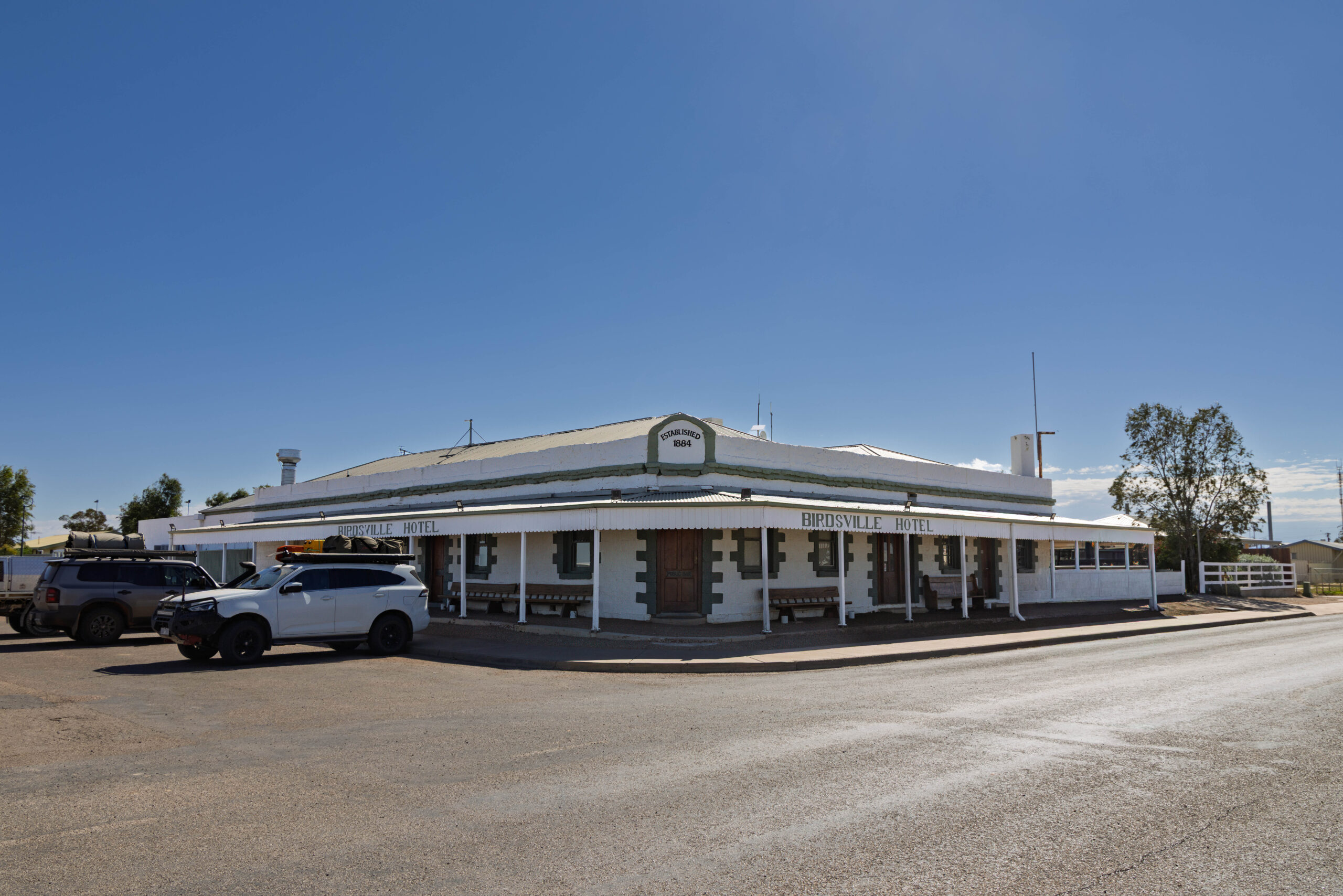
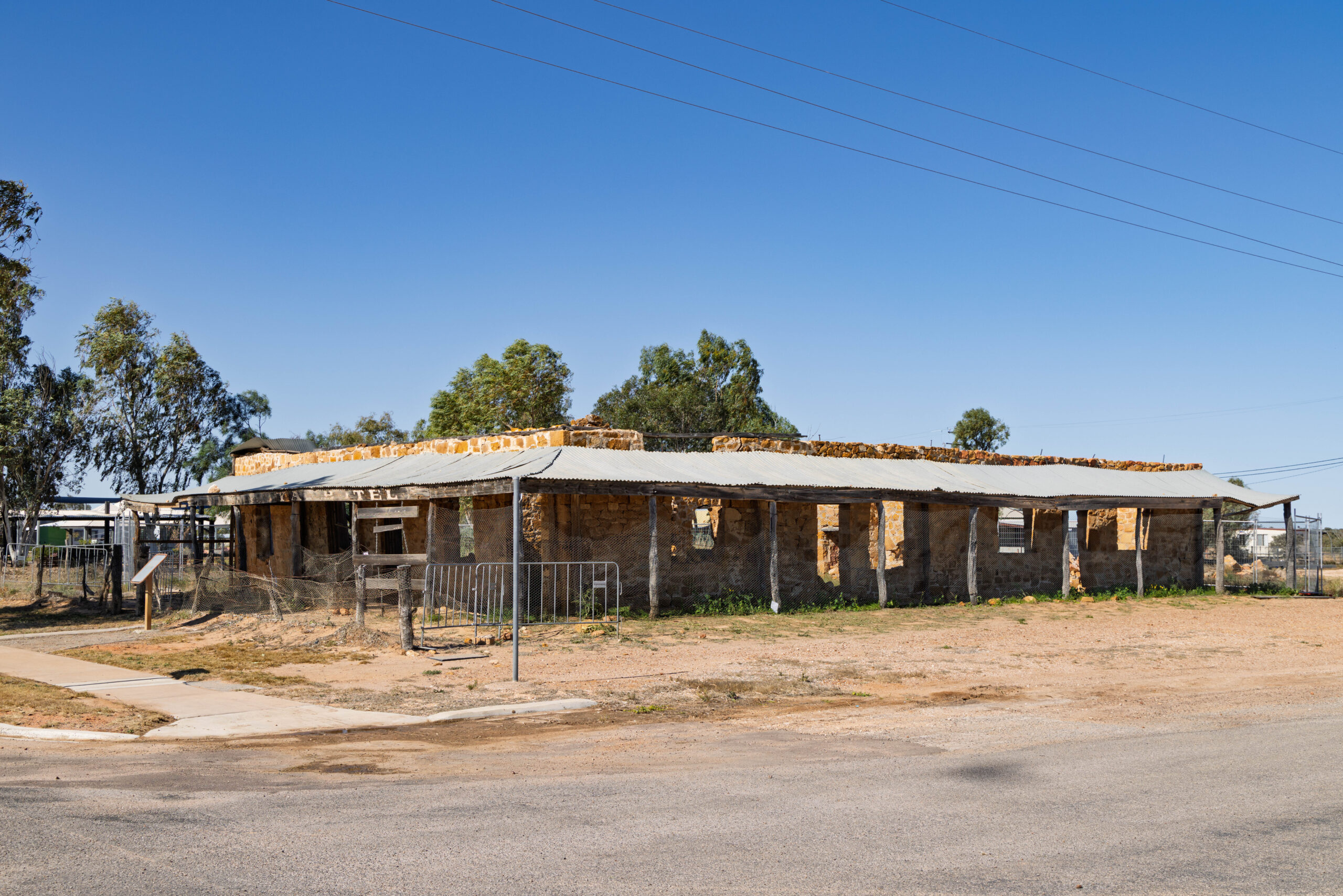
Today was spent in Birdsville. First known as Diamantina Crossing, Birdsville was founded in the late 1870s. In 1890 it had a population of around 400, three hotels and a customs post. Today its population is around a quarter of that and only one hotel remains in operation.
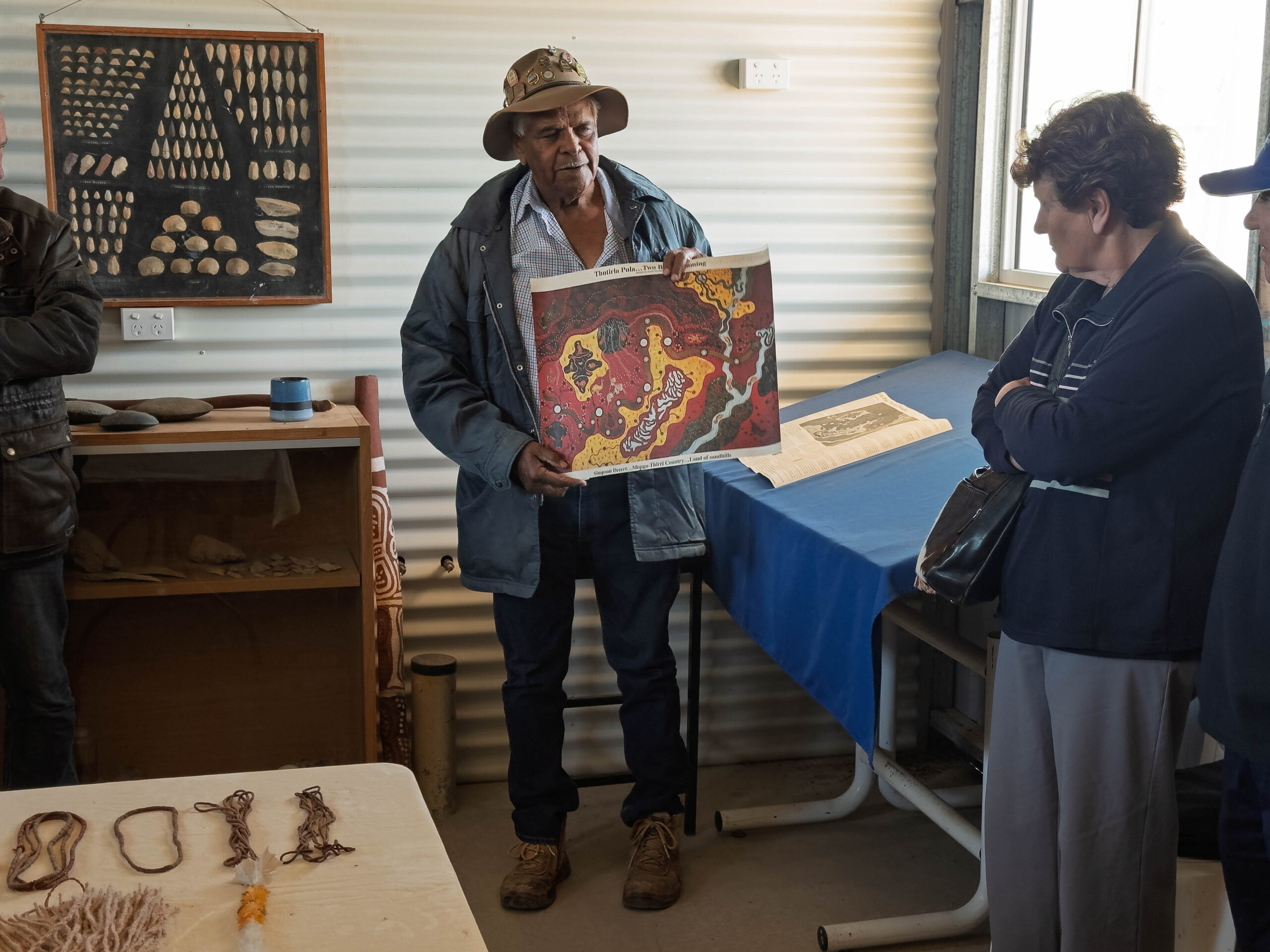
We met the gang for breakfast at Karrawa Wirinya Coffee, which is operated by John’s friend Don Rowlands and his wife, Lin. Don is one of the rangers who operates out of Birdsville. We enjoyed excellent egg and bacon rolls around a campfire out the back of the café. After breakfast, Don showed us around his collection of indigenous artifacts. With his personal commentary about some of his experiences on country, and descriptions of the items in his collection, our visit to his small museum proved poignant and informative.
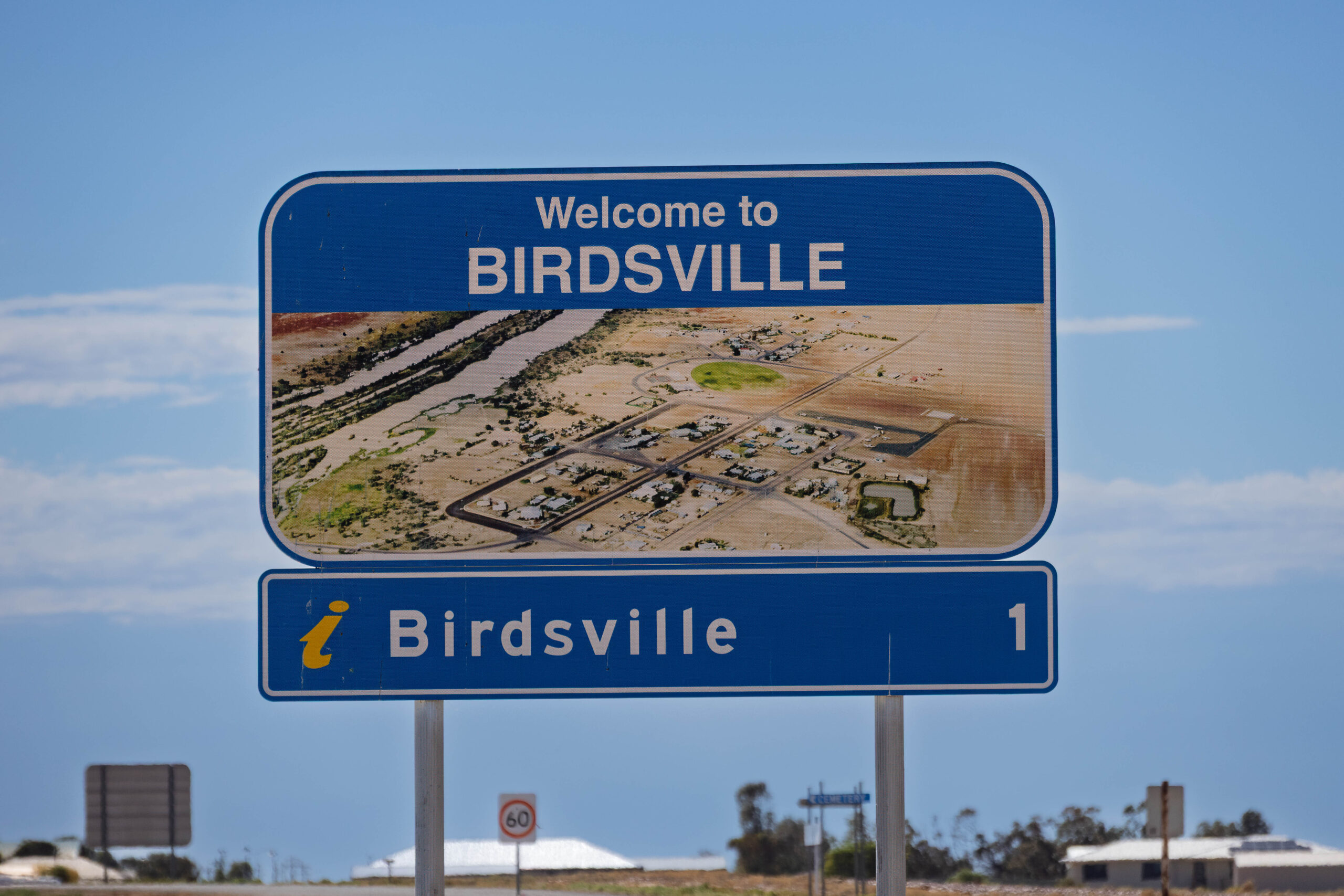
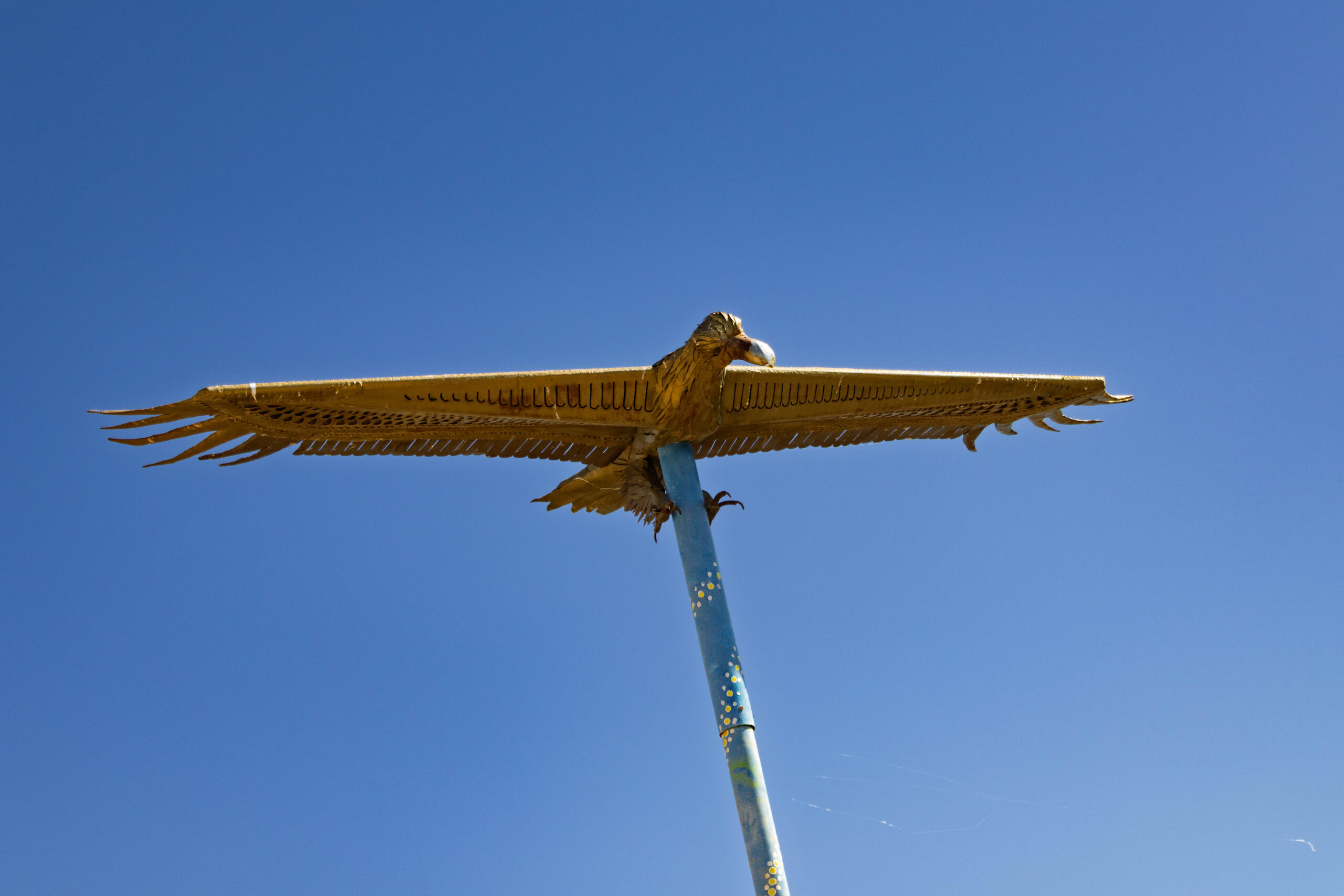
After breakfast, we drove back to the west of town for a couple of photos we missed coming in yesterday. The Birdsville sign and the cairn commemorating the Spriggs Family’s journey across the Simpson Desert … and an eagle sculpture that we didn’t even notice yesterday as we drove past. It was worth the stop at the entrance to Birdsville to see these additional items.
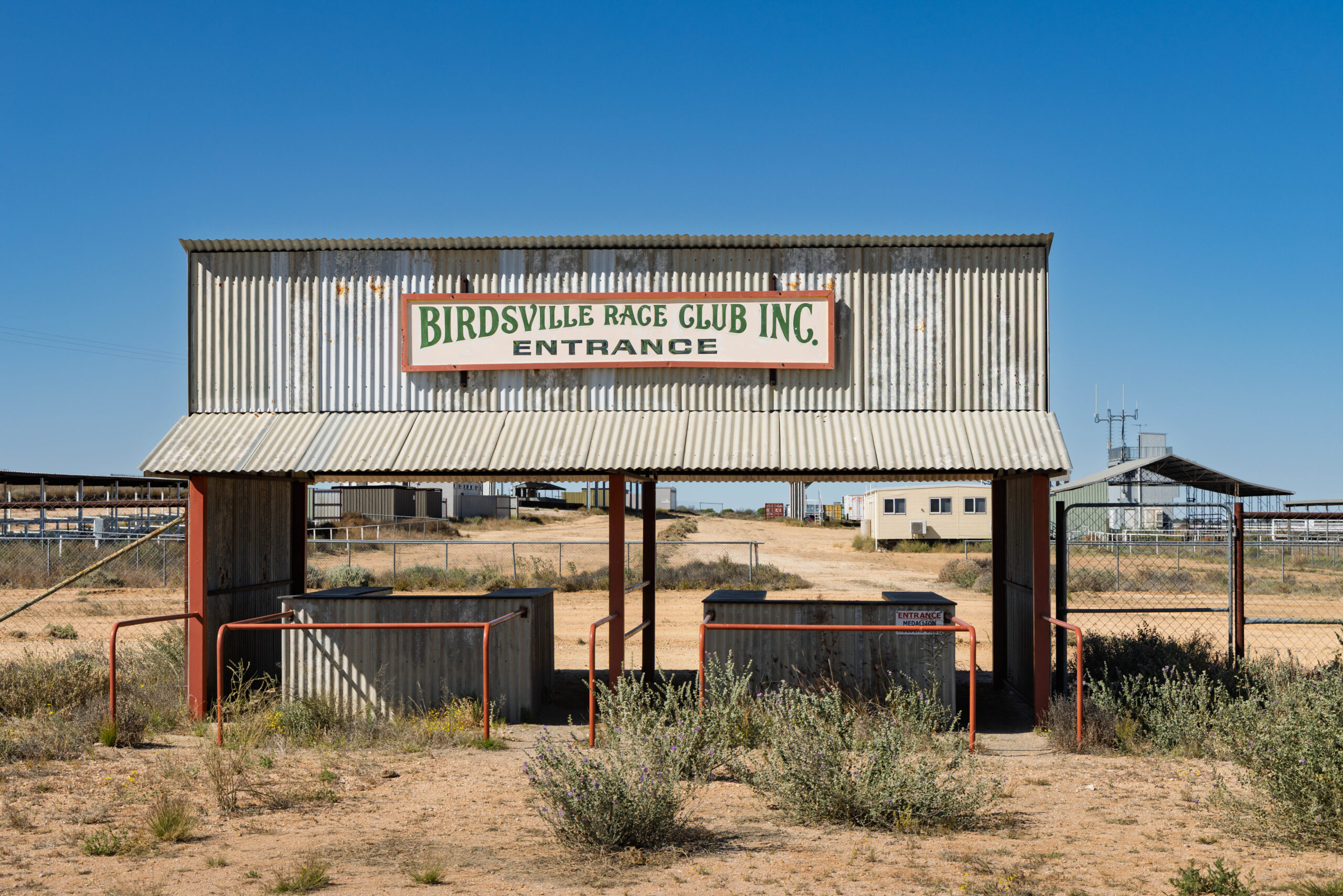
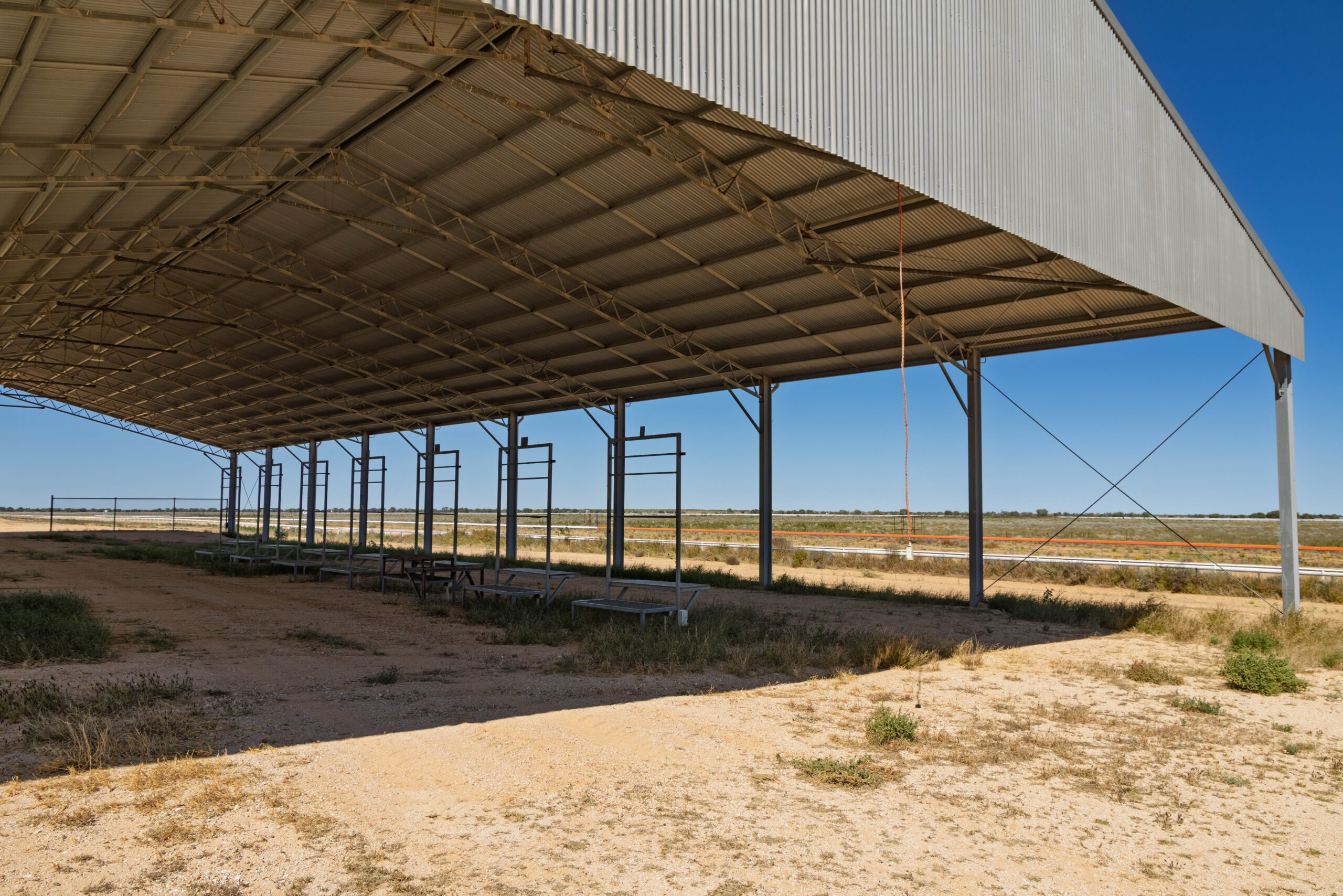
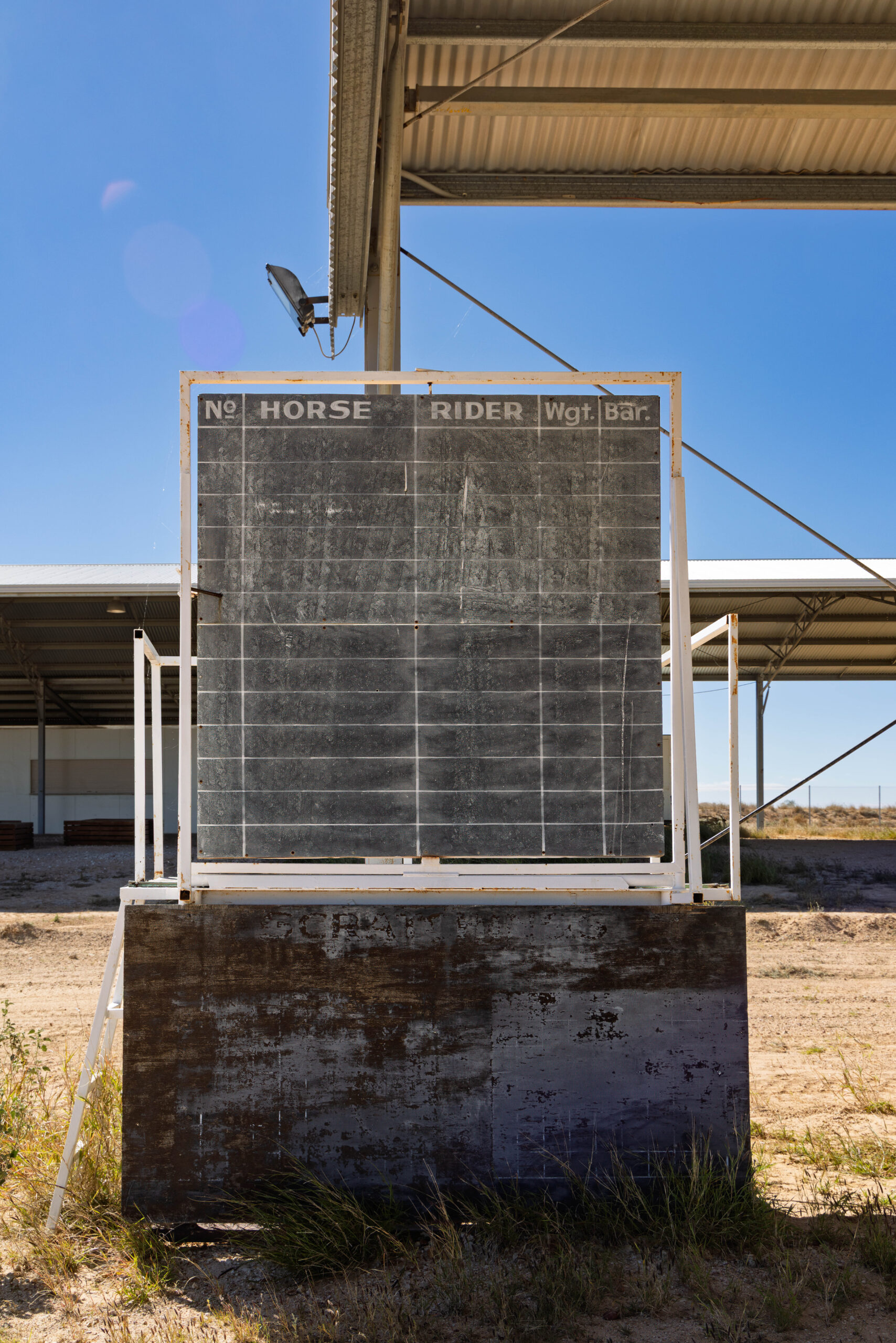
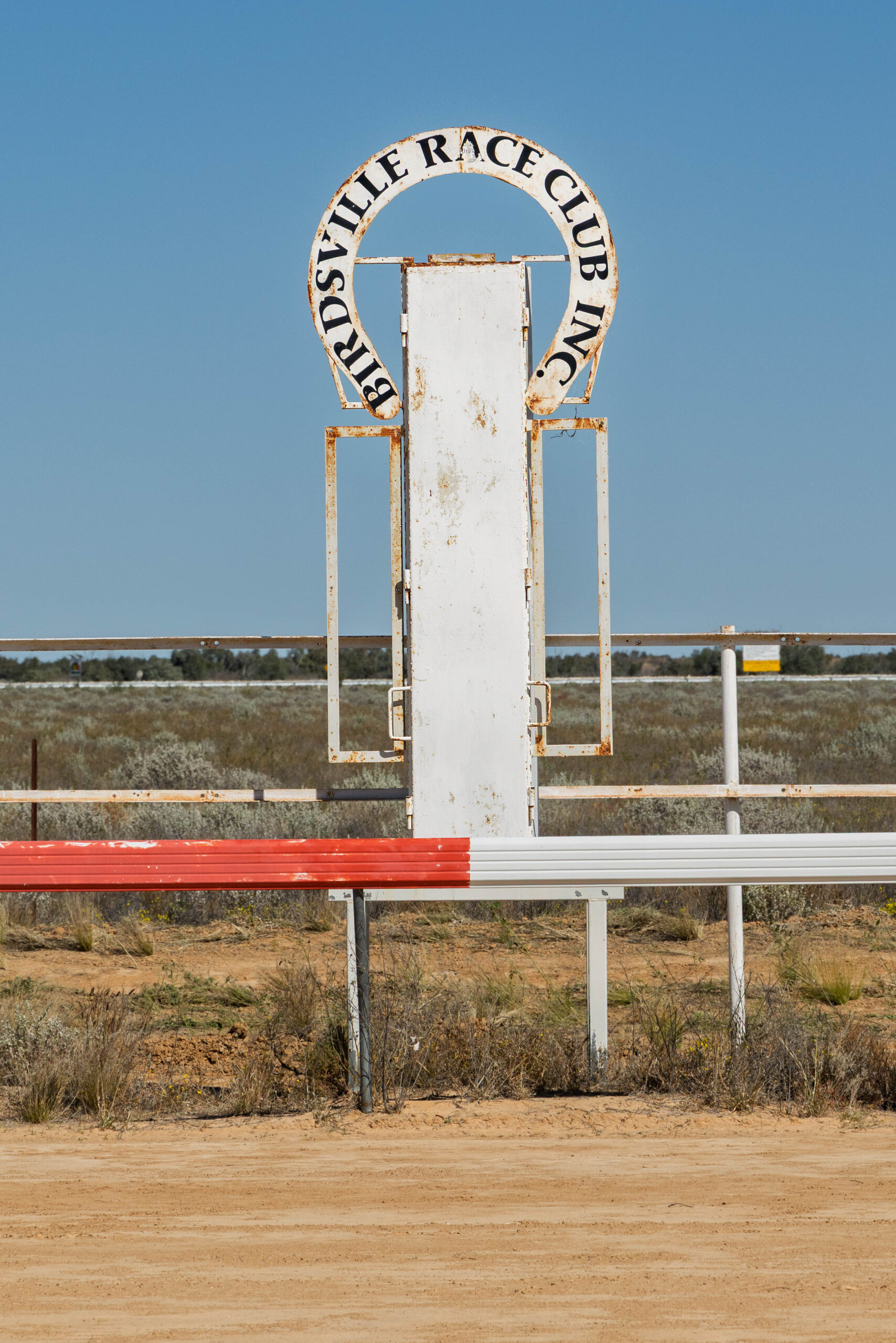
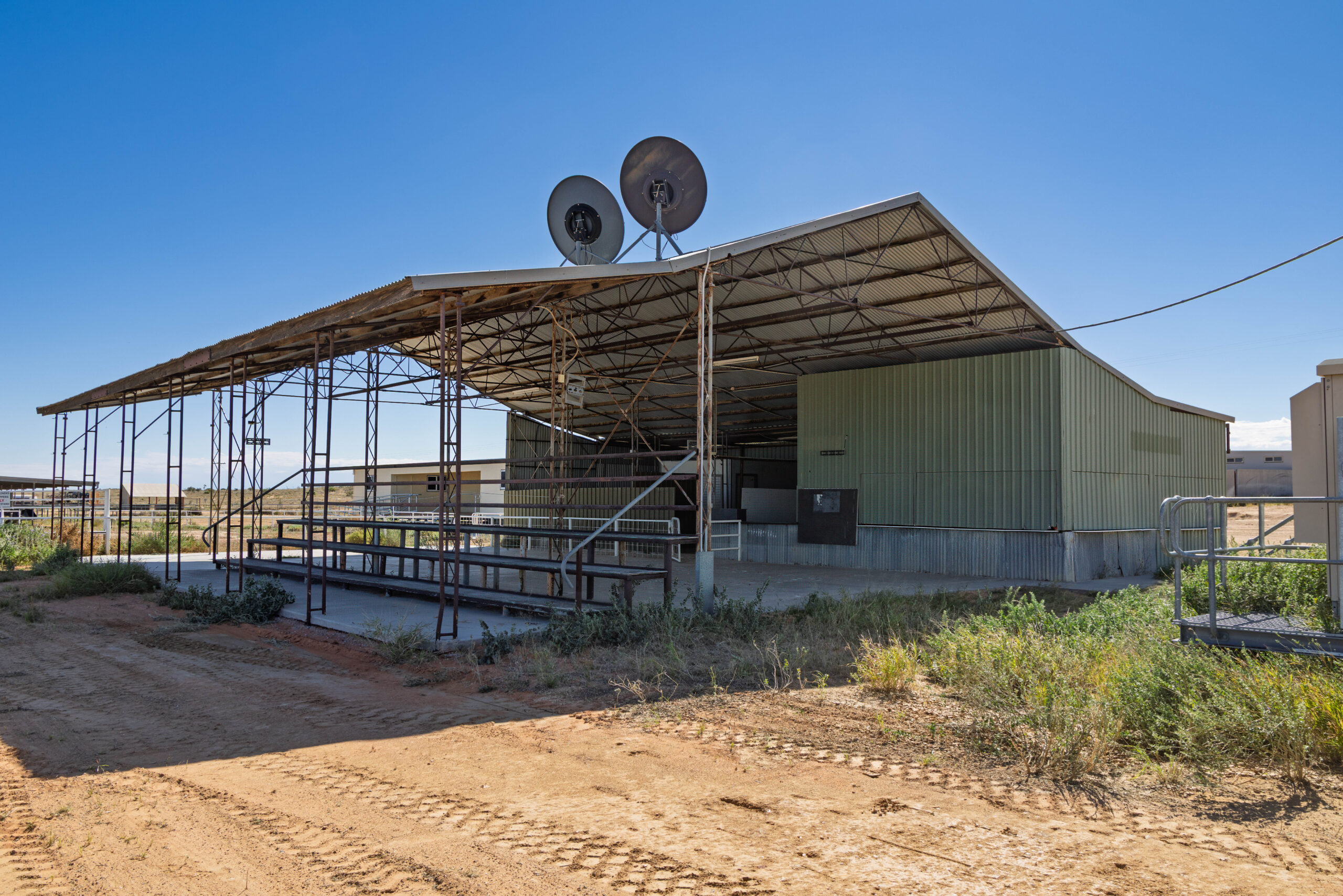
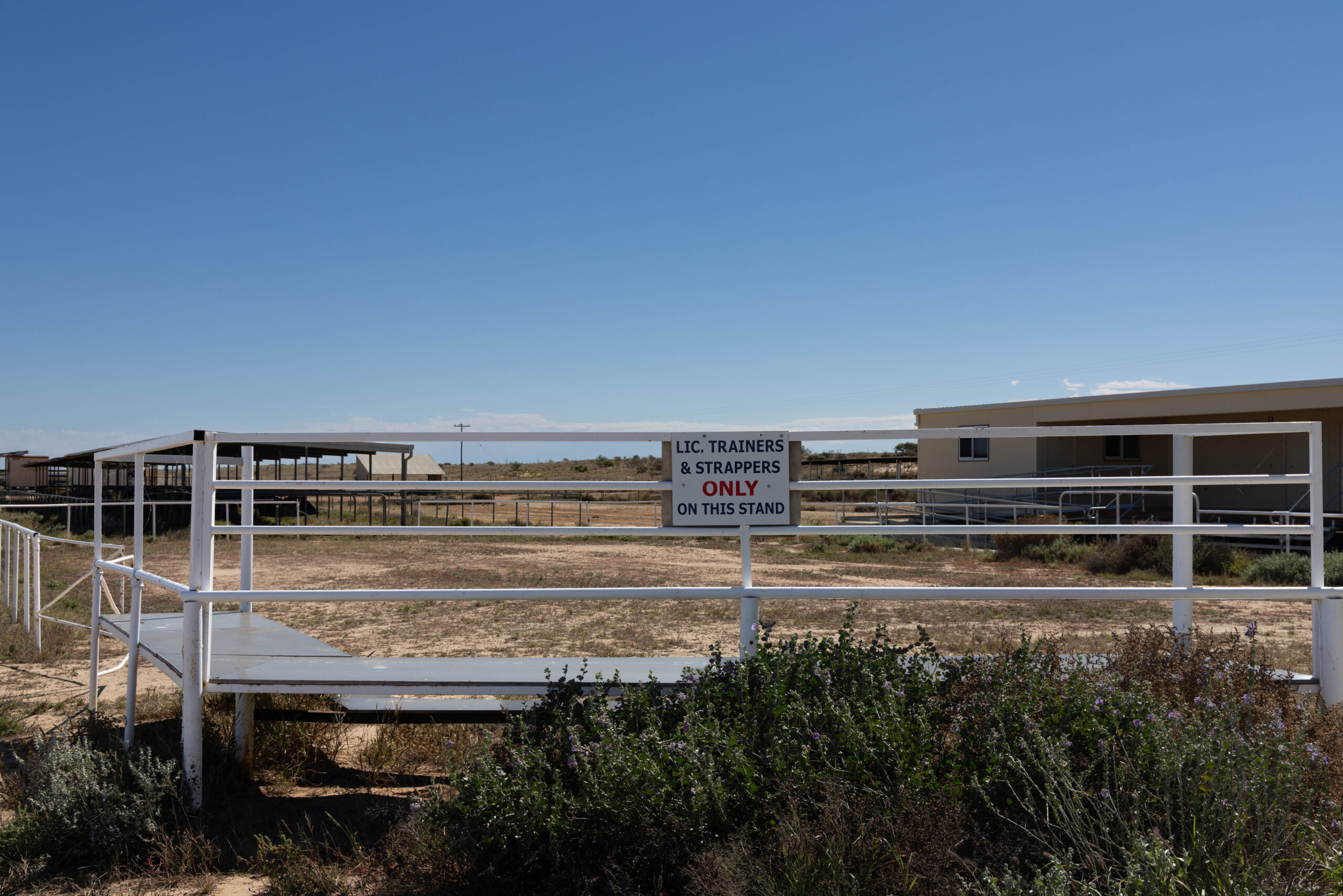
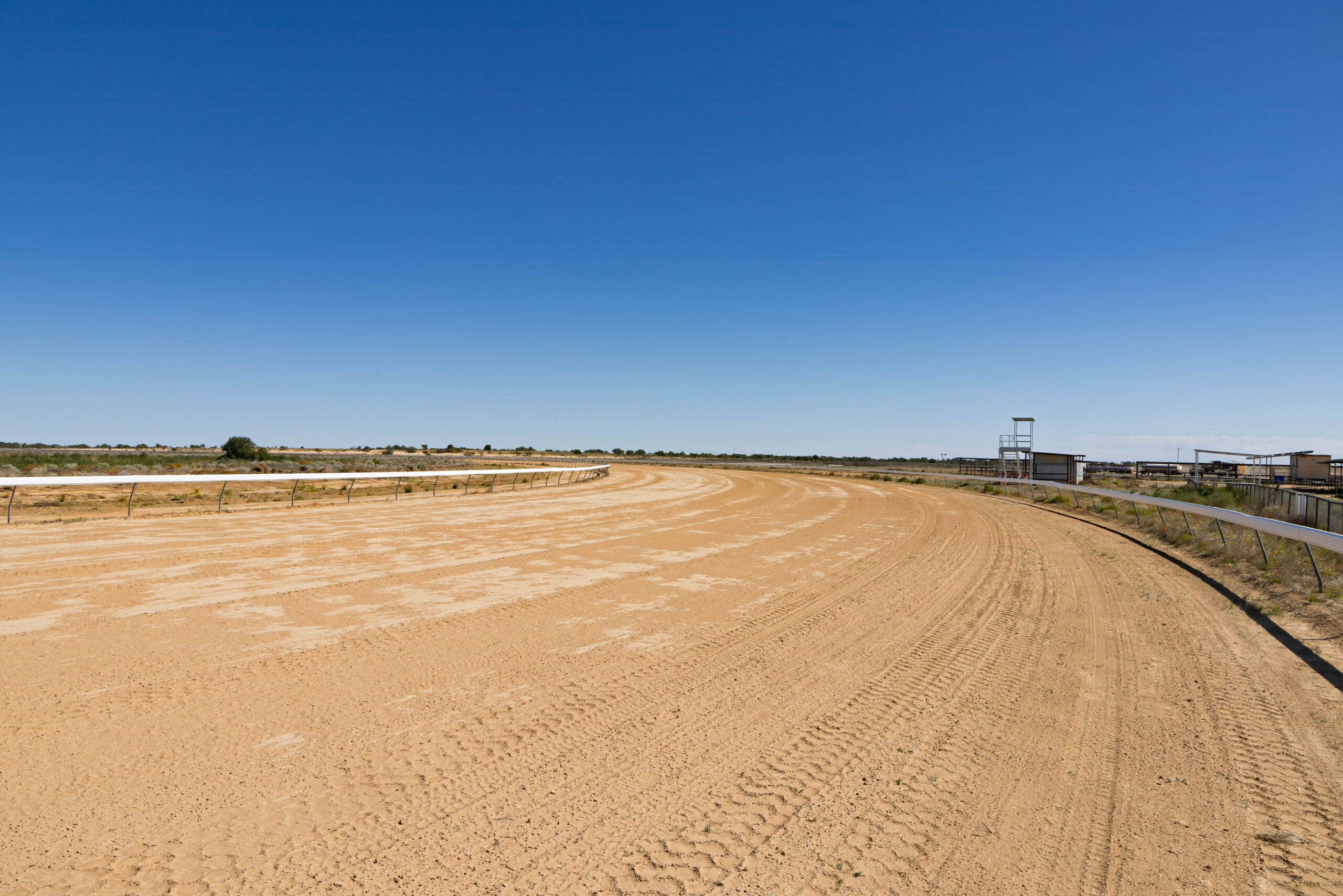
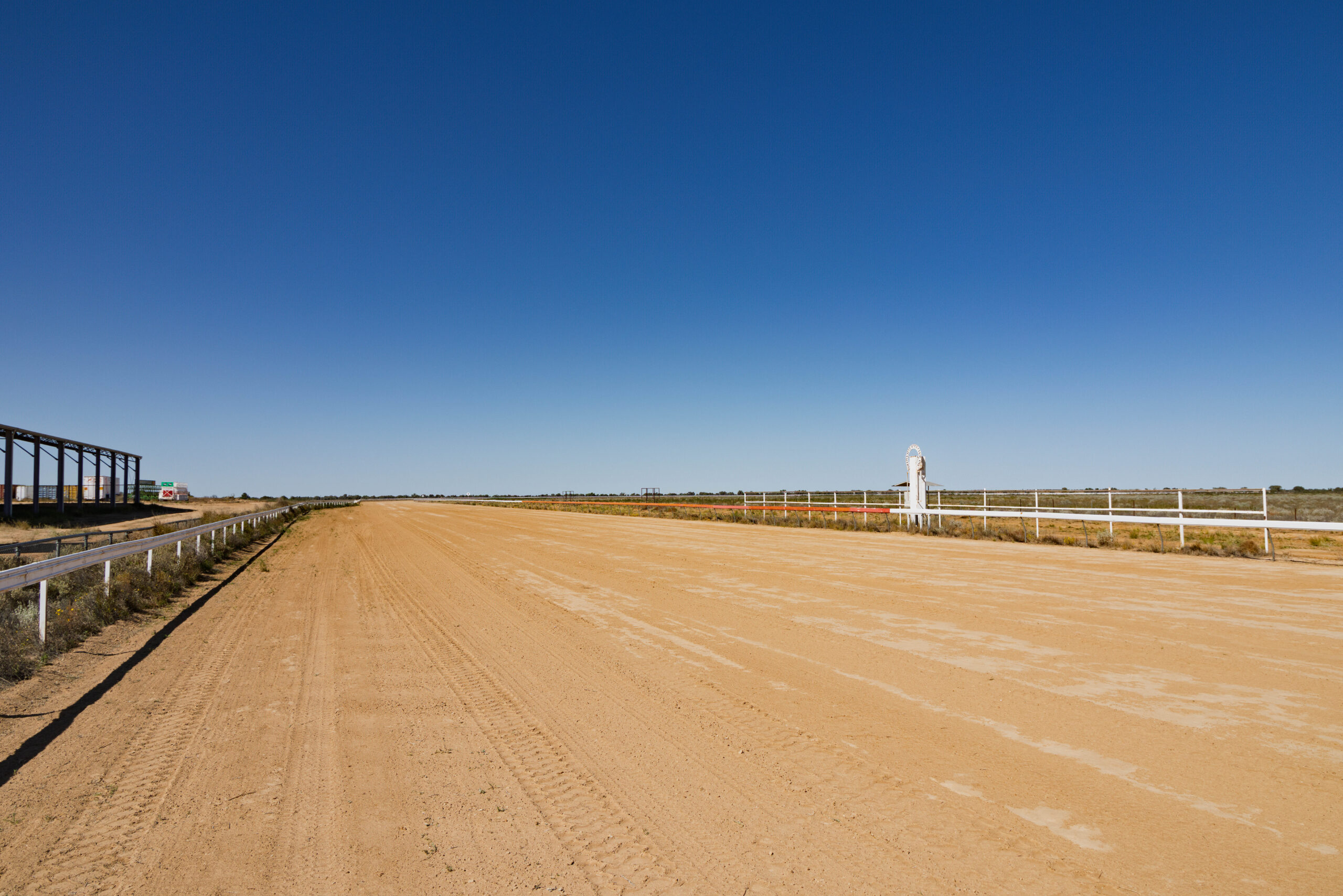
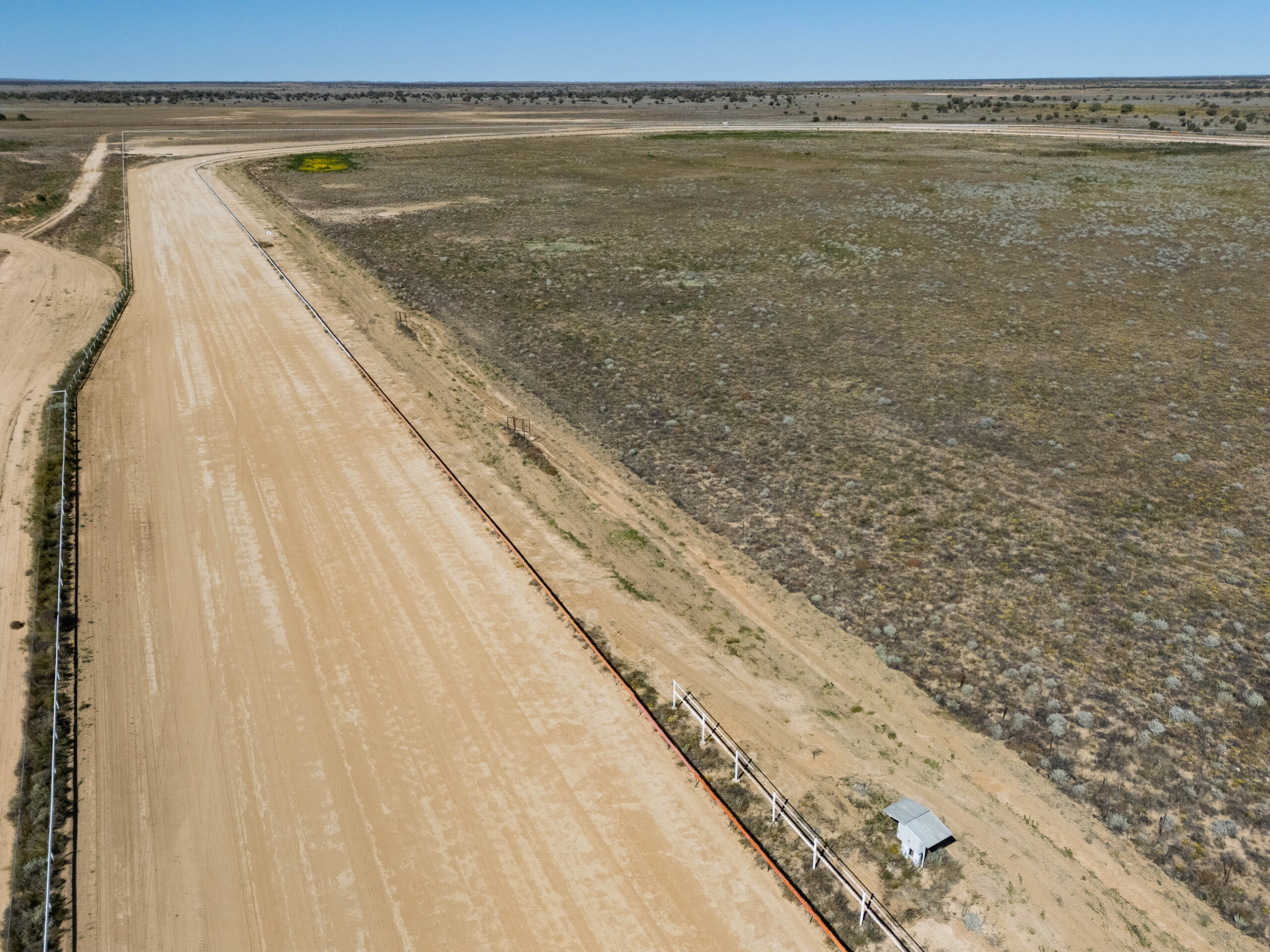
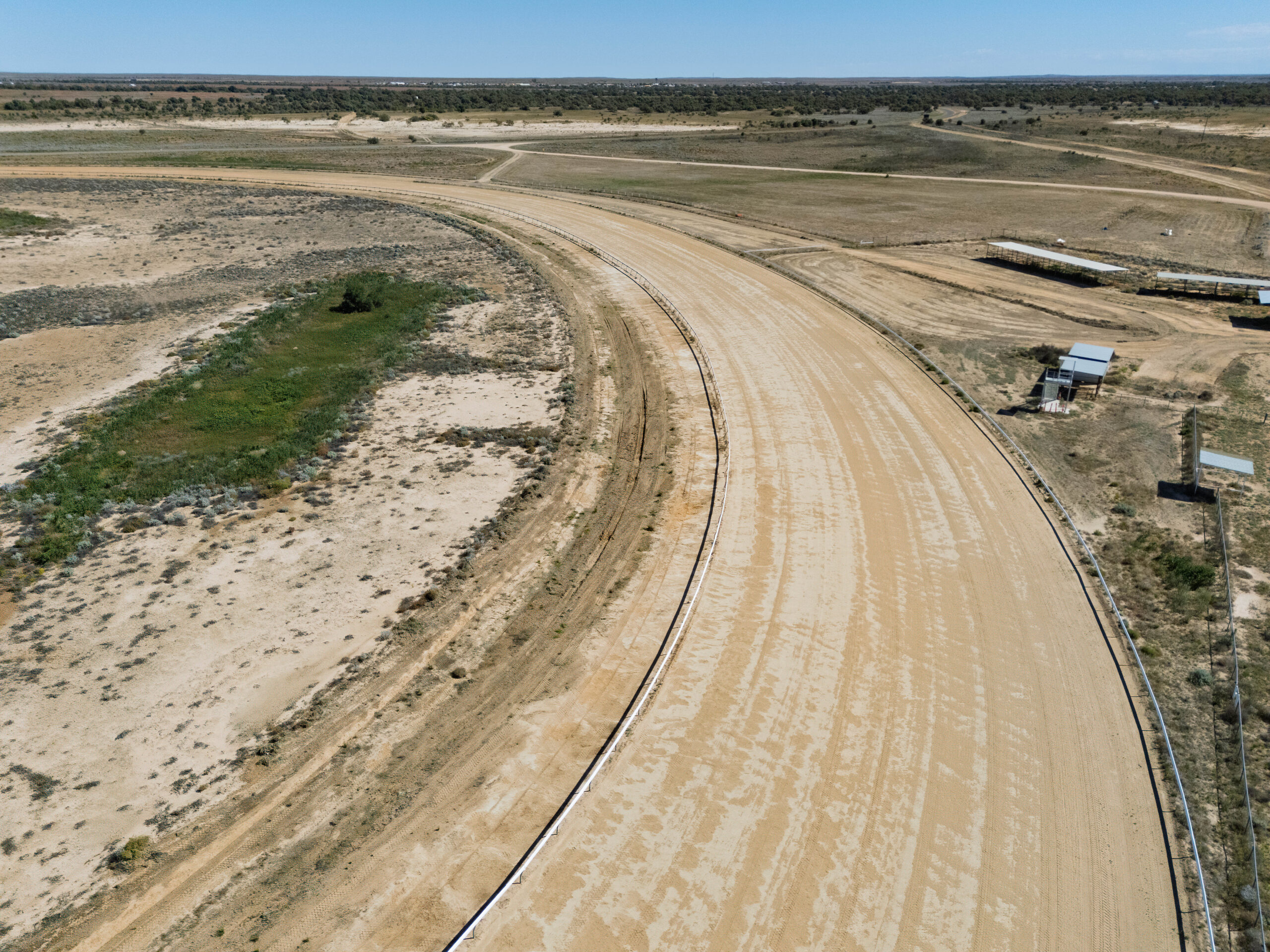
From the west of town we drove all the way out to Birdsville Racetrack, situated on the eastern outskirts of Birdsville. We drove into the racecourse to photograph the entrance gates and the finish line on the main straight. The track looked freshly graded, and it probably was, as a quick Google search found that the famous Birdsville Races will take place very soon between the 4th and 5th of September. It is hard to imagine this quiet little town heaving with people who come to the races.
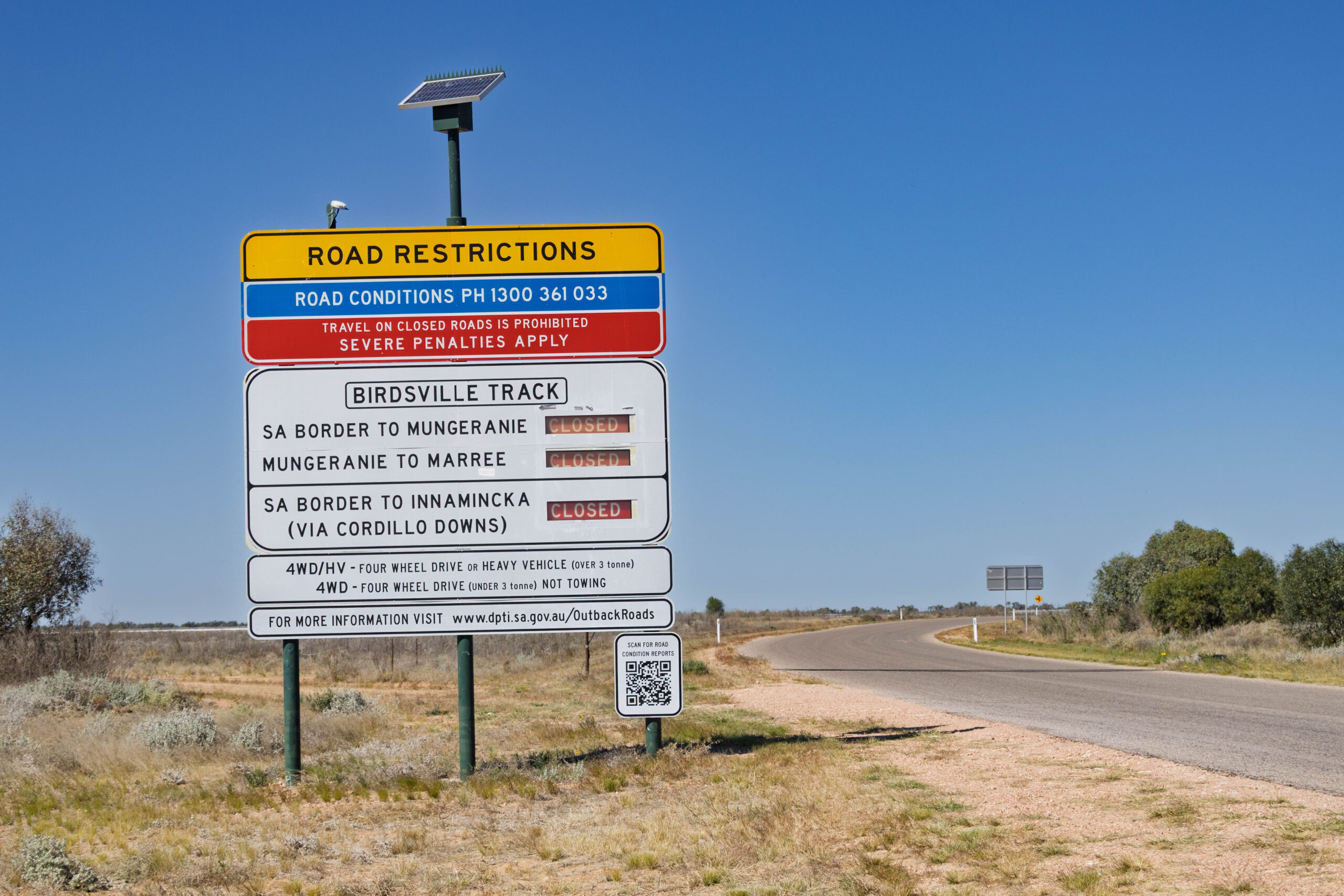
Working our way back into town, we stopped at the Road Conditions sign which currently advised ‘Road between Mungeranie and the SA border – CLOSED’. Hmn, that’s the road that we want to head south on tomorrow. After we left Marree nearly two weeks ago there has been rain through Oodnadatta and Marree that caused road closures. We are very lucky that the rain fell AFTER we passed through, otherwise our tour might have been over before it even started. That’s the unpredictability of travelling out here in the outback on unsealed roads.
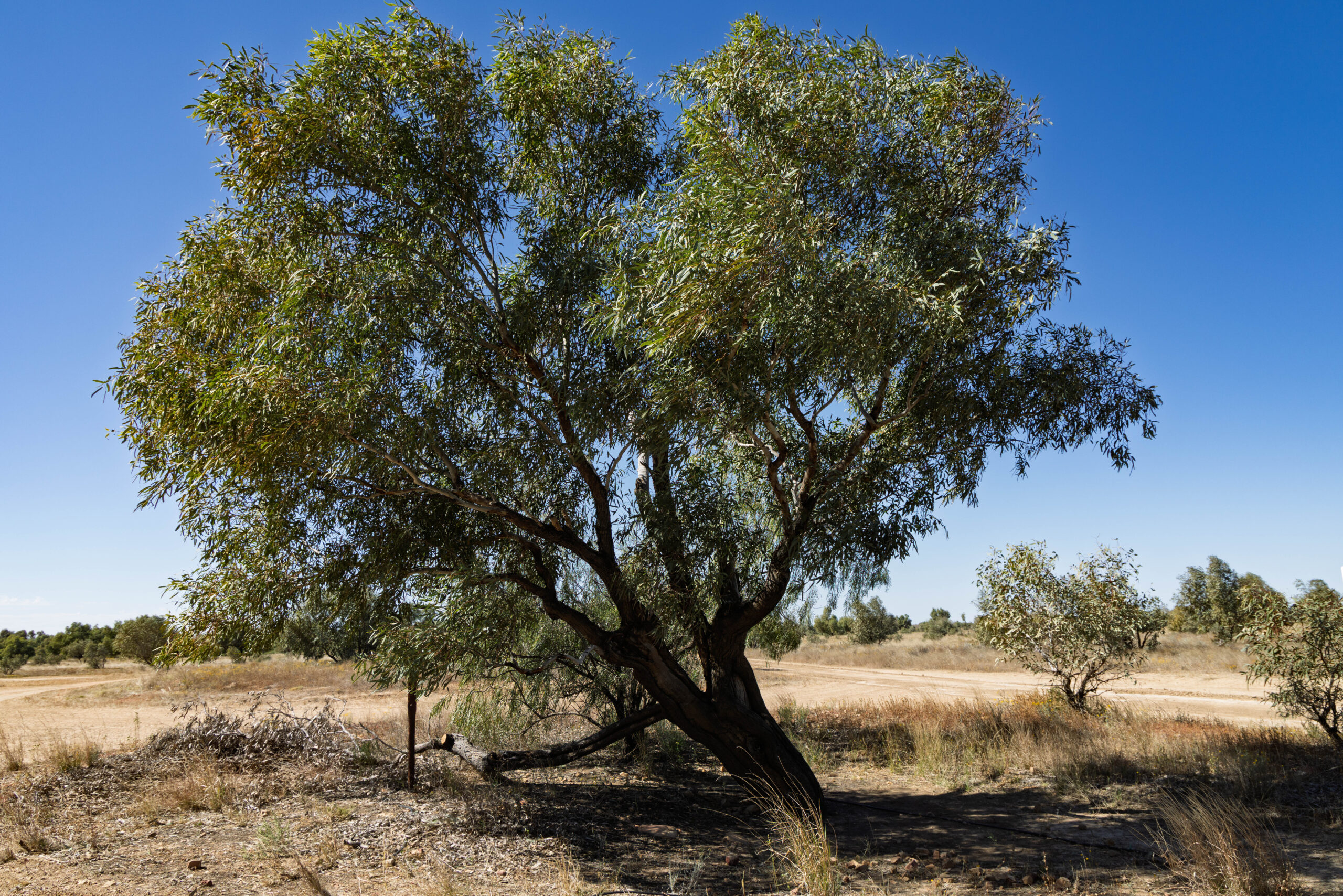
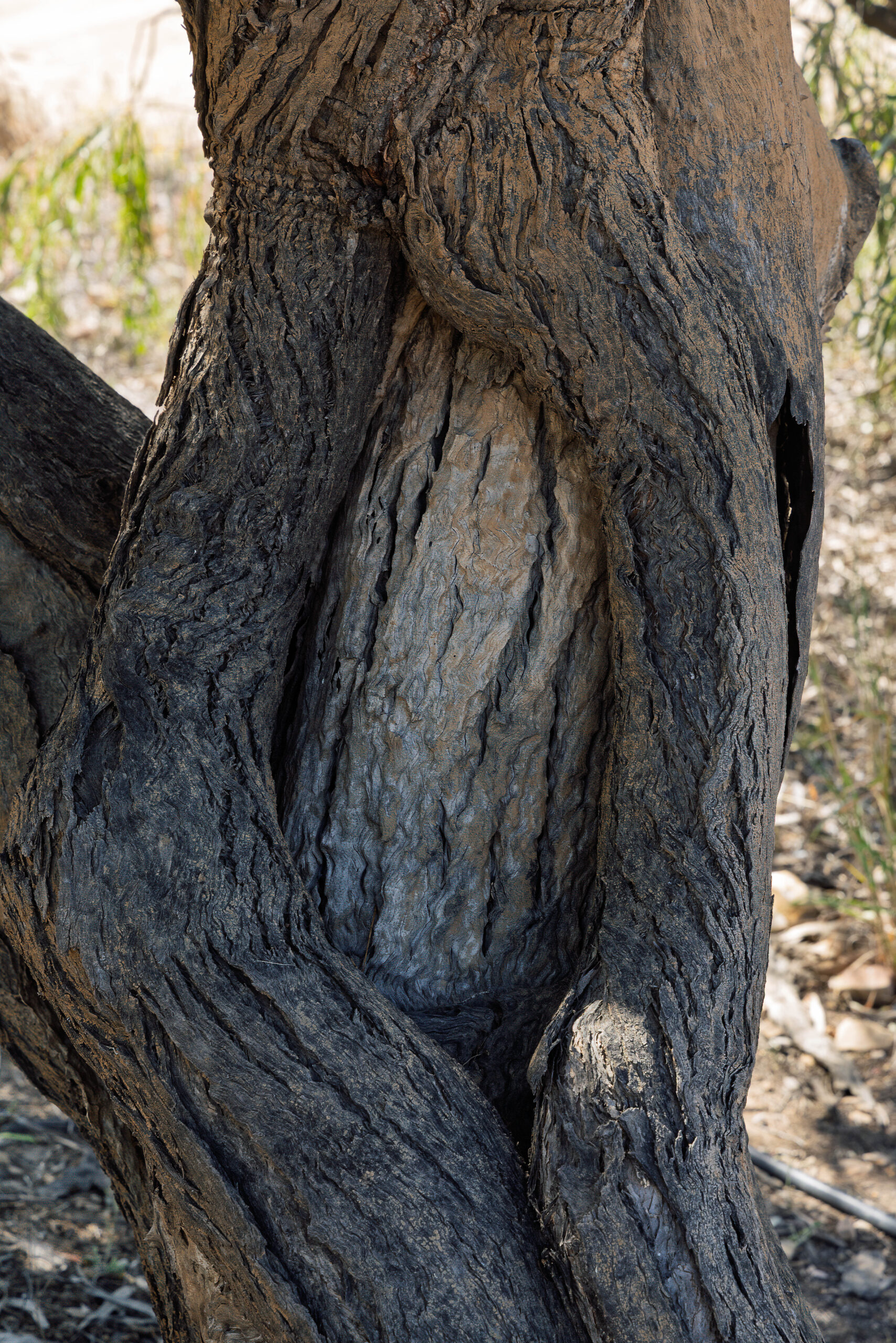
Our next stop was at the Burke and Wills Tree. On the 20th of August 1860 Robert O’Hara Burke and William John Wills set out from Melbourne with a party of 13 men, 20 camels and over 20 tonnes of provisions, to chart a course to the Gulf of Carpentaria. Their Christmas Camp (Camp 73) on the 24th and 25th of December 1860 was at Koonchera Waterhole on the Diamantina River, just south of the future township of Birdsville.
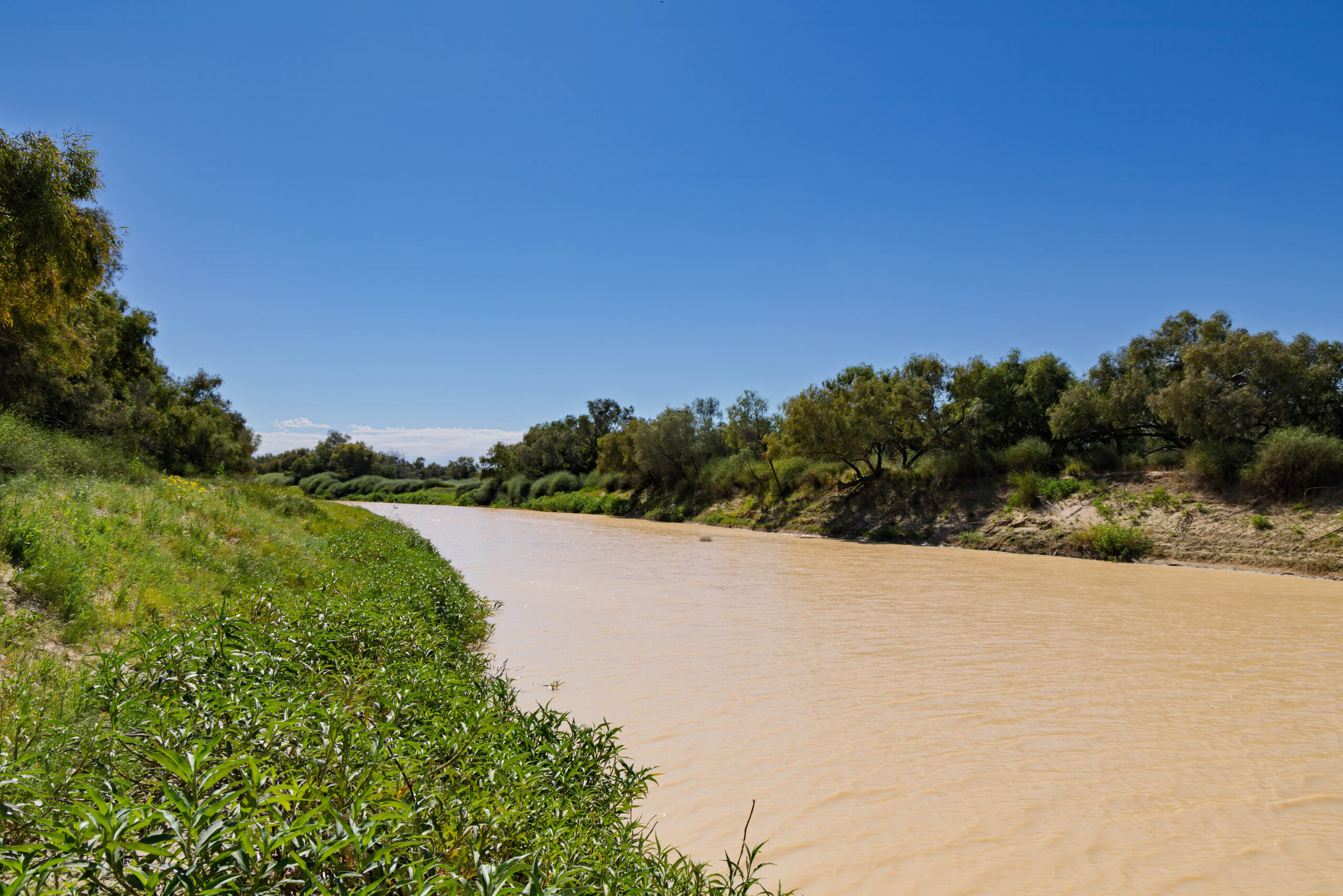
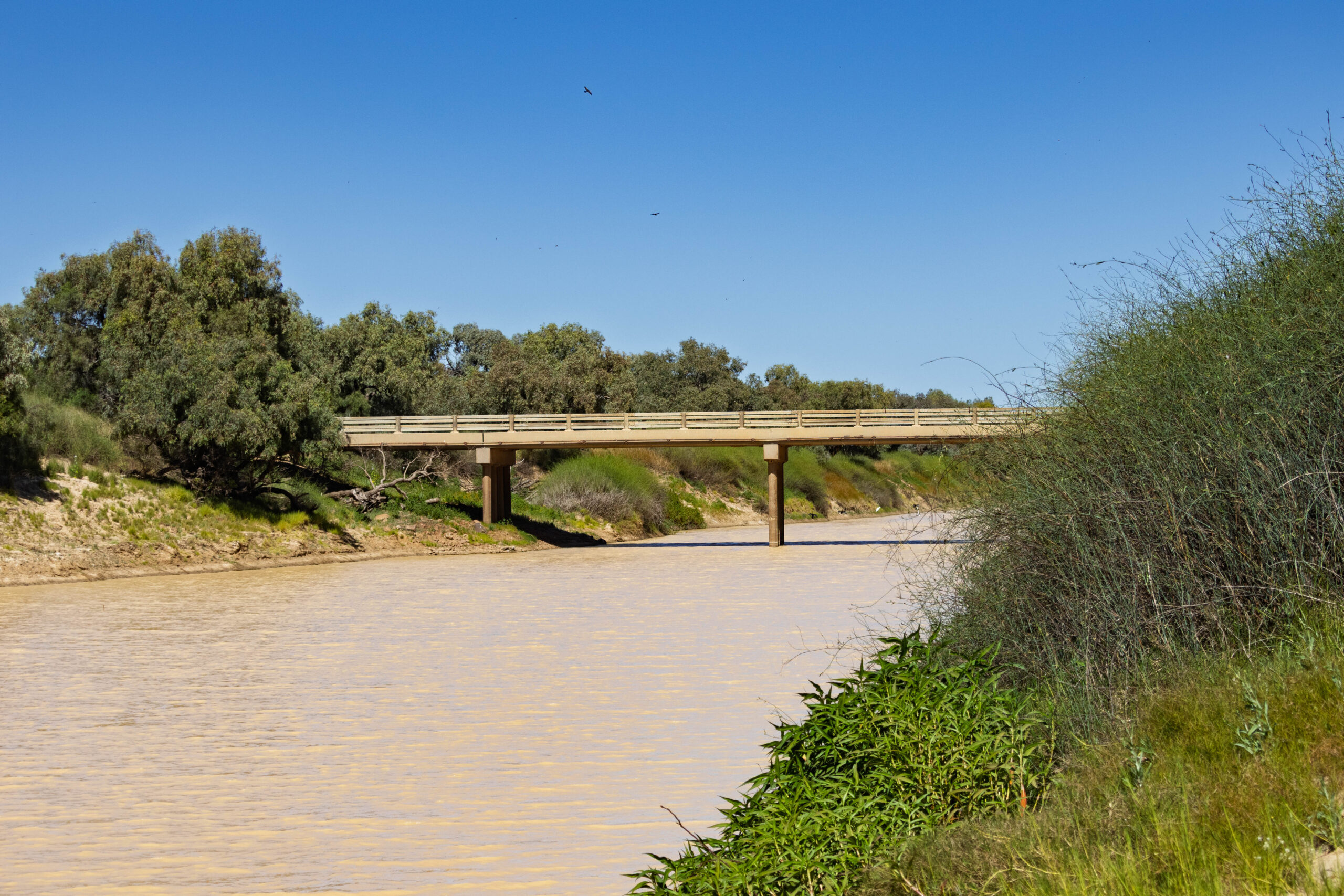
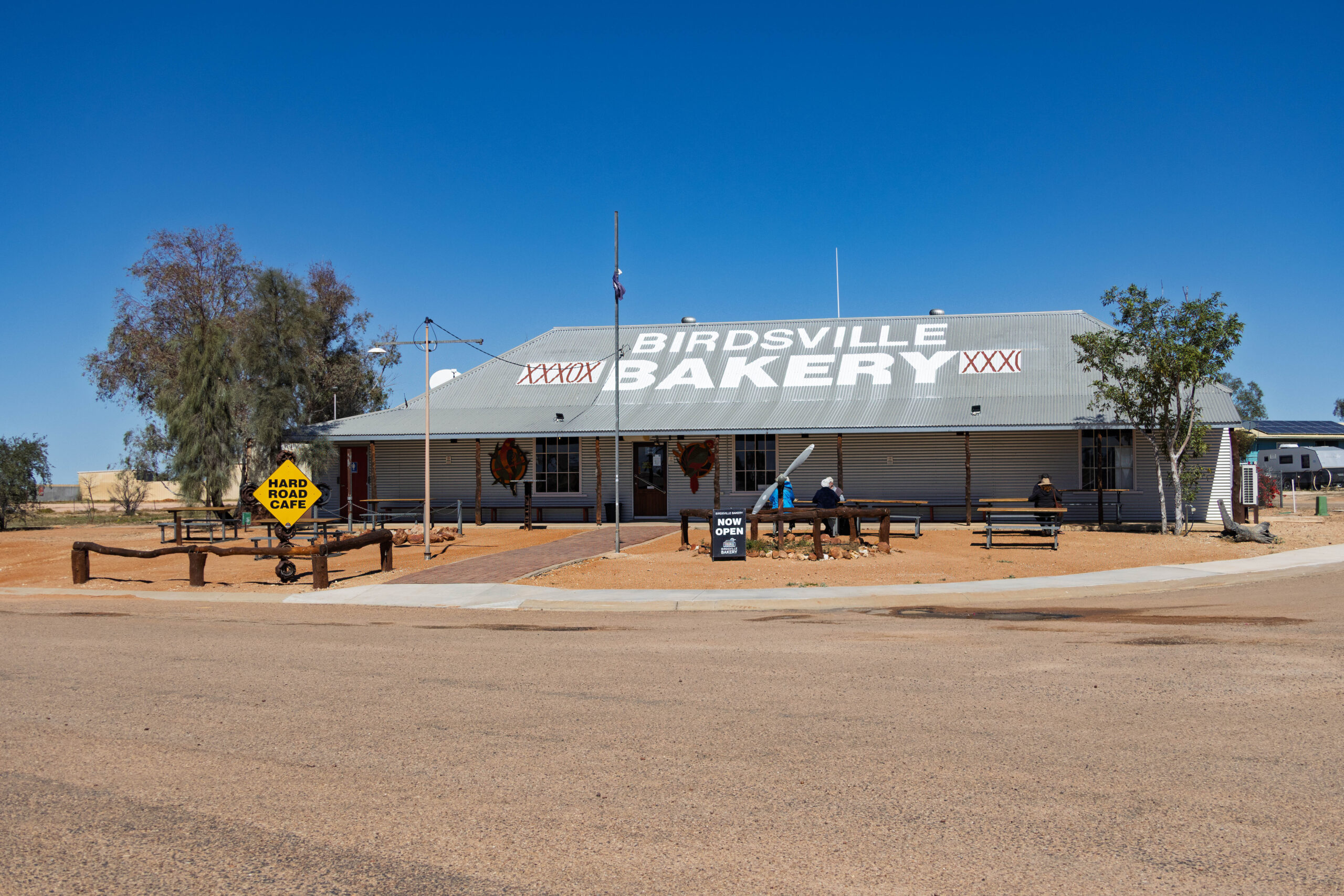
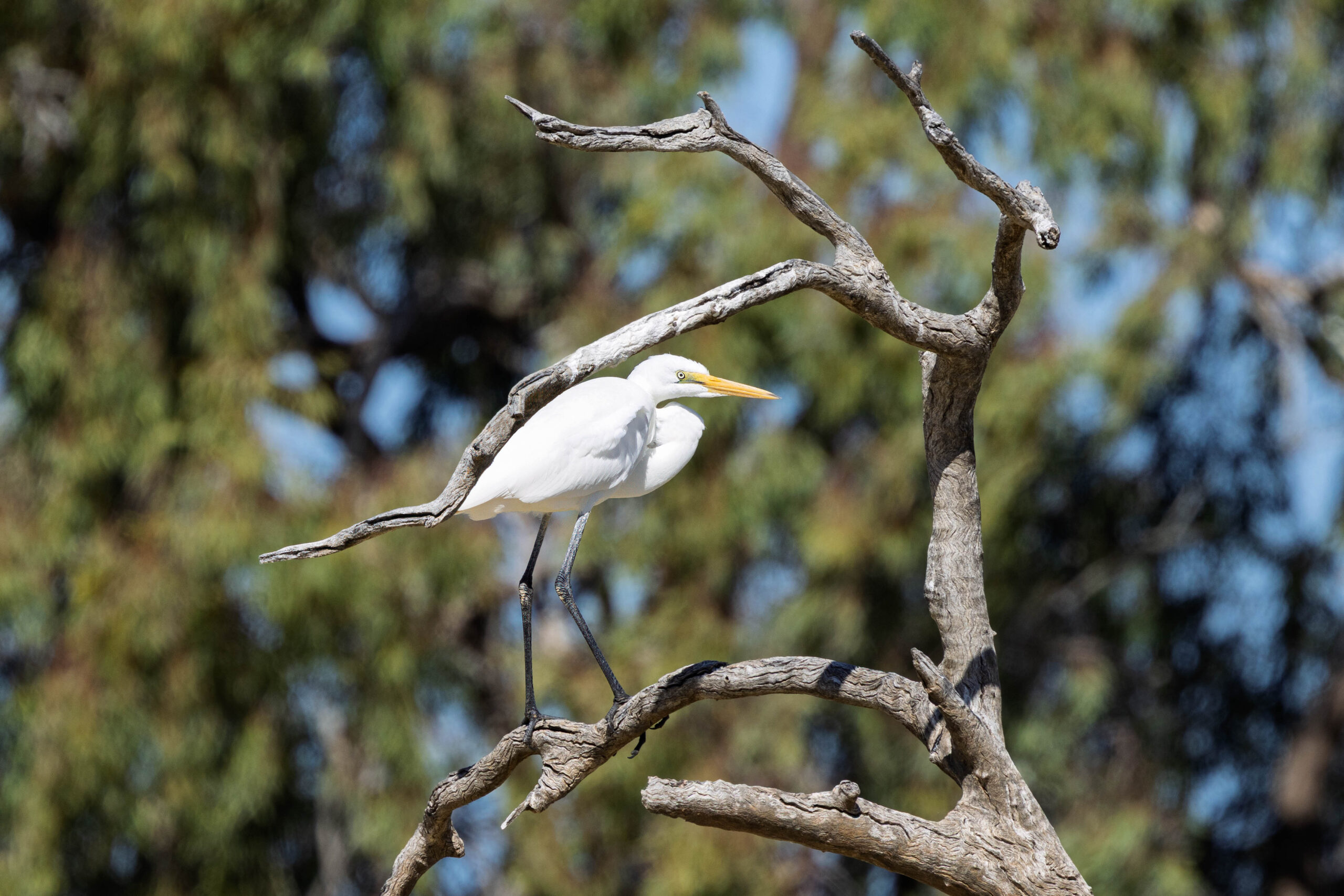
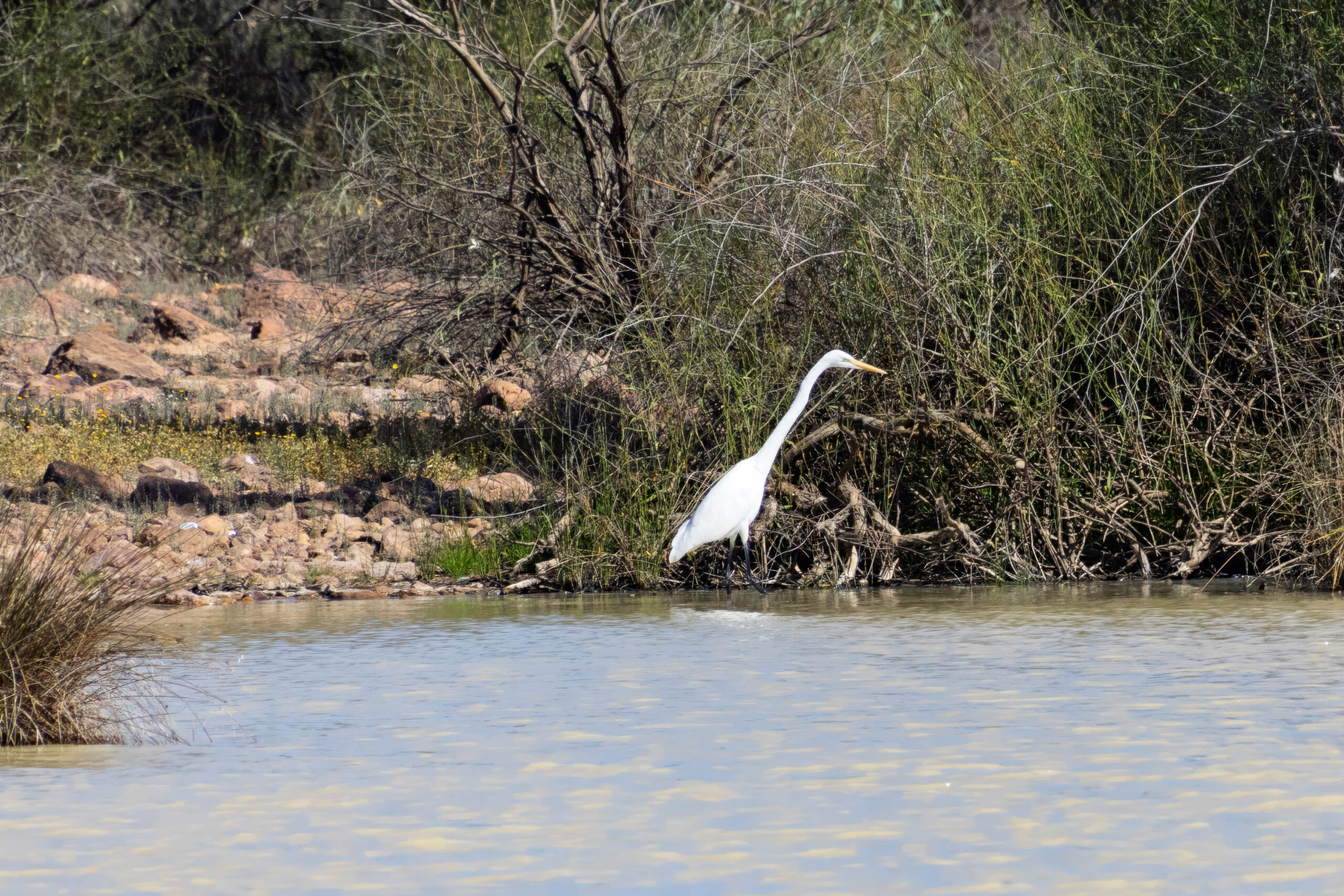
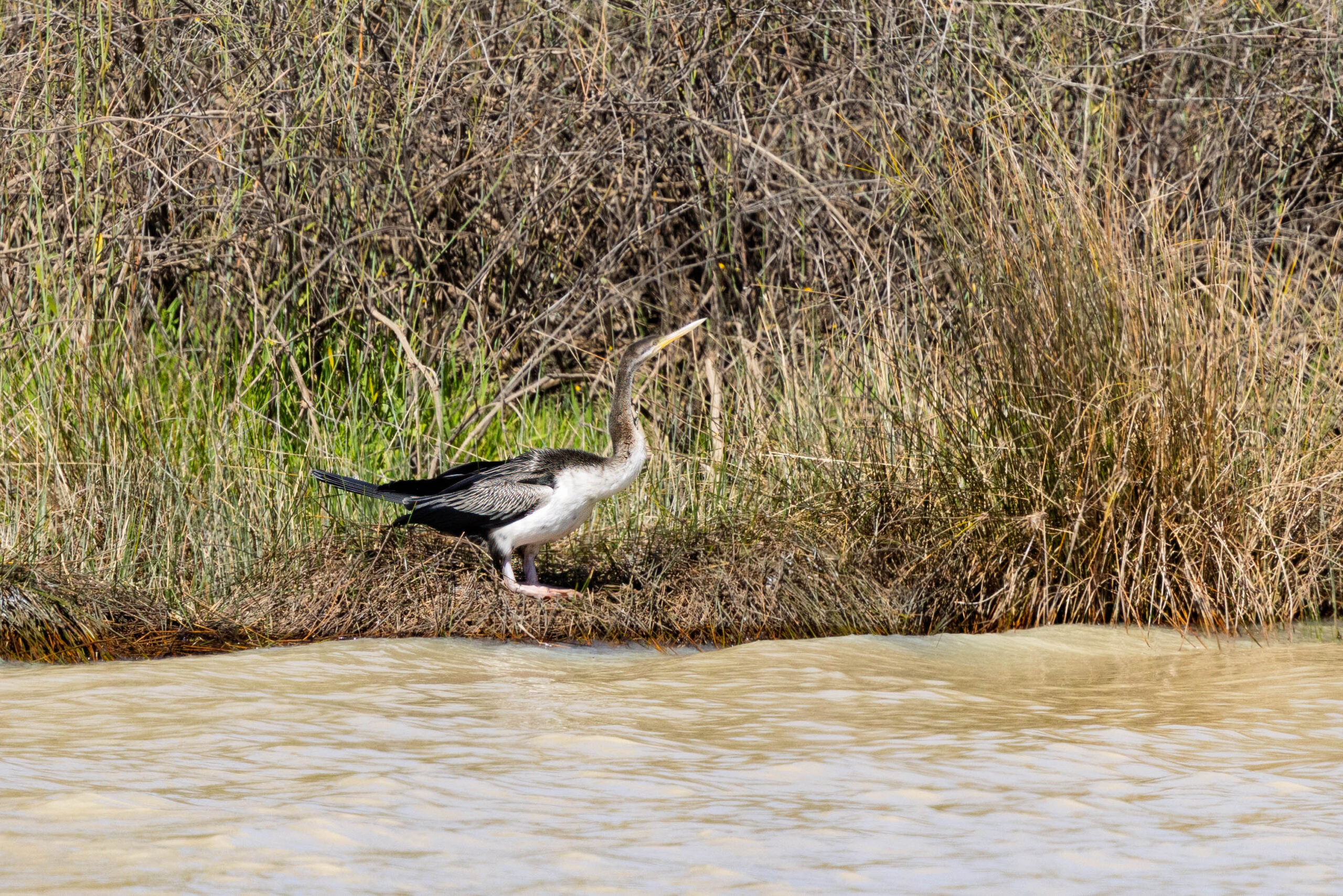
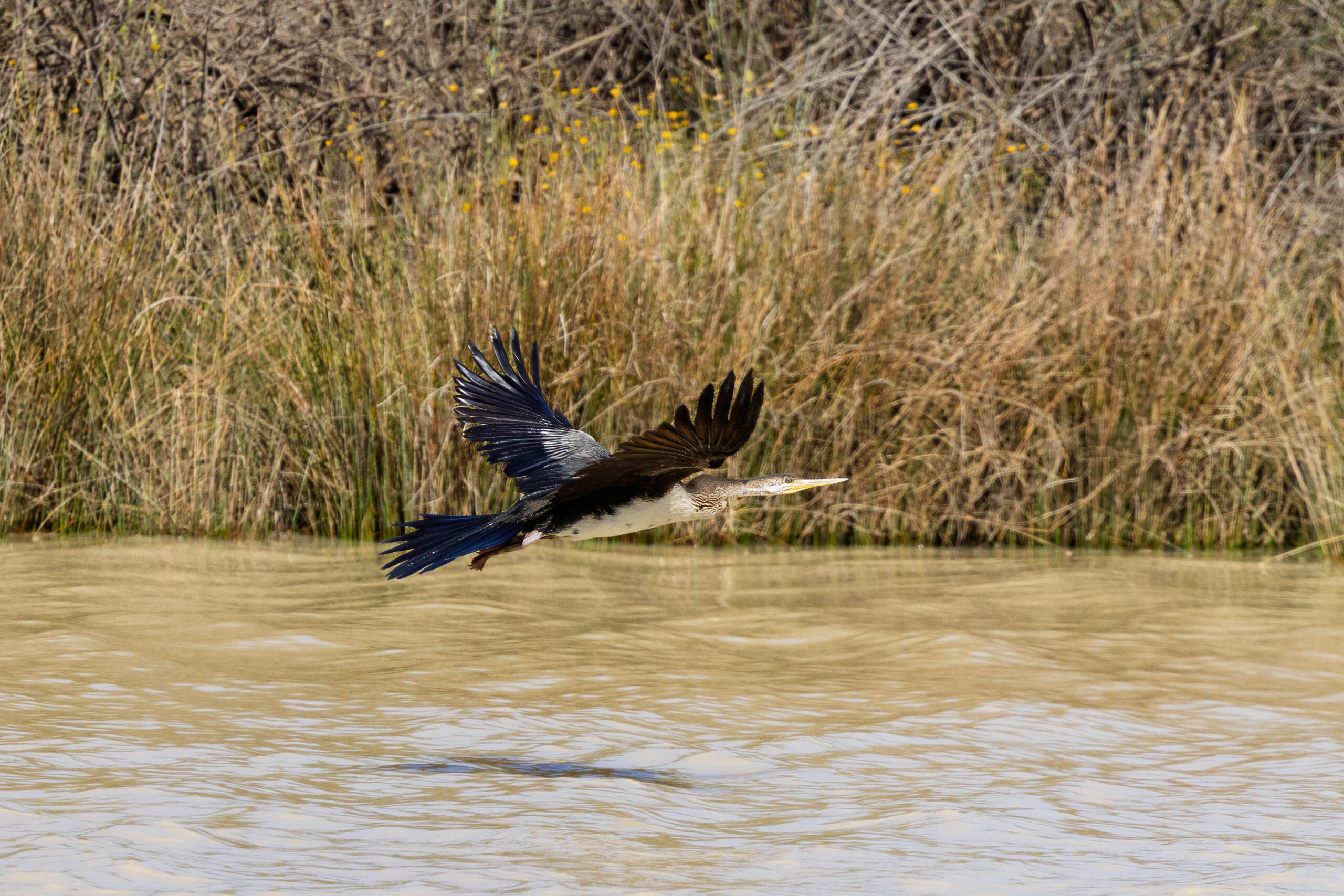
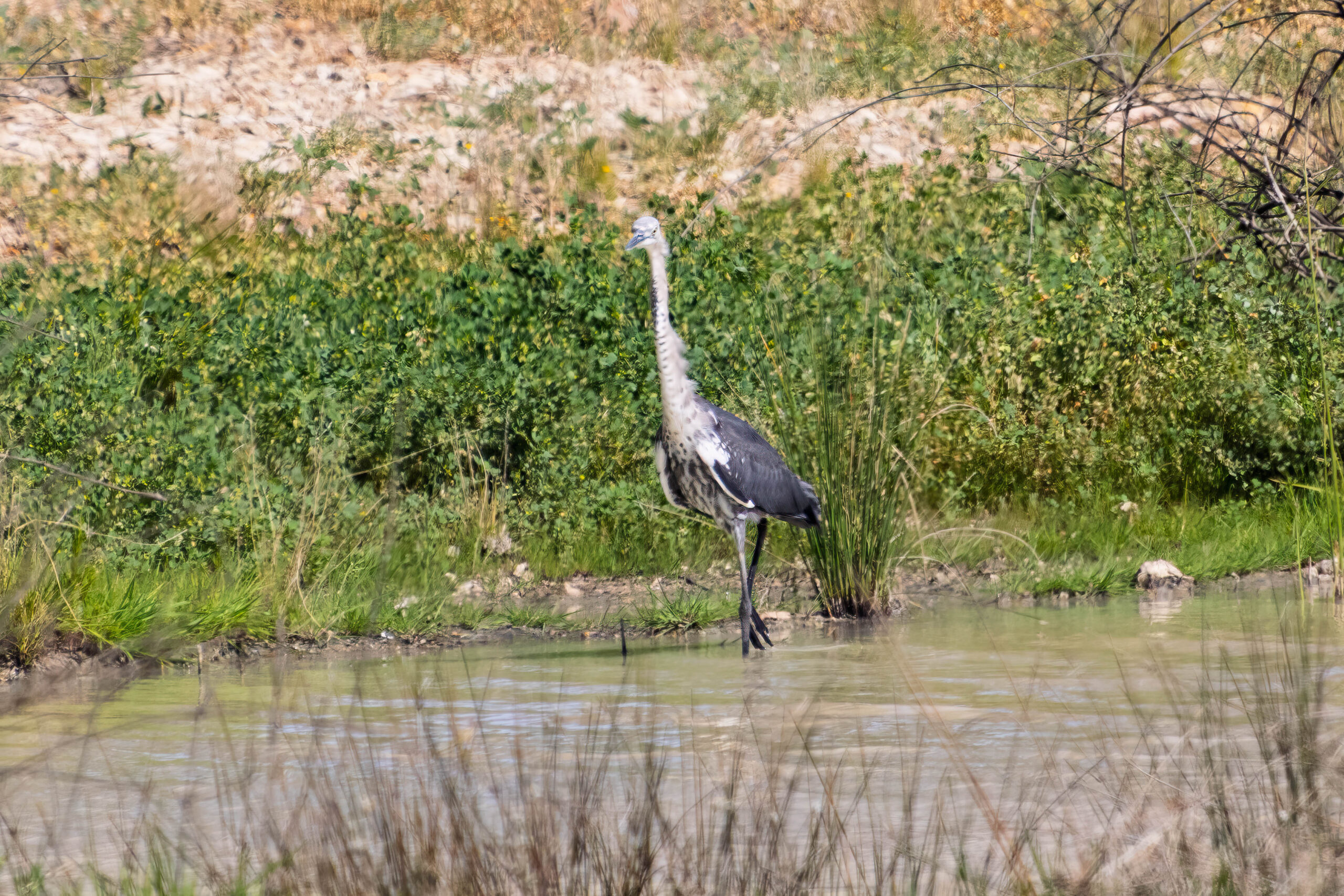
We crossed back to the western side of the Diamantina River and pulled in beside the river to take a photograph of the Kari-Tjura Bridge. There were a few birds stalking around the river bank which was sheltered from the wind that is blowing today. After the bridge photos we hurried into town to buy lunch at the Birdsville Bakery. We didn’t want to leave that too late as we had heard that they sell out early.
Arriving at the bakery we found Steve and Di seated at one of the outdoor tables. They were able to tell us that they were waiting for more pies and sausage rolls to come out of the oven. Shortly after, more stock was being transferred into the pie warmer. We each enjoyed a sausage roll, hot from the oven, and Bernie tried one of the bakery’s renowned curried camel pies. Uniquely triangular-shaped, he tells me it was delicious.
Next we headed to the Visitor Information Centre to find out more about the billabong. With time to kill before we could check in to the Birdsville Hotel, we thought that we would see if there was a walking track in/around the billabong where we could find some birds to photograph. The very helpful staff member set us up with a map and suggested that we should head down to the Old Diamantina Crossing too, to find the local birdlife.
Re-tracing our steps from earlier, we drove back to the signpost for the Old Diamantina River Crossing. Unfortunately, when we reached the river, our way was barred by construction work. There were signs to say that entry was only permitted by prior arrangement with the contractor. Hmn, we guess that they are stabilizing/repairing the old crossing following this year’s floods. We made our way back to the gate, parked the truck, and walked out to Pelican Point, a spit of land that juts out into the billabong.
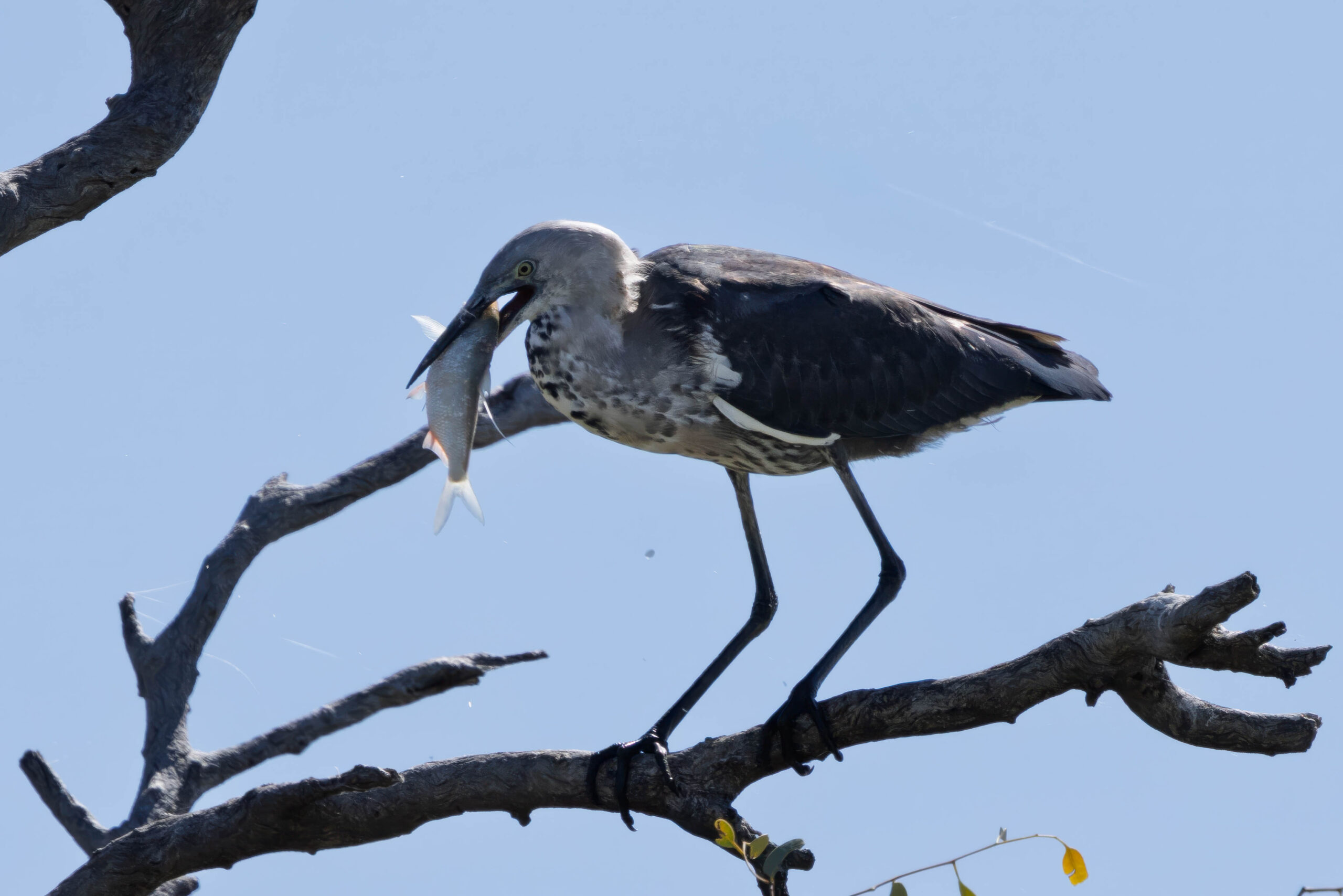
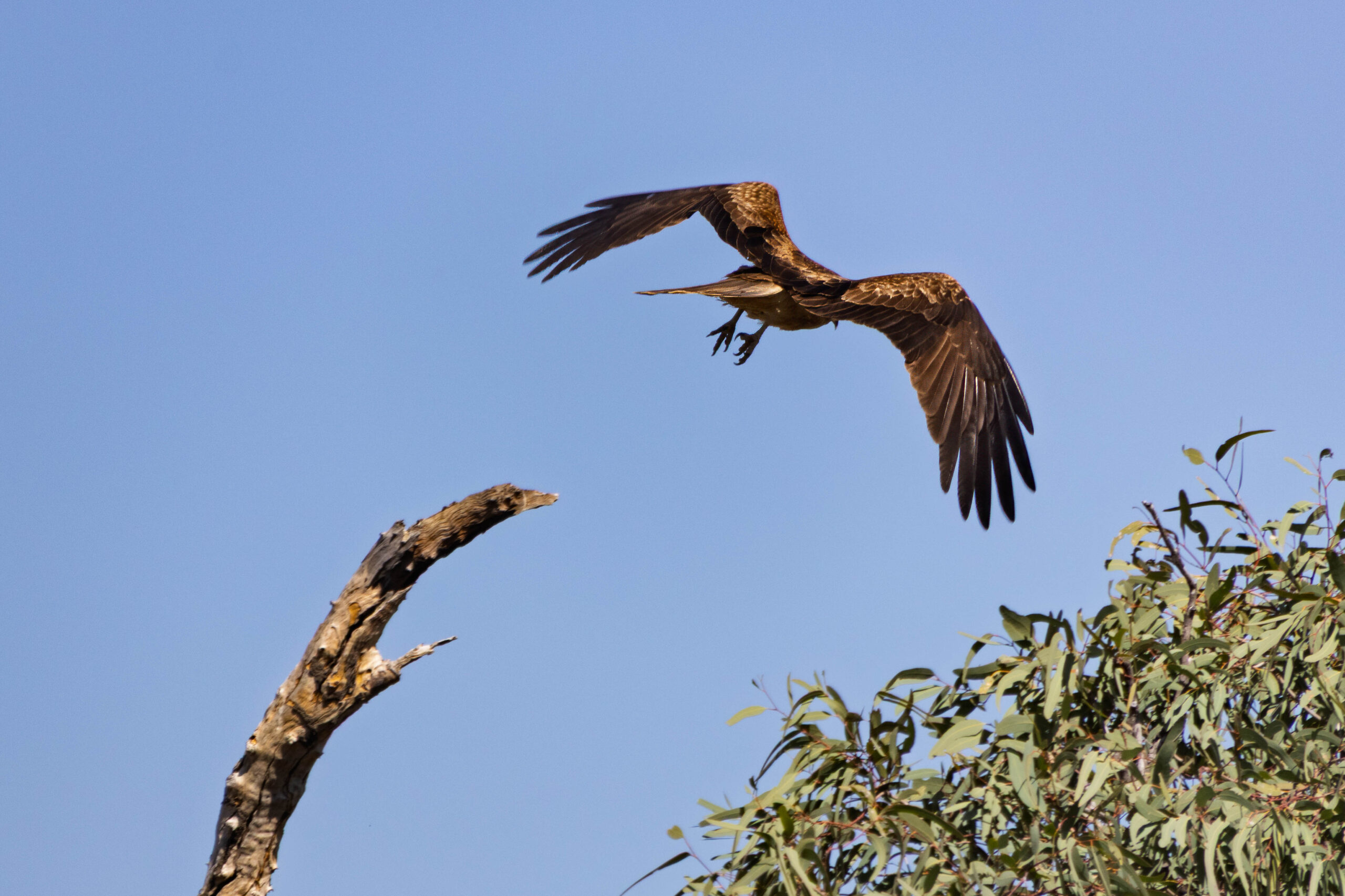
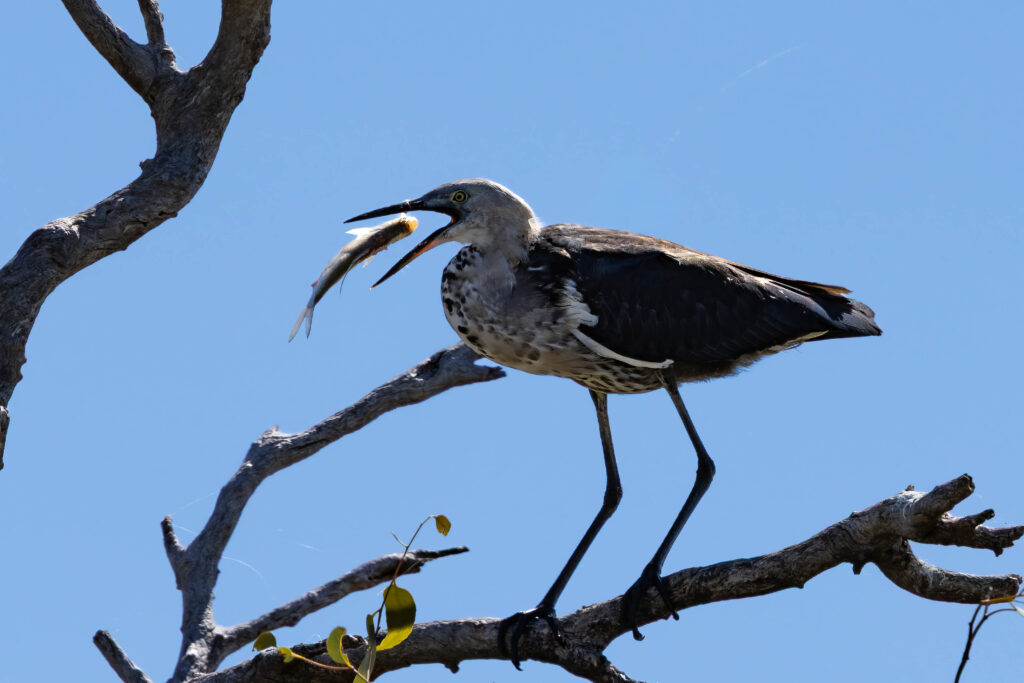
The wind continued to blow and I was having trouble keeping my hat on … even with my fly net fitted snuggly over the top of it! We spotted a bird in a tree that had caught a fish for lunch. We both zoomed in on it, Bernie with his 100-500mm lens, which gave him much more reach than me! It was only later when the photos were processed that Bernie could see that he managed to snap the bird as it tossed the fish about, only to have it look like the fish was flying into the mouth of the bird.
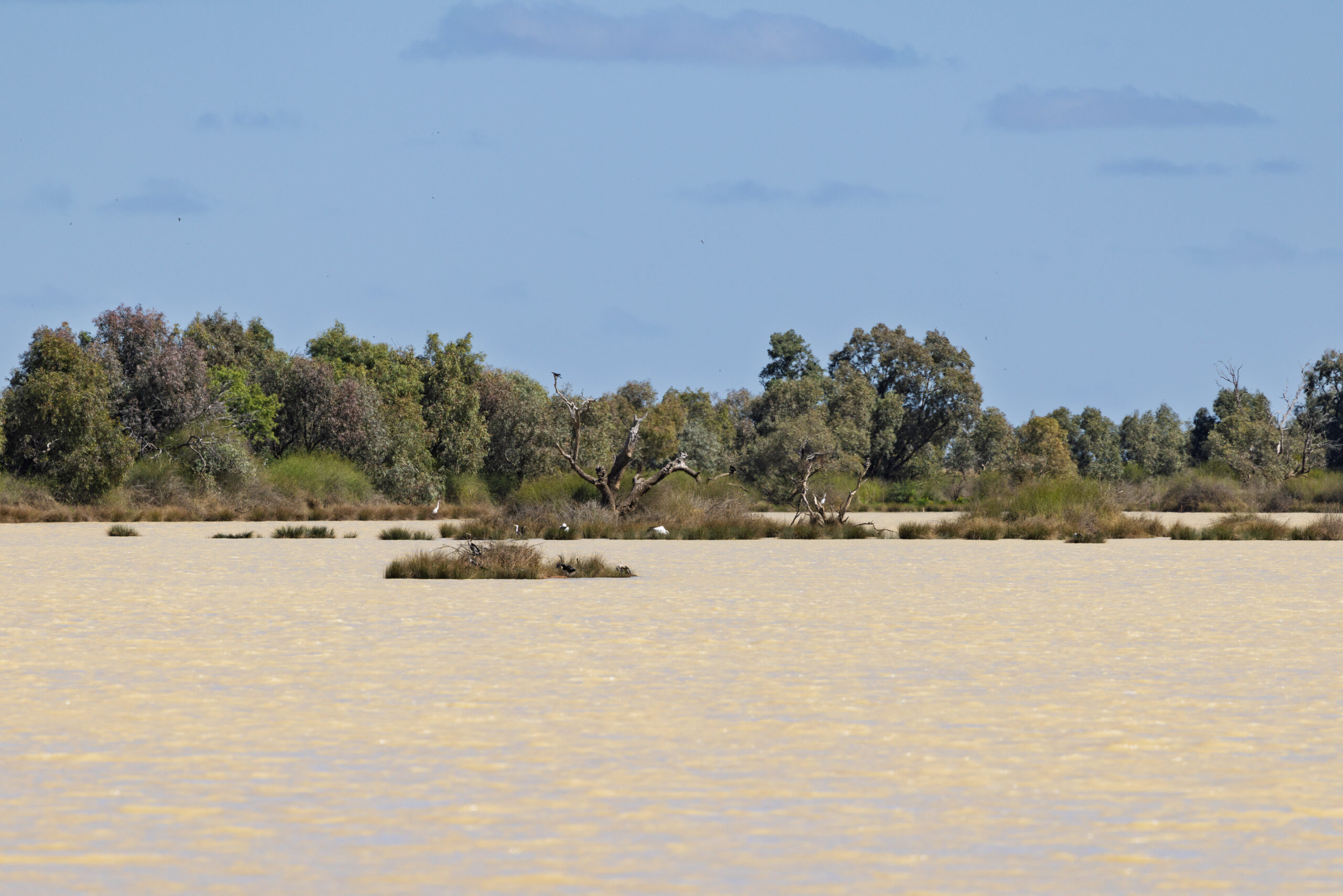
We continued all the way to Pelican Point, only to find the billabong disappointingly devoid of birdlife. The area at the end of the point was very open and exposed to the wind so it seemed that the birds might have found a more sheltered position to hang out today? We did see some pelicans in the river this morning, but not a single one at Pelican Point. Regardless, we had a lovely walk in the wetland area.
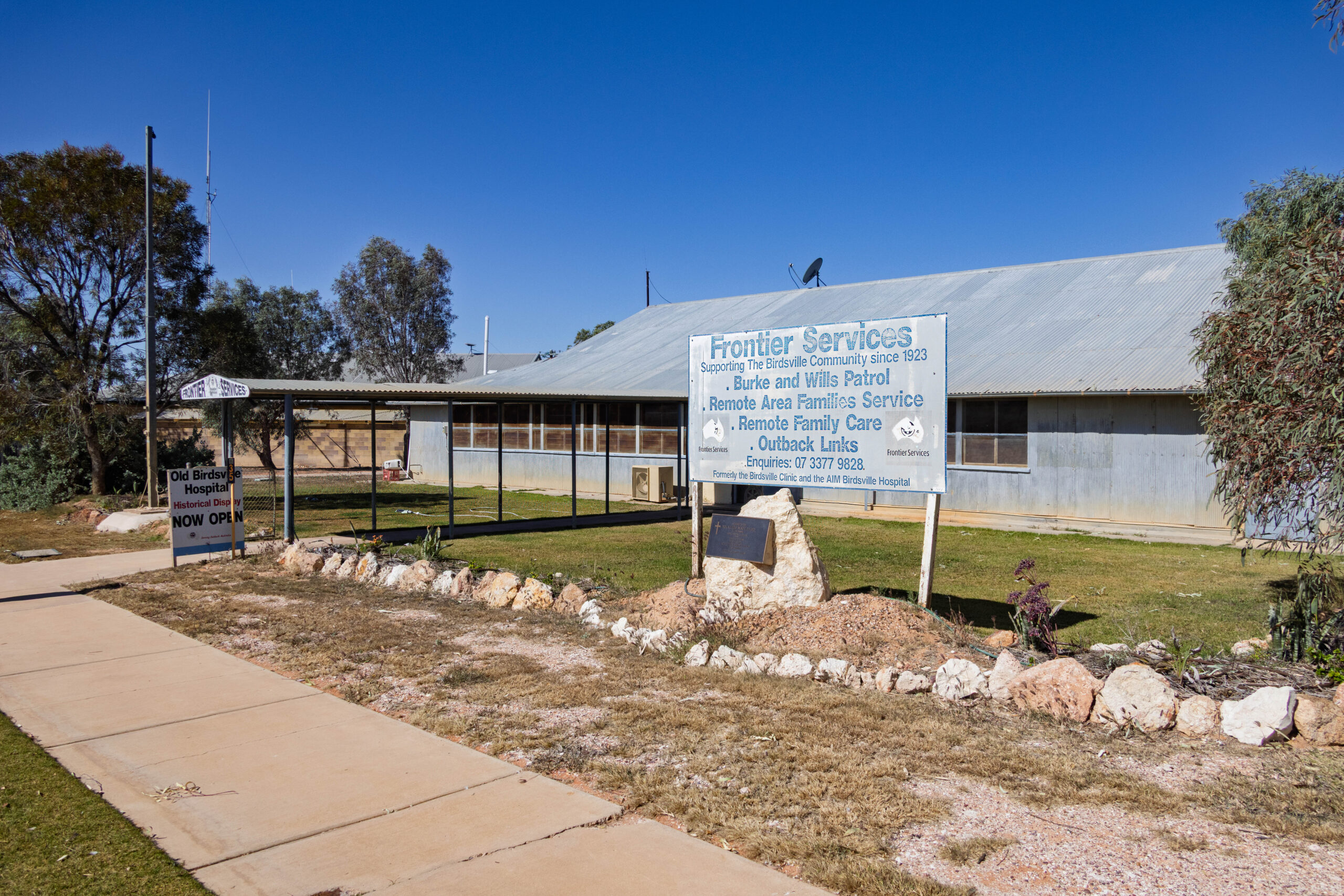
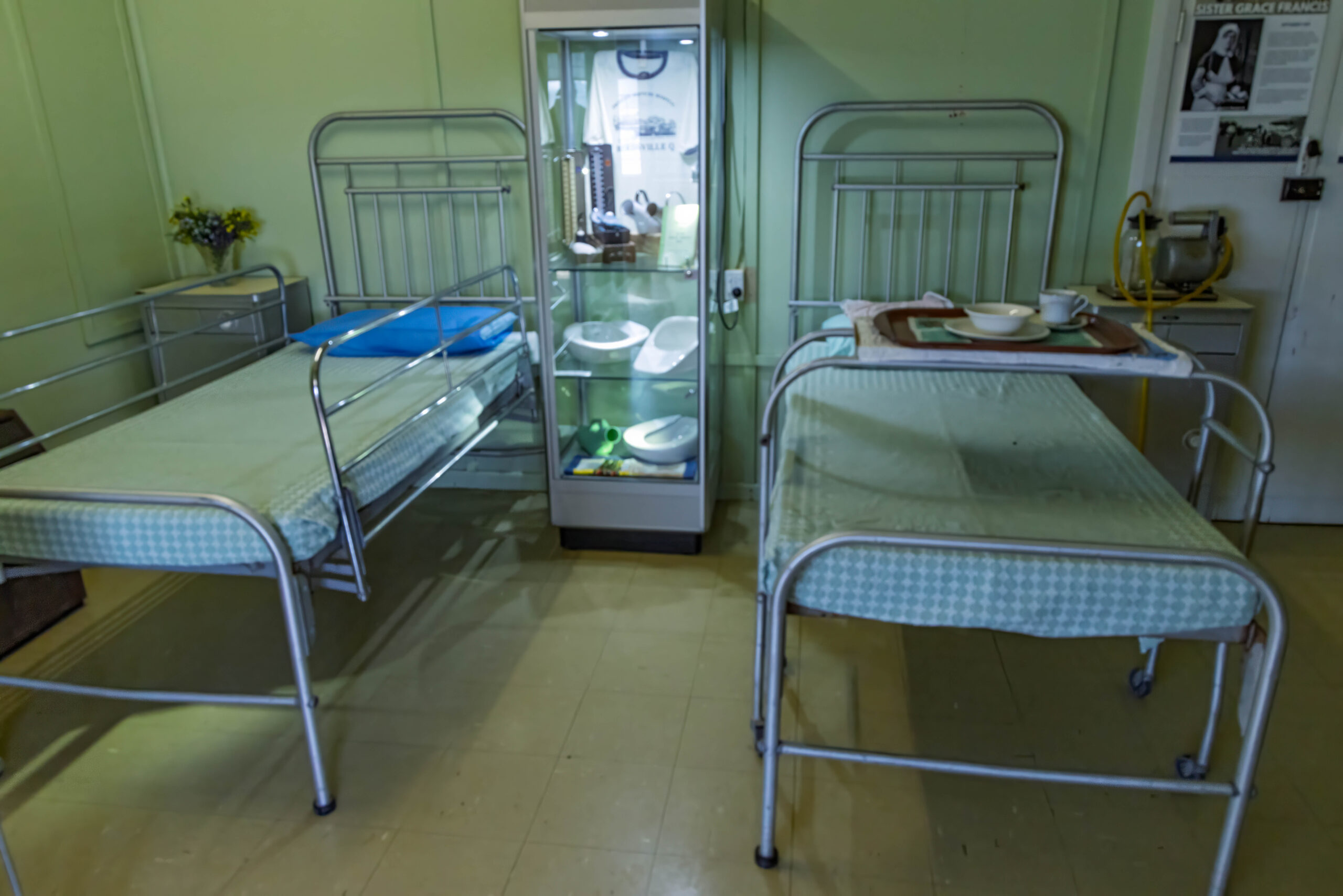
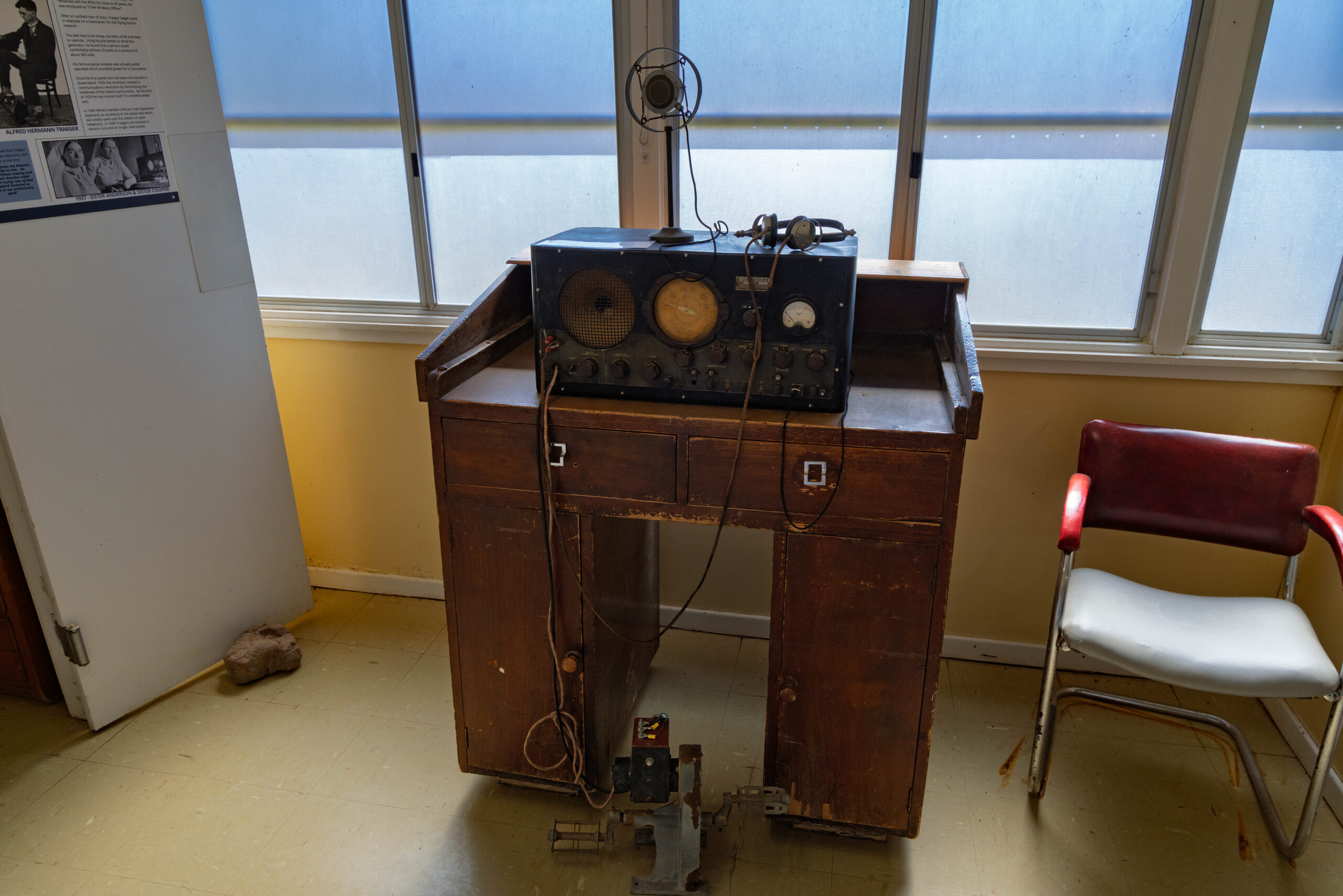
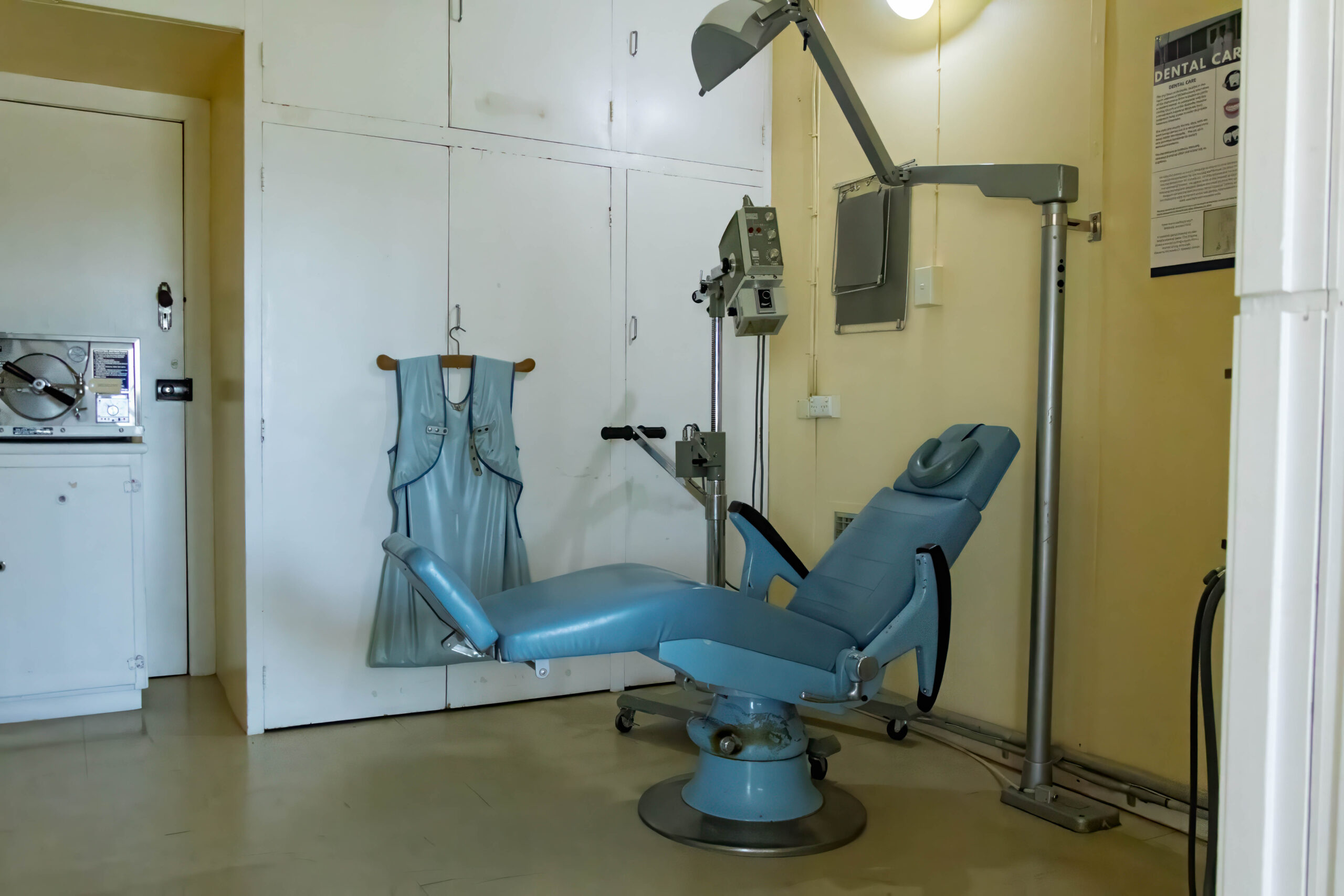
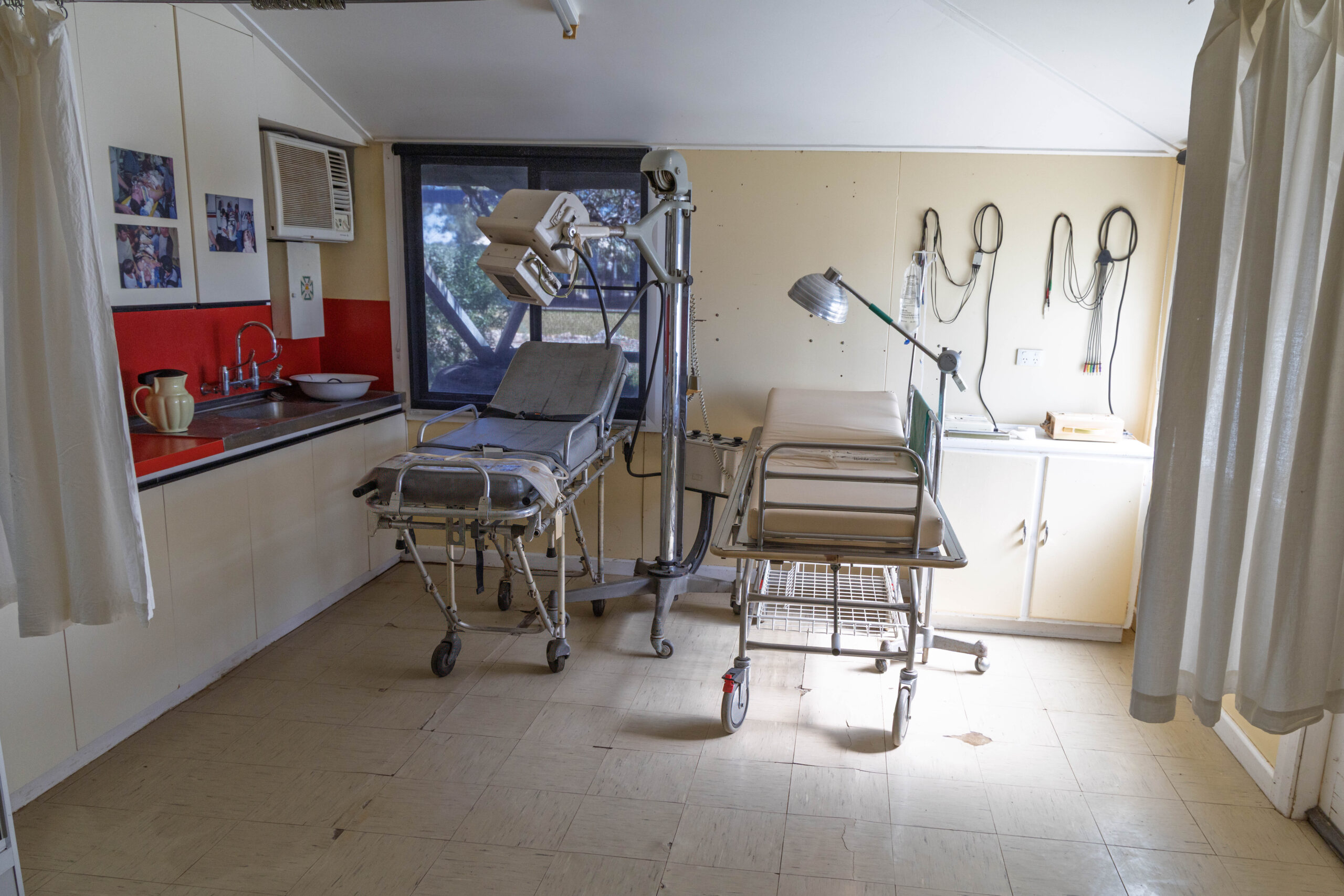
Back in town we popped into the Australian Inland Mission Hospital Museum. Located on Adelaide Street, the heritage-listed building was constructed in 1952-53 to replace the original bush nursing home. The original building, opened in 1923, was the first facility opened by Reverend John Flynn to care for the remote outback community. The hospital operated until 2005 when it was closed after 53 years of service, with local medical services shifting to the modern clinic built next door by the Diamantina Shire Council.
The museum has a collection of old medical equipment, dispensary items and nursing tools and tells the stories of the daily lives of isolated nurses and patients and the impact that Frontier Services and the RFDS had on the people living in remote areas of the outback.
Next stop, the Birdsville Roadhouse to buy fuel for the truck and some supplies for our breakfast tomorrow. More tinned fruit. We are really looking forward to buying some fresh fruit in the next couple of days!
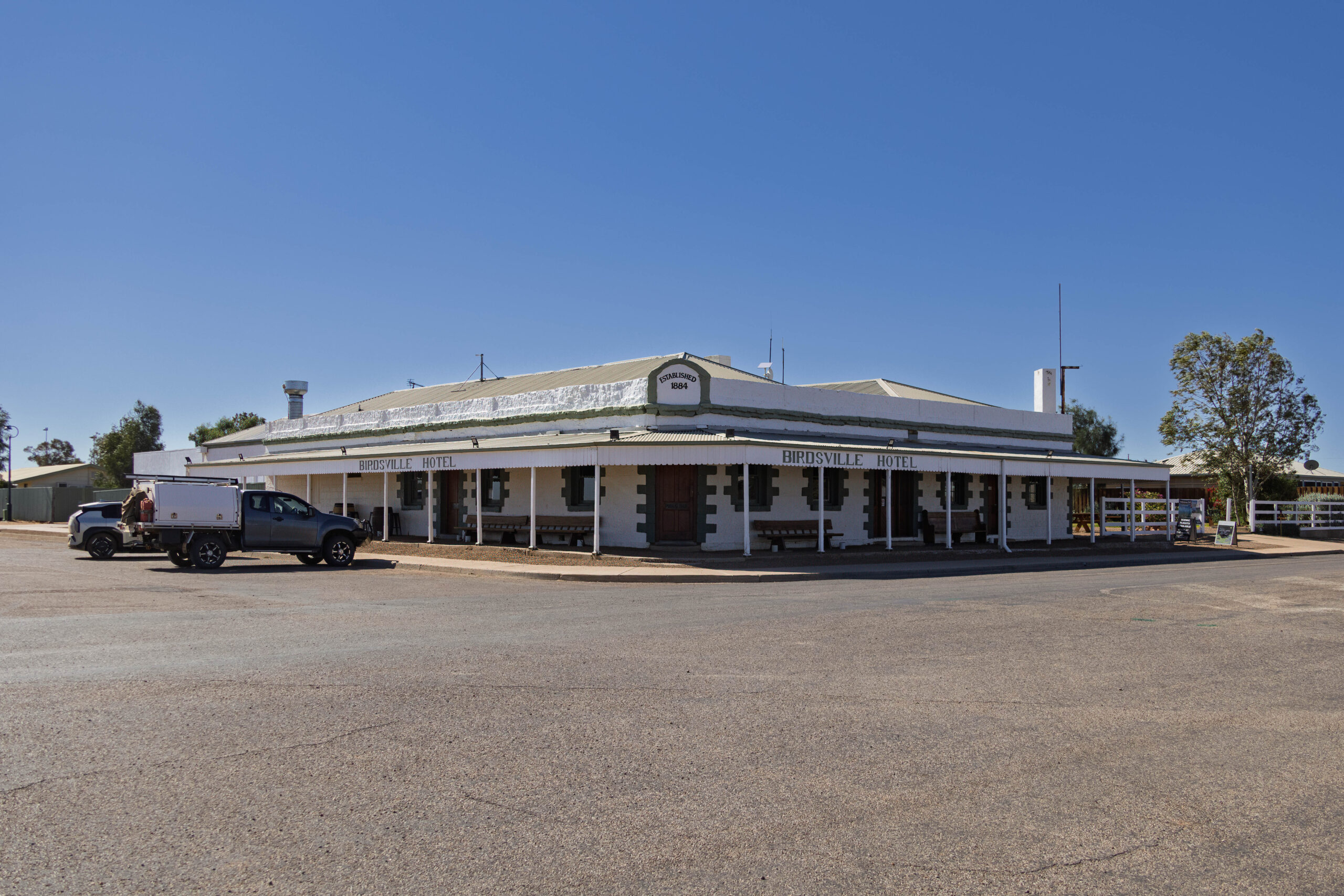
Now after 2.00pm, we headed over to check in at the Birdsville Hotel. Bernie headed off to park the car around the back of the hotel while I took photos of the cairns and plaques situated outside the airport fence. There were tributes to:
‘Compagnie Generale de Geophysique, Seismic Survey Party S.6507, Simpson Desert Australia 1963-64, The French Line Construction Team’; which gives us the French Line through the desert. This was the first route across the desert, constructed by the French exploration company, Delhi International in 1963. It is the now the most popular and shortest route across southern Simpson Desert, according to our Hema map.
‘The Simpson Desert Expedition 1939. Dr C. T. Madigan with 8 camels and 17 camels arrived here on the 6th of July 1939, having left Andado No.1 Bore 31 days earlier’. This gives us the Madigan Line that we have just traversed across the northern Simpson Desert.
‘E.A. (Ted) Colson with Aboriginal Companion Peter crossed the Simpson Desert 1936’; the first crossing by a European. They left Blood Creek Station in South Australia on the 24th of May 1936 with five camels, arriving in Birdsville, via Poeppel Corner, on the 11th of June 1936.
Another plaque commemorates the Department of National Development’s Levelling Survey between the Finke River and Birdsville, which was completed on the 16th of July 1970. The surveyor, John Gibson, walked 230 miles each way, crossing 1,100 sand ridges with his assistants, Roger Wreford, Ron Bunge and Larry Yeates. I guess that’s why the Hema map has printed on it that there are 1,100 parallel sand dunes.
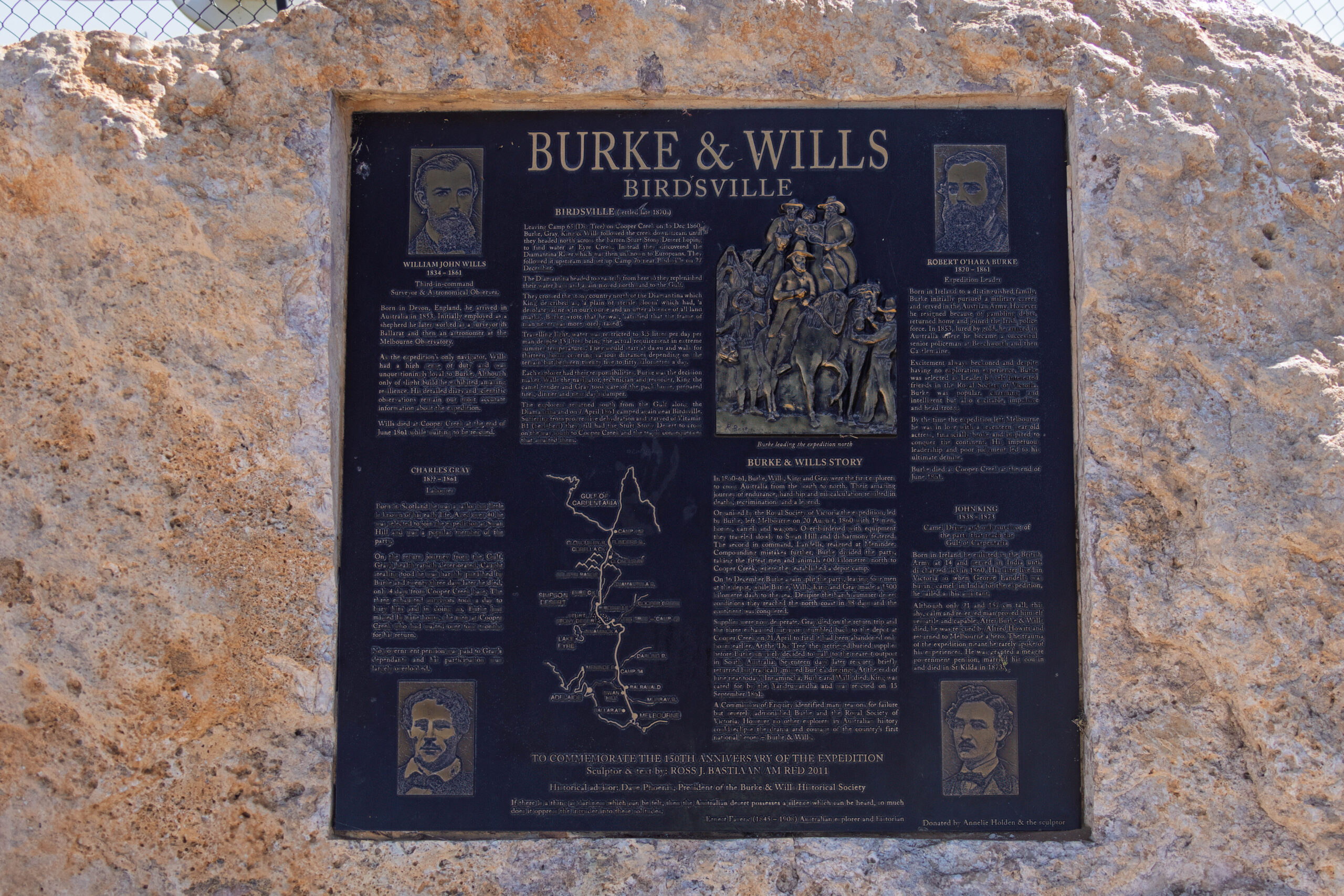
The final cairn was another commemoration of the ill-fated Burke and Wills expedition. It acknowledged not only Burke and Wills, but Charles Gray and John King, the only survivor from the party of four that reached the Gulf of Carpentaria.
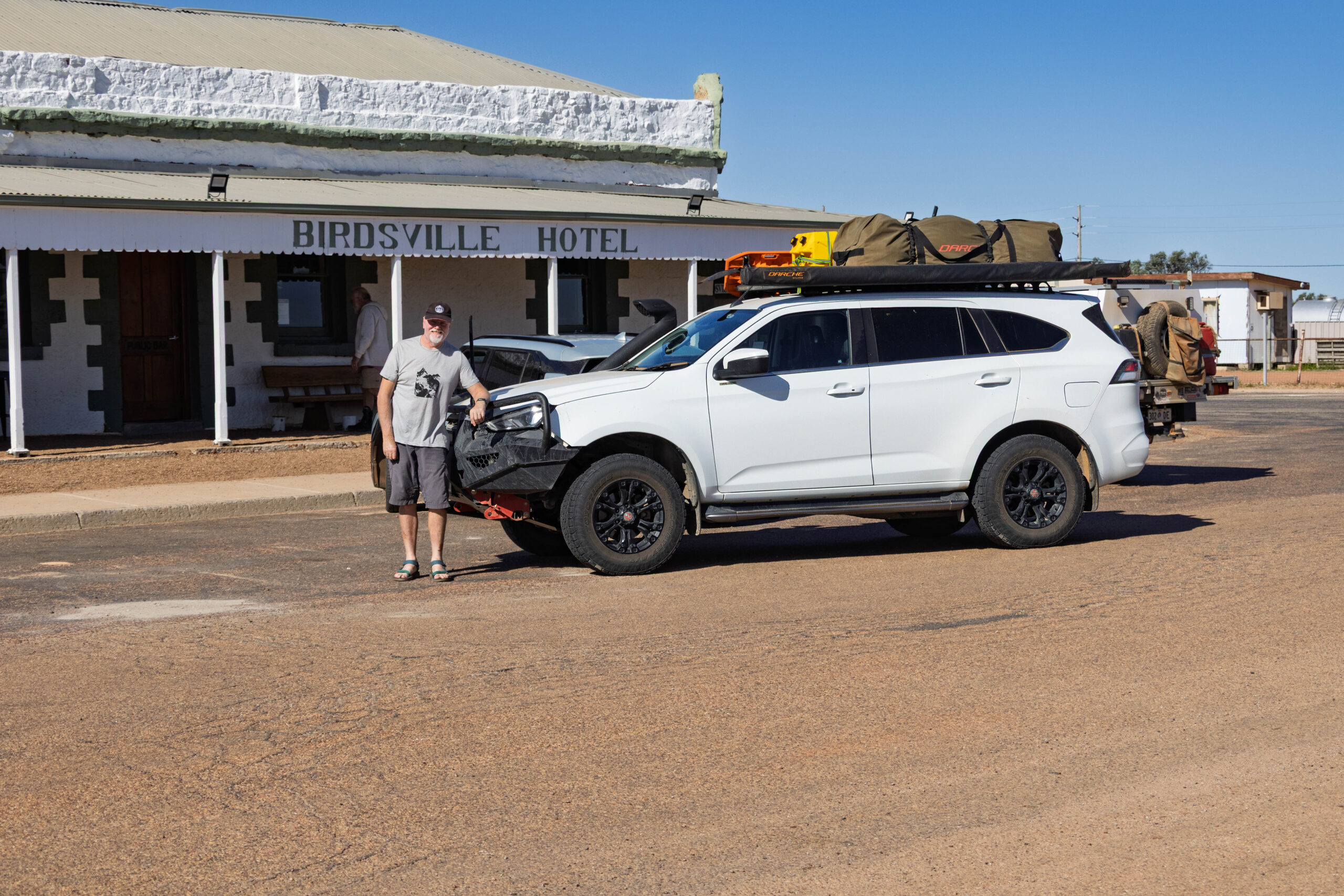
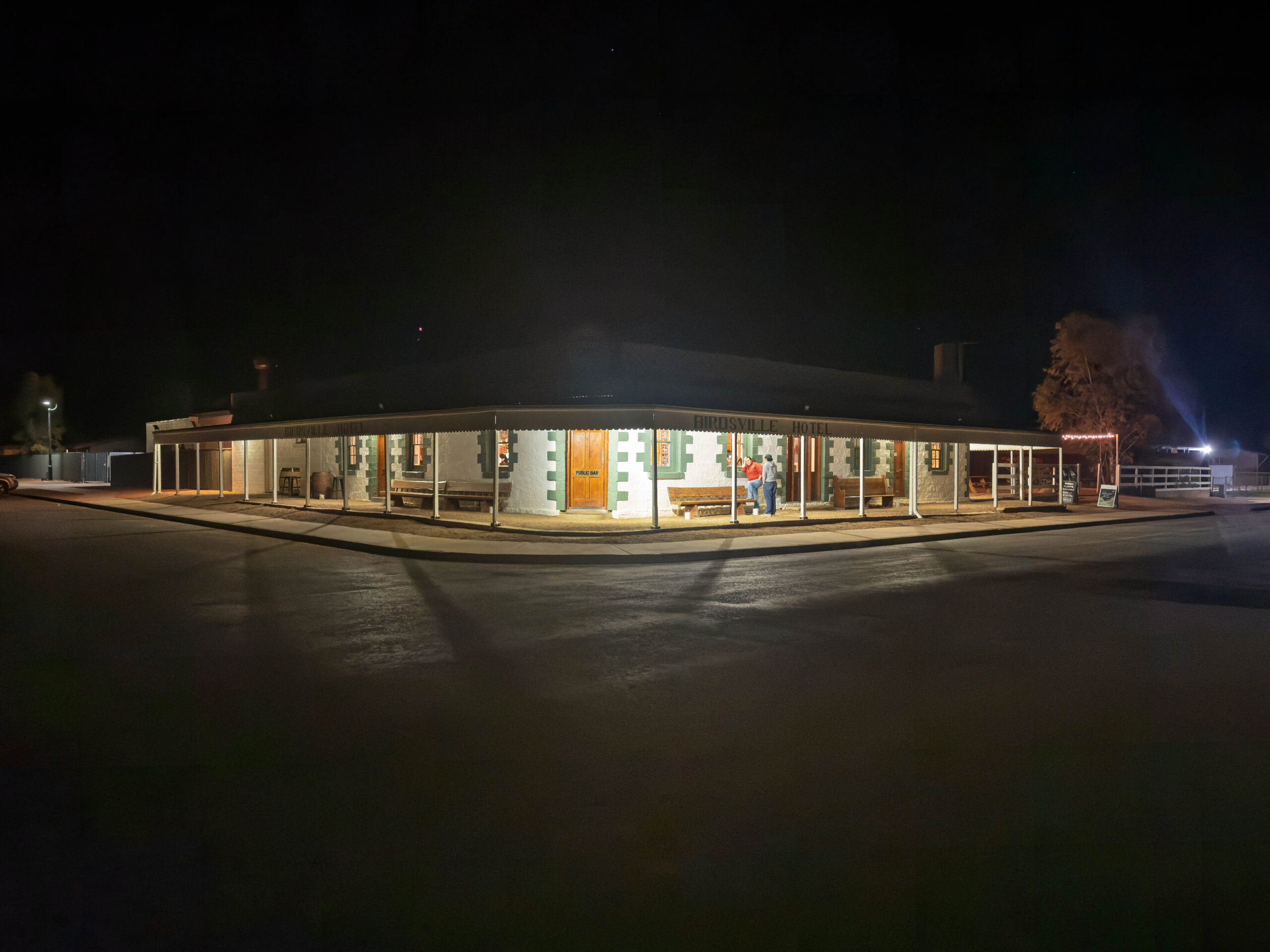
After helping Lutz and Mal take photos with their vehicle in front of the Birdsville Hotel, I walked around to catch up with Bernie in our room for tonight. He was concerned that the double room was too small and I would be too uncomfortable with the bed pushed up against the wall. He was on his way to see if we could swap to a twin as he had been led to twin rooms were slightly bigger. I assured him I could cope for one night in the (very) compact double room.
I spent some time on the travel diary, while Bernie processed the photos that we took today, and then it was time to return to Karrawa Wirinya Coffee for dinner. John had arranged with Don and Lin that they would cook up a curry for those who were interested. We were served up a delicious beef curry/stew from the camp oven, which was accompanied by rice and damper. We were treated with desert afterwards of apple crumble and golden syrup dumplings. Delicious.
At our camp on Eyre Creek on Monday night, Joedi treated us to a reading of The Man From Scott River. Tonight Don gave us the short version.
There was movement at the station, for the word had passed around, that the colt from old Regret had got away. They sent Don Rowland out to bring him back. Or something like that. He delivered it absolutely deadpan and it was hilarious.
By the campfire on Monday Lutz also taught us his Family’s German beer drinking song. To show our appreciation for tonight’s meal, Lutz led us in a rousing rendition of Green Trees (which is sung to the tune of Auld Lang Syne)
Green trees are green, green trees are green, green trees are green because
Green trees are green, green trees are green, green trees are green, green, green.
We sang one round, repeated it softly and then finished it fortissimo!!
After which everyone gradually left the campfire and retired to bed. Two nights in a row in proper beds. Luxury. Who cares how small the room is, it’s still bigger and more comfortable than a swag!